Showing posts with label commercial fishing. Show all posts

Monday, November 11, 2024

Environmental Groups Sue New Jersey Over Sturgeon Deaths

The environmental groups Riverkeeper and the Delaware Riverkeeper Network filed separate lawsuits against New York, New Jersey and Delaware over what the organizations allege are the states’ violations of the Endangered Species Act.Their concerns are about the Atlantic sturgeon, which spends much of its life in the Atlantic Ocean but travels up rivers on the eastern seaboard to spawn.

Sturgeons can live more than 60 years and reach massive sizes. In 2024, a sturgeon was caught in the Hudson River near Hyde Park that weighed 220 pounds and measured more than 6 feet. The fish was caught and released as part of the state Hudson River Estuary’s sturgeon monitoring program.


Sturgeon    NOAA photo

Part of this concern is about what is known as "bycatch," The lawsuit states that: “State-authorized commercial fisheries are allowed to use state-licensed fishing equipment in waters where Atlantic sturgeon are known to live, causing bycatch of Atlantic sturgeon. Studies show that Atlantic sturgeon is known bycatch in several commercial fisheries within New York state’s sovereign waters, including the striped bass, summer flounder, longfin inshore squid, bluefish, scup, tautog, winter flounder, weakfish, winter skate, silver hake, and little skate fisheries.” Nine of these 11 species are caught with either trawls or gill nets, which are known to accidentally catch sturgeon.

Anglers often hrow bycatch back into the water, but sturgeon caught this way are often unable to reproduce and can die, according to the lawsuit.

Extrapolating harvest figures from the late 1800s show about 180,000 spawning female sturgeon in the Delaware River at the time, according to Delaware Riverkeeper Network Restoration Director Erik Silldorff. Today, there are fewer than 250 adults of both sexes. Only 466 adult sturgeon remain in the Hudson River, according to Riverkeeper President Tracy Brown.

Monday, October 16, 2023

Overfishing

By way of anglers.com comes some information about overfishing. A third of our fisheries are overfished and exploited, and that is a number that has more than doubled since the 1980s.

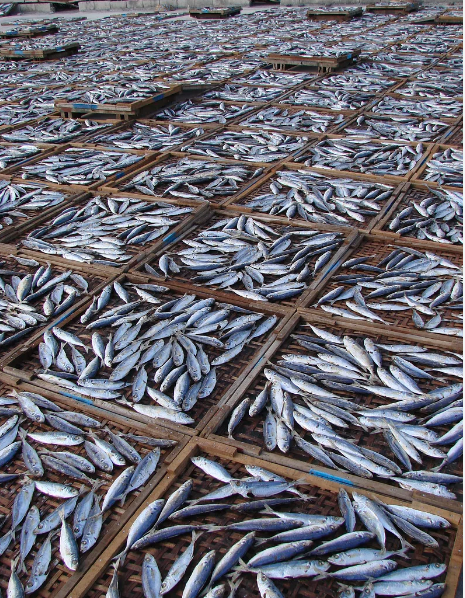
A caveat to this sad statistic is that recreational anglers are not the problem. This is an issue for commercial fishermen in the fishing industry who are trawling the ocean depths with massive nets.

Overfishing is when too many fish are taken from an area, and the remaining fish are unable to reproduce and replenish their populations to a healthy level. Overfishing is a global problem that's causing fish populations to decline and harming ocean ecosystems.

Overfishing is, in some sense, a rational reaction to increasing market needs for fish. Most people consume approximately twice as much fish as they did 50 years ago and there are four times as many people on the planet than there were at the close of the 1960s. 

Unfortunately, we waste approx. 8.6 million tons of fish each year and 3 billion people rely on fish as their primary source of protein. 

A decline in the number of fish of any species - from the smallest bait fish to the largest sold commercially is that is causes issues within ecosystems. A shortage of fish can create a food crisis. It can also create loss of employment for some of around 60 million people who work directly and indirectly in the fishing industry or who benefit from the availability of fish. Overfishing can even lead to further damage to coral reefs.

Although most stories about overfishing seem to focus on salt water fisheries, overfishing is a major cause of declining fish populations in freshwater systems. It has caused severe reductions in many fish stocks, especially large species, including top predators and migratory fishes. 

Freshwater fish are threatened by a number of human activities, which can gravely impact the species and its associated food sources. Poor management in a specific body of water can cause localized overfishing. Other human activities that threaten freshwater fish include invasive species, climate change and dams.

Although commercial fishing causes the greatest damage, it's not that localized overfishing despite regulations isn't a problem. 

Management and conservation is necessary to maintain species viability. For example, striped bass is one of New Jersey’s most sought-after recreational fish species. NJ’s recreational striped bass harvest (by numbers of fish) is typically one of the highest harvests by state coastwide in the ocean fishery. 

Checking a striped bass catch

A combination of size/bag limits, seasons, and gear restrictions are in place to manage NJ’s recreational striped bass fishery. Since this species is of great importance, NJ banned the netting and sale of striped bass and reallocated the commercial quota to the recreational sector to form the Striped Bass Bonus Program (SBBP) in 1990.  The SBBP is a popular program and provides valuable data for assessing stock status and fishing trends, making it an integral part of New Jersey’s striped bass management.