Showing posts with label plastic pollution. Show all posts

Wednesday, May 4, 2022

Plastic Pollution Is Bigger Than Single-Use Bags

Plastic large, small and microplastics at the Pacific gyre
Photo: Hagerty Ryan, USFWS on Pixnio

I wrote earlier about the ban on single-use plastic bags and most polystyrene foam containers that went into effect today. It is an important step in fighting plastic pollution. But plastic pollution comes from a lot more than those bags and takeout containers.

It is estimated New Jersey uses about 4.4 billion single-use plastic bags every year. A small fraction of them (less than 5 percent) are recycled, so they end up in landfills, trash incinerators, or just as litter in streets, wooded areas, along roads, and waterways.

The benefits of fewer plastic bags in the environment are greater than the inconvenience of bringing my having to bring my own bags from home. In my house, we have been re-using the small plastic bags from stores in our small trash cans in the bathrooms and bedrooms. But they do end up in our trash and eventually in a landfill or incinerator.

These bags and most plastic products are made from petroleum byproducts. Burned in an incinerator, they create air pollution. Left out and exposed to sunlight and the elements they eventually break down into smaller and smaller bits. Those bits are known as “microplastics” and these tiny particles become part of the food chain, particularly in oceans. They also find their way into and contaminate our drinking water (even some bottled waters) and food. 
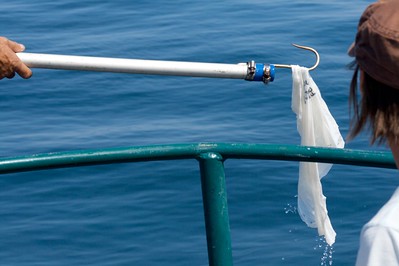
Pollution (plastic bag)

If you walked the coastline of NJ from the rivers in the northeast and west to our famous Jersey Shore, you have come across plastic pollution. If you have been out on coastal waters, you probably have seen it too. As unattractive as it is, the dangers are not aesthetic. They hurt wildlife and eventually people.

The new ban won't even eliminate all plastic bags. Grocery stores can still use bags to hold uncooked meat, fish, poultry, loose items like fruits, vegetables, nuts, coffee, grains, and foods sliced or prepared to order. In other stores, exceptions include bags for holding newspapers, prescription drugs, and dry cleaning bags.

The ban is a good start but it is not the end.


Trash - mostly plastics - often end up washed up on coastlines
Science Photo Library, NTB via ndla.no

LINKS

NJDEP “Get Past Plastic” nj.gov/dep/get-past-plastic/#single_use_bags

New Jersey Clean Communities “Bag Up NJ” website at bagupnj.com

Thursday, April 21, 2022

Single-use Plastic Bag Ban Goes Into Effect May 4

Image by Francis Ray from Pixabay

We've been hearing about it for a long time. Ban plastic! Ban single-use plastic bags!

But now the time has come for New Jersey.

The single-use bag ban was signed into law in November 2020 but implementation was delayed 18 months to give businesses and customers time to prepare.

We see plastic bags in the street, in tress, blowing across highways and - in their worst locations - they end up in waterways, creeks, rivers, and the ocean. They have been noted to be the most frequently found pieces of litter by volunteers cleaning up beaches, rivers and streams in New Jersey.

Turtles, dolphins, and whales mistake bags for food and choke to death or starve due to blocked digestive systems. Plastic bags can also be ingested by birds or smaller fish as they break down into smaller pieces. They can also make their way up the food chain, affecting human health.

On May 4, 2022 a law banning single-use plastic shopping bags goes into effect in New Jersey.

Local bans have already been in effect in some places. Jersey shore towns see the worst consequences of plastic pollution and in 2015 Longport became the first municipality to ban single-use plastic bags. 

What does that mean for you? Supermarkets, stores, and restaurants will no longer be allowed to give out single-use plastic bags to customers. 

Many places can offer free paper bags instead. Supermarkets over 2,500 square feet (which is most of them) won’t have that option. Prepare to bring your own reusable bags. Many stores will offer them for sale at checkout.

If you've been to a big box store, such as Costco, you know that they never offered bags, but they did offer their empty cardboard boxes and trays which you could take home and then hopefully recycle.

The ban also affects most polystyrene foam containers. These are commonly clamshell-style foam food containers used for takeout orders and foam beverage cups. 

All this is good for the environment and I'm glad that New Jersey is getting on board. We are not the first to institute this kind of ban. There are already 8 states to ban single-use plastic bags. We join California, Connecticut, Delaware, Maine, New York, Oregon, Vermont and Washington. However, the NJ ban is considered the strictest.


LINKS

NJDEP “Get Past Plastic” nj.gov/dep/get-past-plastic/#single_use_bags

New Jersey Clean Communities “Bag Up NJ” website at bagupnj.com

Tuesday, September 29, 2020

Plastiki and Plastic Pollution in Oceans

Expedition Kon-Tiki 1947. Across the Pacific. (8765728430)

I posted on another blog of mine back in August about the anniversary of the 1947 landing of Thor Heyerdahl's raft Kon-Tiki on a reef in French Polynesia which ended his sea journey.

I read his account of that journey,  Kon-Tiki, when I was in sixth grade for a book report and it really took hold of my imagination. The story by the Norwegian explorer and writer in his expedition across the Pacific Ocean from South America to the Polynesian islands wasn't intended as an adventure trip. Heyerdahl, a Norwegian ethnologist, had set out from Peru in April hoping to prove that early South Americans could have traveled across the Pacific and settled in the Polynesian Islands. 

The raft itself was historically accurate as they could make it. It was made entirely of pre-Columbian materials. The body was made of balsa logs lashed together with hemp ropes, and had gaps between the logs for the water to drain out. The cabin was built of bamboo and had a thatched roof of banana leaves. The mast was made of planks of mangrove, and it held a square sail. It was a replica of the rafts that native Peruvians were using at the time of the first European contact in the early 1500s. The journey took three and a half months. They traveled 4,300 nautical miles. 

In writing that post, I also found an article about a more recent explorer, David de Rothschild, who crossed the Pacific in a boat made from recycled plastic bottles. He is not an ethnologist but someone who wanted to call attention to the waste plastic that ends up in our oceans. 

This journey appeals to the environmentalist in me. His 60-foot catamaran was built almost entirely with waste material. I like that he named his boat Plastiki (for plastic Kon Tiki). There were 12,500 reclaimed soda bottles that are built into the hulls. Parts of the boat are held together with a new glue made out of cashew nuts and sugar. An old aluminum water pipe became the mast, and more recycled plastic was used to weave the sailcloth. 

They weren't trying to replicate any earlier explorers, so the boat had solar panels, a wind turbine and bicycle generators to provide electricity for the six crew members. There was a miniature greenhouse for some food, and a compost toilet.

Plastiki hull
The plastic bottlehull of Plastiki

Environmentalist David de Rothschild was the designer and sailor and he wanted the boat to be as environmentally green as possible. A team of engineers and marine architects helped build it and they tried to use the same materials that form most of the global marine pollution - the plastic of food and drink packaging. 

Plastiki puts a focus on the pollution but also that some trash can be a valuable resource for reuse instead of being dumped and becoming a pollutant. On its journey, Plastiki sailed through the Great Pacific Garbage Patch that has an estimated 100 million tons of plastic in an area twice the size of France. 

It takes 450 years for a plastic bottle to degrade, but even then, like other plastics, it will remain in the environment in small pieces. One of the concerns about ocean pollution is that those final tiny particles of plastic float around the surface where they are ingested by fish and marine life. Plastic makes up to 80 percent of all marine pollution and at least a million seabirds and 100,000 mammals are killed every year by eating plastic or getting caught up in it.

Though our Atlantic Ocean doesn't have a Garbage Patch like the Pacific, it certainly has a lot of plastic pollution. 


If you want to armchair either voyage: 

Kon-Tiki: Across the Pacific in a Raft 

Plastiki Across the Pacific on Plastic: An Adventure to Save Our Oceans 

map Plastiki's  Pacific-Voyage - Illustration by Andrew Rae - via theplastiki.com
Monday, September 23, 2019

The Dangers of Plastic Pollution to Marine Life

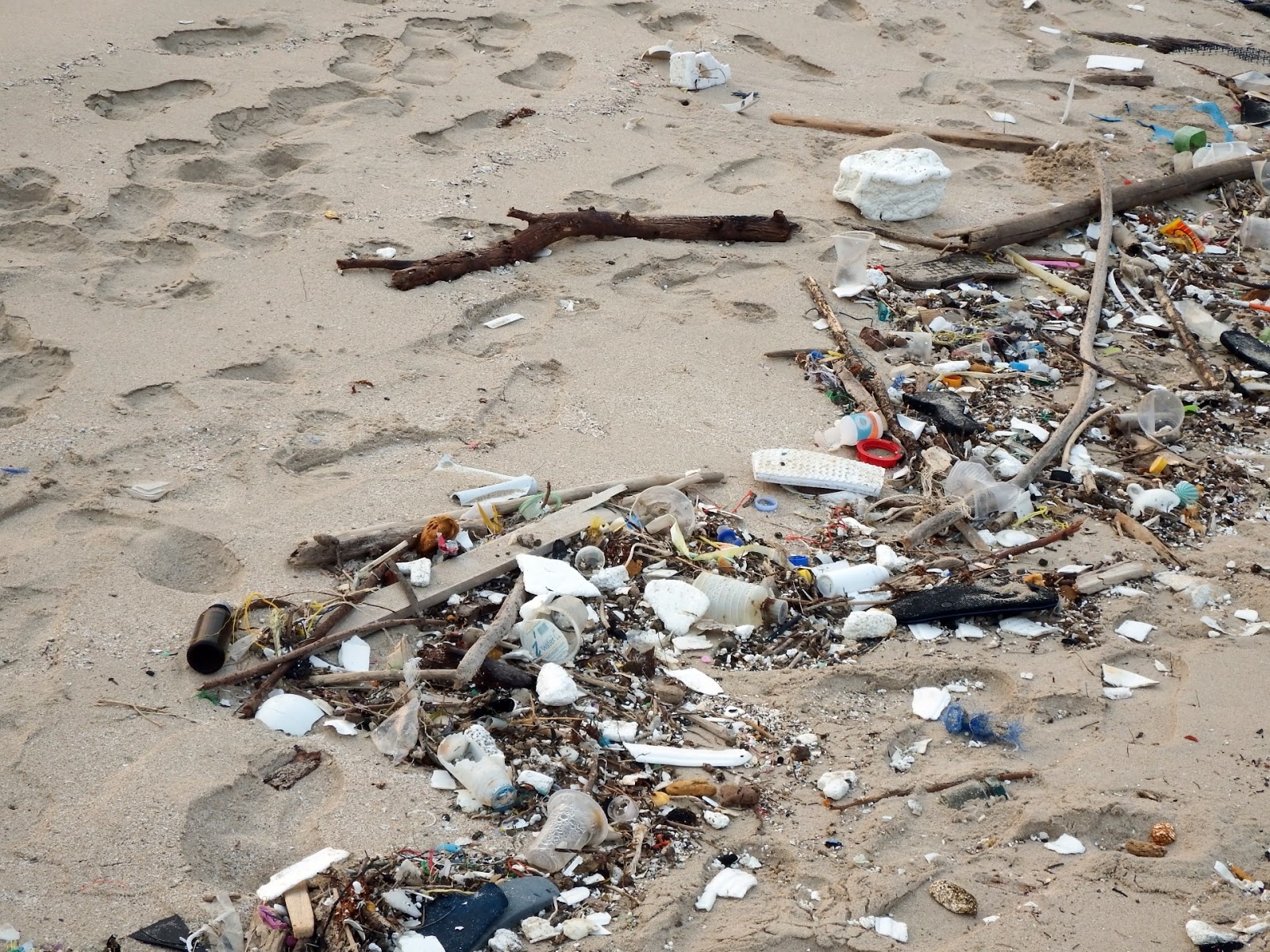
Mixed in with the natural trash along the shoreline is a great deal of plastic.
If you walk the Jersey Shore in the off-season you have the beach much to yourself. You might also take notice of more trash washing up because summer cleanup crews are not working. The trash that will be most common is plastic. Plastic accounts for up to 80% of litter in the ocean.

Millions of tons of disposable plastic that has found its way into our waters. The numbers and weight and size of the now famous garbage islands in the oceans of the world make it seem hopeless that we can clean it up.

Everyday plastic used in homes, schools, and businesses amazingly make their way to the world's oceans by many different routes. Yes, some of it is illegally dumped by water-going vessels. But much of it flows down rivers to be washed to the sea. Some are just dumped directly on the beaches and coastlines. Heavy rainstorms can carry plastic garbage into the oceans via sewer lines and storm drains. The bottle you see lying at the shoreline will be caught by a wave and taken hundreds or thousands of miles away before it washes ashore again.

Manufacturers are beginning to step up on the use, disposal, collection and recycling of their plastic products. An article on bottlestore.com states that:

Every year, between 8 and 12 million tons of plastic trash finds its way into the world's water. The sheer amount of ocean-borne plastic waste has accumulated into large concentrated spots in the world's oceans. These masses are known as garbage patches, and they are herded into large concentrations by ocean currents or gyres. Some of these patches are twice the area covered by the state of Texas. The first garbage patch was found in 1997 by Captain Charles Moore, who was in the midst of a sailing race in the Pacific. Since then scientists have found a total of five major plastic pollution patches. They exist in the Indian Ocean, as well as the north and south Pacific, and the north and south Atlantic oceans. When it comes to dumping plastic into the oceans, the worst offender is China, while thanks to new regulations; the United States is a distant 20th place.

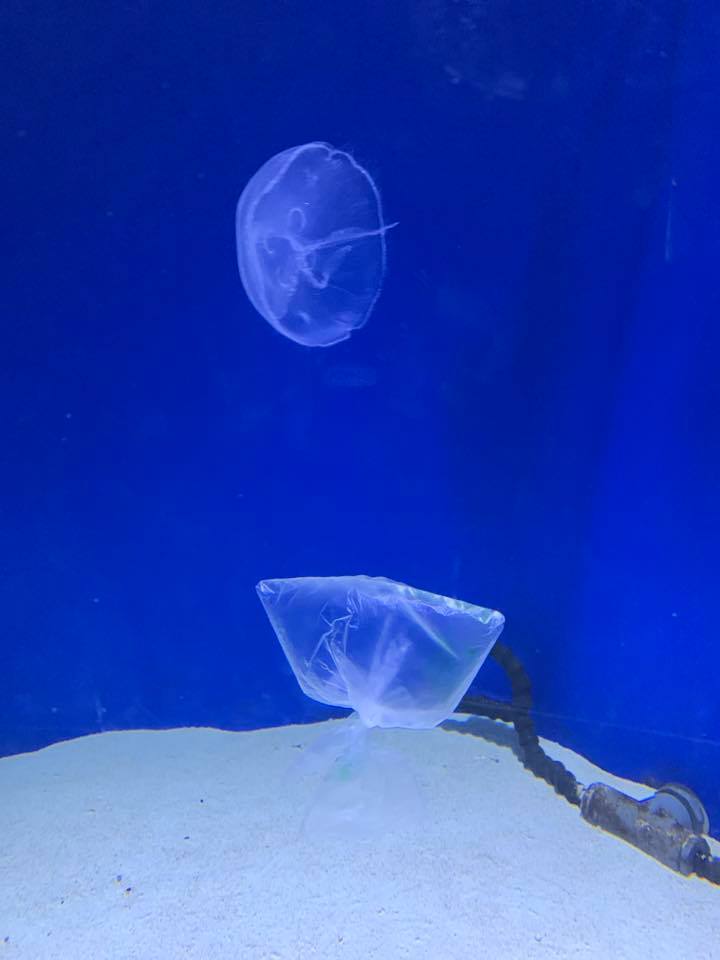
This ocean pollution exhibit at a local aquarium in New Jersey shows how marine life
can easily confuse a jellyfish with a plastic bag.    Photo Credit: K.Graham/USFWS

At least 700 known species of marine animals are known to be harmed by plastic debris. Also birds and animal onshore are also affected by eating both plastic debriss or feeding on animals that have previously fed on plastics.

The dangers of plastic pollution to marine life are multiple. Animals can mistake plastic debris for food and consume it. The material can physically clog and overcrowd their stomachs, and because it is almost impossible to digest, it can result in the animal's death by starvation. Larger pieces, such as fishing nets and large bottles, containers, and rings can also entangle and immobilize wildlife, resulting in starvation, drowning or strangulation. Creatures who encounter floating plastic bags have been known to die from asphyxiation.

Scientists are also finds that invasive species of animals or plants may also ride on pieces of plastic to new areas where they may then threaten the native species.

Plastic debris from some types of plastic release toxic chemicals, such as vinyl chloride, styrene, and bisphenol-A, and can also attract other toxins, such as the insecticide DDT and polychlorinated biphenyls, or PCBs. Fish and other marine life that consume plastic may be killed by these toxins, or they might pass them onto humans and other creatures who consume them.

Plastics do break down in the ocean, but the process is slow. However, when it is reduced to small pebble, sand or micro sizes it is very difficult to remove and now resembles plankton, which is an essential part of the ocean food chain. Plastic waste is thought by scientists to outweigh zooplankton in the ocean now by a ratio of over 35 to one.

Is there any hope of turning the tide back on plastic pollution?

Current solutions can slow down and hopefully prevent the flow of plastic into the ocean, such as laws taxing or barring the use of plastic bags in grocery stores. Many municipalities have laws against dumping plastic into storm drains. The expansion of recycling programs to include more types of plastic has also been helpful, though many plastics recycling centers have more supply than demand. Consumer reusing plastic items, buying in bulk to reduce plastic packaging, and demandin better packaging standards from manufacturers will also help. Making environmentally conscious purchase decisions is an important step individuals can take: not buying beauty or hygiene products that use plastic microbeads (in toothpaste, body wash, etc.), buying fewer plastic water bottles, or minimally reusing them and recycling them or better yet using a more permanent non-plastic reusable bottle.

For more information about plastic pollution, its dangers to marine life, and how to prevent it, please see the links below.

Thursday, April 19, 2018

Earth Day 2018


Next Sunday, April 22, is Earth Day 2018 and this year the day is dedicated to providing the information and inspiration needed to fundamentally change human attitude and behavior about plastics.

From poisoning and injuring marine life to disrupting human hormones, from littering our beaches and landscapes to clogging our waste streams and landfills, the exponential growth of plastics is now threatening the survival of our planet.

If you have ever walked a beach in almost any part of the world, including our beloved Jersey Shore, you have seen evidence of plastic pollution.


I have written here about pollution in the air and water and on the ground, and plastic pollution actually affects all three area although its presence in water gets the most attention.

To look at it locally, consider micro-beads which cannot be filtered from household waste water by sewage treatment plants. Eventually, these very small pieces of plastic end up in the ocean.

Take this globally and you can look at the "Great Pacific Garbage Patch" and the North Atlantic Garbage Patch (trash vortex). These two areas (and there are other areas too) are made primarily up of trash fragments ranging from a millimeter to the size of a pencil’s eraser.

The highest concentrations of plastic were found roughly from the latitude of Virginia to the latitude of Cuba. Scientists have gathered data from 22 years of surface net tows to map the North Atlantic garbage patch, which lies to the east of Bermuda. It is estimated that the average concentration of plastic in this area is about 4,000 pieces per square mile, though it is as high as 250,000 pieces per square mile in some places.

The size of the Atlantic trash vortex compares in size to the area of France. This micro/fine trash, poisons fish and marine mammal and kills seabirds.

We know that balloons and plastic bags and larger pieces of plastic are also floating out there and are a danger, but the micro-beads are easily swallows along with other food and water and clog the guts of creatures with indigestible beads that make them unable to eat and so they starve to death.


The Great Pacific garbage patch (also described as the Pacific trash vortex) is a gyre of marine debris particles in the central North Pacific Ocean discovered between 1985 and 1988. The patch extends over an indeterminate area of widely varying range depending on the degree of plastic concentration used to define the affected area.

These patches include concentrations of plastic, chemical sludge, and other debris that have been trapped by the currents of the North Pacific Gyre. It has a low density and so it can't really be detected by satellite imagery, or even by casual boaters or divers in the area. The suspended, often microscopic, particles are in the upper water column.

But that probably sounds far away from you and your daily life.

The EarthDay.org website offers three paths to get involved in the pollution that exists in your neighborhood.

  1. Individual: learn and act to End Plastic Pollution for yourself and your close communities.
  2. Organization: organize for Earth Day and beyond.
  3. Educator: resources to teach and help others organize to End Plastic Pollution in your school or university.

Wednesday, November 23, 2016

Seabirds and Plastic Garbage

Petrel at sea
An article from Discovery discusses new research that answers why some seabirds consume so much plastic waste. The waste attracts them.

Eating plastic debris in the oceans by any sea life who mistake it for food is a major problem for marine conservation. In most cases - such as plastic bags and whales - it resembles a food that they normally eat. But new research found that in some cases it also smells like food.

Seabirds hone in on a specific chemical to locate food. That chemical is dimethyl sulfide (DMS). It is naturally produced by phytoplankton when crustaceans, squid and other small marine animals are feeding.

In a cruel twist, DMS is also produced by the algae that colonize pieces of plastic floating in the ocean.

Researchers tested three common plastics left in the ocean for three weeks and every bead contained a DMS signature above the threshold detectable by birds. The researchers looked at tube-nosed seabirds, that includes albatrosses, petrels and shearwaters, and they were all attracted to DMS, but they feel it is likely other marine predators use the same mechanism to find prey.

Research: http://advances.sciencemag.org/content/2/11/e1600395

Sunday, December 14, 2014

NJ Bill to Ban Micro-beads Turned Back by Governor Christie

NJ Governor Chris Christie conditionally vetoed a bill that would ban micro-beads. They are tiny polyethylene particles found in cosmetics and personal care products. Christie sent the bill back to the Assembly with a request to lower fines to a maximum of $500 per violation, and to remove language concerning offenses that are “continuing in nature” saying that the bill’s penalties would have unintended consequences on small businesses. He also recommended that it be made clear that the penalties “may be pursued only by the Commissioner of Environmental Protection, and not private parties.”

Micro-beads cannot be filtered from household waste water by sewage treatment plants. Eventually, they end up in the ocean. As with the Pacific garbage patch (photo above), the North Atlantic trash vortex is made up of trash fragments ranging from a millimeter to the size of a pencil’s eraser. The size of the Atlantic trash vortex compares in size to the area of France. The fine trash, like micro-beads, poison fish and kill seabirds whose guts become clogged with the beads making them unable to eat and so they starve to death.

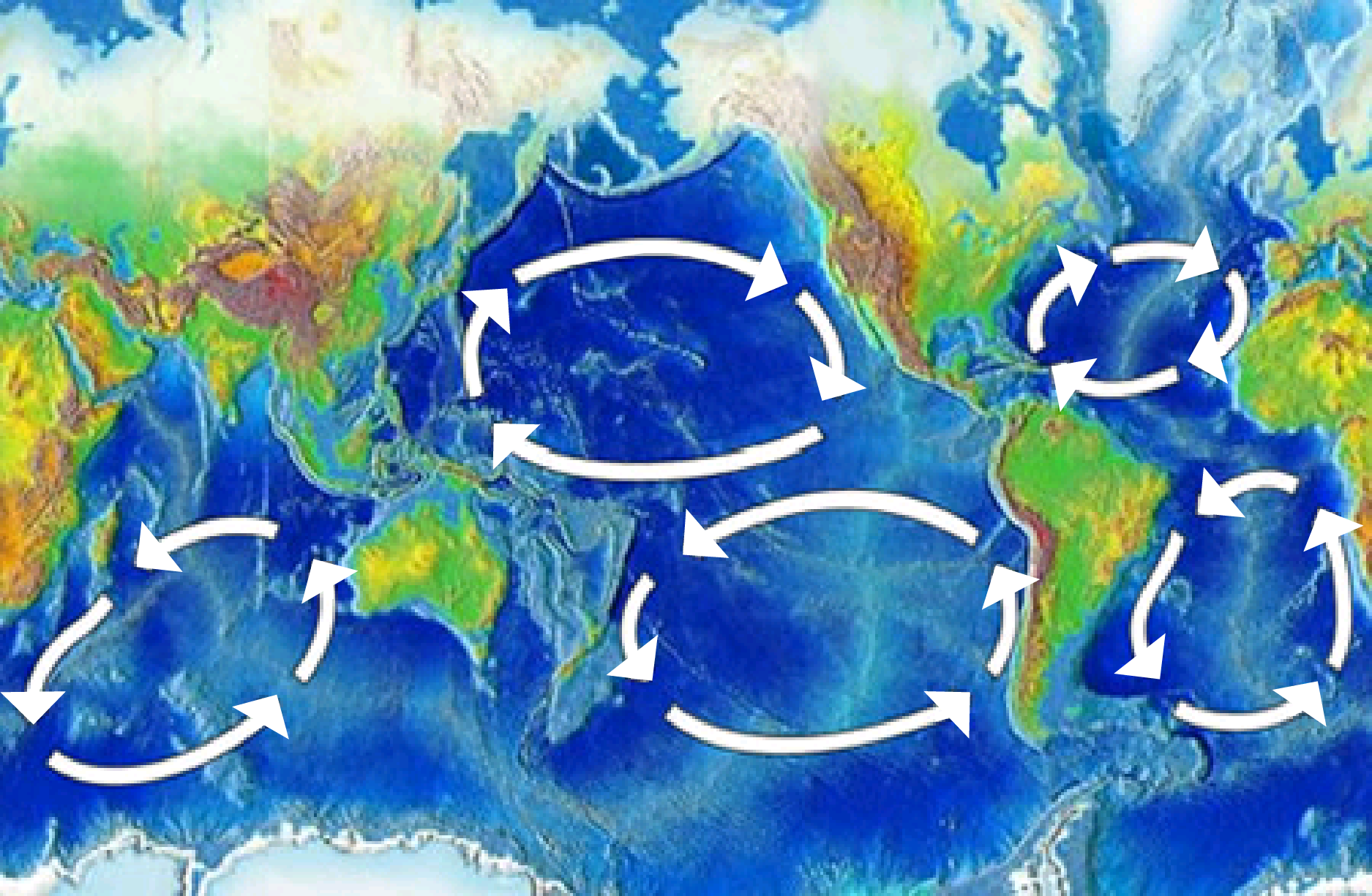
The five major ocean gyres.
The North Atlantic garbage patch is an area of man-made marine debris found floating within the North Atlantic Gyre, originally documented in 1972. The patch is estimated to be hundreds of kilometers across in size with a density of over 200,000 pieces of debris per square kilometer. The debris zone shifts by as much as 1,600 km (990 mi) north and south seasonally, and drifts even farther south during the El NiƱo-Southern Oscillation, according to the NOAA.

The NJ Legislature will now decide whether to make the changes, attempt to override Christie's veto, or let the bill die.

A new study estimates nearly 270,000 tons of plastic is floating in the world's oceans. That's enough to fill more than 38,500 garbage trucks if each truck carries 7 tons of plastic. The figure appears in a study published, Dec. 10, 2014, in the scientific journal PLOS ONE. Researchers say the plastic is broken up into more than 5 trillion pieces.

Microbeads pollution - a drop in the ocean for the beauty industry


Source: Christie vetoes N.J. ban on micro-beads feeding Atlantic Ocean garbage patch the size of France | NJ.com

Tuesday, December 1, 2009

Sailing Trash Plastic Across the Oceans

Computer generated image of Plastiki
The adventurer and environmental storyteller, David de Rothschild, and a crew of leading scientists, adventurers and creatives are to set sail over 10,000 nautical miles across the Pacific from San Francisco to Sydney on a 60-foot catamaran made from post consumer plastic water and soda bottles and self-reinforced PET.

The 3 month journey is intended to inspire, educate and activate people to move towards a smarter more sustainable planet 2.0 way of living that can include. Its time to rethink waste as a resource.

The adventurer and environmental storyteller David de Rothschild and a handpicked crew of leading scientists, adventurers and creatives are to set sail over 10,000 nautical miles across the Pacific from San Francisco to Sydney on a 60-foot catamaran made from post consumer plastic water and soda bottles and self-reinforced PET.

By undertaking this daring expedition over three months, David and his Plastiki crew are on a mission to inspire, educate and activate individuals, communities and business’s to start moving towards a smarter more sustainable planet 2.0 way of living that can include waste as a resource.

The Plastiki Expedition will hopefully raise awareness about environmental disasters like the Great Pacific Garbage Patch, an area of the ocean loaded with floating trash that the Plastiki will sail through on its maiden voyage.

The Plastiki will be made of 12,500 two-liter plastic bottles; weigh 9 tons; and will have a composting toilet, on-board renewable energy, and a garden. The design team had a need to invent a glue that eliminates toxic epoxies, so they developed one from cashew sugar nuts.

http://www.theplastiki.com