Showing posts with label shad. Show all posts

Monday, May 16, 2022

Columbia Dam Removal Project Completed


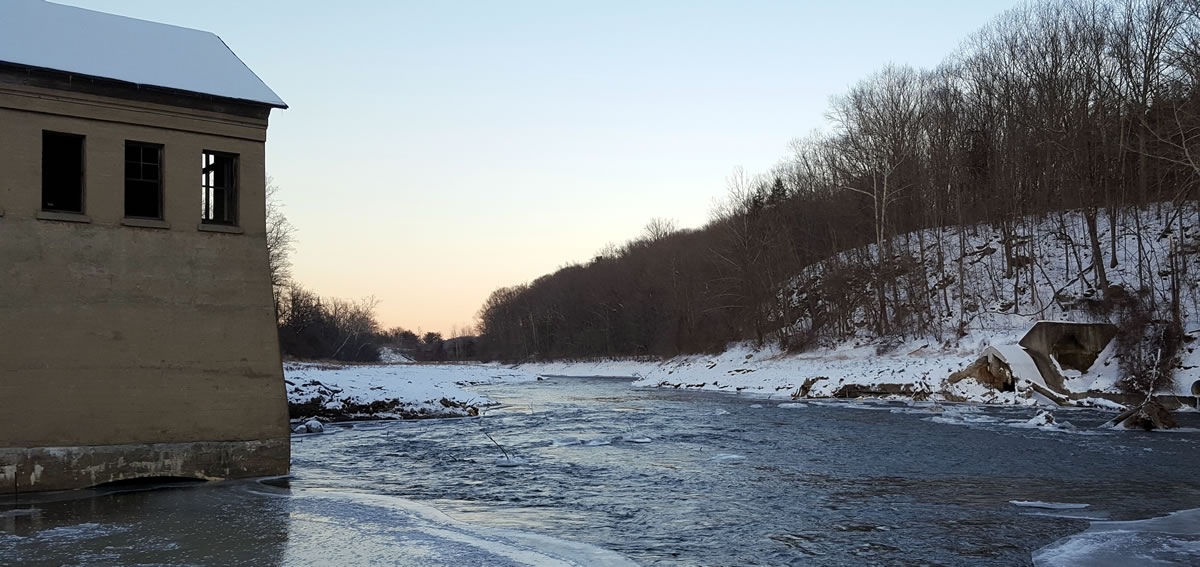
Dam site -Winter 2019

The Columbia dam removal project which began in 2018 is complete and the project area is again open for recreation following improvements to the area. 10 miles of river were reconnected, two dams and a powerhouse removed, and 1.5 miles of stream habitat were restored as part of the project.

The Columbia Dam was an 18-foot high, 300-foot long barrier that has for more than a century degraded water quality and blocked fish passage in the Paulins Kill, the third-largest New Jersey tributary to the Delaware River. 

NJDEP Fish and Wildlife partnered with The Nature Conservancy, US Fish and Wildlife Service, NRCS, American Rivers, National Fish and Wildlife Foundation, NJ Corporate Wetlands Restoration Partnership, and Toms of Maine. NJDEP’s Office of Natural Resource Restoration funded a significant portion of the project.

We have previously reported on other topics related to dam removals and habitat, including that shad were found in the Paulins Kill.

Read an article on the project from The Nature Conservancy


Friday, August 2, 2019

Shad Found in Paulins Kill Upstream of Former Dam Site

NJ Division of Environmental Protection biologists have officially documented American Shad in the Paulins Kill upstream of the former Columbia Lake dam site.

The dam was removed this past winter to restore this historic spawning pathway, as it had been blocking migration in New Jersey's third-largest tributary to the Delaware River for more than 110 years.

While photos from anglers have confirmed the presence of American Shad in the Paulins Kill earlier this spring, Bureau of Freshwater Fisheries biologists have now officially documented this species in the Paulins Kill upstream of the dam site. Shad, as with others, such as salmon, are anadromous, meaning that they migrate up rivers from the sea to spawn.

The dam, owned by the Division of Fish and Wildlife since the 1950s, was 18-feet high making it the largest removal to date in New Jersey. The removal was accomplished through a diverse partnership of state and federal governments, and non-governmental organizations with a majority of funding for the removal provided by DEP's Office of Natural Resource Restoration with monies from natural resource damages. The Nature Conservancy of New Jersey (TNCNJ) provided project management and oversight over the multi-year project in coordination with American Rivers.

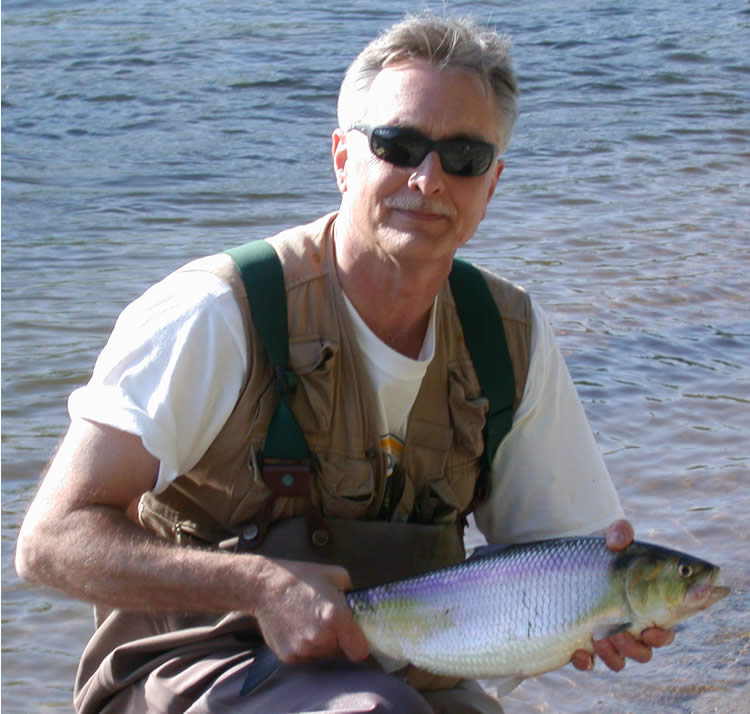
Fisheries Biologist Ross Shramko holds one of the American Shad captured and released while electrofishing the Paulins Kill River in Blairstown. in June 2019.
The Nature Conservancy of NJ also provided significant funding through private donations, and grants from:
US Fish and Wildlife Service
USDA Natural Resources Conservation Service
Corporate Wetlands Restoration Partnership
National Fish and Wildlife Foundation
Atlantic Coastal Fish Habitat Partnership
Delaware Watershed Conservation Fund
Leavens Foundation and
Tom's of Maine.

The USFWS has provided support throughout various phases of the project including the design of critical fish passage structures through the I-80 bridge which traverses the Columbia Wildlife Management Area.

The project is ongoing, with stabilization of key areas along the newly formed stream channel underway, and removal of the powerhouse to begin in upcoming months. The Division's fisheries staff will continue to monitor the recovery of American Shad in the river and will conduct additional sampling this fall to confirm if they have successfully spawned in the river.

Anglers are reminded while American Shad may be targeted in the Delaware River mainstem, they cannot be targeted in other freshwaters of the state. Anglers who see or accidentally catch an American Shad while fishing for other species are encouraged to report their sightings to the Division at NJFWfish@dep.nj.gov or 908-236-2118. Please include the date of sighting, location, any photos, and your contact info.

SOURCES
www.nj.gov/dep/fgw/news/
www.nj.gov/dep/fgw/columbiadam_project.htm

Saturday, April 20, 2019

Shad Migrating and Spawning in the Millstone River

Fishermen standing in the Delaware River above Chester, NJ with the bleaching mills,
smokestacks, and church spires of Gloucester along the shore. - James Fuller Queen, 1820 via Picryl 

American Shad were found migrating and spawning in the Millstone River for the first time in 173 years after the removal of the waterway’s Weston Mill Dam in Manville in summer 2017.

The dam blocked the migration of shad and other migratory fish, and the dam's removal marks an important step in the restoration of the Millstone River and the larger Raritan River Basin.

Great efforts are being made to restore migratory routes of anadromous fish species (those which live in the ocean but spawn in fresh water), including river herring and American Shad.

A flurry of dam removals have taken place along the Raritan, Musconetcong, and Millstone Rivers in recent years, with more on the way, including those along the Paulins Kill (i.e. Columbia Lake).

Shad fishing on the Delaware River has been hot the last few springs - in fact, even novice shad fishermen are currently catching more than a dozen per trip while wading its banks. This is not the case throughout the state, as fishing for American Shad is prohibited on all other New Jersey waters, as populations recover.

The 38-mile-long Millstone River, a tributary of the Raritan River, boasts a wide array of fish diversity with more than fifty species found in recent years. Migratory species, including American Shad, Gizzard Shad, Blueback Herring, Striped Bass, and American Eel, have been documented passing the Island Farm Weir fish ladder on the Raritan River near its confluence with the Millstone River, approximately 1.5 miles downstream of the former Weston Causeway Dam.

Efforts continue to restore American Shad and other migratory fishes by reconnecting historic migratory pathways. The Millstone River's Weston Causeway Dam was removed during the summer of 2017. The Weston Causeway Dam, located just downstream of the Wilhousky Street bridge in Manville, was the first impediment to fish passage on the Millstone River. The 133-foot long and five-foot high dam was originally built to provide power at the Weston Mill. The site included a gristmill, sawmill, the dam, and associated waterpower features. The dam had no current purpose; the mill buildings were claimed by arson in July, 1983. In recent years, the dam had partially failed.

Juvenile American shad from Millstone River - NJDFW photo

Juvenile American shad were captured for the first time upstream of the recently removed Weston Mill Dam on the Millstone River by sampling crews conducting biannual monitoring of this natural resource damage (NRD) restoration project. The American Cyanamid Superfund Site is one of several contaminated sites along the Raritan River and its tributaries.


SOURCE njfishandwildlife.com/artmillstone.htm

Wednesday, April 17, 2019

The New Jersey Spring Shad Run

There are many signs of spring in New Jersey including the migration of shorebirds and horseshoe crabs converging on Delaware Bay. There is also a spring migration in the water as American shad move into the Delaware River to spawn. This is no modern ritual and seining (netting) activities with shad go back to the Lenni Lenape Indians of our area who used that method long before colonists appeared.

How many shad will be seen and when the "shad run" occurs at different times each year because they vary depending on water temperature and conditions.

The American shad is the largest member of the herring family. They are found on the Atlantic coast from Newfoundland to the St. John's River in Florida. They spend three to six years in the ocean and then return to freshwater in the spring to spawn.

Adults usually weigh from four to eight pounds, but New Jersey State and International Game Fish Association record shad are more than 11 pounds.

Anglers know them for their strength and fighting ability.

The Lewis Fishery Report for the Delaware River for 4/15/19 says that "The river was about 4.58' when we would have been trying to make a haul tonight. Too high to fish. Forecast for the crest at Lambertville is for 7.2' now. With a lot of luck we might be able to get back at it Thursday or Friday."

Fishing for shad on the Delaware River usually begins around the end of March. The warm water discharged from a power plant in Trenton warms that section of water.

Low water and warm temperatures will mean an earlier shad run in the Delaware.

As the water warms to 50° F, and the population migrates upstream, shad will be caught all the way up river to the New York state line and beyond through the end of May and into June.


This video shows a couple clips of herring and hickory shad spawning in a Maryland tributary on April 13, 2015. Shad and herring are anadromous fish, meaning they migrate from the ocean to freshwater streams each spring to spawn.

Shad are primarily saltwater fish, but they swim up freshwater rivers to spawn in the spring, and in June 2017 American Shad were documented in the Musconetcong River in Hunterdon and Warren counties after an absence of at least a century.

Unlike some other fish species, many shad survive the spawning and swim back to the Atlantic Ocean.


NJDEP Delaware River Shad Fishing Reports state.nj.us/dep/fgw/del_river_rpt19.htm
Delaware River Shad Fishermen's Association www.drsfa.org

Tuesday, July 3, 2018

The Millstone River Fishery

American shad
Recent electrofishing surveys have given us more information on the Millstone River Fishery. http://www.njfishandwildlife.com/artmillstone.htm In an article by Shawn Crouse, Principal Fisheries Biologist for the Bureau of Freshwater Fisheries, we learn that the American Shad have been on the move in NJ.

Efforts are being made to restore migratory routes of anadromous fish species (those which live in the ocean but spawn in fresh water), including river herring and American Shad.

Several dam removals have taken place along the Raritan, Musconetcong, and Millstone Rivers in recent years, with more on the way, including those along the Paulins Kill (i.e. Columbia Lake).

Shad fishing on the Delaware River has been very good for several spring seasons. Fishing for American Shad is prohibited on all other New Jersey waters, as populations recover.

To restore American Shad and other migratory fishes by reconnecting historic migratory pathways, the Millstone River's Weston Causeway Dam was removed during the summer of 2017.

The Weston Causeway Dam, located just downstream of the Wilhousky Street bridge in Manville, was the first impediment to fish passage on the Millstone River. This 133-foot long and five-foot high dam was originally built to provide power at the Weston Mill. The site included a gristmill, sawmill, the dam, and associated waterpower features. The dam had no current purpose; the mill buildings were claimed by arson in July, 1983. In recent years, the dam had partially failed and was removed in August of 2017 as part of a Natural Resource Damage Assessment settlement agreement.

The Division of Fish and Wildlife (with assistance from the US Fish and Wildlife Service and the Watershed Institute (formerly Stonybrook-Millstone Watershed Association)) are committed to monitor changes to the fish assemblages above and below the dam, before and after dam removal.

The 38-mile-long Millstone River, a tributary of the Raritan River, has a diversity with more than fifty species found in recent years. Migratory species, including American Shad, Gizzard Shad, Blueback Herring, Striped Bass, and American Eel, have been documented passing the Island Farm Weir fish ladder on the Raritan River near its confluence with the Millstone River, approximately 1.5 miles downstream of the former Weston Causeway Dam.

The Millstone River offers an assortment of resident gamefish including both Largemouth and Smallmouth Bass, an abundance of panfish, and trophy-sized carp. The river is stocked annually with Northern Pike, however, those who fish it benefit from some of other nearby waterways stocked by the Hackettstown State Fish Hatchery. Channel Catfish are plentiful in the Millstone, which are presumably transplants from the neighboring annually-stocked Delaware & Raritan (D&R) Canal. Muskies are occasionally captured, possibly originating from the D&R Canal or Carnegie Lake stockings. Transient Walleye, which are not stocked in the watershed, are likely making their way from the Delaware River via the D&R Canal. In fact, sizable Walleye (up to 6 pounds) were found in most surveys in the lower Millstone River. Stocked Rainbow Trout appear as well, coming from any number of trout stocked waters in the watershed. A rigorous fish stocking program is not necessary, as a respectable fishery currently exists, in fact additional stocking of top predators may be counterproductive to the recovering American Shad population.

In the lower reaches, the most numerous species captured were American Eel, Common Carp, Redbreast Sunfish, Bluegills, and Spottail Shiner, with moderate numbers of Largemouth and Smallmouth Bass and Channel Catfish. The surveys near Blackwells Mills and Griggstown, where the river is noticeably smaller in every measurable way, yielded large numbers of American Eel, Redbreast Sunfish, Bluegill, and native forage species such as Spottail Shiner and Tessellated Darter.

Less commonly known species such as the Comely Shiner and Shield Darter (potential for listing as a Species of Special Concern) are also found in the Millstone, along with the Bridle Shiner in its tributaries, a potential State Endangered Species.

Other fishes of conservation interest, and more often found in the Pinelands, are found in the southern-most headwaters including the beautiful Bluespotted Sunfish, Mud Sunfish (potential Species of Special Concern), Swamp Darter, Tadpole Madtom, and the Pirate Perch.

Emily Powers, Hourly Fisheries Technician and Cathy Marion, USFWS biologist, despite their smiles, are holding an invasive Grass Carp that measured 46 inches and weighed almost 52 pounds. The species is fairly common in the lower Millstone River.
This all sounds positive, but while the removal of dams is considered an environmental win, negative impacts also may occur. This action also can expand the range of several invasive species including Grass Carp, Flathead Catfish, Green Sunfish, and Oriental Weatherfish. Other non-desirable fishes, such as Mosquitofish and Common Carp, which have been found in the lower Millstone River, may also extend their range upstream. By rule, anglers are actually required to humanely destroy species regulated as "Potentially Dangerous Fish."

Monday, May 28, 2018

Shad Return to the Musconetcong River


American Shad have returned to the Musconetcong River and the NJDEP Division of Fish and Wildlife is asking anglers who see or accidentally catch American Shad or river herring while fishing for other species to report their sightings. Anglers are reminded that it is illegal to take or possess American Shad except from the Delaware River mainstem.

The historic return of this fish to the Musconetcong River is due to the recent removal of several dams that blocked their spring spawning migration for more than a century. Although illegal to specifically fish for American Shad and river herring (Alewife and Blueback Herring) in the Musconetcong River, documenting their presence is very important to the recovery of these fishes.

Anglers are asked to submit reports of shad or herring to NJFWfish@dep.nj.gov or 908-236-2118. Please include the date of sighting, location, species, any photos, and your contact information. The Division appreciates the cooperation of the angling public.

Wednesday, April 4, 2018

The Shad Are Migrating Up the Delaware River

American Shad - Photo:by Duane Raver, USFWS

Another sign from nature that spring is here is the annual American shad migration up the Delaware River to spawn.

The timing and the number of shad migrating does vary year to year depending on water temperature and conditions. Anglers need accurate, up-to-date information on the "shad run" and there are several NJ resources for that.

  • Lewis Fishery Reports done by Steve Meserve of the Fishery in Lambertville offers an email update. Sign up at LewisFishery@comcast.net to be added to his list.
  • The Delaware River Shad Fishermen's Association offers updates at 610-954-0577 or 610-954-0578 for the latest updates.
  • Woo's Shad Fishing Reports reports shad activity.

Wednesday, November 15, 2017

American Shad Rebound in the Delaware River

Adult shad in measuring box - DEP Photo

Biological surveys conducted this year suggest American shad are making a strong comeback in the Delaware River, historically famous for a once-prodigious population of this important fish species.

Net surveys conducted during the spring resulted in the ninth largest overall haul of migrating adult shad ever recorded, while summer surveys of juvenile shad that hatched this year were the best in the nearly four decades of monitoring for juvenile shad.

“The strong shad spawning run and record-setting juvenile numbers this summer lead us to be very optimistic about the future of shad, a species that is important to the overall ecological health of the Delaware River,” said Commissioner Martin. “We have worked very closely over the years with our partner state and federal agencies in the river basin as well as numerous nonprofit and community groups to restore this species to the Delaware, the largest free-flowing river in the eastern United States.”

The history of shad runs deep in the Delaware River, with the fish providing food and other essential uses to Native Americans, feeding George Washington’s Continental Army, and supporting a major 19th century commercial fishery that fed the region’s burgeoning population.
But water quality problems that developed in lower, urbanized portions of the river around Philadelphia effectively created a dissolved-oxygen barrier to the age-old spawning runs. Water quality improvements, especially in the 1980s and 1990s resulting from upgrades to wastewater treatment systems, greatly improved dissolved oxygen levels, enabling shad to gain access to the upper river and its tributaries.

The closure of the commercial shad fishery in the ocean by state and federal fisheries managers more than a decade ago in response to all-time lows in shad stocks appears to be another significant contributor to the rebound of shad in the Delaware River.

“Building on our encouraging survey results and ongoing conservation measures, the DEP and the New Jersey Division of Fish and Wildlife will continue to work on local and coastwide management strategies that will further the recovery of shad, with the hope of restoring numbers to historic levels,” said Division Director Larry Herrighty.

The American shad is the largest member of the herring family, weighing from four to eight pounds at maturity. They spend most of their lives in the ocean but return to rivers and their tributaries to spawn. The species’ range stretches from the St. Lawrence River in Canada south to the St. Johns River, which flows from its mouth at Jacksonville south through much of eastern Florida.

Adults are capable of swimming some 2,000 miles from ocean feeding grounds to rivers to spawn. They may travel upwards of 200 miles in these rivers to find suitable spawning habitat, usually in rocky or gravelly shallows. Females can release hundreds of thousands of eggs. Juvenile shad spend several years in the ocean, returning to river systems to spawn when they reach sexual maturity.

The fish once supported massive commercial and recreational fisheries in rivers along the Atlantic coast, especially the Delaware River. But, in addition to water quality problems, dams built to generate power, for mills and for other now-obsolete purposes greatly reduced their ability to access potential spawning habitat in the Delaware’s many tributaries.

The DEP has been working with numerous partners to remove dams along Delaware River tributaries, with efforts focused on the Musconetcong River as it flows through Hunterdon and Warren counties.

Steve Meserve, who runs the Lewis Fishery in Lambertville, Hunterdon County, works with the DEP in reporting spring shad runs at this critical point in the Delaware. Netting surveys he conducted in the spring resulted in hauls totaling 1,262 shad, the ninth best in 92 years of reliable record-keeping results and the best since 1,257 were netted in 1995.

Meserve tracks shad as part of a business that sells the fish to people who wait along the riverbank to buy fish he hauls in. His family has been fishing shad in Lambertville since 1888, and is the last remaining operation to do so following a crash in the shad population in the 1940s and 1950s due to poor water quality in the Philadelphia area.

“It’s a much brighter picture than we’ve seen in years,” said Meserve, noting that in 2011 he was catching an average of just two fish per netting operation compared to 30 this year. “It’s certainly good news and we’d like to see it continue, and we will be out there keeping track of what’s going on.”

The DEP also conducts numerous surveys of juvenile shad at various locations along the upper river beginning in late August. This year’s survey resulted in the highest totals in 38 years of monitoring. These surveys counted 24,536 juvenile shad this summer, compared to 2,664 in 2013, and 8,360 in 2016.

Netting hauls conducted in August at Milford Beach in Hunterdon County, for example, were so strong that the total counts of juvenile fish exceeded hauls at that location for all previous five years combined.

Shad, which are very popular as a feisty sport fish, also play a very important role in the ecosystem of the Delaware River, as well as estuarine and ocean ecosystems. Shad are important prey for larger fish and other predators, such as birds. Many wildlife species synchronize their migrations to coincide with shad runs.

Some shad may return to the same river system to spawn two to three times during their lifetimes. Many will die after spawning. When they die, their decomposing bodies return to river systems important nutrients that are essential to other aquatic life.

The Division of Fish and Wildlife uses money from the U.S. Fish and Wildlife Service’s Sport Fish Restoration program to help fund American shad research and recovery projects. Funds for this program are generated by federal excise taxes on fishing equipment, as well as motorboat and small-engine fuels.

For more information on shad and annual shad survey reports, visit: www.nj.gov/dep/fgw/fish_shad.htm

For a news release on dam removal efforts along the Musconetcong, visit: www.nj.gov/dep/newsrel/2017/17_0065.htm

Friday, June 23, 2017

American Shad Return to the Musconetcong River

It has been at least 100 years since we could say that there were American shad in the Musconetcong River in Hunterdon and Warren counties. But that is what the Department of Environmental Protection’s Division of Fish and Wildlife and U.S. Fish and Wildlife Service announced this month.

Shad is a benchmark species indicative of the overall ecological health and diversity of a waterway. This recovery of the river is the result of the removal of dams on the lower Musconetcong River several years ago, followed by the removal of the Hughesville Dam in Warren County last year. These projects – made possible by a partnership of state, federal, nonprofit and private entities – opened nearly six miles of the Musconetcong to migratory fish, such as shad, that spend much of their lives in the ocean but return to rivers and their tributaries to spawn.

“The return of shad, a benchmark species indicative of the overall ecological health and diversity of a waterway, is an exciting milestone,” said DEP Commissioner Bob Martin. “This achievement is the direct result of an ongoing partnership among state and federal agencies, nonprofit groups, and dam owners – all committed to making this beautiful waterway free-flowing again.”

As the shad population continues to rebuild, anglers are reminded that this fish may not be taken from any New Jersey freshwater area except the Delaware River.

NJDFW biologist Pat Hamilton holds a shad near the Warren Glen Dam


The return of shad to the Musconetcong was confirmed earlier this month after anglers fishing for trout reported seeing small schools of shad in the river above the site of the former Hughesville Dam. Biologists from the DEP’s Bureau of Freshwater Fisheries responded and captured shad at the base of the Warren Glen Dam in Holland Township, Hunterdon County.

American shad is the largest member of the herring family, weighing from four to eight pounds at maturity. Shad once supported important commercial and recreational fisheries along the Atlantic coast, especially the Delaware River. But dams built to generate power, for mills and for other now-obsolete purposes greatly reduced their spawning habitat.

The 48-mile-long Musconetcong flows from Lake Hopatcong in the northwestern part of the state and through the wooded and rocky hills of Morris and Warren counties. It flows into the Delaware River at a point in Hunterdon County about 10 miles south of Phillipsburg.

Long stretches of the Musconetcong are on the National Park Service National Wild and Scenic Rivers inventory. The DEP classifies much of the river as a Category 1 stream, affording it the state’s highest level of protection due to its exceptional ecological and fisheries values.

Partners in restoring the Musconetcong to a free-flowing river also include the Musconetcong Watershed Association; American Rivers, the National Park Service, the federal Natural Resource Conservation Service, the U.S. Army Corps of Engineers, North Jersey RC&D, Trout Unlimited, The Nature Conservancy, and International Process Plants and Equipment Corp.

Wednesday, April 26, 2017

The American Shad Spawning Run on the Delaware River

American Shad    -   via Wikimedia

Along with the migration of shorebirds and horseshoe crabs converging on Delaware Bay in spring, another spring migration is that of the American shad up the Delaware River.

American shad, part of the herring family, migrate up the Delaware River to spawn. The numbers and timing of the "shad run" vary year to year depending on river levels, rains, drought and temperature.

Shad are primarily saltwater fish, but they swim up freshwater rivers to spawn in the spring. Unlike some other fish species, many shad survive the spawning and swim back to the Atlantic Ocean. Shad are found in all areas of the Atlantic Ocean, as well as several seas across the world.

The first shad of the 2017 season was already caught in the Delaware on March 26 in the northern Delaware Bay near Mad Horse Creek. It was a female shad that weighed in around 5 pounds.

Shad - Lambertville, NJ  - via Flickr
Low water and warm temperatures usually mean an earlier shad run in the Delaware River. The warm water effluent of the power plant in Trenton usually attracts shad and anglers who get early catches.

On the river, there are some seining (netting) activities which harken back to the Lenni Lenape Indians of our area who used that method long before colonists appeared.

It is another encouraging sign that the once very polluted Delaware River has recovered enough that shad have returned to using the deeper waters of the Delaware River as a spawning ground.

MORE

Wednesday, April 15, 2015

Shad and the Delaware River

The Delaware River still has plenty of life, according to the results of the 2014 annual Seine Survey.

The list leader is the American shad, but the biologists netted 45,178 fish in 284 hauls over five months. Also present are Blueback herring, White perch, Eastern silvery minnow, Atlantic menhaden, Bay anchovy, Banded killifish, Spottail shiner, Striped bass and Atlantic silverside.

Rivers are often endangered too and the Delaware River 75 years ago was considered "grossly polluted." Improvement began after the passage of the Federal Clean Water Act in 1972 and in the next two decades results could be seen in catches of once non-existent striped bass catches in the river "were at a much higher level than previous years. This showed that the striped bass population was rebounding, and water quality was beginning to improve."

Every year American shad migrate up the Delaware River to spawn. The numbers and timing of the "shad run" vary year to year depending on water temperature and conditions. Having accurate, up-to-date information on the run can greatly impact on angling success and enjoyment. Fortunately, there are resources anglers can use to get this information.

In 2013, American shad fisheries (both commercial and recreational), in both marine and fresh waters, with the exception of the Delaware Bay, Delaware River and its tributaries, were closed (no possession, take or harvest). The recreational possession limit in the Delaware Bay, River and its tributaries was 3 fish with no minimum size and an open season all year. Commercial net regulations for American shad remained the same.

The Atlantic States Marine Fisheries Commission management plan was made for American shad and river herring due to concerns about the significant coastwide decline of American shad stocks.


The American Shad (Alosa sapidissima AKA white shad) is the largest of the river herring family.  American shad average around 3 lbs., with fish up to 5 lbs. common. Silver-sided with greenish-blue back; deep bodied from the side, narrow and symmetrical top to bottom head-on; row of dark spots on the sides, running back from the gill cover; the upper and lower jaws are equal length when the mouth is closed.

Lambertville, New Jersey holds a Shad Festival each spring. For 2015, the 34th annual Shad Festival will be April 25 & 26 . It includes arts and crafts, food, including shad prepared a variety of ways - from smoked to shad and shrimp fritters. Of course, visitors also learn about this migratory fish.

Today, only one commercial fishery remains on the non-tidal portion of the Delaware. A pollution block at Philadelphia slowly led to the closure of the fisheries, because it stopped the shad from moving up the Delaware.

One reason the festival was started was to celebrate the return of the shad to the Delaware. Native Americans taught the settlers how to catch the shad in pens, which later evolved to seining. Shad was an important food source to Native Americans and settlers, and an important industry for many decades on the Delaware River.

The NJDEP posts Shad Fishing Reports for 2015 at http://www.state.nj.us/dep/fgw/del_river_rpt15.htm


Monday, May 6, 2013

The Delaware River Shad Run


Spring marks the return of the shad, a fish in the herring family, to the Delaware River.

Shad festivals, like the one in Lambertville that was held April 27 & 28 this year and another on the NY side of the Hudson River, are held when the shad begin to spawn.

Shad are primarily saltwater fish, but they swim up freshwater rivers to spawn in the springtime. Unlike some other species such as trout, many shad survive to swim back to sea.

Shad are found in all areas of the Atlantic Ocean, as well as several seas across the world.

As the fish travel up the Delaware River, there are some seining (netting) activities which recall the method used by the Lenni Lenape Indians when they were the original inhabitants of the area.

The Delaware River was so polluted for many years that the number of shad that came to spawn each spring had dwindled to an alarmingly low number. That was a clear indicator of an unhealthy environment. The shad have returned to using the deeper waters of the Delaware River as a spawning ground which is happily an indicator of the success of some environmental reforms that were enacted in the past decades in cleaning up the waterway.

Andy Still wrote me to say that "When I was a boy the river ran red from the dye coming out of Cyanamid. Greatest success story in New Jersey" and enclosed the shad photo above.

Wednesday, May 12, 2010

Hudson Shad Festival May 16

The Hudson Riverkeeper’s Shad Fest has been a celebration for the past 20 years of the vast numbers of American shad that returned each year to the Hudson River to spawn.

The shad run has been a sure sign of spring for thousands of years and locally dates back to the Lenape Indians who used the Hudson and Delaware Rivers.

The shad population has declined and risen in the past twenty years to dangerously low water levels and pollutants.

That also makes these festivals (I wrote about the NJ Delaware River Shad Festival earlier this year.) a good way to draw attention to saving the American Shad and other Hudson River signature fish which at risk, and to the cleanup and protection of the river.

Shad fishermen set nets from mid-March to mid-May in the Hudson to catch the run of fish as shad migrate upstream to spawn. Shad have been known to travel up to 120 miles upriver to lay their eggs.

The shad spend only 1-2 weeks in the Hudson with most of their adult life being in the ocean. That's good in that their time in the river is short enough to have a very limited harmful effect from PCB’s and other contaminants.

Shad caught here are prized for their flesh and roe (eggs) and they will be shipped all over the country.


You can join Riverkeeper on Sunday, May 16, 2010, at Boscobel in Garrison, NY, in celebration of the American Shad and in the organization’s efforts to protect and restore this historic fishery. The day offers fun for all ages and features a Whole Foods Market picnic, activities for children of all ages, our unique Green Street marketplace, Wellness activities and live entertainment throughout the whole day.

Features: Green Street Market • Children’s Stage • Organic Picnic Fare • Local & Regional • Craft Beers & Limited-Production Wines • Falconry & Wildlife Show • Musical Performances

All proceeds go to supporting the vital work of Riverkeeper, protecting NYC drinking water and the Hudson River.

Sunday, May 9, 2010

Shad Running in the Delaware River

'Best fishing in years' for Shad on Big D

via http://www.dailyrecord.com/apps/pbcs.dll/article?AID=2010100501043
Trout, bass, walleyes, stripers and blues are biting, so we went shad fishing.

Fishing for the plentiful fish was hot until Sports Editor Frank DiLeo and I went looking for them Thursday after the Delaware River water temp cooled below the magic shad turn-on number of 50 degrees Wednesday night.

Shad bite best upriver during April's last week and all of May.

Steve Meserve, whose crew has been steadily netting shad at Lambertville, said Thursday morning they were still getting about two bucks to each roe, so he expects more good fishing ahead. Roe follow bucks upstream to spawn.

Friday, April 23, 2010

Delaware River Shad Festival in Lambertville


The ShadFest in Lambertville, New Jersey, is an annual celebration of the return of the shad, a fish in the herring family, to the Delaware River. For 2010, it occurs this weekend, April 24 & 25.

The Delaware River was so polluted for many years that the number of shad that came to spawn each spring had dwindled to an alarmingly low number.

That indicator of an unhealthy environment, started environmentalists to rally for a cleanup of the waterway.

Shad Festivals (there is also one on the Hudson River in NY) usually are held when the shad begin to spawn. Shad are primarily saltwater fish, but they swim up freshwater rivers to spawn in the springtime. Unlike trout, which have a very similar reproduction ritual, many shad survive to swim back to sea. Various types of shad are found in all areas of the Atlantic Ocean, as well as several seas across the world. The shad have returned to using the deeper waters of the Delaware River as a spawning ground - an indicator of the success of some  environmental reforms that were enacted. 

As the fish travel up the Delaware River, there are shad-hauling demonstrations, called seining, which catch the fish in nets in a method used by the Lenni Lenape Indians, the original inhabitants of the area during colonial times.

In addition to seining demonstrations and shad cooking demonstrations, the Shad Festival also offers a variety of vendors, music, art shows and more, including a poster auction to benefit a scholarship program for local high school seniors.

Food abounds, but the main attraction is the shad. Ultimately, the Shad Festival is a celebration of both the return of this unique fish and the return of tourism and economy to the riverside town.

The first Shad Festival was held in 1981 to mark a kind of ecological milestone in the river's comeback.

Thousands of tourists, anglers, shoppers and environmentalists now attend the two-day event.

For more information  http://www.lambertville.org