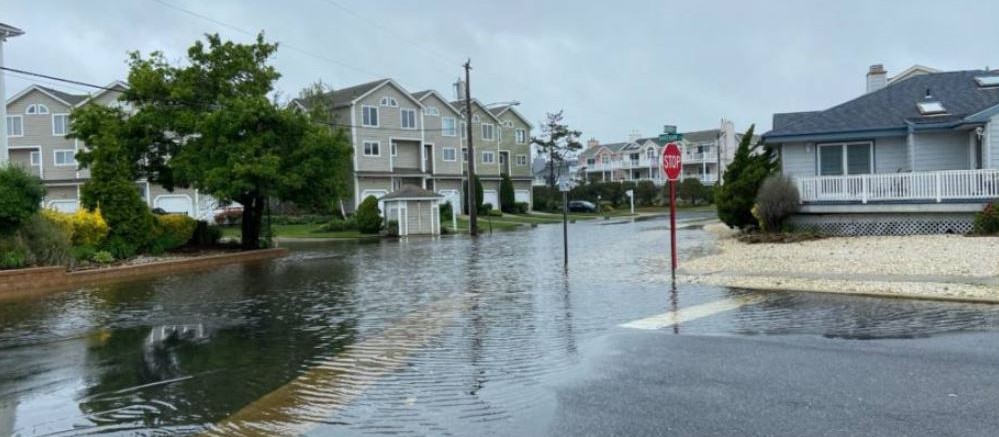
You may be hearing the term "king tides" recently on the news, connected to weather conditions. What are "king tides?" A king tide is a non-scientific term for the highest predicted high tide of the year at a coastal location.
What Causes King Tides?
Celestial alignment plays a role. These tides happen when the orbits and alignments of the Earth, Moon, and Sun combine to create maximum gravitational pull. They occur when the Moon is closest to Earth (called perigee) during a New or Full Moon.
Depending on the region, they often happen a few times a year during specific seasons, such as fall and winter.
One common effect is called "sunny day flooding." The weather is fine, but these tides can push seawater over seawalls and up through storm drains onto streets even on clear, cloudless days with no storms. They also cause very low tides at alternate times of the day, which can expose marine life, sandbars, or shallow channels.
King tides are called "king" because they represent the highest, most dominant natural high tides of the year. Just as a king sits at the top of a hierarchy, these tides tower above normal daily and monthly high tides, creating the largest tidal range (highest highs and lowest lows).
NOAA's National Ocean Service would refer to them as perigean spring tides. Besides when the Moon is at perigee, they often occur during specific times of the year when the Earth is also closest to the Sun (perihelion) or when weather and warm water expansion add extra height.


No comments:
Post a Comment