Showing posts with label webcams. Show all posts

Thursday, January 1, 2026

Eagle Nesting Season Begins


Bald eagles throughout New Jersey are preparing for the 2026 nesting season. In NJ, eagle pairs lay eggs anywhere from January through March, with the bulk of incubation starting in February. 

The Duke Farms eagle pair is spending a lot of time at that nest, rearranging sticks. conservewildlifenj.org , in collaboration with Duke Farms, features an Eagle Cam to raise awareness about nesting bald eagles in New Jersey. (also check out their osprey and falcon webcams)

Bald Eagles are extremely sensitive to human disturbance. At no time should anyone approach nesting eagles. People who want to observe or photograph eagles and who come too close may actually cause the birds to abandon a nest. 

Located on Duke Farms in central New Jersey, the Eagle Cam allows viewers an up-close and personal view into the lives of a pair of bald eagles as they breed, incubate, and raise young. 

During last year's nesting season, incubation was confirmed on January 18 with three eggs. 1st egg hatched: February 25th, 6:32am: banded H58, Female; fledged 5/17/25. 2nd egg hatched: February 27th, 12:41 am: banded H59 Female; fledged 5/26/25. 3rd egg hatched: February 28th, 3:53 pm: banded H57 Male; fledged 5/23/25

WATCH THE EAGLE CAM LIVE via YOUTUBE


Friday, November 24, 2023

Watch NJ Wildlife Virtually

I posted earlier this week about finding places to watch wildlife in New Jersey, but not everyone can get ot to those places. Though it is a very different experience - and you should get outside when you can - but can do some virtual wildlife watching in New Jersey.

Catch birds in real-time action with these web cam feeds.

conservewildlifenj.org/education/uc-falconcam/ in Union County


Osprey (Fish Hawk) with a fish

Barnegat Light Osprey  conservewildlifenj.org/education/ospreycam/interact/ 

How long have eagles been nesting at Duke Farms? The eagle nest at Duke Farms was discovered by staff in the fall of 2004. In the fall of 2012, Hurricane Sandy’s 70+ mph winds tore off the upper half of the nest tree, destroying the nest completely. The pair built a new nest 100 feet south of the original site in late December 2012, which is still actively used. The nest is located in an American Sycamore tree in a restricted area of the property The nest is about 80 feet off the ground. The camera can be maneuvered remotely to pan, tilt and zoom.

See dukefarms.org/eagle-cam/ and the on YouTube 

Wildlife viewing virtually or in person varies by season. For example, the nest at Duke Farms this year was most active on these dates:
Egg 1: January 20, 2023, 4:08 pm
Egg 2: January 23, 2023, 3:05 pm
Egg 1 hatched: February 27, 2023, ~2:15 pm
Egg 2 hatched: February 28, 2023, ~2:20 pm

Thursday, March 31, 2022

Check Out the Eagle Nest Camera at Three Bridges

This is our third webcam this week from Conserve Wildlife Foundation of New Jersey. Today's webcam focuses on one of New Jersey's favorite success stories - bald eagles.

Eagles have made a fantastic recovery in New Jersey and across the eastern United States. In our state, we have gone from a single nesting pair at a failing nest through the early 1980s, to 300+ pairs in 2020. 

Three Bridges, a community in Readington Township in Hunterdon County is where eagles have nested on top of an electric transmission tower since 2015 and have successfully raised 14 young. The towers were replaced by monopoles. PSE&G worked with Conserve Wildlife Foundation, NJDFW Endangered and Nongame Species Program, and US Fish and Wildlife Service to ensure that the Three Bridges eagles would have every opportunity to continue nesting here. 

More info at conservewildlifenj.org/education/threebridges/


The live stream for this season started on December 15, 2021.

Wednesday, March 30, 2022

The Osprey Cam at Long Beach Island

We posted earlier this week about the Conserve Wildlife Foundation of NJ peregrine falcon camera in Elizabeth, NJ, and today we feature their Barnegat Light Osprey Cam. 

The camera at this tall nest gives us a look at this third year for this pair of ospreys at this nest site (second year of cam).  

In 2018, they produced two young, three in 2019, and three in 2020. All young have been banded for future tracking. 

The osprey (Pandion haliaetus carolinensis) is a large bird of prey, which is sometimes referred to as a “fish hawk.” They are found in open areas and nest near water, where they find their main food source, fish. In New Jersey, most ospreys nest along the Atlantic Coast from Sandy Hook to Cape May and then west along the Delaware Bayshore to Salem with less frequent nests along the Delaware River and in Northern Jersey.

Their website states that "ospreys are an important bioindicator species and reflect the health of their surrounding environment. A healthy coastal ecosystem equals a booming shore economy and the ospreys indicate that we're doing a good job of protecting our coastal areas. There are still many threats to ospreys, even though they have recovered from the effects of DDT and habitat loss."

You can help too.
Reduce your dependence on single-use plastics.
Purchase sustainable/local caught seafood.
Don't release balloons which often end up in waterways and mimic food.
Join in a coastal cleanup and
pick up plastic litter that you see near the ocean and waterways.


You can also check out the weather at Barnegat Light at their weather station.

And you can donate to the Foundation to help them continue
to conserve wildlife and educate in New Jersey.

Tuesday, March 29, 2022

Live Stream a New Jersey Peregrine Falcon Nest

Conserve Wildlife Foundation of NJ has partnered with Union County to live stream the view of a peregrine falcon nest located on the roof of the County Courthouse in Elizabeth, NJ.

A first egg was laid on March 18 and a second on March 21.

Watch live!


Tuesday, March 13, 2018

Spring at the Duke Farms' Eagle Cam


Eagle cam at Duke Farms in Hillsborough. Alexis Johnson speaks with Executive Director Michael Catania.


An "Eagle Cam," like the one at Duke Farms, is the only way most of us will get a close up view of a wild eagle's nest. The coming of spring means eggs and eaglets - hopefully!

The Duke Farms live webcam in Somerset County has been active for 10 years. It has had 13 million viewers who have seen an unfiltered view of eagle life.

There are two eggs there that will likely hatch within the next few weeks.

According to Michael Catania, you are likely to see the eagles bring in food at some point and hat might be fish, turtles, even a young fawn. The action isn't always cute or tame. The Eagle Cam once caught a red tail hawk landing on the nest just as the chicks were hatching and in a flash that hawk became the first meal for those chicks.

In the past decade, 23 chicks have been raised and fledged from the nest. Last year was a year without eggs, so things look more hopeful for 2018.

The first egg this year was laid on Valentine's Day with a second coming three days later.

New Jersey now has about 170 active nests, and in 2007 bald eagles were removed from the federal list of threatened and endangered species.

The eggs are expected to hatch between March 21 and March 24.


Live Eagle Cam view

Thursday, August 20, 2015

NJ Webcams

There are a good number of webcams online that let you peek at parts of the state.

You can watch folks on the quiet end of the boardwalk at Seaside Park, or move north to the livelier boardwalk in Seaside Heights, or much further north to the Great Falls in Paterson.

EarthCam and the Friends of Island Beach State Park set up a live streaming look at an osprey who calls Island Beach State Park. Island Beach is one of New Jersey's last significant remnants of a barrier island ecosystem that once existed along much of the Atlantic coast. That webcam has been more off than online this summer, but you can check it out at  earthcam.com/usa/newjersey/islandbeachstatepark/osprey/


Wednesday, April 9, 2014

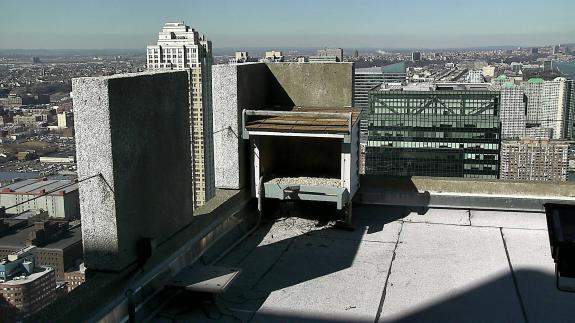
Falcon WebCam Kicks Off New Season from Roof of Jersey City Skyscraper


The Jersey City FalconCam – a popular webcam that captures the breeding, nesting, feeding and flight of a family of endangered Peregrine Falcons living on a Jersey City skyscraper – goes live this week for its 14th season of daily live webfeeds. For the first time, the FalconCam will be operated by the nonprofit Conserve Wildlife Foundation of New Jersey (CWF) rather than the New Jersey State Division of Fish and Wildlife.

“We are so excited to relaunch this unique and inspirational FalconCam, especially for the thousands of devoted falcon lovers who thrill to their every move on this real New Jersey ‘reality show,’” said David Wheeler, CWF Executive Director. “For New Jerseyans to be able to experience the fastest animal on earth from their own computer screens is so rewarding because it connects us with the nature all around us, even in our most densely populated cities.”

After state funding could no longer cover the webcam, CWF assumed the responsibility for managing the FalconCam. CWF is relying on corporate and individual donations to fund the new camera, related equipment, and other costs, which combine to total $10,000 in expenses.

CWF biologist Ben Wurst installed the new equipment last week, adding new components that will give the viewer an even more “inside look at the falcons’ daily lives.


The FalconCam viewer experience will now utilize:

• a digital outdoor high resolution PTZ (pan-tilt-zoom) camera that offers a scenic view of the nestbox, roof, and the New York City skyline
• a small “pinhole” camera was installed inside the nestbox that offers an eye level perspective of the falcons
• and a microphone inside the nestbox that will broadcast the sounds of the falcons and their high-rise city environment.

“In this digital age, the use of a webcam is a key component in engaging the public in wildlife conservation,” said Wurst. “To be able to share this with thousands of viewers is a truly magnificent thing, and I am very grateful for all of the contributions that have been made to support this program!”

In January, CWF ran a series of educational blog posts to help raise awareness for the state endangered peregrine falcons, and to raise funding for the new Falcon Cam. CWF also offers viewers the chance to join our free High Fliers Club, which offers members a chance to attend a falcon banding with biologists at this nest site in the summer of 2014.

Since 2000, a pair of peregrine falcons has nested on the roof of 101 Hudson Street in Jersey City. A webcam was installed inside the nestbox on the roof in 2001 to share the falcons’ annual life cycle with countless wildlife enthusiasts. Over the years the cam showed the ups and downs of the nesting pair during their nesting season from April to July. CWF also developed an educational curriculum, “Days of the Peregrine,” to help educate future generations about conserving endangered species, like the peregrine falcon.

Conserve Wildlife Foundation of New Jersey (CWF) has worked to protect at-risk species of wildlife in New Jersey and beyond for two decades. CWF utilizes science, technology, habitat restoration, education, communications, and volunteer stewardship to save imperiled wildlife from our state before they disappear forever.

Source: http://www.conservewildlifenj.org/about/media/releases/falconcam/ 
Learn more at www.ConserveWildlifeNJ.org

Tuesday, December 24, 2013

Help Save the Peregrine Falcon Webcam


The NJDEP Division of Fish and Wildlife Peregrine Webcam has been streaming live video from the rooftop nestbox at 101 Hudson Street in Jersey City for a number of years.

Even webcams can become endangered. Unfortunately, there is no longer funding available for the NJDEP Division of Fish & Wildlife to manage and host the Jersey City Peregrine Webcam.

The Conserve Wildlife Foundation of NJ (CWF) hopes to replace the old analog system with a new digital high-definition camera and host the webcam. This will allow them to provide streaming video of the nestbox this coming season, but your support is needed to make this happen.

If you would like to help make that happen, you can make a donation,
visit conservewildlifenj.org/education/falconcam/

Since 2001, Nestbox News has chronicled the nesting activity, providing detailed information about each year's activity.

The Peregrine Project has always relied on public support. Much of that support is from The Conserve Wildlife Foundation of NJ, a non-profit organization which works closely with the division's Endangered and Nongame Species Program.

Wednesday, May 15, 2013

First of Four Peregrine Eggs Hatches in Jersey City

The NJDEP Division of Fish and Wildlife is excited to inform the public that the first of four eggs being incubated in the Nestbox atop 101 Hudson Street in Jersey City has hatched.  Staff is monitoring the live feed and still images from two webcams - hopefully we'll soon observe the hatching of the three remaining eggs.

To view the live video stream go to http://www.njfishandwildlife.com/peregrinecam/jcp-live.htm .

Nestbox News chronicles the nestbox activity, providing detailed information and photos of each year's activity. For this year's edition visit http://www.njfishandwildlife.com/peregrinecam/jcp-2013nestnews.htm - there are links to the live video as well as current still images from that page.

Monday, May 13, 2013

Peregrine Webcam


The NJDEP Division of Fish and Wildlife is happy to announce that the Peregrine Webcam is once again streaming live video from the rooftop nestbox at 101 Hudson Street in Jersey City. Technical problems had prevented the live stream from being accessible to the public, but still images have been available for several weeks. The birds have been incubating four eggs since mid-April and hatching is expected around May 13th-14th.


Since 2001, Nestbox News has chronicled the nesting activity, providing detailed information about each year's activity. (See Nestbox News at http://www.njfishandwildlife.com/peregrinecam/jcp-2013nestnews.htm for this year's and previous years' accounts). There are links to the live video as well as current still images from that page.

To go directly to the live stream go to http://www.njfishandwildlife.com/peregrinecam/jcp-live.htm .

The Peregrine Project relies on public support. Much of that support is from The Conserve Wildlife Foundation of NJ, a non-profit organization which works closely with the division's Endangered and Nongame Species Program. Due to the technical issues we experienced this year, and with the advent of new technology, the foundation will be raising funds for a new webcam configuration in addition to its continued support of this and other activities of the division's Endangered and Nongame Species Program. To make a donation, go directly to their Donate Now website .

Wednesday, May 2, 2012

Hatching Soon for Peregrine Falcon Nest in Jersey City


Viewers of the NJDEP Division of Fish and Wildlife's Peregrine Webcam can expect to see increased activity now that hatching is imminent.  The birds have been incubating five eggs the past month.

The webcam broadcasts from atop 101 Hudson St. in Jersey City.  Since 2001, Nestbox News has chronicled the nesting activity, providing detailed information about each year's activity. (See Nestbox News at http://www.njfishandwildlife.com/peregrinecam/jcp-2012nestnews.htm for this year's and previous years' accounts). There are links to the live video as well as current still images from that page.

The Peregrine Project relies on public support.  Much of that support is from The Conserve Wildlife Foundation of NJ, a non-profit organization which works closely with the division's Endangered and Nongame Species Program. To make a donation, go directly to their Donate Now Web site at partners.guidestar.org .

Thursday, March 29, 2012

Peregrine Falcon Webcam


The NJDEP Division of Fish and Wildlife's Peregrine Webcam has been activated for the 2012 nesting season.

Broadcasting from atop 101 Hudson St. in Jersey City since 2001, the webcam has chronicled the nesting activity of peregrine falcons in a nestbox installed the previous year.

Read the Nestbox News for this year's and previous years' accounts.

As of March 28th, four eggs have been laid and incubation is beginning.

Follow the live action at http://www.njfishandwildlife.com/peregrinecam/jcp-live.htm.

The Peregrine Project relies on public support. The Conserve Wildlife Foundation of NJ is a non-profit organization which supports the work of the division's Endangered and Nongame Species Program. To make a donation, go directly to their Donate Now Web site.

Thursday, January 12, 2012

New Jersey's Newest National Park

Not far from downtown Paterson is is the Great Falls on the Passaic River which recently become America's 397th national park. The National Park designation makes the 35-acre site eligible for federal funds.

The 77-foot waterfall in downtown Paterson is second only to Niagara Falls in terms of water volume east of the Mississippi River.


Alexander Hamilton (lieutenant colonel in the American Revolution, confidant to George Washington, delegate to the Constitutional Convention, and first Secretary of the Treasury) formed in 1792 an investment group called the Society of Useful Manufactures (the “SUM”) whose funds would be used to develop a planned industrial city that was later to be known as Paterson.

Hamilton believed that the United States needed to reduce its dependence on foreign goods and should instead develop its own industries. The industries developed in Paterson were powered by the 77-foot high Great Falls of the Passaic, and a system of water raceways that harnessed the power of the falls. The district originally included dozens of mill buildings and other manufacturing structures associated with the textile industry and later, the firearms, silk, and railroad locomotive manufacturing industries. In the latter half of the 1800’s, silk production became the dominant industry and formed the basis of Paterson’s most prosperous period, earning it the nickname “Silk City.”

 Take a look at the Great Falls from a webcam view via EarthCam and the City of Paterson.

Tuesday, May 3, 2011

Jersey City Peregrine Falcon Webcam - Hatching Near

Male peregrine guarding the nest. Note banding.
The Jersey City Peregrine Webcam streams live video from a nestbox atop 101 Hudson Street between April and July each year. Follow the season on screen during that period. Clicking on the still image will open a new window containing the live video feed when active.

They are projecting hatching to occur around May 5-6, so this is a great time to tune in.

Viewers get a glimpse of the four eggs only when the adults get up to exchange duties or to stretch, but these peregrines are the essence of diligence during the 32-33 days of required incubation, very focused on their duties.

The ENSP staff and volunteers are monitoring peregrine nesting at about 20 other sites around the state. The recent rain and wind storms may have caused problems at some sites that are more vulnerable to easterly winds. In many cases all we can do is document the outcome of those nests. (See the annual reports at www.njfishandwildlife.com/ensp/ for details.)

The Jersey City peregrines have been very successful over the years. During a nest check visit in March, it was determined that adults are the same birds that have nested here since at least 2005 (the female) and 2006 (the male). The female has not been identified except that she wears a silver federal band and no color band. The male was banded in 2003 at Riverside Church in NY, making him 8 years old this year. Both are fiercely defensive of their nest and have been good parents over the years.

Keep watching this great natural show!


NJDEP Division of Fish & Wildlife - Peregrine Falcon Webcam

Tuesday, April 12, 2011

The NJ EagleCam

Located on Duke Farms in central New Jersey, the EagleCam allows viewers an up close and personal view into the lives of a pair of bald eagles as they breed, incubate, and raise young.

Bald Eagles are extremely sensitive to human disturbance. At no time should anyone approach nesting eagles. People who want to observe or photograph eagles and who come too close may actually cause the birds to abandon a nest. So, the nest cam is the perfect tool for teaching about wildlife and covers a variety of topics including animal behavior, bird biology and natural history, endangered species, food webs, contamination, and more.
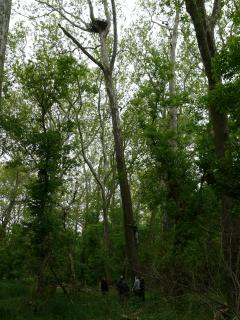
On April 7, the first chick hatched and viewers could see the parents feeding the chick.

The nest at Duke Farms


Eaglecam: Bald eagle nest camera, lesson plans, and environmental education at Duke Farms via Conserve Wildlife Foundation of New Jersey

Friday, September 10, 2010

Thursday, September 9, 2010

Watch the NJ Peregrines

Visitors to the NJ DEP Division of Fish and Wildlife web site are probably familiar with the Peregrine Webcam. You can view the Jersey City nestbox at http://www.njfishandwildlife.com/peregrinecam.

But there are about 20 peregrine nests found throughout the state, from river bridges to coastal nesting platforms to the Palisades and beyond.

A Star-Ledger videographer, Andre Malok, went along with NJDEP biologist Kathy Clark on banding day in Atlantic City. Peregrines have been nesting on a ledge outside a Hilton Casino penthouse suite for about 20 years and his video gives you a view of the nest area, biologists at work, and the reactions of hotel staff.

Peregrine falcons nesting on top of Atlantic City casino hotel


State-endangered peregrine falcons have adapted to their urban surroundings.

Urban Falcons


Check out the video at http://videos.nj.com/star-ledger/

Tuesday, March 30, 2010

Peregine Falcon Activity at the Jersey City Nestbox


From njfishandwildlife.com:

"An egg has been laid! When we first tuned in today the webcam image revealed an egg that had been laid sometime between yesterday afternoon and 7:30 a.m. this morning. The timing is about average - egg laying varies year to year, with last year being one of the latest with the first egg not laid until April 13; in 2008 the first egg was laid around March 21.

Hopefully a new egg will be laid every two days or so until there is a full clutch of three or four (rarely, five). Once the female has finished laying her eggs incubation will begin, and about 32 to 33 days later hatching should occur. We appreciate the support of all our viewers as we begin another season in earnest now that laying has begun. Please remember our work and Check-off for Wildlife when you complete your NJ tax form this year."

The Jersey City Peregrine Webcam streams live video from a nestbox atop 101 Hudson Street between March and July each year. Follow the season on screen. Clicking on the still image will open a new window containing the live video feed when active. The video feed is in Windows Media format.

WEBCAM  http://www.njfishandwildlife.com/peregrinecam/jcp-live.htm

Tuesday, January 12, 2010

Watch Lily the Black Bear Denning

Lily is a 3-year-old black bear denning near Ely, Minnesota. She is expected to have cubs in mid-January 2010. There is a live webcam in her den and we can watch her give birth and care for her cubs.

Personal Information:
- daughter of June (born Jan 2001)
- granddaughter of Shadow (born Jan 1990)
- Lily has 2 brothers: Cal - currently denned north of Birch Lake in Quetico Provincial Park and Bud - left study area after family breakup in June 2008

Visit the webcam

Become a fan of Lily on Facebook

http://www.wildearth.tv

http://www.bear.org

http://www.bearstudy.org


http://www.whitewolfentertainment.com