Showing posts with label birds. Show all posts

Monday, April 20, 2026

Essential Pollinators


After last week's spring and summerish weather, you might be seeing more pollinators in your neighborhood. 

Pollinators — including bees, butterflies, birds, bats, and moths — are essential to New Jersey’s food, gardens, and natural areas: roughly one out of every three bites of food depends on animal pollination, and local programs from Rutgers and Jersey‑Friendly Yards offer practical, region‑specific ways to help. 

Pollinators transfer pollen that enables plants to produce fruits, seeds, and nuts. This service supports about one‑third of global food production and underpins many of the fruits, vegetables, nuts, and oilseeds that make diets nutritious. 

In the United States, insect pollination was valued at tens of billions of dollars, reflecting the economic importance of these species to agriculture and local farms. New Jersey crops that rely on pollinators include blueberries, cranberries, peaches, tomatoes, and peppers. Native bees and honey bees both contribute to these yields. 

Native plantings and small habitat patches in yards, parks, and roadsides make a measurable difference because many pollinators are short‑ranged and depend on continuous floral resources. 

Primary threats to pollinators are habitat loss, pesticide exposure, disease and parasites, and climate change. Populations of many pollinator species have declined in recent decades, which can reduce crop yields and the availability of nutrient‑rich foods. 

What are some practical actions for New Jersey residents?

  1. Plant native species that bloom from early spring through fall to provide continuous nectar and pollen. Rutgers and Jersey‑Friendly Yards offer region‑specific plant lists and planting guides. 
  2. Cluster plantings and include host plants for caterpillars (e.g., milkweed for monarchs) to support both adult pollinators and larvae. 
  3. Reduce or eliminate pesticide use and adopt integrated pest management; when treatment is necessary, apply at night and avoid bloom periods. 
  4. Provide nesting and water resources: leave some bare ground for ground‑nesting bees, retain dead wood for cavity nesters, and offer shallow water sources. 
  5. Replacing lawns with native plantings reduces mowing and chemical use but may require initial investment and maintenance. Expect some leaf or caterpillar feeding on host plants; this is normal and supports butterfly life cycles.

Jersey‑Friendly Yards provides planting guides and local tips for New Jersey homeowners. 

Rutgers Cooperative Extension offers county‑level guidance, native plant lists, and Master Gardener programs. 

U.S. Fish and Wildlife Service New Jersey Field Office publishes recommended native plant lists for pollinators and habitat restoration guidance. 

See a list (pdf) of Native Plants for Pollinators and Beneficial Insects for our Mid-Atlantic Region


Monday, December 1, 2025

Leaving Your Leaves Is a Good Thing for Your Garden and the Planet


People in my suburban neighborhood are still raking leaves to the curb, and the leaf blowers are still working hard, but maybe there shouldn't be a fall clean-up frenzy.

Many of us have been brought up to believe that a tidy, sterile lawn is the sign of a "good gardener." That bare look is ecologically disastrous.

Walk through a forest now, and the floor is covered in a rich tapestry of leaves. That’s what nature intends.

Leaving the leaves is a matter of life or death for beneficial bugs. Dozens of species that pollinate our crops, eat pests, and power the entire food web survive the winter by hunkering down in the leaf litter. We're talking about native bees, butterflies, moths, and more, who shelter there as adults, eggs, larvae, or cozy cocoons. 

Scientists have been sounding the alarm about a global "insect apocalypse," and by tossing those leaves, we’re essentially trashing their winter homes and their only shot at surviving until spring. 

Your birdfeeder is nice if you keep it stocked, but birds evolved to forage on native seed heads all winter long, so leaving them standing through winter is one of the easiest ways to support bird populations.

Raking and blowing is mostly about aesthetics. The lawn covered with leaves might not be the look you want and thick layers of leaves can turn a lawn patchy, but removing leaves from the lawn and then entirely from your whole landscape might not be necessary. I was even taught to be careful removing the leaf litter too ealy in late winter or early spring because the life beneath wasn't ready to handle the temperature fluctuations.

Putting leaves into my garden beds has become my habit. They become free, nutrient-rich mulch that suppresses weeds and feeds your soil. I do use a mulching mower to shred them into small pieces. And a lot of it goes into my compost, where they will decompose into beautiful leaf mold—one of the best, richest soil amendments on the planet.

Don't pile leaves or mulch right up against the base of tree trunks because tree roots need to breathe.

Thursday, July 24, 2025

Greenbrook Sanctuary

Greenbrook Sanctuary is a 165-acre nature preserve located in Tenafly, New Jersey, within the Palisades region of Bergen County. It's about 4.7 miles north of the George Washington Bridge, off Route 9 West. This sanctuary is a unique blend of natural beauty and tranquility, offering a serene escape from the urban sprawl of nearby New York City

In the wildest, most secluded acres, trees rise 100 to 130 feet and are often over 200 years old. Hikers and walkers here feel hundreds of miles and years away from the cities in such primeval forests.

The sanctuary boasts a range of ecosystems, including mixed oak forests, cliff edges, ponds, ravines, meadows, and wetland forests. These support a wide variety of plant and animal life, such as over 250 species of birds and numerous small mammals.

It has a network of  6.5 miles of trails suitable for all levels of hikers, offering stunning views of the Hudson River and the surrounding landscape.

The sanctuary is home to a diverse range of wildlife, including deer, foxes, and birds of prey like bald eagles and peregrine falcons.

If you pay attention to geological features, the area features rocky cliffs, wooded areas, and a shoreline along the Hudson River, providing scenic views and unique habitats.

A five-acre pond with a small adjoining bog increases the great diversity of this sanctuary. The 250-foot Greenbrook Falls is one of three major streams that drain the area and tumble down the ancient diabase cliffs into the Hudson River. Views of these waterfalls, the Palisades and Highlands to the north, and the densely populated cities across the Hudson, are possible from several promontories which look down 350 feet into the river.

During the migratory seasons, it is not unusual to observe eighty species in one day, including twenty varieties of colorful warblers and, in the fall, thousands of hawks (and an occasional eagle) soaring along the cliffs. Nesting birds are the great horned owl, broad-winged hawk, pileated woodpecker, ruffed grouse, wood duck, scarlet tanager, rose-breasted grosbeak, worm-eating warbler, and indigo bunting.

Common mammals include the nocturnal raccoon, red fox, striped skunk, gray squirrels, chipmunk, muskrat, cotton-tail rabbit, and the secretive white-footed mouse, short-tailed shrew, and common mole. Deer, opossums, weasels, flying squirrels, and red bats are also occasionally seen.

One caveat is that access to hiking Greenbrook Sanctuary requires a membership. Palisades Nature Association, (PNA) is a non-profit organization of conservation-minded people, founded in 1946 to preserve the natural character of the Palisades cliffs and to develop a wild sanctuary. PNA administers Greenbrook Sanctuary and members are required to follow the rules and regulations to support their conservation efforts, ensure the safety of fellow members, and preserve the wildlife and natural environment of Greenbrook Sanctuary.

More Information at njpalisades.org and greenbrooksanctuary.org/


Tuesday, March 4, 2025

First Avian Flu Poultry Case Since 2023 Confirmed in New Jersey


Federal and state partners are coordinating disease response after the U.S. Department of Agriculture’s Animal and Plant Health Inspection Service and the N.J. Department of Agriculture’s Division of Animal Health confirmed a new Highly Pathogenic Avian Influenza poultry case in a Union County live bird market. This is the first positive HPAI case for domestic poultry in New Jersey since 2023. “No poultry were sold to the public that may have been infected,” the USDA pointed out.

Bird flu, also known as avian influenza, is a contagious respiratory disease that affects birds. It's caused by the influenza A virus, which is mainly spread between wild aquatic birds. 

The N.J. Department of Environmental Protection’s Fish and Wildlife division and APHIS continue to work with local officials to provide guidance on the safe removal and disposal of dead birds in the wild.

On Long Beach Island, numerous residents have reported dead gulls, ducks, and other birds on the beaches over the past month, causing some concern. However, officials stress that the risk of avian flu to the general public remains low.

Wild birds, including waterfowl and shorebirds, are considered natural reservoirs for avian influenza. Since the beginning of the U.S. outbreak in January 2022, avian influenza has impacted wild and domestic birds in every state. 
      Preventing the spread  
  • Avoid contact with birds that appear sick or have died
  • Avoid contact with surfaces that have bird feces
  • Keep pets (including pet birds) away from sick or dead wild birds

Thursday, June 13, 2024

Tropical Avian Visitors to New Jersey


Scarlet tanager


Each spring, birds known as “neotropical migrants” make incredible long-distance journeys to breed and raise young. Spending winters in Central, South America and the Caribbean and as far as the tip of South America.

Bird watchers are on thelookout in the spring for these birds as they head north to breed and are passing through New Jersey.

Spring in North America means plenty of emerging insects and places to nest. Longer days and seasonal abundance of food, means long-distance migrants can raise larger clutches of young than their tropical relatives who stay put.

Many species follow coasts or natural features like rivers and mountain ranges. Most birds that migrate to or through New Jersey follow the Atlantic Flyway, an avian superhighway that includes all of North America’s Atlantic coastline. Birds also navigate by using the position of the sun and stars, sensing the earth’s magnetic field, and noticing landmarks during the day.

Red knots fly from the tip of South America to the Canadian arctic, and are known for making a critical stopover along the Delaware Bay in New Jersey to fatten up on horseshoe crab eggs, which give them the energy to complete their journey.

New Jersey has many great locations where birds can either pause along their migration routes or stay for the summer to nest and raise young. According to the New Jersey Department of Environmental Protection, we have 361 species of neotropical migrating birds, including warblers and shorebirds. Over 130 species nest in New Jersey, and nearly 80 of those are songbirds such as wood warblers, a group of 36 species that includes yellow, black-and-white, cerulean, northern parula, prairie, pine and Cape May warblers. 

Another group of neotropical migrants are the brightly-colored tanagers and orioles, including the scarlet tanager and Baltimore oriole. And then there’s eastern North America’s smallest bird, the ruby-throated hummingbird, which winters in Central America and breeds throughout the eastern United States and southeastern Canada.

Among New Jersey’s many birding hotspots are Cape May Point State Park, the Sandy Hook unit of Gateway National Recreation Area, the Great Swamp National Wildlife Refuge, Sourland Mountain Preserve, Stokes State Forest, High Point State Park, and Liberty State Park.


Ruby-throated hummingbird


Monday, December 4, 2023

How Birds Adapt to Winter


The Tree Swallows Tachycineta bicolor shown above huddling on a branch during a snowstorm are demonstrating one way that birds stay warm during the winter. 

Of course, some birds move to warmer climates in winter, but many birds stay in New Jersey all year. How do birds can stay warm in the cold winter months? An article at fws.gov discusses ways that they cope. Here are some excerpts. 

Just like people, birds shiver to stay warm. Birds have much higher metabolic rates and burn more energy to stay warm than we do. Black-capped chickadees weigh less than half an ounce and can maintain a body temperature of 100 degrees Fahrenheit - even when the air is 0 degrees! They also have great insulation, stay active, and remember where they store their food. 

Like human homes, birds use insulation. Whether fat, fur or feathers, insulation matters for most cold-weather animals. And like many humans, cold-climate birds pack on body weight in the fall. People wear insulating clothing. Birds also trap pockets of air around their bodies, which requires having clean, dry and flexible feathers. 

People cuddle for warmth and so do small birds in shrubs, vines, evergreen trees, branches and wires.  Cavity nesters like nuthatches, titmice and downy woodpeckers use tree cavities and nest boxes to stay warm. Larger birds like American crows and ring-billed gulls are also known to flock together for warmth.

I hate having cold feet in winter. Birds hate it too and waterfowl species circulate blood through a countercurrent heat exchange, isolating the blood that flows in their legs rather than circulating it throughout their entire bodies. This helps to keep their body temperatures higher. Birds also have specialized scales on their feet and legs that help minimize heat loss. Many ducks, geese, pelicans, gulls and swans further conserve body heat by standing on one leg or even sitting down. Some birds will also tuck their bills under their back feathers to keep it warm and increase breathing efficiency by utilizing warmer air.

People can help too. Providing high-energy foods like suet, peanuts and black oil sunflower seeds and water year-round is critical. If that feeder you filled all summer goes empty in winter, birds who became used to feeding there are at a loss. A heated bird bath or one that you regularly de-ice and refill with clean water is also important to help keep birds hydrated. 

Photo By: Keith Williams, Creative Commons Attribution-NonCommercial-NoDerivatives 4.0

Friday, November 24, 2023

Watch NJ Wildlife Virtually

I posted earlier this week about finding places to watch wildlife in New Jersey, but not everyone can get ot to those places. Though it is a very different experience - and you should get outside when you can - but can do some virtual wildlife watching in New Jersey.

Catch birds in real-time action with these web cam feeds.

conservewildlifenj.org/education/uc-falconcam/ in Union County


Osprey (Fish Hawk) with a fish

Barnegat Light Osprey  conservewildlifenj.org/education/ospreycam/interact/ 

How long have eagles been nesting at Duke Farms? The eagle nest at Duke Farms was discovered by staff in the fall of 2004. In the fall of 2012, Hurricane Sandy’s 70+ mph winds tore off the upper half of the nest tree, destroying the nest completely. The pair built a new nest 100 feet south of the original site in late December 2012, which is still actively used. The nest is located in an American Sycamore tree in a restricted area of the property The nest is about 80 feet off the ground. The camera can be maneuvered remotely to pan, tilt and zoom.

See dukefarms.org/eagle-cam/ and the on YouTube 

Wildlife viewing virtually or in person varies by season. For example, the nest at Duke Farms this year was most active on these dates:
Egg 1: January 20, 2023, 4:08 pm
Egg 2: January 23, 2023, 3:05 pm
Egg 1 hatched: February 27, 2023, ~2:15 pm
Egg 2 hatched: February 28, 2023, ~2:20 pm

Saturday, October 28, 2023

New to Birding?


Can you identify the bird pictured here? Do you wish you knew how to identify some of the less common birds you encounter, or that you could identify a species just by its call? If yes, then you might be a good candidate to take up birding.

There are plenty of books to get you started. Though you can spot lots of birds with the naked eye, you might want to get a pair of binoculars or a scope too as you progress.

If you are new to birding, you can get started easily with this birding tutorial from NJ Fish and Wildlife.

So, can you identify the bird pictured here? Post your answer in the comments.


A few birding books that focus on New Jersey

    =


Several birding scopes & binoculars

    =

Monday, August 23, 2021

Every Sound Has a Memory To It

Diane Moser

In December 2020, we lost Diane Moser who was known as a musician rather than an environmentalist. We were acquaintances, perhaps even friends, but we became closer in the last years of her life because of a project she started involving the music of bird songs.


Come Walk and Listen from Dennis Connors on Vimeo composition by Diane Moser
Improvisations by Diane Moser - piano, Anton Denner - flutes - Ken Filiano - bass.
Music recorded at Rockland Recording, Orangeburg, NY April 22, 2019.
Recording engineer, mixing and mastering by John Guth.


Diane wrote me last summer after a conversation we had at a party. She said "Here's something for you that I came upon today, through my research. It is Barry Truax's book Acoustic Communication (he worked with R. Murray Schafer on The World Soundscape Project). There is a chapter called "Listening to the Past" that you should read.

I read it and this was the quote that I wrote down. 
"The individual listener within a soundscape is not engaged in a passive type of energy reception, but rather is part of a dynamic system of information exchange. Similarly, soundscape composition is an open circuit in which the composer communicates the essence of a place to listeners."
Diane said that quote was pretty much what she was after with her new project. The project was recording endangered and threatened coastal and wetlands birds and their environments and then composing music to that. 

Diane had just come back from a conference in June and she said that a group of people there agreed that "creating empathy is the first line of environmental communication."

   
Diane gave me a copy of her album BIRDSONGS and then emailed me some background and recommendations for further reading. 

"I recommend R. Murray Schafer's book, The Soundscape: Our Sonic Environment and The Tuning of the WorldHere is something I wrote recently for a grant proposal: "To evoke a memory of nature, or feelings of compassion for nature is often times the first step for someone to take action in the form of volunteering, voting, protesting, signing petitions and so forth. It is my hope that this will happen with this new project."


"I was looking through Pauline's book Deep Listening: A Composers Practice. Here is a little of what she writes -
...sounds carry intelligence: ideas, feelings and memories can be triggered by sounds
...if you are too narrow in your awareness of sounds, you are likely to be disconnected from your environment
...more often than not, urban living causes narrow focus and disconnection
...too much information is coming into the auditory cortex, or habit has narrowed listening to only what seems of value and concern to the listener...all else is tuned out or discarded as garbage.
Diane told me that what she was finding interesting on her bird hikes was that people were talking. They weren't so much listening to the birds so much as they were looking for them. She said that she would either stay ahead of them to hear a good leader or more often stay way behind so she could listen and record.

I think that every sound has a memory to it. We all don't share the same memories for the same sound, but that is also quite beautiful. Tuning in to the sounds of nature and hearing the music there is a gift not all of us were given. Thankfully, the gift has been given to some of us, and they want to share it with us. Thanks, Diane.


MORE ABOUT DIANE

Tuesday, January 19, 2021

Winter Owl Spotting

Can you identify this well-camouflaged owl?
Image by Kevinsphotos from Pixabay

Though most of us prefer to be out in nature in spring through autumn, winter is actually a great time for spotting and listening for owls. Bare trees make it easier to see at dawn and dusk when many owls are active.

New Jersey’s year-round owls include great horned, Eastern screech, barred and, less common, short-eared, long-eared, barn and saw-whet owls. 

In winter, you can also see snowy owls and short-eared, long-eared, and saw-whet owls from the north that migrate to our warmer climate in search of a steadier food supply. Barn owls usually migrate further south from New Jersey in winter, but there may be a few that stay.

Giselle Chazot Smisko, director of the Avian Wildlife Center in Wantage advises looking carefully in those bare branches at dawn and dusk as owls may nap in tree branches during daylight hours. Owls can camouflage themselves very well.

Of course, you can also listen for their distinctive calls. It is also possible to find signs of an owl's roosting place by finding chalky white droppings and grey owl pellets of indigestible bones and fur in the area below a tree. (They are not "owl poop" but rather regurgitated parts and they are frequently opened up in science lessons to show what the owl had eaten.)

If you want a guaranteed owl spotting (especially with children), visit the Raptor Trust or the Woodford Cedar Run Wildlife Refuge. Both have resident owls that have been injured and cannot survive in the wild. The Avian Wildlife Center, Raptor Trust, and Woodford Cedar Run Wildlife Refuge also provide public education programs at various locations using “ambassador” owls.

MORE

Cornell Ornithology Lab’s “All About Birds” website 

National Audubon Society’s guide to North American birds

New Jersey Conservation Foundation and njconservation.org/owl-spotting-in-winter/

Sunday, October 11, 2020

Hawkwatch New Jersey

Red-tailed hawk by skeeze

Hawks are on their way south for the winter. You might spot them almost anywhere in New Jersey, but you have an excellent chance of seeing some at the NJ Audubon Montclair Hawk Lookout in Essex County. This is the Audobon's smallest sanctuary at 1 acre, but it is the second oldest continuous hawk watch in the nation. 

I have climbed up there each fall for a good number of years since it is in my neighborhood.

It is a stone-filled platform atop a 500-foot basalt ledge on a ridge that borders Montclair and Cedar Grove that is part of the First Watchung Mountain. Coastal and ridge flying birds follow this first ridge west of the lower Hudson River Valley. It runs northeast to southwest. 

Looking north across the road is Essex County Park, Mills Reservation. A concrete pad on that cliff is all that remains of what was once a tracking location that was part of the Nike missile system. That is the location for the Spring Hawk Count as it offers better visibility to the south as hawks return to the state. 

The hawkwatch is manned for fall from September 1 through November 30 from 9am - 5pm. The spring watch is from March 16 to May 15.

"October may be the most interesting time to visit the Lookout, as it offers the greatest diversity of hawk species. Chances are now better to see Merlins or even a Peregrine Falcon or two. However, by mid-month the Broad-winged Hawk flight will be over for the season, as other species begin to peak. The Red-tailed and Red-shouldered Hawk will be most numerous at the end of the month."

NJ Audobon also has a Cape May Hawkwatch location. 

For directions to the Montclair location: njaudubon.org/watches/montclair-hawk-watch/

Wednesday, August 1, 2018

The American Kestrel and Raptors in New Jersey

American Kestrel - male

The Bald EaglePeregrine FalconOsprey, and the American Kestrel are some of New Jersey's raptors. Commonly referred to as "birds of prey," this group includes hawks, owls, eagles, falcons and vultures.

Raptors have fascinated people for thousands of years and were once the birds kept by British royalty and used i both ceremonies and for hunting.

After some frightening declines in some of our largest species, raptors represent some of New Jersey's greatest wildlife success stories. The bald eagle, osprey and peregrine falcon have made impressive comebacks from the brink of extinction, in large part thanks to the efforts of division biologists.

Unfortunately, not all species of raptors are thriving - the American kestrel, for instance, has experienced a sharp decline in recent years, and the work of biologists in the Endangered and Nongame Species Program continues.


American Kestrel - female
This once-common inhabitant of fallow fields and pastures has declined in recent years, and the reasons are largely unknown. In February, 2012, the American kestrel became listed as a State Threatened species. 

MORE

Friday, March 9, 2018

Eagle Scout project helps ospreys at Cheesequake State Park

One Cedar Grove Boy Scout, Dylan Green, chose for his Eagle Scout project chose to help a bird species other than an eagle that is also threatened in New Jersey. He coordinated the construction and installation of three osprey nesting platforms in Cheesequake State Park in Old Bridge.

Dylan had an earlier interest in raptors having brought orphaned birds to the Raptor Trust wild-bird rehabilitation center in Long Hill Township.

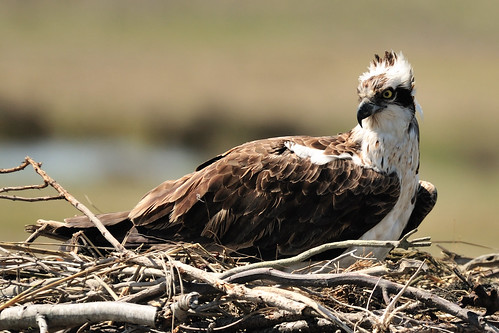
Ospreys are the only water-based raptors in America. These "fish hawks" are one of New Jersey’s largest raptors. They are well known and highly visible along coastal marshes. When hunting, they can completely submerge in water for fish which makes up almost all of their diet.

Ospreys winter in southern Florida and South America, but return to their previous nesting areas north to breed.

Osprey
Osprey - photo via flickr.com/photos/albertovo5


Another species, like the eagle, that has been threatened by the past use of certain pesticides and loss of their natural habitat, the osprey is a threatened species of wildlife in New Jersey.

Listed as endangered in New Jersey in 1973, the osprey’s status rose to “threatened” in 1986 due to an increase in pairings increased from about 50 to more than 100. And our coastal sightings in NJ for 2017 were at 668 pairings.

Dylan worked with Ben Wurst, a habitat program manager for the Conserve Wildlife Foundation of New Jersey. Environmentalists began providing platforms for nesting in the 1970s and today about 75 percent of the state's ospreys nest in platforms.

The nesting areas have a 3-foot perch for the birds on 16-foot posts. Like many Scout projects, Dylan had many helpers. Major Hardware, a Cedar Grove store, donated all the hardware and
West Essex Building Supply Co. in nearby Verona discounted the lumber. The project cost still amounted to $1400 for the three platforms.

Eagle Scout project helps ospreys - via northjersey.com

Monday, January 8, 2018

Ravens in New Jersey

Statue of a raven on the grounds of the Edgar Allan Poe National Historic Site in Philadelphia, PA
by Midnightdreary via Wikimedia Commons

Ravens are birds that have been a part of many mythologies. They were companions to the Norse god Odin. Native Americans thought of them as tricksters. And almost everyone knows that "Nevermore" raven in Edgar Allan Poe’s famous poem by that name.

But the real life raven is one of several larger-bodied species of the genus Corvus. There is no consistent distinction between "crows" and "ravens", and these names have been assigned to different species chiefly on the basis of their size. Crows are generally considered smaller than ravens, and the largest raven species are the common raven and the thick-billed raven.

The common raven, Corvus corax, has the widest distribution of any of the Corvidae family that includes crows, jays, nutcrackers, magpies and related birds such as rooks, jackdaws, and choughs. It is also the largest and heaviest of the passerines, or perching birds. And you may have heard that it is also one of the smartest birds.

Have you seen ravens in New Jersey?  They were once numerous in our state. They disappeared as a nesting bird in New Jersey in the 1920s. But in the early 1990s they began to breed once more in NJ and their numbers have been increasing ever since.

If you are curious about our Jersey ravens, the Wednesday, January 10 meeting of the Montclair Bird Club will feature “Return of the Raven,” presented by writer and environmental consultant Rick Radis. He will cover the historic status of the common raven in eastern North America, its return and its present status. Rick Radis is a past editor of NJ Birds, NJ Audubon Magazine and other conservation publications. His writing, editorial and photography have appeared in the New York Times, TNY, and many other national and regional publications.

The club's meeting on Jan. 10 begins at 7:30 p.m. at the Union Congregational Church in Montclair. The meeting is free and open to the public.

Common raven
By Stephencdickson - Own work, CC BY-SA 4.0, Link


Monday, June 5, 2017

Jersey Beaches, Crabs and Birds

With summer nearing, many of us in New Jersey are ready to drive down the shore. No matter how bad the Garden State Parkway traffic might be, you'll never have the journey that some take to get to a Jersey beach.

These beach visitors come early, mostly before the official Memorial Day weekend that unofficially open the season here. They are birds that have to supply their own nonstop 6,600 mile flight over the Amazon rainforest and ocean,

Red Knots
Red knots arrive in New Jersey very hungry and lightweight and bulk up to twice their weight by eating horseshoe crab eggs and adding about 3 percent of their body weight each day.

For thousands of years, this ritual journey has been reenacted and the Delaware Bay has been the critical food rest stop for migrating shore birds each spring.

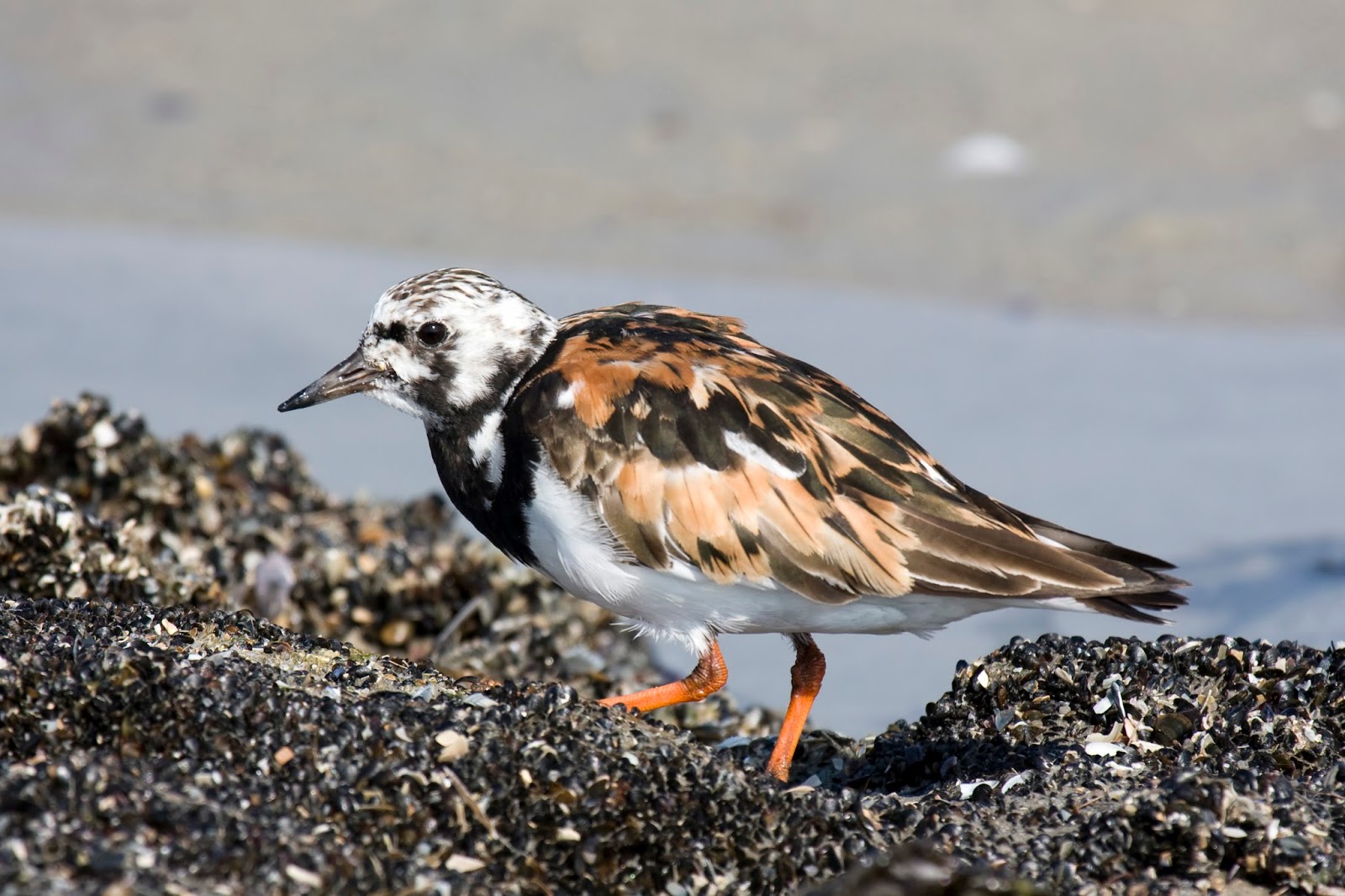
The red knots and ruddy turnstones are here around mid-May after their sojourn from South America.

Ruddy Turnstone
In the late 1800s and early 1900s, their stopover was not very satisfying. In those days, as many as 2 million horseshoe crabs were harvested each year and ground up as fertilizer for farms in South Jersey. That usage fell off as better fertilizers were found and was off by the 1960s.

There were a few decades when the main threat was fishermen who used the crabs for bait. In the late 1990s, the demand for them as bait for eel and conch fishermen increased. Those fishermen had been using shellfish bellies discarded by South Jersey processing plants, but when the processing plants started closing and waste disposal laws were made tighter, the supply disappeared.

The horseshoe crabs were also in demand for the biomedical industry. The crabs’ blue blood is used to make a clotting agent that helps detect human pathogens in patients, drugs and intravenous devices. Thankfully, in this process the crabs are returned to the water after blood is extracted, but not all survive the process. More than a half a million crabs were used for biomedical purposes in 2015.

Of course, not only were the crabs affected, but also the numbers of birds who were returning to the beaches.

After a steep population decline, a harvest management plan was put into place for horseshoe crabs in Delaware Bay, Where once 2.5 million crabs were taken annually, now New Jersey, Delaware, Maryland and Virginia harvesters are restricted to 500,000 male crabs and no females.

New Jersey has gone beyond the restrictions and has had a complete ban on horseshoe crab harvesting since 2008.


Horseshoe crabs at Reeds Beach

Hopefully, the Delaware Bay will remain the largest concentration of the prehistoric horseshoe crabs in the world. Red knot numbers have stabilized. Conservationists still work towards those numbers rebounding up. The red knot is considered threatened, and it is listed as endangered by New Jersey.

And after their visit to our state, the birds still have another 3000 miles to go to their breeding grounds in the Arctic. Think about that the next time you're stuck in Parkway traffic on the way to the beach.

Thursday, May 18, 2017

Ocean Fun Day Saturday May 20 at Island Beach State Park


Island Beach State Park, the jewel of New Jersey’s State Park System, will give visitors an opportunity to watch the release of young diamondback turtles into their natural habitat, as well as other youth-oriented environmental activities during Ocean Fun Day on Saturday, May 20. The diamondback terrapin release is new this year at Island Beach State Park.

Island Beach State Park is one of the few remaining undeveloped barrier beaches on the north Atlantic coast. With approximately 3,000 acres of beaches, dunes, maritime forests, freshwater wetlands and tidal marshes, the park is home to the state’s largest osprey colony, as well as peregrine falcons, wading birds, shorebirds, waterfowl and songbirds.

This year’s 14th annual Ocean Fun Days are scheduled from 11 a.m. to 3 p.m. May 20 at Island Beach State Park in Ocean County, and on Sunday, May 21 at the New Jersey Sea Grant Consortium’s headquarters in the historic Fort Hancock section of Sandy Hook in Monmouth County. Admission and parking are free. A free shuttle bus will be available at both parks to take visitors to tour sites.

Ocean Fun Day events encourage visitors to enjoy a day outdoors while learning about New Jersey’s coastal ecosystem through educational displays, nature tours and interactive programs that include seining, crafts, a scavenger hunt, touch tanks, youth fishing clinics and more.

Diamondback Terrapin
“Ocean Fun Day is a great way to teach visitors about the critical, yet fragile coastal ecosystems along the unspoiled barrier island that is Island Beach State Park,” said Director of Parks and Forestry Mark Texel. “The planned activities will show why Island Beach is a unique classroom to learn how ocean dynamics create barrier islands, and how the plants and animals here have adapted and thrived.”

Events at Island Beach State Park will be at Ocean Bathing Area 1, which is about four miles past the park’s gatehouse.

The turtle release will be done by students and faculty from Project Terrapin and the Marine Academy of Technology and Environmental Science (MATES). The Sandy Hook event will include guided tours of Sandy Hook sites and an open house at the National Oceanic and Atmospheric Administration/James J. Howard Marine Sciences Laboratory. Both sites will also offer a program on how to build a better sand castle by understanding the science behind cohesion, adhesion and surface tension.

“Ocean Fun Days have become a wonderful tradition for New Jersey’s families and visitors, and that is due to strong partnerships,” said Claire Antonucci, Executive Director of the New Jersey Sea Grant Consortium. “This year, we are delighted to partner with the Marine Academy of Technology and Environmental Science (MATES) to add a new activity to Ocean Fun Days with students and faculty from MATES Project Terrapin inviting the public to join them to release young diamondback turtles back into their natural habitat.”

Ocean Fun Days is presented by founding sponsor New Jersey Natural Gas, in partnership with the New Jersey Department of Environmental Protection, New Jersey Sea Grant Consortium, Asbury Park Press, New Jersey Division of Parks and Forestry, National Park Service and NOAA.

The New Jersey Sea Grant Consortium is an affiliation of colleges, universities and other groups dedicated to advancing knowledge and stewardship of New Jersey’s marine and coastal environment through innovative research, education and outreach programs. To learn more about the consortium or Ocean Fun Days, call (732) 872-1300, Ext. 19 or visit: njseagrant.org

For more information about Island Beach State Park, visit: islandbeachnj.org/ or find the park’s Facebook page at: facebook.com/islandbeachstatepark/


SOURCE: nj.gov/dep/newsrel/2017/17_0045.htm


Thursday, February 16, 2017

Webcam on Union County Courthouse Provides Peregrine Falcon Views


A new partnership between the Union County Freeholder Board and the nonprofit Conserve Wildlife Foundation of New Jersey is providing students, scientists and other wildlife enthusiasts all over the world the chance to study a pair of rare peregrine falcons. The birds, endangered in our state, have made their nest on the roof of the historic 17-story Union County Courthouse Tower, located in the bustling center of midtown Elizabeth.

Peregrine falcons have been nesting on the Courthouse Tower every year since 2006. In 2016, Union County began offering a free livestream “Falcon Cam” after installing two cameras inside and outside of the nest. This winter a third camera has been added to provide a scenic view, and audio will be available later this year.

“This year our Falcon Cam will become a new collaborative effort between the County and Conserve Wildlife Foundation, with assistance from the New Jersey Department of Environmental Protection,” said Freeholder Chairman Bruce H. Bergen. “This partnership makes Union County a premier site for falcon observation and research in New Jersey. The result is a truly enriching experience that brings the message of environmental stewardship throughout Union County and beyond.”

Peregrine falcon and young - USFWS photo

The peregrine falcon, also known as the duck hawk, is the largest falcon in New Jersey, and the world’s fastest animal, capable of flying at speeds over 200 miles an hour.

The two current occupants of the nest have spent the winter “pair bonding.” Bird watchers who visit the Falcon Cam at the right time can catch sight of the two falcons meeting at the nest, bowing to each other and communicating with gentle sounds called “ee-chupping.”

“While peregrine falcons were completely gone east of the Mississippi River just a few decades ago, this magnificent bird – the fastest animal in the world – has recovered dramatically in recent years,” said Conserve Wildlife Foundation executive director David Wheeler. “Thanks to Union County, students and New Jerseyans of all ages can enjoy a behind-the-scenes look at this rare wildlife reality show unfolding near tens of thousands of people in downtown Elizabeth.”
In winter the prime time for viewing is early morning. Activity also tends to occur mid-afternoon. If the pair breeds, the nest will be occupied almost constantly until the chicks fledge.

The Courthouse Tower hosts one of only two falcon cams in New Jersey. The other falcon cam is in Jersey City.

In addition to providing a unique learning opportunity for students of all ages, the Union County Falcon Cam provides essential information that helps promote the continued recovery of peregrine falcons in the eastern U.S.

The cameras help biologists determine when the chicks are old enough to be banded and enable observers to identify the falcons based on bands placed on their legs at birth. The bands indicate the age of each falcon and where they were born. That information can help scientists detect trends in range of habitat and choice of nesting locations.

The leg bands helped biologists to take note of some recent changes in the population of the Union County nest.

The first female to occupy the nest was from Jersey City. She remained there until last year, when a new and younger female from New York City gained possession of the coveted spot. Her leg band indicated that she was born at the Throgs Neck Bridge in 2010.

“Peregrine falcons prefer to nest in a high spot on the face of a cliff where they can forage for prey, and apparently the Courthouse Tower fits the bill,” Bergen explained. “It is the tallest building in Union County.”

Early this year, a third female replaced the New York City female. This new occupant does not have a leg band. The first male to occupy the nest was banded and came to Union County from Connecticut. The current male is unbanded.

The free Falcon Cam livestream is available on the Union County website at ucnj.org/falcon.

Union County has also provided a link to the Falcon Cam on the Conserve Wildlife Foundation website, ConserveWildlifeNJ.org. Conserve Wildlife Foundation will use the Falcon Cam in its STEM (science, technology, engineering and mathematics) programs in local schools, and for programming at the County’s Trailside Nature and Science Center in Mountainside.

A new adult peregrine falcon up close checking out the igloo nest
atop the Union County Courthouse in Elizabeth, NJ  - January 2017

Conserve Wildlife Foundation is also offering individual and corporate sponsorships of public outreach and environmental education in Union County centered on the Falcon Cam. CWF seeks to provide educational programs, lesson plans, curriculum development, and educational field trips for schools within Union County.

For more information about Conserve Wildlife Foundation's individual and corporate sponsorships, call 609-984-6012 or use the online form at ConserveWildlifeNJ.org. High resolution photos available upon request.

For quick links to all Union County programs related to conservation and sustainability, visit ucnj.org/green-connection

Monday, September 19, 2016

Observe Migrating Birds at Montclair Hawk Watch


Montclair Hawk Watch in Essex County Mills Reservation is for people of all ages. Join NJ Audubon staff and volunteers for fantastic views of migrating hawks.

Volunteers will be on hand to help people spot and identify hawks as they move through the ridges of the Watchung Mountains. Park along Edgecliff Road and look for the pathway to the stairs into the reservation. The stairway is steep, but worth the effort. Bring a hat, water and a folding chair. This is a free event. Pre-registration is requested. Montclair Hawk Watch will be held as follows:

Date: Thursday, September 22, 2016
Time: 9 a.m. to 12 p.m.
Place: Essex County Mills Reservation, Edgecliff Road, Montclair, NJ
see njaudubon.org/SectionBirdingSites/MontclairHawkWatch.aspx

Sunday, September 11, 2016

Reviewing NJ Birds for a Species Update

Peregrine falcon - Jersey City

The NJDEP Division of Fish and Wildlife periodically conducts status assessments for groups of wildlife. The Division is preparing to begin a review of NJ waterbird and landbird species to help guide an update of species status, that is, to assist in determining which species should be included on the state's Endangered Species list or designated as Threatened, Special Concern, Stable-Secure, or Undetermined-Unknown on the state's list of nongame wildlife.

To assist us with this process, the Division is inviting persons with expertise and knowledge regarding New Jersey's native bird populations to submit relevant information.

For more information, including how to be invited to participate, visit njfishandwildlife.com/news/2016/bird_status_review16.htm

Wednesday, March 9, 2016

Bobwhite Quail Restoration

Virginiawachtel 2007-06-16 065
Adult male


Have you ever heard that whistled call of "bob-white" in a grassy field or piney woods? You may have heard that distinctive song, but it's likely that you did not see a Northern Bobwhite. Their dappled plumage gives them excellent camouflage.

The birds forage in groups and scurry between cover area and will burst into flight if alarmed. Northern Bobwhite populations declined by 82% between 1966 and 2010, one of the most dramatic declines in the U.S. New Jersey Audubon and others are attempting to restore Northern Bobwhite quail to New Jersey. Bobwhites have been in sharp decline throughout the past half-century, likely owing to habitat loss and changes in agriculture, and they are an increasingly high priority for conservation.


The northern bobwhite, Virginia quail or (in its home range) bobwhite quail (Colinus virginianus) is a ground-dwelling bird native to the United States, Mexico, and the Caribbean. It is a member of the group of species known as New World quails (Odontophoridae).

The name "bobwhite" derives from its characteristic whistling call. Despite its secretive nature, the northern bobwhite is one of the most familiar quails in eastern North America because it is frequently the only quail in its range.

The Northern Bobwhite Restoration Initiative in NJ is dependent upon: (1) areas of high quality habitat and (2); the translocation of true wild birds, not pen raised, with both factors providing significant advantage in the face of severe storm events.

The release site at Pine Island has been stewarded through the implementation of a Forest Stewardship Plan, creating patches of young forest habitat suitable for quail and rich in cover and food resources. In addition, the wild birds are known to more quickly adapt and yield offspring that also exhibit innate survival instincts.

Fossil records show that quail-like birds existed at least a million years ago, but their appearance in most of the northern states across their range probably did not occur until sometime after retreat of the last glacier, approximately 10,000 years ago. Over the last 10,000 years serve storm events obviously have occurred and through it all the Bobwhite has persisted.


                    Project researcher Kaili Stevens tracking the Bobwhite at Pine Island.

For more on the Quail Project see NJ Audubon's Quail webpage.

Help continue this effort by donating at bobwhite.njaudubon.org