Showing posts with label artificial reefs. Show all posts

Monday, June 8, 2020

New Artifical Reef Deployments Off the NJ Coast

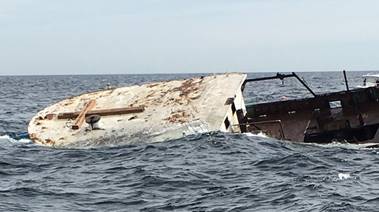
A vessel being sunk for an artificial reef - NJDEP photo

New Jersey's Artificial Reef Program provides a network of 15 artificial reefs in the ocean waters along the New Jersey coast. These reefs provide a hard substrate for fish, shellfish and crustaceans, fishing grounds for anglers, and underwater structures for scuba divers. The reefs are strategically located along the coast so that one site is within easy boat range of 12 New Jersey ocean inlets.

Artificial reefs are constructed by intentionally placing dense materials, such as old ships and barges, concrete and steel demolition debris and dredge rock on the sea floor within designated reef sites. Every deployment of additional materials increases the complexity and productivity of a reef.


The New Jersey Marine Fisheries Administration is planning two deployments off the coast this week as part of the Artificial Reef Program. The first deployment, a 150-foot long caisson gate, is scheduled for the morning of Monday, June 8, on the Deepwater Reef site. A caisson gate is a barrier used to dam off the open end of a dry dock, and is constructed of heavy gauge steel with several tons of ballast in the keel. Due to the nature of construction and heavy gauge of steel, this deployment will serve as marine habitat for the next 75 years or more. The deployment is sponsored by The Sportfishing Fund, an organization dedicated to artificial reef building. Deployments of caisson gates in 2019 were on the Atlantic City and Cape May reefs. 


The links below are to information about upcoming and past deployments. 


Thursday, November 7, 2019

Gandy's Beach Preserve Breakwater Project

Photo credit: Adrianna Zito-Livingston/The Nature Conservancy
Gandy's Beach is a Nature Conservancy Preserve along an area of undeveloped shoreline on the Delaware Bay that provides valuable habitat for a variety of fish and wildlife. Its shore has been increasingly vulnerable to coastal erosion and was considerably impacted by storm surge from Hurricane Sandy.

This project includes the building of a shell-based living shoreline one mile offshore that will act as a breakwater and protect about one mile of sandy beach shoreline and adjacent salt marsh.

Oyster castles   Credit: Mary Conti/TNC
In 2016, TNC installed a half-mile oyster reef breakwater at the Gandy’s Beach preserve, as a means of combatting erosion and creating habitat for marine life at the site.

As of December 2017, they report about a 50% reduction in wave energy during the tidal cycle, and sand has been building up behind the structures. The reef has been colonized by about 1 million oysters, is filtering more than 1 million gallons of water per submerged hour during summer months and is helping 4,330 new fish mature every year. Blue crab, black drum, northern kingfish, weakfish, summer flounder, black sea bass, and white perch have all been recorded at the site.

The first phase of the Hurricane Sandy-funded living shoreline installation in Downe Township, New Jersey, part of the Gandy’s Beach shoreline protection project, was completed in October 2015.

For three days, partners and local volunteers placed a combination of “oyster castles” and bagged oyster shells created by local schools, just offshore. The "castles" are stackable, interlocking blocks of concrete, limestone, crushed shell and silica that encourage oyster larvae to settle.

Partner organizations monitor the integrity of the structure. This work will help stabilize approximately 3,000 feet of beach and tidal marsh shoreline, allowing the coast to heal itself.

Monday, October 3, 2016

Adding to New Jersey's Artificial Reef Program

The Department of Environmental Protection’s artificial reef program is sinking two more vessels to enhance recreational fishing opportunities and enhance ocean habitat for fish.

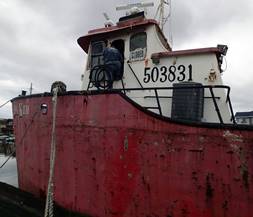
Trawler Austin 
The program, back in gear following restoration of federal funding, sank the 68-foot trawler, Austin, as part of the Axel Carlson Reef, 4.4 nautical miles southeast of Manasquan Inlet.

The 115-foot surf clam vessel, Lisa Kim, was added to the Wildwood Reef, 8.3 miles northeast of Cape May Inlet.

The boats are among as many as 10 vessels the DEP’s Division of Fish and Wildlife plans to deploy by the end of fall.

After a hiatus of nearly five years, three vessels were deployed over the summer. The sinking of these vessels was made possible by an agreement reached by the Christie Administration regarding access to reefs by recreational and commercial fishing interests that resulted in restored federal funding for the artificial reef program.

“For more than 30 years, New Jersey has had a robust program of creating artificial reefs that enhance offshore habitats for fish and draw in thousands of anglers and sport divers,” said DEP Commissioner Bob Martin, who was on-hand for today’s sinking of the Austin. “These latest additions continue that tradition and firmly establish the program as being back in business.”
The U.S. Fish and Wildlife Service is providing $119,250 to the artificial reef program because the DEP was able to reach a compromise that allows commercial interests to have continued access to portions of two reefs in state waters and calls for the construction of a new reef for recreational fishing, also in state waters. State waters extend three miles from the shoreline.

The U.S. Fish and Wildlife Service had suspended the funding due to concerns that commercial fishing was intruding on and hampering recreational fishing on artificial reefs in state waters, which are funded by excise taxes on recreational fishing gear and motor boat fuel. The compromise was reached in 2013, and codified in rule changes that were adopted by the DEP in November 2015.

Under the new rule, commercial fishing operations are permitted to continue using portions of two existing reefs in state waters off Sandy Hook and Manasquan. State waters extend to three miles offshore. Recreational anglers will continue to have access to all portions of these reefs.
artificial reef structure materials attract the most fish.

Among the vessels expected to be deployed before the end of the year is the former U.S. Coast Guard Cutter Tamaroa immortalized in the book The Perfect Storm and the movie by the same name for its rescue role during a brutal nor’easter in 1991. Originally a U.S. Navy fleet tug, the Tamaroa is also the last surviving vessel from the World War II Battle of Iwo Jima.

Old vessels and other materials used in artificial reefs provide surfaces for organisms such as algae, barnacles, mussels, sea stars, and sea fans to grow on. This colonization occurs in as little as two weeks. These organisms attract smaller fish which, in turn, attract black sea bass, tautog, summer flounder, scup, lobster and other sought-after species.

Artificial reefs are extremely popular with anglers and divers, contributing to the state’s economy through the creation of tourism opportunities and jobs. New Jersey’s commercial fishing industry ranks 7th in the nation in retail sales, and supports $327 million in salaries and wages and nearly 13,000 jobs.

Recreational saltwater fishing brings in more than $640 million in retail sales and is directly responsible for nearly 10,000 jobs and more than $242 million in tax revenues, including $165 million in state and local taxes.

For more information on New Jersey’s Artificial Reef Program, visit: http://www.nj.gov/dep/fgw/artreef.htm

 Clam boat Lisa Kim

Tuesday, September 27, 2016

Volunteers Needed for Delaware Bay Reef Build on October 1

October 1, 2016
Delaware Bay Reef Build
2 PM- 6 PM
Dyers Cove
Dyers Creek Road
Newport, NJ 08345

Come lend a hand building an oyster reef at Dyers Cove in the Delaware Bay. The work will involve carrying bags of whelk shells to a site just off the beach. Layers and a change of clothes are recommended as it may be chillier on the Bay and the work can get messy. Gloves, snacks, and beverages will be provided for volunteers.

The American Littoral Society has restored 7 beaches following Hurricane Sandy and is now working to establish near-shore shell bars at those sites to prevent sand loss from wind-driven waves and have already established an oyster reef at South Reeds and Moores beaches.

For more information on Littoral Society reef building projects, see http://www.restorenjbayshore.org/oyster-reef-construction.html?utm_source=www.endangerednj.blogspot.com or contact Quinn Whitesall quinn@littoralsociety.org

South Reeds Beach oyster reef April 2015