Showing posts with label threatened. Show all posts

Wednesday, August 28, 2019

Threats to Fireflies

firefly
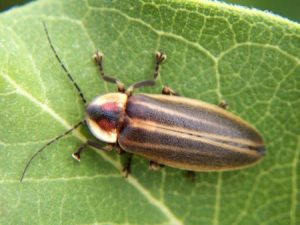
 Adult Firefly - Photuris lucicrescens
I read this past week that fireflies - lightning bugs to many of us - are a threatened species these days. You might see some tonight in your backyard, but they are more likely found in greater numbers in wetland habitats.

I'm sure many New Jersey residents have childhood memories of fireflies. They might have been an insect that you capture in a jar. Perhaps you are still are lucky enough to see them at night. I'm seeing fewer in my suburban Jersey backyard.

There are at least 125 species of fireflies in the United States, but none are protected by the Endangered Species Act. The threats to them are the development of wetlands and insecticide spraying that is meant to target mosquitoes. But it is disruptions in their habitat while they are young - such as construction - that can extinguish an entire population.

Fireflies or lightning bugs aren't flies or bugs. They are soft-winged beetles. What everyone knows them for is that they can produce light and this ability in a living organism is called bioluminescence and it is relatively rare.

Birds and other predators quickly learn to avoid them because many species of fireflies protect themselves from predators with chemicals called lucibufagins which are toxic in the right doses, but also extremely distasteful.

The light comes from special organs in their abdomens that combine the luciferin with oxygen. Entomologists think they control their flashing by regulating how much oxygen goes to their light-producing organs.


Fireflies use that blinking to find mates but it may have evolved as a way to ward off predators. The males fly around and flash a signal unique to their kind, and the females watch for males. When a female sees one doing a good job of making her species’ signal, she flashes back with a species-appropriate flash of her own. And maybe they will mate.

Scientists think the males synchronize so everyone has a chance to look for females. These displays can be quite large and spectacular and in some places (like one forest in Tennessee) crowds assemble to watch.

To most of us, fireflies are kind of magical and harmless creatures. They don't bite. They don't do significant damage to plants. They just want a stable woodland, meadow or marsh habitat. Their lifecycle runs a year or more and they spend most of their lives as larvae preying on earthworms and other animals in the soil or leaf litter. Oddly, most adults don’t feed at all.


Further Reading

theconversation.com/how-fireflies-glow-and-what-signals-theyre-sending

countryliving.com/life/a39391/where-have-all-the-fireflies-gone/

Wednesday, February 7, 2018

Oceanic Whitetip Shark Classified As Threatened


Oceanic Whitetip Shark with Pilot Fish - Photo: By The original uploader was OldakQuill at English Wikipedia - Transferred from en.wikipedia to Commons., CC BY-SA 3.0, Link

The federal government says the oceanic whitetip shark will be listed as threatened under the Endangered Species Act to help the species recover. The shark lives along the East Coast of the United States, off southern California and in international waters. Conservation group Defenders of Wildlife called on the government to list the species.

The oceanic whitetip shark (Carcharhinus longimanus), also known as Brown Milbert's sand bar shark, brown shark, nigano shark, oceanic white-tipped whaler, and silvertip shark, is a large pelagic requiem shark inhabiting tropical and warm temperate seas. Its stocky body is most notable for its long, white-tipped, rounded fins. Scientists say the sharks have declined by 80 to 90 percent in the Pacific Ocean since the 1990s and they have fallen 50 percent to 85 percent in the Atlantic Ocean since the 1950s.

Conservationists blame commercial fishing and demand for their fins. Their large fins are highly valued as the chief ingredient of shark fin soup, and as with other shark species, the whitetip faces mounting fishing pressure throughout its range.

This slow-moving but aggressive fish dominates feeding frenzies, and is a danger to shipwreck or air crash survivors.

Wednesday, June 15, 2016

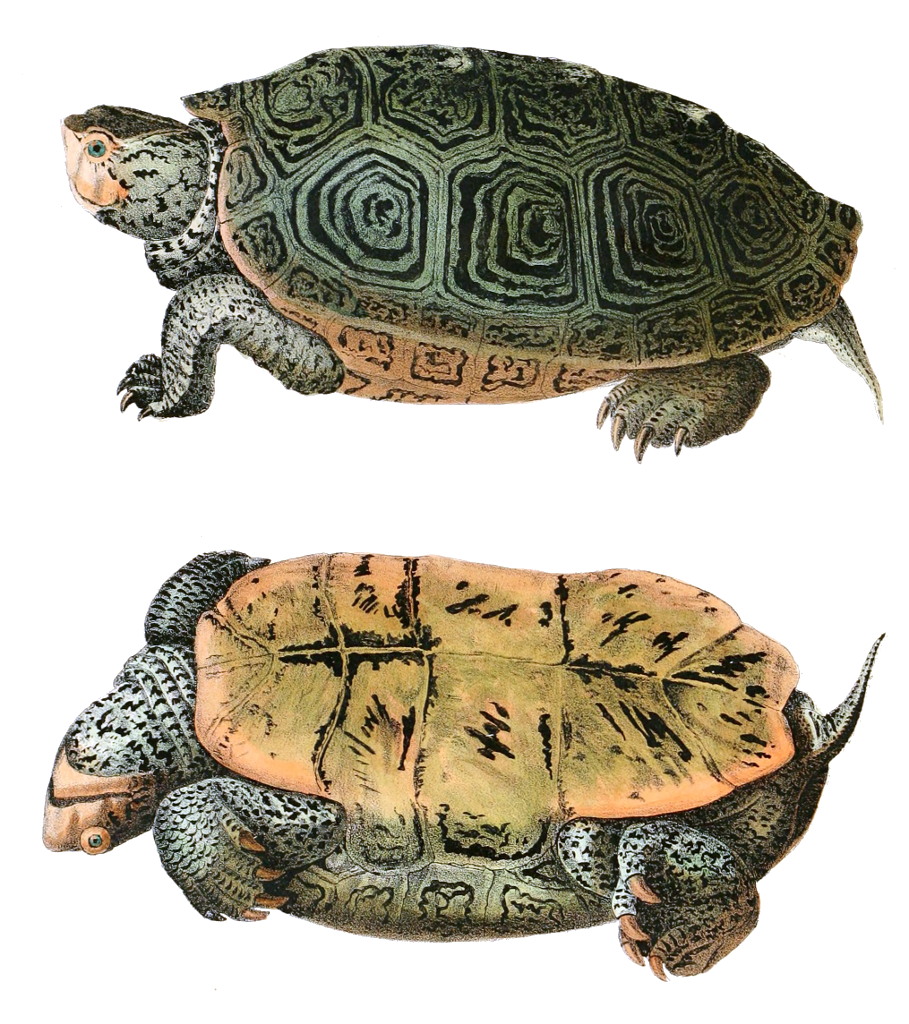
Diamondback Terrapins


There is a proposed ban on the commercial harvesting of diamondback terrapins in New Jersey. These turtles could be on the edge of extinction if more measures are not taken to protect them.

In 2013, the Fish and Wildlife Service alerted the state that it had discovered several harvesters had illegally trapped 3,522 adult terrapins from South Jersey marshes for sale to an aquaculture facility in Maryland for breeding.

This medium-size turtle is the only species in the world that lives exclusively in brackish waters with some salinity. It has a patterned brown, black, and sometimes orange and yellow carapace.

They are vulnerable to overharvesting because they "brumate," or hibernate in the mud, at shallow depths, in large clusters during the winters. Commercial harvesters currently are permitted to collect them by hand in New Jersey, but wildlife investigators found many terrapins were raked from the marshy bottom by illegal harvesters using crab dredges and were then scooped into nets.

After the discovery of the illegal harvesting, the Fish and Wildlife Service recommended the state "immediately close the season . . . and begin to develop a longer term solution," the DEP said. The season this year was curtailed in January.

The federal government classifies the terrapin, known as Malaclemys terrapin, as a species of "special concern" and the majority of the states where the terrapins reside have already imposed complete bans or strict controls. Maryland has prohibited all harvesting since 2007, and Delaware places a limit of four terrapins per day during its designated season. Some states, including Rhode Island, have declared the terrapin an endangered species. New Jersey and New York are the last to take action on the terrapins.

SOURCES:

articles.philly.com

www.dailyitem.com/news/

Wednesday, January 27, 2016

Diamondback Terrapin Harvest Season Closed


Due to continued concerns about harvest pressures on northern diamondback terrapins in state coastal areas, DEP Commissioner Bob Martin has signed an Administrative Order immediately closing the remaining two months of the commercial harvest season.

In 2002, the Northern diamondback terrapin was listed as a species of special concern in New Jersey, but this status has not been officially adopted under the Endangered Species Conservation Act and terrapins are still considered to be a game species in NJ with an open season from November 1 to March 31

The Division of Fish and Wildlife has been working with the Marine Fisheries Council, neighboring states, the U.S. Fish and Wildlife Service, and terrapin experts to develop management strategies to enhance protection of the terrapins in order to sustain the species in New Jersey.

Northern Diamondback Terrapins (Malaclemys terrapin terrapin) are native to New Jersey. They inhabit coastal salt marshes and estuaries along the Atlantic Coast and Delaware Bay. They live exclusively in brackish water (a mixture of both salt and fresh water).

Diamondback terrapins, so named for the diamond-shaped patterns on its shell, are more closely related to freshwater turtles than marine turtles, and spend their entire life cycle in coastal marshes. They are an important part of the ecosystem, feeding on snails that can overgraze marsh grasses, leaving them barren mudflats.

They are threatened by habitat loss, illegal trapping, mortality from being drowned in crab traps, and especially by road mortality as they cross busy roads.

Terrapins were once very common and used as a main food source of protein by Native Americans and then European settlers.

They were hunted so extensively that they almost faced species extinction by the early 1900s. They became a delicacy here and in Europe and were exported. During the Depression, demand fell off and the population was able to make enough of a recovery to avoid extinction.

In the past, commercial harvesting of terrapins in New Jersey was reported on a small-scale basis. But increased demand, particularly in Asian food markets, has put excessive pressure on the species.

In a 2014 incident, more than 3,500 terrapins were harvested from two locations in southern New Jersey to provide terrapins for an out-of-state aquaculture facility that raises them for overseas markets. More than 14,000 offspring of the wild adult terrapins were then exported to Asia.

For more information, see the DEP news release at  http://www.nj.gov/dep/newsrel/2016/16_0004.htm


Monday, August 11, 2014

Are Bees Endangered?


I was having a conversation with some friends about this blog and someone said, "Why don't you write about bees. Aren't bees endangered?"

Turns out that people are paying attention to the news articles about the disappearance of bees. But bees (and there are so many species - and we don't mean wasps and yellow jackets) have not made the official endangered lists.

Even kids that watch Jerry Seinfeld's Bee Movie know that one-third of our food depends on the services of a pollinator—bee or other insect, bird, or mammal.

Bees are the most important pollinators in the Northeastern U.S., and there are hundreds of species of bees that live in our state.

National Honey Bee Day is August 17. It's a good time to celebrate honey bees that pollinate many of our important food crops like apples, broccoli and blueberries - and then there is that wonderful honey.

You might have read that there have been many problems with bees in New Jersey and across the country. Scientists are still not sure if the cause (or causes) are fungal, viral or from toxic pesticides.

Bees are one of the issues for the Natural Resources Defense Council.

In 2006, beekeepers became vocal about disappearing bees. Seemingly healthy bees were abandoning their hives, and this became known as Colony Collapse Disorder (CCD). Estimates are that nearly one-third of all honey bee colonies in the country have vanished.

Scientists have not come up with a definitive answer to the the problem. Factors seem to be pesticide exposure, invasive parasitic mites, an inadequate food supply and a new virus that targets bees' immune systems.


We know from other endangered species that when species disappear it is often an early indicator of problems that will affect humans. For example, bees that pollinate crops that are sprayed with pesticides are more likely to die off than bees that pollinate in the wild. 

Have you have ever thought about having your own hive? Check out the  NJ Beekeepers Association which has chapters throughout the state.