Showing posts with label turtles. Show all posts

Tuesday, April 14, 2020

Providing Wild Crossings for Endangered Species

Turtle using a tunnel under a roadway

CHANJ is Connecting Habitat Across New Jersey, an effort to make New Jersey's landscape and roadways more permeable for terrestrial wildlife. By identifying key areas and actions needed to achieve habitat connectivity across the state, CHANJ offers statewide mapping and a Guidance Document to help prioritize land protection, inform habitat restoration and management, and guide mitigation of road barrier effects on wildlife and their habitats.

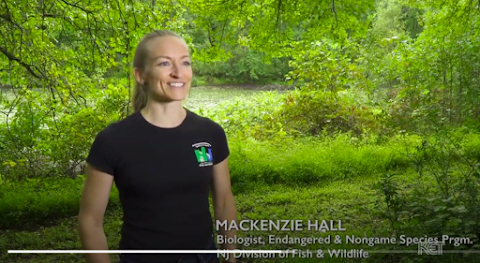
Mackenzie Hall
Mackenzie Hall, ENSP biologist


CHANJ is featured in a new episode of the PBS show, EcoSense for Living.  In this episode, "Wild Crossings," NJ is one of three major habitat connectivity projects, from North Carolina to New Jersey, that are helping wildlife navigate our increasingly developed world.  

In this program, CHANJ comes in at the 14-minute mark but I recommend watching the entire 26-minute episode. The CHANJ portion is 12 minutes and covers salamander migrations, turtle tunnels, timber rattlesnakes, and various connectivity projects of the NJ Division of Fish and Wildlife. You will even meet the Division's bobcat scat-sniffing dog, Fly.


In finding food and finding mates and adapting to climate change, these creatures must overcome all the obstacles humans and nature have put in their way. This project, which once relied solely on volunteers physically moving the smaller amphibians, is using more sustainable methods to help animals find safe passage in our increasingly developed state.

This time of year is especially important for amphibians who are coming out of hibernation and moving to area with water and vernal pools for their short breeding season.

Volunteer transferring a frog across a roadway on a spring night

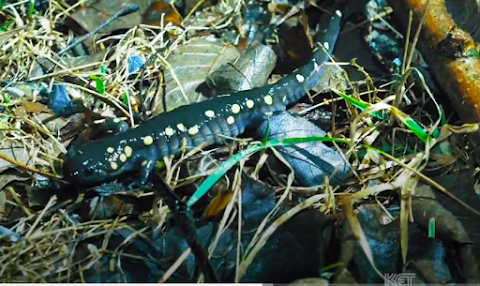
Spotted salamander entering a tunnel

Despite our well-known population density, we are fortunate that NJ is also a recognized leader in preserving open spaces for recreation, agriculture, and nature. Nearly one-third of the state’s landmass is now in permanent preservation. NJ boasts a higher percentage of publicly-owned forest land than any other state east of the Mississippi (Widmann 2004). Healthy, connected ecosystems are an important part of that.

bobcat
Bobcat in the northern NJ "Bobcat Corridor"

Bobcat using a dry terrestrial pathway under a road

All images via pbs.org video

Wednesday, October 23, 2019

Endangered Sea Turtles Off New Jersey

The US Fish and Wildlife Service lists two endangered sea turtles that can be found in the Atlantic Ocean off our the New Jersey coast.

The endangered Hawksbill Sea Turtle (Eretmochelys imbricatais one of seven species of sea turtles found throughout the world. It is one of the smaller sea turtles. It has overlapping scutes (plates) that are thicker than those of other sea turtles which protects them from being battered against sharp coral and rocks during storm events.

We can say they are "smaller" but adults range in size from 30 to 36 inches (0.8-1.0 meters) carapace length, and weigh 100 to 200 pounds (45-90 kilograms). Its carapace (upper shell) is an attractive dark brown with faint yellow streaks and blotches and a yellow plastron (under shell). The name "hawksbill" refers to the turtle's prominent hooked beak.

Eritmochelys imbricata, Hawksbill Sea Turtle - Photo: Caroline S. Rogers, available through NOAA

At the other extreme in size is the Leatherback Sea Turtle (Dermochelys coriaceais the largest, deepest diving, and most migratory and wide-ranging of all sea turtles. The adult leatherback can reach 4 to 8 feet in length and 500 to 2000 pounds in weight.

Its shell is composed of a mosaic of small bones covered by firm, rubbery skin with seven longitudinal ridges or keels. The skin is predominantly black with varying degrees of pale spotting. There is a notable pink spot on the dorsal surface of the head in adults. A toothlike cusp is located on each side of the gray upper jaw and the lower jaw is hooked anteriorly. The paddle-like clawless limbs are black with white margins and pale spotting.

Female Leatherback, Dermochelys coriacea,  Photo by Claudia Lombard, USFWS at Sandy Point National Wildlife Refuge, US Virgin Islands


Wednesday, February 27, 2019

Poaching and Selling a Threatened New Jersey Turtle

The diamondback terrapin (Malaclemys terrapin) or simply terrapin, is a species of turtle native to the brackish coastal tidal marshes of the eastern and southern United States and Bermuda.

A Pennsylvania man has pleaded guilty in federal court to smuggling protected turtles from the Jersey Shore. Prosecutors said that for more than three years he poached thousands of diamondback terrapins and their eggs from coastal marshes in New Jersey.

Why? Money. His profits over that three-year span were more than $530,000, according to court documents. The officials also seized over 3,400 diamondback terrapin hatchlings from his home in 2017. The hatchlings were returned to their New Jersey habitat.

New Jersey banned collecting, possessing and transporting diamondback terrapins in 2016. Selling the turtles is a violation of the Lacey Act which is the nation’s oldest wildlife trafficking statute and prohibits falsely labeling packages containing wildlife, fish, or plants.

The U.S. Fish and Wildlife Service conducted the investigation with assistance from the New Jersey Division of Fish and Wildlife.

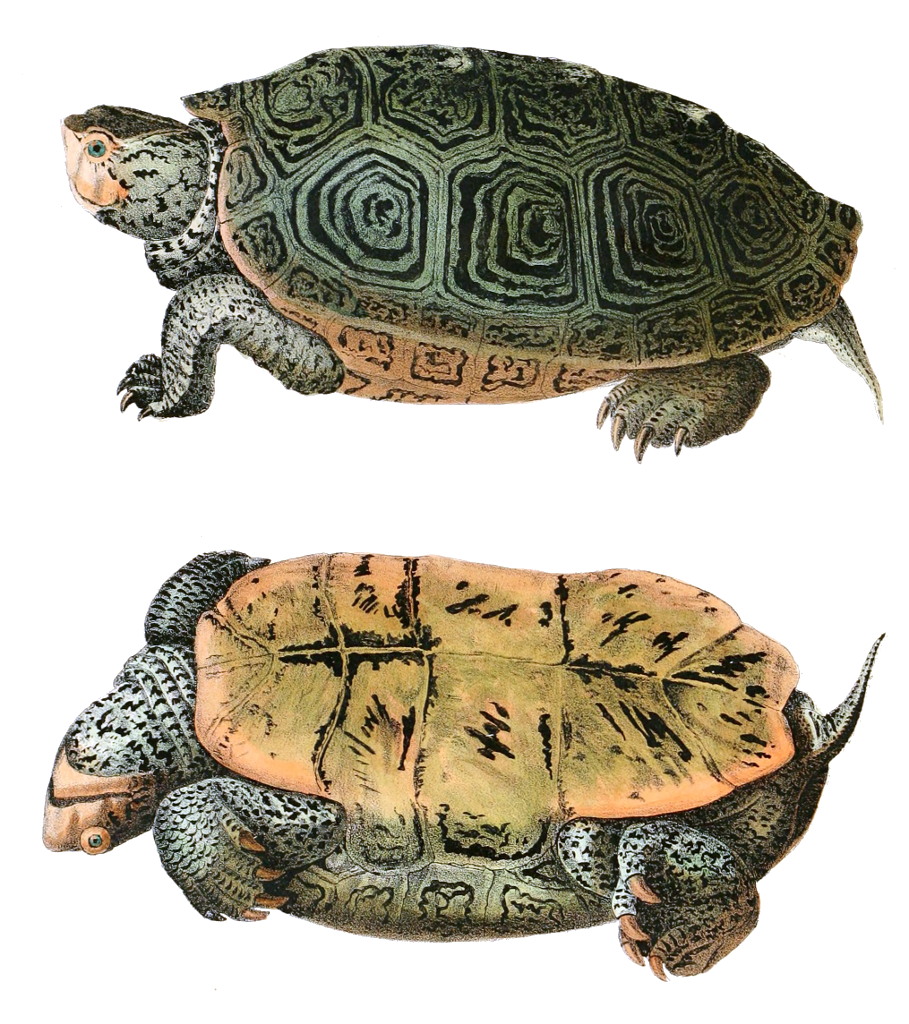
The common Diamondback name refers to the diamond pattern on top of its shell (carapace)

The poacher faces a maximum of five years’ imprisonment, three years of supervised release, a fine of up to $250,000 and restitution to New Jersey for the value of the turtles.

The diamondback terrapin is the only species of turtle that lives in the brackish waters of New Jersey’s coastal marshes and estuaries. They are protected under state law and by an international treaty, the Convention on International Trade in Endangered Species of Wild Fauna and Flora, recognizing the terrapin as threatened.

In the 1900s, the species was once considered a delicacy to eat and was hunted almost to extinction. The population also decreased due to the development of coastal areas and wounds from motorboat propellers. Accidental trapping of the turtles in recreational crab traps has also caused a threat to the turtles.

The diamondback terrapin is listed as an endangered species in Rhode Island, a threatened species in Massachusetts and is considered a "species of concern" in Georgia, Delaware, Alabama, Louisiana, North Carolina, and Virginia.

New Jersey banned collecting, possessing and transporting diamondback terrapins in 2016.

Earthwatch Institute, a global non-profit that teams volunteers with scientists to conduct important environmental research, supports a research program called "Tagging the Terrapins of the Jersey Shore." This program allows volunteers to explore the coastal sprawl of New Jersey’s Ocean County on Barnegat Bay, one of the most extensive salt marsh ecosystems on the East Coast, in search of this ornate turtle.

Sources:
wikipedia.org/wiki/Diamondback_terrapin
philly.com/science/
nj1015.com

Wednesday, June 15, 2016

Diamondback Terrapins


There is a proposed ban on the commercial harvesting of diamondback terrapins in New Jersey. These turtles could be on the edge of extinction if more measures are not taken to protect them.

In 2013, the Fish and Wildlife Service alerted the state that it had discovered several harvesters had illegally trapped 3,522 adult terrapins from South Jersey marshes for sale to an aquaculture facility in Maryland for breeding.

This medium-size turtle is the only species in the world that lives exclusively in brackish waters with some salinity. It has a patterned brown, black, and sometimes orange and yellow carapace.

They are vulnerable to overharvesting because they "brumate," or hibernate in the mud, at shallow depths, in large clusters during the winters. Commercial harvesters currently are permitted to collect them by hand in New Jersey, but wildlife investigators found many terrapins were raked from the marshy bottom by illegal harvesters using crab dredges and were then scooped into nets.

After the discovery of the illegal harvesting, the Fish and Wildlife Service recommended the state "immediately close the season . . . and begin to develop a longer term solution," the DEP said. The season this year was curtailed in January.

The federal government classifies the terrapin, known as Malaclemys terrapin, as a species of "special concern" and the majority of the states where the terrapins reside have already imposed complete bans or strict controls. Maryland has prohibited all harvesting since 2007, and Delaware places a limit of four terrapins per day during its designated season. Some states, including Rhode Island, have declared the terrapin an endangered species. New Jersey and New York are the last to take action on the terrapins.

SOURCES:

articles.philly.com

www.dailyitem.com/news/

Wednesday, January 27, 2016

Diamondback Terrapin Harvest Season Closed


Due to continued concerns about harvest pressures on northern diamondback terrapins in state coastal areas, DEP Commissioner Bob Martin has signed an Administrative Order immediately closing the remaining two months of the commercial harvest season.

In 2002, the Northern diamondback terrapin was listed as a species of special concern in New Jersey, but this status has not been officially adopted under the Endangered Species Conservation Act and terrapins are still considered to be a game species in NJ with an open season from November 1 to March 31

The Division of Fish and Wildlife has been working with the Marine Fisheries Council, neighboring states, the U.S. Fish and Wildlife Service, and terrapin experts to develop management strategies to enhance protection of the terrapins in order to sustain the species in New Jersey.

Northern Diamondback Terrapins (Malaclemys terrapin terrapin) are native to New Jersey. They inhabit coastal salt marshes and estuaries along the Atlantic Coast and Delaware Bay. They live exclusively in brackish water (a mixture of both salt and fresh water).

Diamondback terrapins, so named for the diamond-shaped patterns on its shell, are more closely related to freshwater turtles than marine turtles, and spend their entire life cycle in coastal marshes. They are an important part of the ecosystem, feeding on snails that can overgraze marsh grasses, leaving them barren mudflats.

They are threatened by habitat loss, illegal trapping, mortality from being drowned in crab traps, and especially by road mortality as they cross busy roads.

Terrapins were once very common and used as a main food source of protein by Native Americans and then European settlers.

They were hunted so extensively that they almost faced species extinction by the early 1900s. They became a delicacy here and in Europe and were exported. During the Depression, demand fell off and the population was able to make enough of a recovery to avoid extinction.

In the past, commercial harvesting of terrapins in New Jersey was reported on a small-scale basis. But increased demand, particularly in Asian food markets, has put excessive pressure on the species.

In a 2014 incident, more than 3,500 terrapins were harvested from two locations in southern New Jersey to provide terrapins for an out-of-state aquaculture facility that raises them for overseas markets. More than 14,000 offspring of the wild adult terrapins were then exported to Asia.

For more information, see the DEP news release at  http://www.nj.gov/dep/newsrel/2016/16_0004.htm