Showing posts with label threatened species. Show all posts

Friday, April 18, 2025

Imperiled Freshwater Fish Species

Some information from a formal review process led by Fish and Wildlife’s Endangered and Nongame Species Program that was conducted in 2014 and 2015 to determine the status of our native freshwater fishes.  The procedure is known as the Delphi Technique.  

It is a systematic method for reaching consensus among experts in which absolute, quantitative answers are either unknown or unattainable.  It is an iterative process characterized by anonymity among the participating experts, controlled feedback via the principal investigator, and a statistical estimator of group opinion.  By structuring the group communication process, the Delphi Technique helps the group reach a consensus of opinion by incorporating all available data and disseminating those data among all participants.  

NJFW created species distribution maps using GIS, based on data collected from 2000 through 2012.  In addition to data collected by the Bureau of Freshwater Fisheries Research and Management Unit, data were supplied by the Department’s Bureau of Freshwater and Biological Monitoring, the Pinelands Commission, and United States Geological Survey.  Results informed the update of the New Jersey’s State Wildlife Action Plan.

The following recommendations were made by the Committee:

  1. Endangered (Candidate):   Bridle Shiner, Ironcolor Shiner
  2. Threatened (Candidate): Slimy Sculpin
  3. Special Concern (Candidate): American Brook Lamprey, Comely Shiner, Northern Hog Sucker, Blackbanded Sunfish, Mud Sunfish, Shield Darter, Brook Trout

Read the full report at dep.nj.gov/njfw/wp-content/uploads/njfw/FINAL-fish_status_rprt.pdf 


brook trout


Monday, December 16, 2024

U.S. Wildlife Officials Plan to List Monarch Butterflies


Migrating monarchs  -  NPS Photo

The US Fish and Wildlife Service has proposed listing the monarch butterfly as threatened with extinction under the Endangered Species Act. The law states that a species is labeled "threatened" when it is likely to become endangered within the foreseeable future.

Winter is the time when millions of monarch butterflies journey thousands of miles across North America to spend winters in the forests and mountains of central Mexico.But over the years, the beloved butterfly has seen such a troubling decline in its population.

Monarch butterflies in New Jersey are no exception and also migrate to Mexico for the winter. Every year, they embark on an incredible journey, traveling up to 3,000 miles from as far north as Canada to the mountain forests of central Mexico1. New Jersey plays a special role in their migration, as thousands of monarchs stop at the tip of the Cape May peninsula to rest and refuel before crossing Delaware Bay. 

The monarch plays a significant role in maintaining its ecosystem's biodiversity. It is an important pollinator and a vital food source for various animals.

the threats are all too common - habitat loss (often from legal or illegal logging), exposure to insecticides, and the climate crisis. These factors have shifted the monarch's breeding and migratory patterns.

The loss of pollinators would have far-reaching consequences for ecosystems and economically for agricultural production. Pollinators are responsible for 75% of the production of the food for humans. But with President-elect Donald Trump - whose previous administration attempted to water down protections for endangered species - protection of a species may be much more difficult..

It was two years ago that the International Union for Conservation of Nature categorized the migratory monarch butterfly, specific to North America,as endangered due to climate change and habitat loss. In just one year, between 2021 and 2022, the presence of monarch butterflies in their Mexican forest wintering grounds dropped by 22%, according to a recent report from the World Wildlife Fund.

More at njconservation.org/our-marvelous-mysterious-migrating-monarchs/

Tuesday, September 20, 2022

Most Threatened Wildlife in Every State

Curious about what the Most Threatened Wildlife in Every State might be? It's an interesting list, but I'll save you the trouble of clicking through the pages if you want to get right to New Jersey. Their answer is the Leatherback Sea Turtle (ermochelys coriacea) and the Dwarf Wedgemussel (alasmidonta heterodon). 


Tuesday, April 14, 2020

Providing Wild Crossings for Endangered Species

Turtle using a tunnel under a roadway

CHANJ is Connecting Habitat Across New Jersey, an effort to make New Jersey's landscape and roadways more permeable for terrestrial wildlife. By identifying key areas and actions needed to achieve habitat connectivity across the state, CHANJ offers statewide mapping and a Guidance Document to help prioritize land protection, inform habitat restoration and management, and guide mitigation of road barrier effects on wildlife and their habitats.

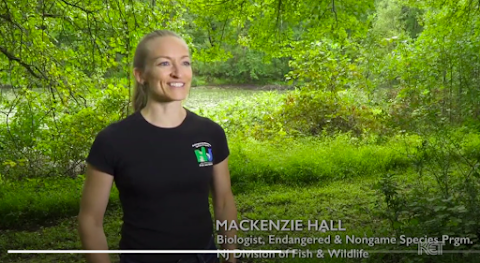
Mackenzie Hall
Mackenzie Hall, ENSP biologist


CHANJ is featured in a new episode of the PBS show, EcoSense for Living.  In this episode, "Wild Crossings," NJ is one of three major habitat connectivity projects, from North Carolina to New Jersey, that are helping wildlife navigate our increasingly developed world.  

In this program, CHANJ comes in at the 14-minute mark but I recommend watching the entire 26-minute episode. The CHANJ portion is 12 minutes and covers salamander migrations, turtle tunnels, timber rattlesnakes, and various connectivity projects of the NJ Division of Fish and Wildlife. You will even meet the Division's bobcat scat-sniffing dog, Fly.


In finding food and finding mates and adapting to climate change, these creatures must overcome all the obstacles humans and nature have put in their way. This project, which once relied solely on volunteers physically moving the smaller amphibians, is using more sustainable methods to help animals find safe passage in our increasingly developed state.

This time of year is especially important for amphibians who are coming out of hibernation and moving to area with water and vernal pools for their short breeding season.

Volunteer transferring a frog across a roadway on a spring night

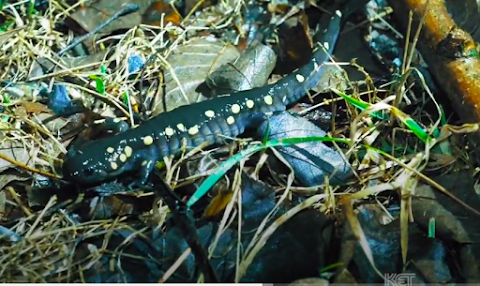
Spotted salamander entering a tunnel

Despite our well-known population density, we are fortunate that NJ is also a recognized leader in preserving open spaces for recreation, agriculture, and nature. Nearly one-third of the state’s landmass is now in permanent preservation. NJ boasts a higher percentage of publicly-owned forest land than any other state east of the Mississippi (Widmann 2004). Healthy, connected ecosystems are an important part of that.

bobcat
Bobcat in the northern NJ "Bobcat Corridor"

Bobcat using a dry terrestrial pathway under a road

All images via pbs.org video

Wednesday, May 29, 2019

One Million Species Moving to Extinction


A United Nations-backed report released this month has gotten a lot of media attention for its findings. The headline "The One Million Species Moving to Extinction" is not hyperbole and that number catches the eye of even those people who might not normally read or listen to a report on endangered species.

Here, I write about things threatened and endangered and, thankfully, less often about species that go extinct, but the report suggests that I could write a lot about extinctions on the global scale.

Up to one million plant and animal species face extinction, many within decades, because of human activities, says the report, said to be the most comprehensive one yet on the state of global ecosystems.

About 75% of the planet’s land and 66% of its ocean areas have been “significantly altered” by people, driven in large part by the production of food, according to the IPBES report, which will be released in full later this year. Crop and livestock operations currently co-opt more than 33% of Earth’s land surface and 75% of its freshwater resources.

Without drastic action to conserve habitats, the rate of species extinctions—already tens to hundreds of times higher than the average across the last ten million years—will only increase, according to a United Nations-backed panel, the International Science-Policy Platform on Biodiversity and Ecosystem Services (IPBES).

I was surprised that they found that agriculture is one of the biggest threats to Earth’s ecosystems, especially in ecosystems that people depend on for food, clean water and a stable climate. The loss of species and habitats is as much a danger to life on Earth as climate change.

Nearly 150 authors from 50 nations worked for three years to compile the report by the Intergovernmental Science-Policy Platform on Biodiversity and Ecosystem Services — a panel with 132 member nations, including the United States. Representatives of each member nation signed off on the findings.

Without “transformative changes” to the world’s economic, social and political systems to address this crisis, the IPBES panel projects that major biodiversity losses will continue to 2050 and beyond.

Besides agriculture, other serious threats to nature are the exploitation of plants and animals through harvesting, logging, hunting and fishing, climate change, pollution and the spread of invasive species.

The report also find inextricable links between biodiversity loss and climate change.

A 2 °C of warming above pre-industrial levels (which the world could breach in the next few decades unless greenhouse gas emissions are drastically reduced) would mean an estimated 5% of the planet’s species would be threatened with extinction by. Earth could lose 16% of its species if the average global temperature exceeds 4.3 °C. These losses would undermine global efforts to reduce poverty and hunger and promote more sustainable development.

The report is not without hope. The biodiversity crisis could be reversed with proactive environmental policies, the sustainable production of food and other resources and a concerted effort to reduce greenhouse-gas emissions.

SOURCES
scientificamerican.com/article/humans-are-driving-one-million-species-to-extinction/

washingtonpost.com...one-million-species-face-extinction-un-panel-says-humans-will-suffer-result/

Wednesday, August 1, 2018

The American Kestrel and Raptors in New Jersey

American Kestrel - male

The Bald Eagle, Peregrine Falcon, Osprey, and the American Kestrel are some of New Jersey's raptors. Commonly referred to as "birds of prey," this group includes hawks, owls, eagles, falcons and vultures.

Raptors have fascinated people for thousands of years and were once the birds kept by British royalty and used i both ceremonies and for hunting.

After some frightening declines in some of our largest species, raptors represent some of New Jersey's greatest wildlife success stories. The bald eagle, osprey and peregrine falcon have made impressive comebacks from the brink of extinction, in large part thanks to the efforts of division biologists.

Unfortunately, not all species of raptors are thriving - the American kestrel, for instance, has experienced a sharp decline in recent years, and the work of biologists in the Endangered and Nongame Species Program continues.


American Kestrel - female
This once-common inhabitant of fallow fields and pastures has declined in recent years, and the reasons are largely unknown. In February, 2012, the American kestrel became listed as a State Threatened species. 

MORE

Wednesday, May 2, 2018

Foxes and Piping Plovers


Piping plover eggs and hatchling - NPS photo

The piping plover remains one of New Jersey's most endangered species. Because they lay their eggs in the coastal dunes, but also must go back and forth to the water to forage for food, they and their eggs and young are quite vulnerable to predators.

According to the DEP's New Jersey Fish and Wildlife Service website."The threats that it faces, including increased beach recreation and predation, continue to act as serious impediments to the recovery of this species. Without intense protection and management, it is unlikely that the piping plover would survive in New Jersey."

Plover numbers have dropped to 115 nesting pairs in the state, down from the roughly 135 pairs a decade ago.

One of those predators is the fox which will eat the adult birds, their chicks and their eggs. Eliminating foxes in some of these beach areas has become one necessary protection.

"These are not easy choices," said Dave Jenkins, head of the state Division of Fish and Wildlife's endangered species project. "We don't relish the idea of having to control foxes."

Foxes are not threatened in our state. They are vulnerable to diseases like rabies and mange, and can be aggressive. One fox aggressively approached a young child at Island Beach State Park last summer and had to be put down.

Nesting areas are also subject to human disturbances on beaches and as spring becomes summer you can expect to see more signanage and even closed area on some beaches to protect piping plovers and other shorebird nesting areas.

MORE at state.nj.us/dep/fgw/ensp/pdf/end-thrtened/plover.pdf


Friday, March 9, 2018

Eagle Scout project helps ospreys at Cheesequake State Park

One Cedar Grove Boy Scout, Dylan Green, chose for his Eagle Scout project chose to help a bird species other than an eagle that is also threatened in New Jersey. He coordinated the construction and installation of three osprey nesting platforms in Cheesequake State Park in Old Bridge.

Dylan had an earlier interest in raptors having brought orphaned birds to the Raptor Trust wild-bird rehabilitation center in Long Hill Township.

Ospreys are the only water-based raptors in America. These "fish hawks" are one of New Jersey’s largest raptors. They are well known and highly visible along coastal marshes. When hunting, they can completely submerge in water for fish which makes up almost all of their diet.

Ospreys winter in southern Florida and South America, but return to their previous nesting areas north to breed.

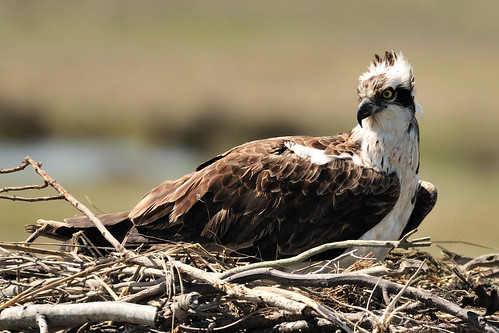
Osprey
Osprey - photo via flickr.com/photos/albertovo5


Another species, like the eagle, that has been threatened by the past use of certain pesticides and loss of their natural habitat, the osprey is a threatened species of wildlife in New Jersey.

Listed as endangered in New Jersey in 1973, the osprey’s status rose to “threatened” in 1986 due to an increase in pairings increased from about 50 to more than 100. And our coastal sightings in NJ for 2017 were at 668 pairings.

Dylan worked with Ben Wurst, a habitat program manager for the Conserve Wildlife Foundation of New Jersey. Environmentalists began providing platforms for nesting in the 1970s and today about 75 percent of the state's ospreys nest in platforms.

The nesting areas have a 3-foot perch for the birds on 16-foot posts. Like many Scout projects, Dylan had many helpers. Major Hardware, a Cedar Grove store, donated all the hardware and
West Essex Building Supply Co. in nearby Verona discounted the lumber. The project cost still amounted to $1400 for the three platforms.

Eagle Scout project helps ospreys - via northjersey.com

Friday, January 12, 2018

Eagles Across New Jersey

Bald Eagle in flight at Mountain Lakes Preserve
A bald eagle in flight at Mountain Lakes Preserve in Princeton, New Jersey.

Eagles are probably New Jersey's most successful comeback story when it comes to endangered species. But that doesn't mean that we can be complacent about that recovery.

Bald eagles have been removed from the federal endangered species list, although they are still protected by other federal laws. In New Jersey, eagles are still considered an endangered species during the breeding season, which runs from January through June. The rest of the year they fall under the threatened species category.

In Sussex County, for example, the number of chicks that fledged dropped this year from a year before. The number of known, observed, eagle nests also dropped. This information, according to the 2017 Bald Eagle Report issued by the NJ Division of Fish and Wildlife, shows a slight decrease in the number of eaglets that made that first flight was down slightly across the state. There were 216 last year and only 190 this year.

That drop is not catastrophic and may not continue in 2018.


Bald Eagle Fledgling 26 June 2013 New Jersey USA from Michael Black on Vimeo.
A New Jersey fledging before it has acquired its distinctive white "bald" head.

Mortality in chicks is usually due to adverse weather at critical times in the nesting period, and predation.

Bald eagles in NJ and across the country were much more common until the late 1950s when the population plummeted. Why? The main cause was human use of the pesticide DDT which had entered the food chain and caused female eagles to lay eggs with very thin shells, which did not survive incubation.

By the time DDT was banned in the U.S. in 1972, there was only one nesting pair of eagles in New Jersey.

Twenty years later, biologists throughout the Northeast were importing young eaglets that could be artificially raised (hacked) until they could fledge. Those young eagles would range in wide areas but generally will return to the area where they fledged to find a mate.

New Jersey had 23 nesting pairs by 2000, 48 pairs by 2005, 82 pairs by 2010 and 150 pairs by 2015.

Though the monitoring program is run by staff from the Division of Fish and Wildlife, most of the observations are done by volunteers. These devoted folks check assigned nests at least weekly, note when eggs are present, how many hatch and whether or not those young fledge.

In the article "Eagle fledglings, known nests down across county, state" from the New Jersey Herald, the focus was on Sussex County where the number of young eagles dropped from 20 in 10 known nests, to 12 in only 8 observed nests this past spring.

A nest on Minisink Island in the Delaware River had nesting eagles on February 28 but it was reported that the nest failed on March 9 after a major storm moved through the area the week before. That storm brought a temperature drop from the 60s to the low 40s, along with high winds, hail and more than a half-inch of rain.

Nest mortality often takes 4 of 5 fledglings before they reach maturity.

Sometimes our Jersey eagles leave the state. One female eagle that was banded in 2009 at the Newton Reservoir site has been spotted from Maryland to New York. Another Newton eagle banded in 2011 is now nesting at a reservoir near Middletown, N.Y.  Borders don't mean anything to eagles.


Sunday, September 11, 2016

Reviewing NJ Birds for a Species Update

Peregrine falcon - Jersey City

The NJDEP Division of Fish and Wildlife periodically conducts status assessments for groups of wildlife. The Division is preparing to begin a review of NJ waterbird and landbird species to help guide an update of species status, that is, to assist in determining which species should be included on the state's Endangered Species list or designated as Threatened, Special Concern, Stable-Secure, or Undetermined-Unknown on the state's list of nongame wildlife.

To assist us with this process, the Division is inviting persons with expertise and knowledge regarding New Jersey's native bird populations to submit relevant information.

For more information, including how to be invited to participate, visit njfishandwildlife.com/news/2016/bird_status_review16.htm

Wednesday, July 6, 2016

Observing (and Reporting) New Jersey's Endangered Species

Is that a bobcat or a feral house cat?

I sometimes get requests here about "where to find endangered species" in New Jersey. Of course, in general, we don't want you to be seeking out and disturbing threatened or endangered species.

We have about 500 animal species in our state and 83 of are classified by the state as endangered or threatened.

No one will stop from birdwatching for endangered birds - peregrine falcons, northern goshawks, red knots, piping plovers, short-eared owls, black skimmers and our breeding populations of bald eagles - but don't approach them or their nests.

There are guides (Endangered and Threatened Wildlife of New Jersey) and places online that can point you to areas where endangered species have been reported, but they are somewhat general.

You would be lucky to spot one of our elusive bobcats. And some other endangered mammals, such as Indiana bats and Allegheny woodrats, are more likely to be avoided by the average citizen.

We have six whale species listed and everyone loves to see them, either passing offshore or while on a whale watch boat that, hopefully, stays the legal distance away from them. The six are blue, fin, humpback, sperm, sei and North Atlantic right whales.

Have you spotted a bald eagle, bobcat, peregrine falcon, bog turtle, corn snake, blue-spotted salamander or southern gray tree frog? The New Jersey Division of Fish & Wildlife's Endangered and Nongame Species Program would be happy to hear from you. Volunteers and "Citizen Scientists" are useful for record keeping on the places where these species are found.

The state's endangered reptiles and amphibians include timber rattlesnakes, corn snakes, bog turtles, Atlantic loggerhead and leatherback turtles, blue-spotted and eastern tiger salamanders, and southern gray tree frogs.

Invertebrates on the list include northeastern beach tiger beetles, gray petaltail dragonflies, Aragos skipper butterflies and green floater mussels.

Two fish, Atlantic and shortnose sturgeon, are on the endangered list.

Last year, citizen scientists reported 465 rare species sightings, which supplemented about 2,000 staff reports.

There were probably a few reports of wolves, moose and other animals that do not live in our state. Some coyotes turn out to be dogs. So, you need to know your species. Look at the list of New Jersey's endangered and threatened animals, at  www.njfishandwildlife.com/tandespp.htm and check out the online field guide to help you identify these species found at www.conservewildlifenj.org/species/fieldguide

How to report spotting a rare animal: Go to www.state.nj.us/dep/fgw/ensp/pdf/rptform.pdf and download a report form which will ask you to filling some information, a map showing where the sighting occurred and, if possible, photos, video or audio recordings.

Wednesday, February 24, 2016

Threatened, Endangered, Extinction and Extirpation

It is not unusual to hear the words “extinct” and “extinction” used. Sadly, they tell us that a species has vanished from the planet. Every little kid knows that - despite the ideas in the Jurassic Park movies - the dinosaurs are extinct.

It is a process, like climate change, that naturally occurs and has been happening long before humans were around. Since life began on our planet, it is estimated that about 99 percent of all species that ever lived have gone extinct. Most of that is due to natural causes.

Humankind played no role in most of these extinctions, but for the most recent extinctions, we do play a part.

The passenger pigeon, wild dromedary camel, the dodo bird, the Javan tiger, the dusky seaside sparrow and others on a long list can be blamed on our hunting, harvesting and destruction of habitat.

Less commonly heard is the term extirpate. Some species are not gone forever (extinct) but have disappeared from large areas of their original, natural habitat. We say that they been extirpated which means completely gone from a particular region—in other words,”locally extinct.”

For example, the American red wolf used to be common throughout much of the Southeastern U.S., but by 1980, Canis rufus had been extirpated everywhere but along a narrow strip of coastal eastern Texas. Of course, if that last small population of wolves had been killed off, the species would have gone extinct.

In New Jersey, cougars, bobcats and bald eagles all went through being threatened, endangered and extirpated.  But bobcats and bald eagles were reintroduced to the state and have made comebacks. (I don't expect  a similar program for cougars!)

Pine Barren tree fog via conservewildlifenj.org

Another state example is the Pine Barrens tree frog (Hyla andersonii) which for a time was a logo favorite for state conservation programs. It is a species of New World tree frog that has become endangered due to habitat loss.

At only 1–3 inches (25–76 mm) long, it is one of the smaller species of tree frogs.

The Pine Barrens tree frog is currently distributed in three disjunct areas in the eastern United States: the New Jersey Pine Barrens; the Sandhills of North and South Carolina; and the Florida panhandle and southern Alabama.

It is the state frog of North Carolina. As far as I can find, NJ has no state frog. I nominate this little green wonder.

In our Pine Barrens, it is most commonly found in brushy areas, often near peat bogs or shallow ponds and areas carpeted with thick moss. The adults are terrestrial, but tend to reside near water sources. Unlike most frogs, they are tolerant of low pH levels, and often lay eggs in the shallow, acidic ponds which are found in the Pinelands.

Hyla andersonii was listed as endangered by the US Fish and Wildlife Service between 1977 and 1983, when additional populations were found in Florida.

Those red wolves were placed in a captive breeding program, and some have been released into one area of North Carolina, where they have since been breeding successfully. As with our Jersey eagles and bobcats, these programs have also brought back the California condor, the American bison to repopulate areas from which they were extirpated by humans.

Monday, January 4, 2016

Assessing NJ's Native Reptiles and Amphibians.

Timber Rattlesnake

The NJDEP Division of Fish and Wildlife's Endangered and Nongame Species Program recently completed an assessment of the conservation status of the state's native reptiles and amphibians. 

ENSP periodically conducts such assessments for groups of nongame wildlife to help determine which species should be listed on the state's Endangered species list or designated as Threatened, Special Concern, Stable-Secure, or Undetermined-Unknown on the list of nongame wildlife.

For information on this process, including the draft reptile/amphibian report, visit http://www.njfishandwildlife.com/ensp/species_assessment.htm on the Division's website.

Review of this report will be a major agenda item at the January 7, 2016, meeting of the Endangered and Nongame Species Advisory Committee.

Tuesday, December 29, 2015

What Has Happened to the Animals on the Original Endangered Species List?

 
Indiana Bat  (Myotis sodalis)
Photo: Andrew King, USFWS via Wikimedia

What Happened to the Animals on the Original Endangered Species List is what a post on time.com
recently asked and answered.

The mammals that had the unfortunate distinction of being included in the first cohort of endangered species when the Endangered Species Act was approved December 28, 1973, were put on the first U.S. government list of endangered and threatened species.
  1. Indiana Bat, Myotis sodalis.Status: Endangered. The only member of this first group that is also listed on New Jersey's Endangered and Threatened Species list. For more on the Indiana bat in NJ, see http://www.nj.gov/dep/fgw/ensp/pdf/end-thrtened/indianabat.pdf
  2. Delmarva Peninsula Fox Squirrel, Sciurus niger cinereus. Status: Delisted due to recovery, in 2015.
  3. Timber Wolf, Canis lupus lycaon. Status: Varied. The Gray Wolf is endangered in some portions of the mountain-prairie region, threatened in the Great Lakes region and delisted due to recovery in other areas. Recently, the Eastern Timber Wolf was found to be a separate species from the Gray Wolf, Canis lupus, and the status of the Eastern Wolf was put up for review.
  4. Red wolves, Canis rufus. Status: Endangered except, as of 1986, a non-essential experimental population in North Carolina and Tennessee. ("Experimental" populations are those that have been reintroduced within the species' historical range but outside the regions where it is currently found. Experimental populations can be deemed either essential or inessential to the species' survival.)
  5. Indiana Bat, Myotis sodalis. Status: Endangered.
  6. San Joaquin Kit Fox, Vulpes macrotis mutica. Status: Endangered.
  7. Grizzly bears, Ursus horribilis. Status: Downgraded to 'threatened' status in 1975, with an additional non-essential experimental population in Idaho and several other regional populations under review.
  8. Black-footed Ferret, Mustela nigripes.  Status: Endangered except, as of 1991, a non-essential experimental population in Wyoming and portions of other Western states.
  9. Florida panther, Felis concolor coryi. Status: Endangered.
  10.   Florida manatee, Trichechus manatus latirostris. Status: Endangered.
  11.   Guadalupe Fur Seal, Arctocephalus philippi townsendi. Status: Threatened.
  12.   Key Deer, Odocoileus virginianus clavium. Status: Endangered.
  13.   Sonoran Pronghorn, Antilocapra americana sonoriensis. Status: Endangered except, as of 2011, a non-essential experimental population in Arizona
  14. Columbian White-tailed Deer, Odocoileus virginianus leucurus. Status:Endangered in the area surrounding the Columbia River, but delisted due to recovery in an area of Oregon
You can see that many remain endangered, but some have been moved to “threatened” status or removed from the list entirely.

The unfortunate exception to the rule is that Caribbean Monk Seal, Monachus tropicalis, which was removed from the list due to extinction. The seal had not actually been seen since 1952, but it took decades for scientists to conclude that there were no members of the species left. Fortunately, it remains the only mammal in the first class of listed species to have gone extinct.

Tuesday, September 22, 2015

The Greater Sage Grouse Isn’t Being Listed As An Endangered Species

The mating strut of a male sage grouse near Rawlins, Wyo. Fish and Wildlife Service officials in America
 have determined that the number of birds and the extent of its habitat are sufficient to assure their survival.
Credit Jerret Raffety/Rawlins Daily Times, via Associated Press and the nyt.com


The greater sage grouse is a bird that’s been at the center of a major conservation fight the past year. Today, it was announced that it will not be protected under the Endangered Species Act by the Department of Interior.

Is this a good thing? In a video announcement, Secretary of the Interior Sally Jewell called the decision a “milestone for conservation in America” and a point of pride for the department.


She said that the decision not to list the bird — a designation that would have meant that the greater sage grouse was “in danger of extinction throughout all or a significant portion of its range,” and would have subjected it to certain federal protections — came because of an “unprecedented” conservation effort in 11 western states over the last few years.

Once seen in great numbers across the West, greater sage-grouse have declined in number over the past century because of the loss of sagebrush habitats essential for their survival and had been candidate species for listing under the Endangered Species Act (ESA).

This "unprecedented effort" by dozens of partners across 11 western states included state leaders, ranchers, conservation groups, and other stakeholders. Each for their own reasons, they have made enough progress that the bird’s future looks bright enough to leave it off the endangered species list.

Perhaps, the hopeful message here is that it may offer lessons for conserving other threatened species,

Not everyone is happy with the decision. Some groups will still point to the decision being made in order to allow energy development on public lands.

Brian Rutledge, Central Flyway conservation strategy and policy adviser for the Audubon Society’s Rockies office, said that as long as the federal government sticks to its plan to preserve sage grouse habitat on public lands — a plan that includes limits on oil, gas, solar, and wind development inside the sage grouse’s habitat — he doesn’t think additional drilling will be a major threat to the bird.

There are many articles now online about the decision - a few listed below.

What is your reaction to the decision? Is it a good sign for the future?

Sunday, August 2, 2015

Cecil The Lion and New Jersey


All the media coverage of the death in Africa of Cecil the Lion, seems to have also brought attention to a New Jersey bill to protect endangered species.

New Jersey Assemblyman Tim Eustace (D) announced last week that he will file a bill during the state's next legislative session that would ban transporting animal carcasses of endangered or threatened species through airports overseen by the Port Authority of New York and New Jersey (Kennedy, LaGuardia and Newark Liberty airports).

A second bill would add "threatened" species to an existing New Jersey law that prohibits the possession or transport of endangered species.

Earlier in the week, media reports that an American, Walter Palmer, paid $55,000 for a "hunt" in which the well-known lion was lured from Hwange National Park in Zimbabwe to a nearby hunting zone made news worldwide. After a two-day stalking, the lion was shot by Palmer with bow and arrow.

Tuesday, July 14, 2015

Newly Discovered Insect Species in the NJ Pine Barrens May Already Be Threatened


A male F. whitcombi leafhopper. Credit: Andrew Hicks
A new grass-eating species of insect was discovered to be living in the Jersey Pine Barrens of New Jersey. This leafhopper (Flexamia whitcombi) had previously escaped notice. - and at least one scientist worried that it might not be around for very much longer.

Unfortunately, this leafhopper depends on a single species of New Jersey grass, the pine barren smokegrass, for its food. Smokegrass is on the state's threatened species list. There are over 800 endangered plants and species of special concern in NJ.

M. torreyana pinebarren smokegrass    Credit: Uri Lorimer
As of now, scientists don't know for sure if the insect lives in the other regions of the eastern U.S. where the smokegrass also grows ( Tennessee and North Carolina).

If the leafhopper is unique to the Pine Barrens, there's a particular reason for concern, even though its food source is still relatively abundant there. Andrew Hicks of the Museum of Natural History at the University of Colorado writes:
 "The Pine Barrens are already suffering the effects of a warming climate, as evidenced by the recent irruption there of the Southern Pine Beetle. Should the effects of climate change or other anthropomorphic pressures cause the local extinction of the host (as has apparently already occurred elsewhere in its range), there will be little opportunity for the survival of this Flexamia. But that might be said of most species described today."


Sources:
washingtonpost.com/news/speaking-of-science/
www.nj.com

Monday, May 25, 2015

Putting a Face on Threatened and Endangered Birds


I received an email from Evan Stuart Marshall, an artist living and working in Roseland, NJ. He has a new series of paintings that he calls "Treasured in Essex County: Birds." This set of 28 portraits of birds found in Essex County, and all are either endangered or threatened.

Marshall says, "I painted them in extreme close-up to "put faces" on the dry government lists and also to show the birds' beauty and variety. Many bird species that appeared on "threatened and endangered" lists years ago have been removed from these lists because they are out of danger due to our protection efforts. I painted these portraits in extreme close-up in order to “put a face” on dry government lists, and also to showcase the birds’ amazing beauty and variety. It is my way of helping to make the public aware of what is happening to these creatures all around us. My hope is that, like many threatened and endangered species before them, these 28 birds will soon fall off the threatened and endangered lists due to our protection efforts.

Birds in the series include: American Bittern, American Kestrel, Bald Eagle, Barred Owl, Northern Harrier, Osprey, Peregrine Falcon, Red Knot, Short-Eared Owl and the Yellow-Crowned Night Heron.

View some of these painting on his website and Instagram account
https://www.instagram.com/evanstuartmarshall/
http://www.evanstuartmarshall.com/

Tuesday, May 19, 2015

Federal Protection of Endangered Species


The NJ threatened Piping Plover (Charadrius melodus)

Federal protection of endangered species dates back to the Lacey Act of 1900, when Congress passed the first wildlife law in response to growing public concern over the decline of the passenger pigeon (Ectopistes migratorius). The Lacey Act prohibited interstate commerce of animals killed illegally and required the secretary of agriculture to preserve, introduce, distribute, and restore wild bird and game bird.

As public awareness of environmental problems initiated political activism in the 1960s, the Department of Interior formed a Committee on Rare and Endangered Wildlife Species to identify species in immediate danger of extinction.

The Redbook on Rare and Endangered Fish and Wildlife of the United States, published in 1964, served as the first official document listing species the federal government considered to be in danger of extinction. Two years after the Redbook list was published, Congress passed the Endangered Species Protection Act of 1966—the first piece of comprehensive endangered species legislation.

The goal, as stated in the 1966 Act, was to "conserve, protect, restore, and propagate certain species of native fish and wildlife." It was under the 1966 Endangered Species Preservation Act that the very first list of threatened and endangered species was created,

There are more than a thousand listed - see http://ecos.fws.gov/tess_public/pub/listedAnimals.jsp

Some are well known to the public and others are largely unknown. Here are some mammal examples

Indiana Bat - Myotis sodalis
Delmarva Peninsula Fox Squirrel - Sciurus niger cinereus
Timber Wolf - Canis lupus lycaon
Red Wolf - Canis niger
San Joaquin Kit Fox - Vulpes macrotis mutica
Grizzly Bear - Ursus horribilis
Black-footed Ferret - Mustela nigripes
Florida Panther - Felis concolor coryi
Caribbean Monk Seal - Monachus tropicalis
Guadalupe Fur Seal - Arctocephalus philippi townsendi
Florida Manatee or Florida Sea Cow - Trichechus manatus latirostris
Key Deer - Odocoileus virginianus clavium
Columbian White-tailed Deer - Odocoileus virginianus leucurus
Sonoran Pronghorn - Antilocapra americana sonoriensis


The Gray Wolf, (Canis lupus), is a good example of a species that is both loved and mythologized by the general public, but also seen as a nuisance predator by some farmers and ranchers.

It is a "keystone predator," and is an integral component of the ecosystems to which it typically belongs. The wide range of habitats in which wolves can thrive reflects their adaptability as a species, and includes temperate forests, mountains, tundra, taiga, and grasslands.

Gray wolves were originally listed as subspecies or as regional populations of subspecies in the contiguous United States and Mexico. In 1978, they were reclassifed as an endangered population at the species level (C. lupus) throughout the contiguous United States and Mexico, except for the Minnesota gray wolf population, which was classified as threatened. (Gray wolf populations in the Northern Rocky Mountains and Western Great Lakes were delisted due to recovery in 2011 and 2012)

Each state has its own unique list of species that are federally protect and exist in that state, and also species that are listed as threatened or endangered in that state but not across the country. (See the NJ list at state.nj.us/dep/fgw/tandespp.htm)

The general public often doesn't realize that listings include not only mammals but also birds, reptiles, amphibians, fishes, insects and plants.

An example of the plants is the NJ Swamp pink (Helonias bullata.

Swamp pink was federally listed as a threatened species in 1988.

A perennial member of the lily family, swamp pink has smooth, oblong, dark green leaves that form an evergreen rosette. In spring, some rosettes produce a flowering stalk that can grow over 3 feet tall. The stalk is topped by a 1 to 3-inch-long cluster of 30 to 50 small, fragrant, pink flowers dotted with pale blue anthers. The evergreen leaves of swamp pink can be seen year round, and flowering occurs between March and May.

Supporting over half of the known populations, New Jersey is the stronghold for swamp pink.  Swamp pink occurs in Morris, Middlesex, Monmouth, Ocean, Burlington, Camden, Gloucester, Atlantic, Salem, Cumberland, and Cape May Counties.

Friday, March 6, 2015

Birds Threatened and Endangered in the NJ Meadowlands


  Endangered Peregrine Falcon under the Route 3 bridge
NJ.com staff photo by Michael Karas
Though some people from outside New Jersey may think of the Meadowlands as a swath of green by the Turnpike and other northern NJ highways, hopefully natives of our state are better informed.

The Meadowlands are home to a large variety of birds and the area and its inhabitants are generally experiencing a revival.


There are 20 endangered and 14 threatened bird species in New Jersey, two of which have also earned the endangered classification at the federal level. In the Meadowlands, at least 18 nesting birds are on New Jersey's watch list, according to Jim Wright, bird columnist, member of the New Jersey Meadowlands Commission and blogger at The Meadowlands Nature Blog. 

Nesting in the Meadowlands are 4 endangered species - Pied-billed Grebe, Peregrine Falcon, Least Tern and Northern Harrier - and 4 threatened species - Osprey, Savannah Sparrow, Yellow-crowned Night Heron and Black-crowned Night Heron.

And there are also 10 species of "special concern" - not yet threatened - that nest here: American Kestrel, Barn Owl, Brown Thrasher, Common Gallinule (moorhen), Common Nighthawk, Horned Lark, Least Bittern, Saltmarsh Sparrow, Spotted Sandpiper and Virginia Rail.


A yellow crowned night heron - threatened in NJ and appearing
in the Meadowlands. This one was spotted in Carlstadt.
Ospreys and Peregrine Falcons have been experiencing a comeback in the past few decades. There are 24 pairs of Peregrine Falcons nesting in the state, including in Jersey City and Newark. There are first-year falcons in the Meadowlands and other young falcons hunting there. Adults have nested on two bridges in the Hackensack River in recent years.

The Meadowlands is a good location to see the endangered Northern Harrier which can appear year-round but primarily in the winter.

The Meadowlands is also a temporary home for migrating birds, translating to about 280 species of birds spending at least part of the year in the area.

SOURCE: Birds fighting extinction here in Meadows