Thursday, January 1, 2026
Eagle Nesting Season Begins
Thursday, March 31, 2022
Check Out the Eagle Nest Camera at Three Bridges
This is our third webcam this week from Conserve Wildlife Foundation of New Jersey. Today's webcam focuses on one of New Jersey's favorite success stories - bald eagles.
Eagles have made a fantastic recovery in New Jersey and across the eastern United States. In our state, we have gone from a single nesting pair at a failing nest through the early 1980s, to 300+ pairs in 2020.
Three Bridges, a community in Readington Township in Hunterdon County is where eagles have nested on top of an electric transmission tower since 2015 and have successfully raised 14 young. The towers were replaced by monopoles. PSE&G worked with Conserve Wildlife Foundation, NJDFW Endangered and Nongame Species Program, and US Fish and Wildlife Service to ensure that the Three Bridges eagles would have every opportunity to continue nesting here.
More info at conservewildlifenj.org/education/threebridges/
The live stream for this season started on December 15, 2021.
Wednesday, March 30, 2022
The Osprey Cam at Long Beach Island
We posted earlier this week about the Conserve Wildlife Foundation of NJ peregrine falcon camera in Elizabeth, NJ, and today we feature their Barnegat Light Osprey Cam.
The camera at this tall nest gives us a look at this third year for this pair of ospreys at this nest site (second year of cam).
In 2018, they produced two young, three in 2019, and three in 2020. All young have been banded for future tracking.
The osprey (Pandion haliaetus carolinensis) is a large bird of prey, which is sometimes referred to as a “fish hawk.” They are found in open areas and nest near water, where they find their main food source, fish. In New Jersey, most ospreys nest along the Atlantic Coast from Sandy Hook to Cape May and then west along the Delaware Bayshore to Salem with less frequent nests along the Delaware River and in Northern Jersey.
Their website states that "ospreys are an important bioindicator species and reflect the health of their surrounding environment. A healthy coastal ecosystem equals a booming shore economy and the ospreys indicate that we're doing a good job of protecting our coastal areas. There are still many threats to ospreys, even though they have recovered from the effects of DDT and habitat loss."
You can help too.
Reduce your dependence on single-use plastics.
Purchase sustainable/local caught seafood.
Don't release balloons which often end up in waterways and mimic food.
Join in a coastal cleanup and
pick up plastic litter that you see near the ocean and waterways.
You can also check out the weather at Barnegat Light at their weather station.
And you can donate to the Foundation to help them continue
to conserve wildlife and educate in New Jersey.
Monday, March 28, 2022
Conserve Wildlife Foundation of New Jersey
This week we are featuring a number of resources from the Conserve Wildlife Foundation of New Jersey. One of those resources is their Instagram account which regularly features beautiful photos of wildlife from our state.
They also inform with some excellent infographics on individual species. These would be great to use in classrooms - and great for all of us to learn about a species. https://instagram.com/wildlifenj
Monday, November 5, 2018
Species On the Edge Art & Essay Contest for Grade 5 Students
One winner from each county will be recognized at a ceremony at the NJEA building in Trenton in the spring. Winners, their family, their teacher and school administrators will be invited.
The Species On the Edge Art & Essay Contest is conducted by the Conserve Wildlife Foundation of New Jersey.
Contest Information www.conservewildlifenj.org/education/edge/
Monday, April 23, 2018
Sedge Island Summer Field Experience
Friday, March 9, 2018
Eagle Scout project helps ospreys at Cheesequake State Park
Dylan had an earlier interest in raptors having brought orphaned birds to the Raptor Trust wild-bird rehabilitation center in Long Hill Township.
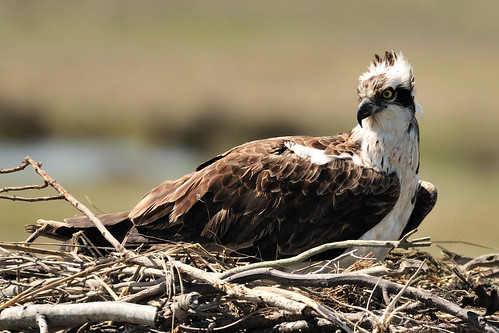
Ospreys are the only water-based raptors in America. These "fish hawks" are one of New Jersey’s largest raptors. They are well known and highly visible along coastal marshes. When hunting, they can completely submerge in water for fish which makes up almost all of their diet.
Ospreys winter in southern Florida and South America, but return to their previous nesting areas north to breed.
![]() |
| Osprey - photo via flickr.com/photos/albertovo5 |
Another species, like the eagle, that has been threatened by the past use of certain pesticides and loss of their natural habitat, the osprey is a threatened species of wildlife in New Jersey.
Listed as endangered in New Jersey in 1973, the osprey’s status rose to “threatened” in 1986 due to an increase in pairings increased from about 50 to more than 100. And our coastal sightings in NJ for 2017 were at 668 pairings.
Dylan worked with Ben Wurst, a habitat program manager for the Conserve Wildlife Foundation of New Jersey. Environmentalists began providing platforms for nesting in the 1970s and today about 75 percent of the state's ospreys nest in platforms.
The nesting areas have a 3-foot perch for the birds on 16-foot posts. Like many Scout projects, Dylan had many helpers. Major Hardware, a Cedar Grove store, donated all the hardware and
West Essex Building Supply Co. in nearby Verona discounted the lumber. The project cost still amounted to $1400 for the three platforms.
Eagle Scout project helps ospreys - via northjersey.com
Monday, March 27, 2017
Third Annual Shell-A-Bration on the Delaware Bay
| Photo via restorenjbayshore.org |
The Third Annual Shell-A-Bration on the Delaware Bay in New Jersey will be held on Saturday April 8th at 12:30pm - 4:30pm at Thompsons Beach, 163 Thompson Beach Road in Delmont.
You can volunteer to help "shell-a-brate" building a fourth oyster reef at Thompsons Beach in the Delaware Bay. The work will involve carrying bags of shell to a site just off the beach.
Dress to get wet and dirty. Layers are recommended as it may be chillier on the Bay. And you may want to bring a change of clothes for after the work is completed.
Following the reef build, enjoy a small campfire on the beach, a picnic-style lunch provided by Spanky's BBQ and family-friendly activities.
The American Littoral Society and Conserve Wildlife Foundation have helped restore beaches at a number of locations following Hurricane Sandy and is now working to establish near-shore shell bars at three of those sites. The reefs will prevent sand loss from wind driven waves. We have already established oyster reef living shorelines at South Reeds Beach, Moores Beach and Dyers Cove.
Although registration is not required, it is recommended. Please contact Quinn Whitesall quinn@littoralsociety.org for more information or to register.
Wednesday, February 22, 2017
Osprey Project Report Details Remarkable New Jersey Recovery
![]() |
| Osprey preparing to mate Photo: Matt Edmonds at en.wikipedia |
The nonprofit Conserve Wildlife Foundation of New Jersey (CWF) and New Jersey Division of Fish and Wildlife’s Endangered and Nongame Species Program (ENSP) today released the 2016 New Jersey Osprey Project Report highlighting the work performed to monitor and protect the state threatened bird of prey.
Some Highlights:
- In 2016, 376 known-outcome nests fledged an average of 1.78 young per active nest. That rate has averaged 1.74 in recent years, remaining well above the minimum necessary for a stable population (0.80 young/active nest).
- The 2016 productivity rate was near the long term average and suggests the population will continue to grow.
- Forty-two new nests were found this year.
- A state-wide census will occur in this year.
- Of the 376 known-outcome nests, 316 were found along the Atlantic Coast and 60 were found on Delaware Bay.
- A total of 670 young were produced from these known-outcome nests.
- A total of 361 young were banded by volunteers and biologists with USGS leg bands for future tracking.
- Population growth remains around 10% since approximately 2009.
The report notes that a total of 515 active nests were documented. A total of 670 young were produced from 376 known-outcome nests, and 361 young were banded by volunteers and staff with USGS leg bands for future tracking. The majority of nests are along the Atlantic Coast, while the most productive nests are located along the Delaware Bayshore (see end of release for report highlights).
“At the beginning of nesting surveys each year, I attempt to speculate on how well ospreys are doing,” stated CWF Habitat Program Manager Ben Wurst. “I started this year by simply saying that I’m optimistic for the positive outcome of the nesting season. Well, ospreys made my speculation seem quite dismal. I’m astonished by their continued growth while living in very close proximity to humans. I’m thankful for all support that we receive to help carry out this project to monitor and manage ospreys.”
Ospreys are the quintessential wildlife bioindicators in New Jersey and abroad. The continued monitoring of their population is critical for their long-term conservation and the health of the ecosystems where we live alongside ospreys.
“Only decades ago, ospreys had drastically declined across New Jersey and the nation, which makes their continuing recovery all the more remarkable,” said CWF Executive Director David Wheeler. “The ospreys’ expansion speaks both to the improving water quality of our estuaries and rivers, and the dedication and leadership of our State and CWF biologists and volunteers.”
In 2016, CWF continued to band young ospreys produced in Barnegat Bay with a red, alpha-numeric coded auxiliary band. Project RedBand is focused on ospreys that nest in the Barnegat Bay watershed from Point Pleasant to Little Egg Harbor. The main goal of the project is to engage the public in osprey management and conservation along the Jersey Shore. At the same time, while collecting data from re-sightings, biologists will learn about their dispersal, foraging habits, site fidelity, migration routes, and life span. In 2016, 62 red bands were fielded, putting the three-year total at 157. Five red-banded ospreys were re-sighted in 2016.
Over the past decade, CWF has conducted annual nesting surveys for ospreys while working in close partnership with ENSP. These surveys, performed each summer during the peak of their nesting season, cover around 80% of the known population, guiding conservation efforts across the state. The annual surveys would not be possible without the dedication of volunteer osprey banders and citizen scientists who monitor nests and report nesting activity online at www.osprey-watch.org.
Residents can help protect New Jersey's ospreys and all other rare wildlife by supporting the New Jersey Endangered Wildlife Fund when you file your state income tax this year and every year. Simply look for Line 59 on your NJ 1040 income tax return, and check-off for wildlife. Every dollar you donate goes directly to ENSP, enabling biologists to continue their work to restore, conserve and enhance New Jersey's populations of rare species. What's more, your contribution is matched with an equal amount of federal funding, further strengthening efforts to protect hundreds of imperiled species.
Conserve Wildlife Foundation of New Jersey (CWF) is a private, non-profit organization dedicated to the protection and preservation of New Jersey’s endangered and threatened wildlife and the habitats they depend on. We carry out our mission by researching and managing rare animal species, restoring habitat, educating New Jersey’s residents, and engaging volunteers in our conservation projects. Since the early 1990’s, CWF scientists and educators have helped conserve and protect a variety of at-risk species of wildlife in New Jersey, the most densely populated state in the nation.
Friday, September 23, 2016
Rare Wildlife Revealed: The James Fiorentino Traveling Art Exhibition,
There will be a traveling exhibition this fall of his artwork which depicts some of New Jersey’s most endangered and vulnerable wildlife species. His watercolors are lifelike depictions of rare wildlife in their natural surroundings.
The Opening Reception for the exhibit will be September 30, 2016D&R at the Greenway Land Trust www.drgreenway.org at 1 Preservation Place, Princeton, NJ 08540 and the exhibit will be open from September 6 - October 16, 2016. Gallery hours Monday-Friday, 10 a.m.-5 p.m.—please call ahead to confirm availability. 609-924-4646
Sales of the original paintings, limited edition digital prints and a book with a forward by Gov. Kean, as well as wildlife merchandise, will benefit D&R Greenway Land Trust and Conserve Wildlife Foundation of New Jersey.
For addditional locations and dates see conservewildlifenj.org/getinvolved/wildlifeart/
| James Fiorentino in his studio |
The artist's official website is jamesfiorentinonatureart.com
Wednesday, August 3, 2016
Flemington “BatCam”
![]() |
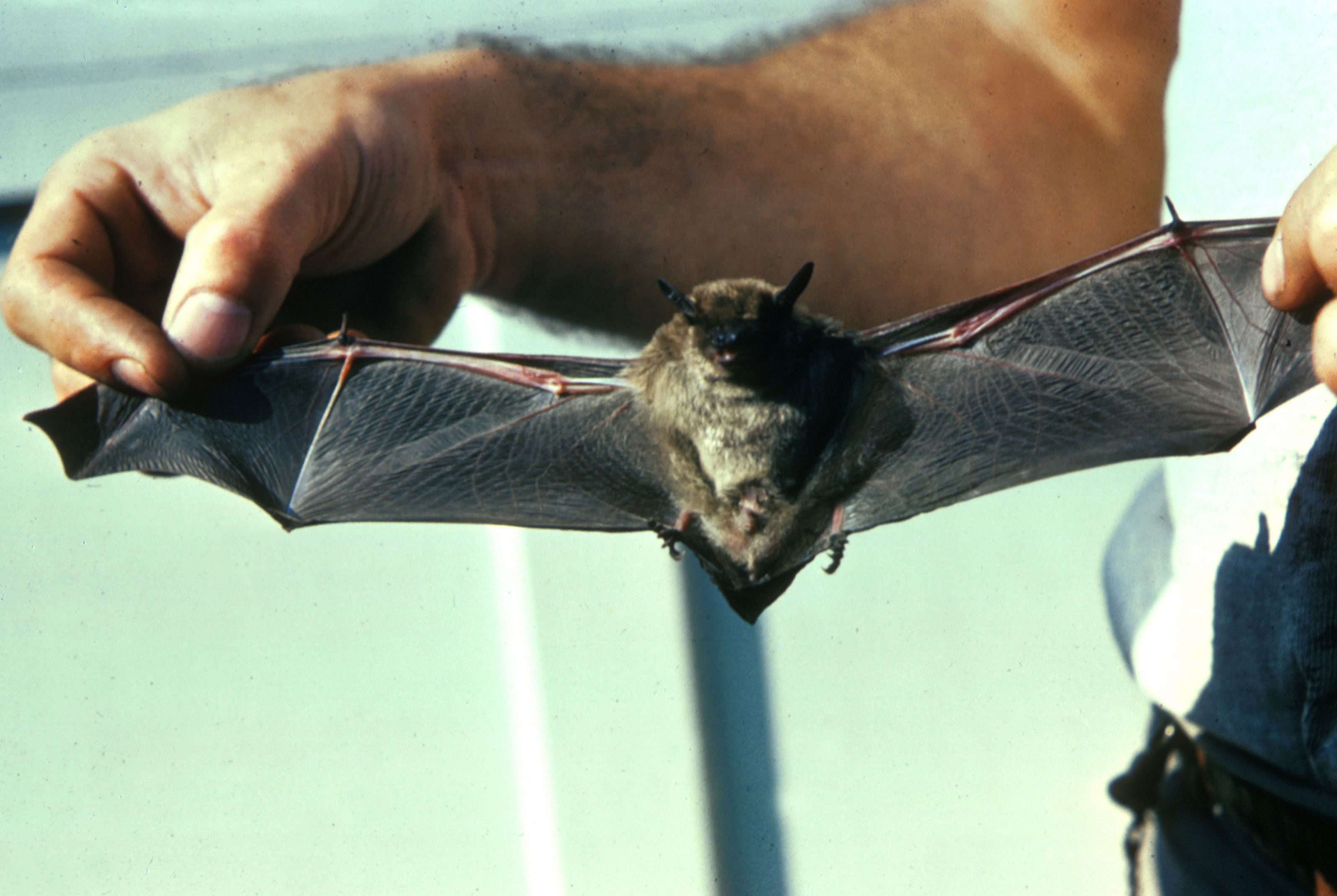
| Brown bat photo: wikimedia.org |
Conserve Wildlife Foundation of New Jersey (CWF) wildlife ecologist Stephanie Feigin, along with project partner MacKenzie Hall from New Jersey’s Division of Fish and Wildlife (NJDEP) and project interns from Rutgers University, streamed a bat banding LIVE on Facebook from a residential house in Flemington, New Jersey. The banding has reached over 200,000 online followers as of Thursday morning.
This banding survey was part of a long-standing maternity survey project conducted by CWF in partnership with NJDEP. These surveys allow us to gain important information about reproductive success, record weight, sex, and age status of the bats, assess bats for signs of white-nose syndrome, and band bats for future observation.
“Though going ‘live’ can be a bit nerve-wracking, I really felt this once-in-a-lifetime opportunity could make a difference. Not only do we want to give our viewers first-hand experience of our field biologists, we also want to give them the ability to see wildlife in a way they have never seen before,” said Feigin. “This technology gives us the ability to raise awareness for New Jersey’s rare wildlife, directly interacting with thousands of followers as we conduct important wildlife surveys to protect these imperiled species.”
During the banding survey and live-streaming, the scientists caught and banded over 35 big brown bats. Many New Jersey bat species have plummeted over the past decade due to the ravages of white-nose syndrome, an introduced fungus that interrupts bats’ winter hibernation.
In addition to banding bats, CWF coordinates acoustic bat monitoring, summer bat counts, mist netting and radio telemetry surveys, and white-nose syndrome research – all aimed at ensuring bats are given the best chance at survival.
This work is funded in part by Cooper Pest Solutions, EarthColor, and the Franklin Parker Conservation Excellence Grants Program.
“The main goal of our bat projects is to protect the bats we have in New Jersey, protect their habitats, learn more about their life cycles, and educate the public on the benefits of bats and how amazing and beneficial they truly are,” said Feigin. “By streaming live, I think we were able to shed new light on bats and allow the public to gain a better understanding of these special mammals.”
conservewildlifenj.org Conserve Wildlife Foundation (CWF) is the state's leading organization working to protect rare and imperiled wildlife. CWF utilizes field science, wildlife management, habitat restoration, education, and public engagement to help vulnerable wildlife species recover.
Monday, August 1, 2016
Additional Species Added to CWF's Field Guide
Recent status reviews by the state’s Endangered and Nongame Species Program for reptiles, amphibians, and butterflies, additional species within the state will be receiving an imperiled status of either Endangered, Threatened, or Special Concern. Six reptile species are being added as well as four amphibians and thirteen butterfly species.
For a list of list of all the new species included, see conservewildlifenj.org
Tuesday, November 24, 2015
Piping Plover Population Rebounds in 2015
The NJDEP Division of Fish and Wildlife and the Conserve Wildlife Foundation of NJ have released the 2015 Piping Plover Breeding Report. The data reveals that the population of breeding piping plovers increased 17% to 108 pairs in 2015, as compared to 2014.
Despite the increase, the population of this federally threatened, state endangered species still remains below the long-term average (118 pairs) since federal listing in 1986 and well below the peak.
“The rebound in New Jersey’s piping plover breeding population and a second consecutive year of robust chick productivity was a much needed outcome,” said Conserve Wildlife Foundation Beach Nesting Bird Project Manager Todd Pover. “We need to continue our intensive management for a number of years to sustain any recovery, but we were very pleased to have finally broken the recent cycle of low nesting success and the record low number of nesting pairs in 2014.”
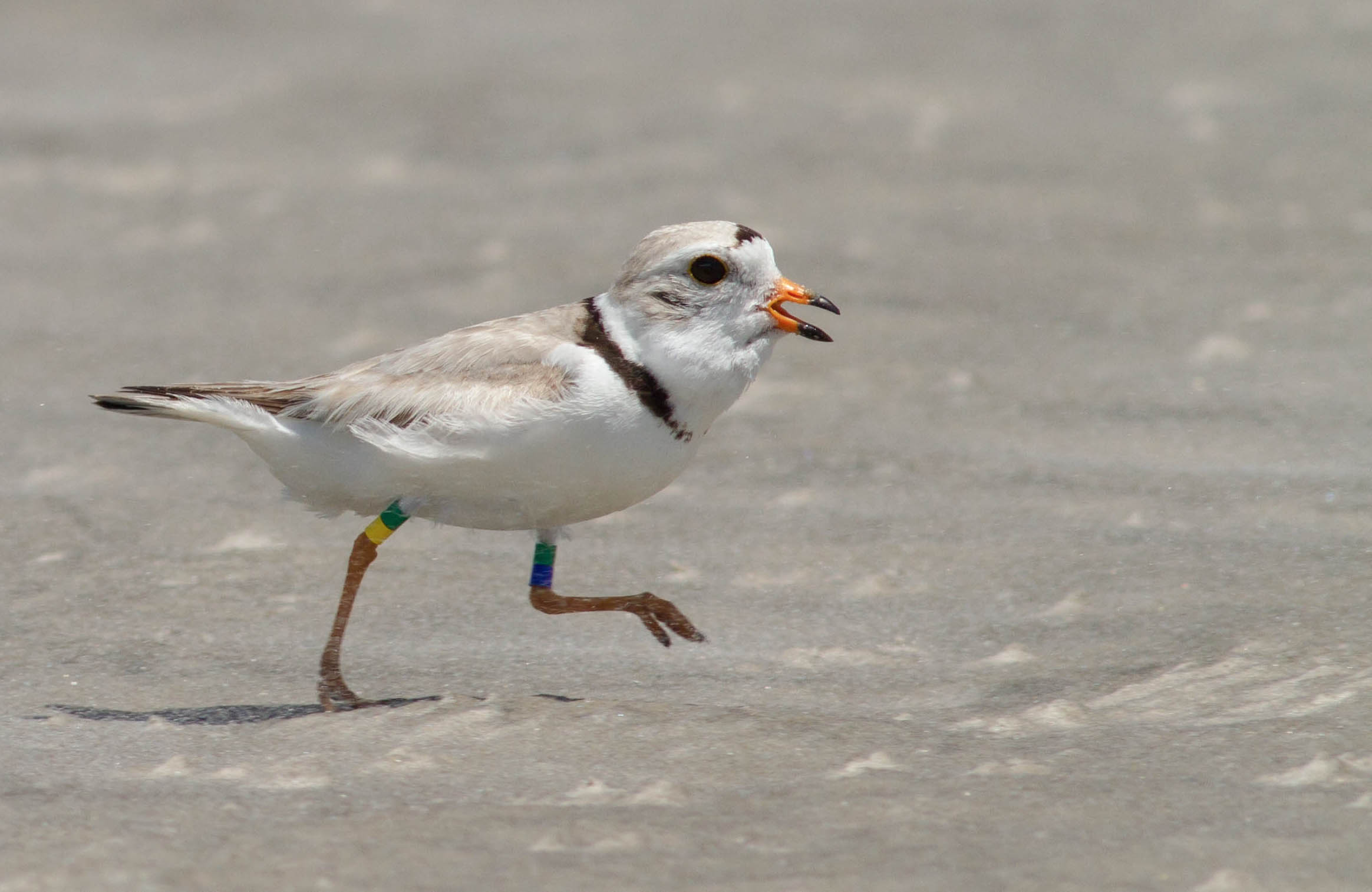
The piping plover – a small sand-colored shorebird that nests in New Jersey as part of its Atlantic Coast range from North Carolina up to Eastern Canada – face a number of threats, including intensive human recreational activity on beaches where they nest, high density of predators, and a shortage of highly suitable habitat due to development and extreme habitat alteration.
Federally listed as a threatened species in 1986, piping plovers have since recovered in some areas of the breeding range. Yet piping plovers continue to struggle in New Jersey, where they are listed by the state as endangered.
“As a species dependent on natural beach habitat, piping plovers face a particularly daunting challenge along New Jersey’s heavily developed and dynamic coast,” said Conserve Wildlife Foundation Executive Director David Wheeler. “Our dedicated scientists, partners, and volunteers are working tirelessly to ensure piping plovers remain a beloved and healthy presence along the Jersey Shore and beyond.”
CWF, in close coordination with NJDFW’s Endangered and Nongame Species Program, oversees piping plover conservation throughout New Jersey. Staff and volunteers help erect fence and signage to protect nesting sites, monitor breeding pairs frequently throughout the entire nesting season from March to August, and work with public and municipalities to educate them on ways to minimize impacts. Although conservation efforts on the breeding ground remain the primary focus, in recent years, CWF has also begun to work with partners all along the flyway, in particular on the winter grounds in the Bahamas, to better protect the at-risk species during its entire life-cycle.
The statewide fledgling rate, which includes data collected by partners at 19 active nesting sites throughout the state, was 1.29 fledglings per pair, down slightly from 2014 (1.36 fledglings/pair), but still one of the highest statewide levels since federal listing. Furthermore, both years were above the 1.25 fledgling rate believed necessary to maintain the range-wide Atlantic Coast population of piping plovers.
Statewide pair-nest success, the percentage of pairs that successfully hatch at least one nest, was high at 79%, well above the average since federal listing. Although population and productivity are ultimately the most important measures of recovery success, hatch success is an important metric to demonstrate the effectiveness of on-the-ground management.
Northern Monmouth County, as a region, continued to account for the largest percentage of pairs in the state (55 pairs or 51%), with Gateway National Recreation Area – Sandy Hook Unit accounting for most of those pairs.
The region comprised of North Brigantine Natural Area and the Holgate and Little Beach Units of the Edwin B. Forsythe National Wildlife Refuge accounted for the other significant concentration of breeding pairs in the state (43 pairs or 40% of the statewide total).
Holgate had the largest jump in abundance for any individual site, doubling its breeding pairs to 24 in 2015 (up from 12 in 2014). This increase was the result of highly suitable overwash habitat created at the site by Hurricane Sandy and the high breeding success that helped spur.
Cape May County, the southernmost region of the state, consisting of Ocean City to Cape May Point, continued its long-term downward trend, accounting for just 8 pairs in 2015, compared to 11 pairs in 2014 and 43 pairs in 2004 at its peak.
For more information, including a link to the report, visit http://www.conservewildlifenj.org/blog/2015/11/19/piping-plover-population-rebounds-from-historic-low-in-new-jersey/ on the CWF website.
For information on Beach Nesting Bird Management in New Jersey, visit http://www.njfishandwildlife.com/ensp/bnbmgt.htm on the Division's website.
Friday, October 16, 2015
Species on the Edge 2.0 Multimedia Contest Winners
The Species on the Edge 2.0 Multimedia Contest is a fun and educational way for high school students to work with technology and showcase their talent, creativity, and a love of nature. The contest helps to develop students’ experience in STEAM (Science, Technology, Engineering, Art and Mathematics). It is free to enter and open to all New Jersey high school students.
Prizes include a 1st prize of $1,000 in scholarship money and a 2nd prize of $500 and a 3rd prize of $250 in scholarship money. And all entries are eligible to win a drawing to spend a day in the field with a wildlife biologist.
This year's first place winner is David Tattoni, a senior at Peddie School in Hightstown, who created a YouTube channel featuring wildlife and wild places. For example, he worked with a piping plover biologist (shown below). The piping plover is a NJ endangered beach nesting bird.
The second place winners are Priyanshi Jain and Victoria Momyer, seniors at Biotechnology High School in Freehold, who developed the website “New Jersey Wilds” and its accompanying Facebook page.
The third place winner is Kayleigh Young, a junior at Cresskill High School in Cresskill, who produced the video "Endangered in New Jersey," which features interviews of her teachers and classmates focused on the importance of wildlife conservation.
More information on the contest and the winners on the Conserve Wildlife Foundation of New Jersey website.
Friday, August 7, 2015
Tenth Annual Women & Wildlife Awards
Wednesday, October 28, 2015
Duke Farms, Hillsborough, New Jersey
The event honors outstanding women for their contributions to wildlife conservation. It includes a cocktail party and silent auction on Wednesday, October 28, 2015, from 6:00 p.m. to 9:00 p.m. This year's event will have keynote speaker Governor Christine Todd Whitman.
You are invited to celebrate New Jersey’s wildlife and the women who protect our unique biodiversity. Tickets go on sale this month and the proceeds benefit Conserve Wildlife Foundation of New Jersey’s work to protect our rare and imperiled wildlife.
http://www.conservewildlifenj.org/getinvolved/event/women/
Wednesday, July 1, 2015
Women & Wildlife Awards 2015 Nominations Open Until July 24, 2015
For the 10th year, Conserve Wildlife Foundation of New Jersey will present Women & Wildlife Awards to special individuals for their achievements, the advances they have made for women in their professions, their efforts to increase awareness of rare species and the habitats they depend on, and their contributions to New Jersey’s wildlife.
By acknowledging these special individuals, CWF hopes to encourage more young women to strive to make a positive impact on species and habitat protection, especially through the biological sciences. Conserve Wildlife Foundation encourages you to take this opportunity to nominate a woman who has distinguished herself in the service of New Jersey’s wildlife.
Nominations will be accepted in three categories:
Leadership
Inspiration
Education
The nomination form will be accepted through Friday, July 24, 2015. Nominations submitted last year will automatically be reconsidered this year.
Sunday, May 10, 2015
Scholarship Contest for New Jersey High School Students
The Conserve Wildlife Foundation of New Jersey's "Species on the Edge 2.0 Multimedia Contest" is open to all New Jersey high school students.
The contest invites students to submit a video, app, podcast, digital graphic design, webpage, or other multimedia component showing why wildlife is important to protect in New Jersey.
All entries are due by Friday, May 22, 2015.
Prizes, sponsored by PSE&G, include:
1st prize: $1,000 in scholarship money
2nd prize: $500 in scholarship money
3rd prize: $250 in scholarship money
All entries will also be eligible to win a drawing to spend a day in the field with a wildlife biologist!
Friday, April 24, 2015
Harbor Seals in New Jersey
| Seals hauled-out at Sandy Hook, NJ. © Joe Reynolds |
Conserve Wildlife Foundation of New Jersey (CWF) and Jenkinson’s Aquarium today announced the release of a new interactive, digital story map that showcases harbor seals in New Jersey. A story map is a web-based interactive map embedded with multimedia content, such as text, photographs, and video. Visit ConserveWildlifeNJ.org to view the story map.
The Conserve Wildlife Foundation of New Jersey (CWF) is a private, non-profit organization dedicated to protecting New Jersey’s rare wildlife species and the diverse habitats they depend on. We carry out our mission by researching and managing imperiled species, restoring habitat, educating New Jersey’s residents, and engaging volunteers in our conservation projects. Since the early 1990’s, CWF scientists and educators have helped conserve and protect a variety of at-risk species of wildlife in New Jersey, the most densely populated state in the nation.
Monday, April 20, 2015
Beaches on Delaware Bay Continue to Undergo Restoration
A continuing story in New Jersey since Hurricane Sandy has been the restoration of the beach area on Delaware Bay that are spawning grounds for horseshoe crabs and feeding areas for shorebirds.
It's a story worth retelling as these important populations of shorebirds and horseshoe crabs need the protection that comes this year with the restoration of more beaches on New Jersey’s side of Delaware Bay.
Thompson’s Beach, on a remote stretch of the Cumberland County shore, will see the removal of shattered bulkheads and the replacement of 40,000 cubic yards of sand for the spawning of thousands of horseshoe crabs.
Four more beaches and a marsh are due for restoration over the next two years in a federally funded $5.1 million operation on behalf of the American Littoral Society and the Conserve Wildlife Foundation of New Jersey.
A ban on horseshoe-crab harvesting on New Jersey beaches has shown an increase in the bay’s population of red knots. But the crabs are still taken for medical uses and as bait and are harvested on Maryland and Virginia shores even though they are part of the Delaware Bay population.
The red knot migrates from southern Argentina to Arctic Canada via the Delaware Bay beaches each spring and relies on horseshoe crab eggs for food to fuel that journey. The bird population was at its lowest in the early 2000s and has recently stabilized at about 25,000.
That is encouraging, but it is less than a third of the 80,000 birds that biologists consider sustainable, and well below its peak of about 92,000 in the 1980s. The red knot was recently listed as threatened under the federal Endangered Species Act,.
Other shorebirds that use the bay beaches have also suffered a sharp decline and may be more endangered than the red know. For example, the ruddy turnstone's numbers are down to 14,000 from some 150,000 during the 1980s.
Larry Niles, a consulting biologist who designs and manages the beach-restoration program and who previously headed the endangered species program at New Jersey’s Department of Environmental Protection, estimates that some 500,000 male crabs and 150,000 females are harvested each year for their blood, which contains LAL, an extract used to ensure that medical products such as intravenous drugs and vaccines are free of contamination. The crabs are bled and then returned to the ocean in an operation that may kill as many as half of them, he said.
The medical harvest has cut the number of females to about 4 million from about 12 million in the 1990s, he said. “There’s no evidence of recovery in the crab population,” he said. “We’re not going to increase the bird population until the crab numbers start increasing.”
Tuesday, March 3, 2015
How Many Salamanders?
Ecologist Raymond Semlitsch and his doctoral student Katie O’Donnell are researching part of the Mark Twain National Forest in Missouri for salamanders. They crawl along the ground, raking the leaf litter with their hands, looking under rocks and logs, and when they find salamanders, they lift them gently from the dirt to be weighed and measured.
They are building a model of salamander populations and using the data from the sites they studied, they can estimate salamander populations in other parts of the woods.
How many salamanders are in the woods? The answer, according to the model, is between 1.88 and 2.65 billion salamanders. That’s within a district of the Mark Twain National Forest about 2,800 square kilometers in area, and those numbers 2-4 times higher than estimates made by other scientists in the 1970s.
Those earlier researchers, studying salamanders in the woods of New Hampshire, didn’t account for amphibians hiding underground. And more recent studies of other salamander species have found up to 10 times more salamanders than the 1970s research.
What about here in New Jersey?
NJDEP, Division of Fish and Wildlife’s Endangered and Nongame Species Program and the Conserve Wildlife Foundation of NJ have enhanced a complex of 12 vernal pools in Cape May County to create habitat for state-endangered eastern tiger salamanders and other vernal pool breeding amphibians. The interconnecting pools allowed eastern tiger salamanders to return to vernal pools to breed in early winter.
In mid-December, eastern tiger salamander egg masses can be found in the pools and egg masses collected from other sites have also been introduced into these pools as supplements.
Every year, volunteers on a wooded road in northwestern New Jersey spend some early spring nights looking for frogs and salamanders to count.
They wait for the amphibians to cross the road on their way from the wooded uplands where they winter to the marshy lowlands and vernal pools where they will do their spring mating
Wood frogs and blue-spotted salamanders are more common amphibians in northern New Jersey and not endangered.
The NJ’s Endangered and Nongame Species Program and Conserve Wildlife, along withe the NJ Audubon Society are partners on the Amphibian Crossing Survey Project. Relying again on volunteers to help monitor sites in Warren and Morris County, they identify additional crossings throughout the northern region of the state. (Due to limited resources, they are currently focusing efforts on northern New Jersey.)
It is estimated that one third of the world’s amphibians are threatened with extinction, according to the International Union for the Conservation of Nature (IUCN).
SOURCES:
A Surfeit of Salamanders
NJ Online Field Guide for Reptiles and Amphibians