Showing posts with label Delaware Bay. Show all posts

Thursday, June 23, 2022

The Ancient Crab That Isn't a Crab

Fossil horseshoe crab dead in its tracks
Fossil horseshoe crab ancestor Mesolimulus an extinct arthropod


You might know that horseshoe crabs go back before dinosaurs. Their fossil ancestors lived 445 million years ago. (Dinosaurs appear about 200 million years later.) And they survived the extinction event that wiped dinosaurs from the planet 66 million years ago. 

There are 4 species today. In New Jersey, we know the species that is found in the Atlantic coastal waters of North America and the Gulf of Mexico. The three others are found in Asia’s coastal waters.

Did you know that are "blue bloods?" They don't have the hemoglobin that makes human blood red. Horseshoe crabs have hemocyanin which is also an oxygen-carrying protein that contains copper (our blood has iron) and that gives horseshoe crab blood a bright blue color.

That unique blood contains an enzyme that causes the blood to coagulate when exposed to deadly bacterial endotoxins, and so biomedical companies use this to test medicines, vaccines, and implants for endotoxins to insure it is safe for people. Unfortunately, many horseshoe crabs die in the process of collecting their blood. Scientists are now looking for synthetic alternatives to the enzyme.

These crabs walk on 10 legs (5 pairs) but they have another pair that they use to bring food to their mouths like arms. Without jaws, they crush worms, algae, clams, and other small prey from the ocean floor with those legs.

Those legs and its pointed tail look pretty scary to a child (and some adults!) but they are harmless. The tail (telson) is only used when a crab gets stuck upside-down so that it can flip over or as a rudder to swim upside down. When washed up on dry land, the tail isn't as effective, so if you see one it's safe to turn it over and get it back to shallow water.

That telson might not work as a sword but their tough shell is a pretty good defense for adults when they are right-side-up against other predators including sea turtles, sharks and gulls. 

Image by Chris Engel from Pixabay

Spotting a horseshoe crab in the water or on a beach is common enough at the Jersey Shore or in the bays that they even appear on t-shirts and as jewelry. Although you may spot this crab at any time of year on a Jersey beach, the most important time for them is from May to early June when they arrive on beaches to lay eggs.

The largest populations live in the Delaware Bay and they hit the beaches there during high tides that coincide with the full moon or new moon. Females dig nests in the sand and bury a cluster of about 4,000 tiny, blue-green eggs, and they can lay about 20 egg clusters each year.

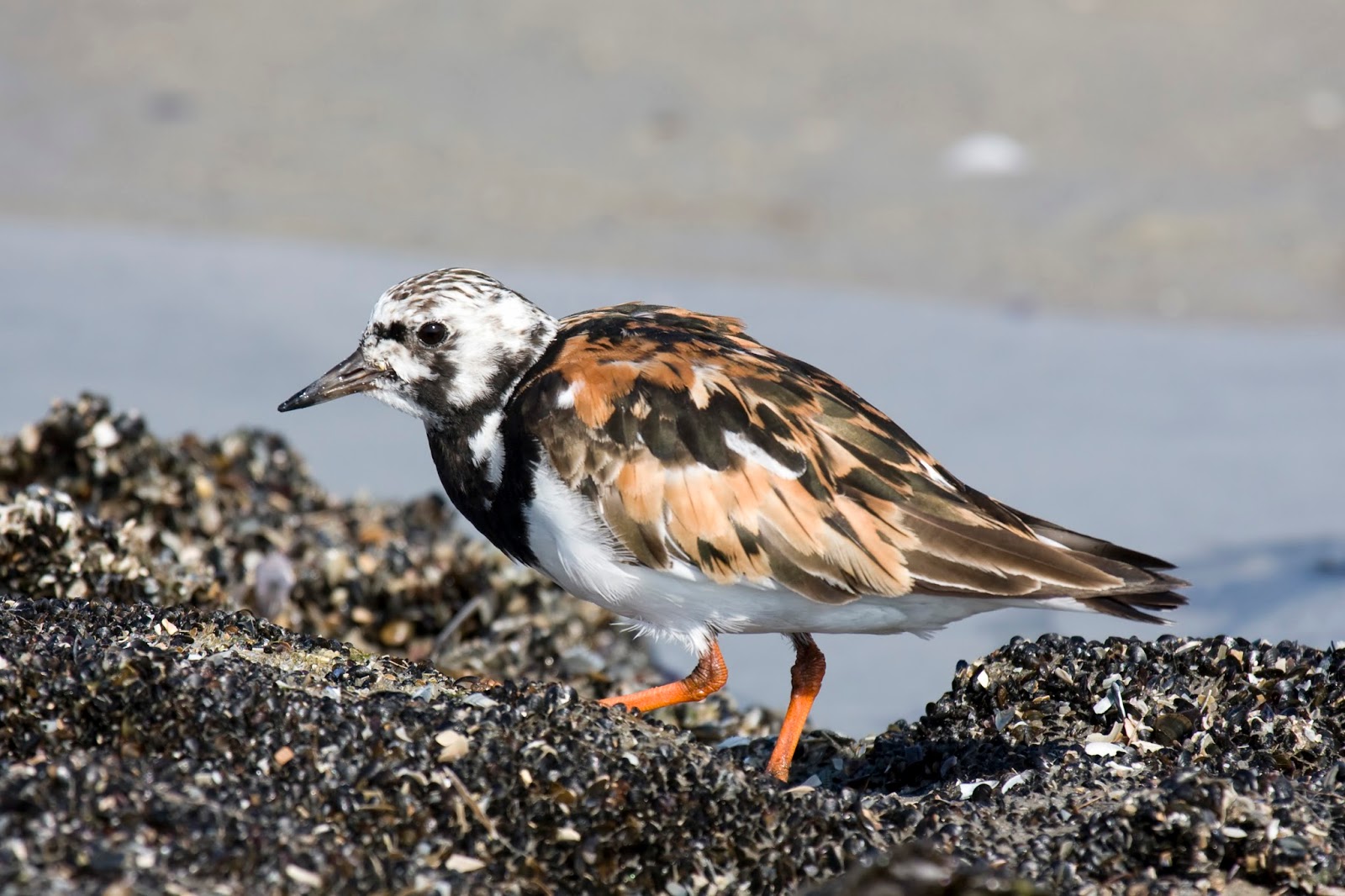
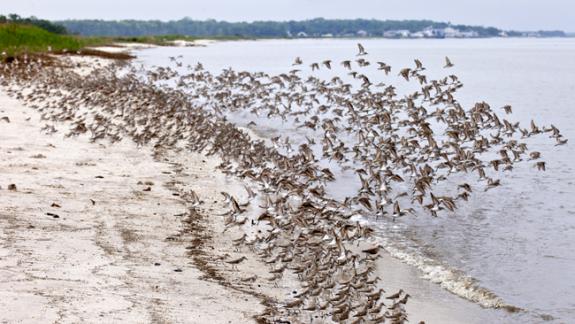
That sounds like more than enough eggs but thousands of shorebirds also arrive there at that time to feast on the eggs. It is a critical food supply for migrating species such as red knots, ruddy turnstones, and sanderlings. The red knots need this final food stop before they complete their 9,300-mile migration from South America to the Arctic.

If eggs survive they will hatch in two to four weeks and the very vulnerable baby horseshoe crabs go to shallow, sheltered waters to live in for their first year as they grow and molt. 

Besides medical uses and marine and bird predators, humans use horseshoe crabs as bait to catch eels and whelk (sea snails), and that has really hurt crab populations in the past few decades.

The Atlantic horseshoe crab is currently considered “Near Threatened” by the IUCN. While not currently listed as a threatened species by the State of New Jersey, there is currently a moratorium on the harvest of horseshoe crabs within the state.

We always refer to this species as a horseshoe crab but they aren't crabs. They are arthropods and are more closely related to scorpions and spiders. They are the only living members of the Xiphosura order.

Horseshoe crab with shells 2
Sometimes you'll see them with some hitchhiking creatures attached to their shell

Friday, May 8, 2020

TODAY: Introduction to Horseshoe Crabs in Delaware Bay

Join Quinn Whitesall for a Facebook Live event today at 11am to learn all about horseshoe crabs. 

Quinn will cover horseshoe crab anatomy, the crabs' significance to Delaware Bay ecology, threats they face, and what the American Littoral Society has been doing to protect them.


Sunday, September 8, 2019

Flesh-Eating Bacteria in New Jersey?

False color scanning electron micrograph of Vibrio vulnificus bacteria 

Let's not panic, but you might see headlines like this one from Rutgers,  "Flesh-Eating Bacteria Move Into New Waters" in which a Rutgers infectious disease expert discusses how to stay safe as the bacteria that causes necrotizing soft tissue infections moves into new, more northern waters.

Sounds really bad, right? But what is it, and does it affect us in New Jersey?

Vibrio vulnificus is a bacterial species that can cause an infection that kills the body’s soft tissue. V. vulnificus may not be a commonly known bacteria, but is is the most common cause of death due to seafood in the United States. It is the cause of 95% of deaths in the United States that are known to have happened because of ingested seafood. It also occurs when an open wound comes in contact with salt water or brackish water.

Infections caused by the bacterium, which is also known as the scarier "flesh-eating bacteria," are becoming more common in northern waters. Why the increase? It is because surface temperatures are rising due to climate change. A recent study showed that infections are increasing in areas with typically colder water, such as the Delaware Bay.

The Centers for Disease Control and Prevention estimates that about 80,000 people contract Vibrio infections each year, 52,000 from contaminated seafood. Although most infections subside within a few days, about 500 people are hospitalized and 100 die, usually within a few days of infection, annually.

Another bacterium, Aeromonas hydrophila, causes similar infections and is found in fresh or brackish water. Most infections occur between May and October when water temperatures are highest.

David Cennimo, an infectious disease expert at Rutgers New Jersey Medical School, said that while the infections are rare, people should take preventive measures when swimming in natural waters and act quickly if infection is suspected. When Vibrio infects soft tissue, it looks like a severe skin infection. The area may be very inflamed and very red, with blisters. It may also become dusky-blue like a severe bruise. You may have a fever, and in severe cases, confusion. Seek emergency medical care immediately as the infection can progress rapidly to death.

The majority of infections by these bacteria are gastrointestinal, like food poisoning – in which case they are usually relatively benign. Patients experience watery diarrhea, vomiting, cramping, abdominal pain and sometimes fever. Symptoms usually start one day after ingestion and last for three days.

For most people, the skin infection is easily treated with antibiotics. However, necrotizing infections can be very serious and move very fast. The bacteria have mechanisms to evade the immune system. You are especially at risk of a severe and rapidly progressive Vibrio infection if your immune system is compromised by conditions such as liver disease, cancer, diabetes or HIV, or receive immune-suppressing therapy or are recovering from stomach surgery. The cause of death from these infections is overwhelming sepsis, when the body’s response to an infection causes damage to its own organs.

How can people protect themselves?

If you have open cuts, consider avoiding the water, especially saltwater and brackish water. Cover the wound with a waterproof bandage if there’s a possibility of contact with water or raw seafood or raw seafood juices. In addition, the CDC advises that you cook all seafood thoroughly and wash your hands after handling raw shellfish. Alert your doctor if you develop a skin infection after contacting saltwater or brackish water, raw seafood or raw seafood juices.

If you are in an at-risk group, wear clothes and shoes that can protect against cuts and scrapes when in saltwater or brackish water, and protective gloves when handling raw seafood.

SOURCE:  Rutgers Today by Patti Verbanas


Saturday, May 25, 2019

Horseshoe Crabs Come Ashore from the Delaware Bay


Each May and June, millions of Atlantic horseshoe crabs come ashore along the East Coast to spawn. The height is usually when there is a full moon or new moon, creating the highest tides of the month. 

The result is those familiar helmet-shaped shells of Limulus polyphemus and trillions of their greenish eggs.

At least 11 different species of shorebird rely on horseshoe crab eggs as their primary food source for about 2-3 weeks during their migration. Migrating to their breeding grounds in the Arctic, some come from as far away as the southern tip of South America. Recent declines in the horseshoe crab population have triggered similar and more drastic declines in shorebird populations.

Red knots feeding near horseshoe crab. Photo by Gregory Breese/USFWS


Horseshoe crabs are often called "living fossils" as they are thought to have changed very little in the last 450 million years. Scientists are still not sure if they were land-based arachnids that moved into the sea or an ancestor that stayed put in the oceans. Recent genetic research favors arachnids, placing them alongside spiders and scorpions.

The horseshoe crabs spawn from Maine to the Yucatan Peninsula, but our own Delaware Bay is the center of activity. The warm water and mild surf with sandy shores must be appealing because some of the crabs have come from more than 60 miles out from the continental shelf off the mouth of the bay.

The blue blood of the Atlantic Horseshoe crab is used in medical testing of equipment and vaccinations to detect bacterial contamination in minute quantities, and the crabs have always been harvested as bait. The Atlantic horseshoe crab is currently considered “Near Threatened” by the IUCN. While not currently listed as a threatened species by the State of New Jersey, there is currently a moratorium on the harvest of horseshoe crabs within the state. With this law, it is illegal to remove a horseshoe crab, dead or alive, from its habitat in the wild.


conservewildlifenj.org/species/fieldguide/view/Limulus-polyphemus/

fws.gov...Modeling-a-Future-for-Horseshoe-Crabs-and-Red-Knots


Friday, May 4, 2018

Tracking Sturgeon in Delaware Bay

The Division has again deployed acoustic receivers in the Delaware Bay to track migration patterns of endangered Atlantic sturgeon.

Those fishing inshore waters may encounter the white buoys marked "NJDEP Research" in water depths generally less than 20 feet.

For more information, including a link to a buoy location chart and data from last year's research, visit njfishandwildlife.com/news/2018/sturgeon_research18.htm

Sunday, April 8, 2018

The Delaware Bay Looks Reddish - Don't Panic

If this week you see portions of the Delaware Bay, Stow Creek and Mad Horse Creek looking reddish in color, don't panic. It is not pollution, red tide or anything dangerous to wildlife, fish or people.

Two dye applications will be made in the upper bay in Salem County starting near early morning high tides the week of April 9 and continuing until late evening.

This dye release is a way to measure water flow and dispersion in waters used for shellfish harvesting. The dye used in the study is not harmful to people or the environment and is used commonly in water-quality and dispersion tests.

Information collected during this study will be used to evaluate potential water quality improvements that would result in a water classification upgrade.

The dye will be pumped into the bay from a point on land near Stow Creek. The extent of discoloration could be fairly widespread but will disperse.

The study is known as a hydrographic dye dilution study and is conducted in conjunction with the U.S. Food and Drug Administration to aid in the classification of shellfish harvesting waters. Stormwater runoff from uplands and wetlands inhabited by wildlife affects the quality of water in the bay.


The DEP’s Bureau of Shellfisheries and Bureau of Marine Water Monitoring manage and protect more than 720,000 acres of estuarine and ocean beds used to raise clams, oysters and mussels for public consumption. The DEP works closely with the FDA and New Jersey Department of Health to ensure the safety of shellfish brought to market.


For more information on the DEP’s Bureau of Shellfisheries: nj.gov/dep/fgw/shelhome.htm

For more information on the DEP’s Bureau of Marine Water Monitoring: nj.gov/dep/bmw/

Source: nj.gov/dep/newsrel/2018/18_0025.htm

Tuesday, November 28, 2017

Endangered Sturgeon and the Delaware River

Atlantic sturgeon at the Northeast Fishery Center are part of a project to raise sturgeon from egg through sexual maturity. If successful, the Fishery Centers work will provide a roadmap to the development  of domestic broodstock and help in efforts to restore Atlantic sturgeon to their native range. Photo: U.S. Fish and Wildlife Service Northeast Region

Sturgeon is not a fish many people know about because you don't often see the fish in stores or on menus. But a century ago an estimated 180,000 female Atlantic sturgeon lived in the Delaware River. Those females produced enough eggs, sold as caviar, to make the Delaware River and Bay area the caviar capital of America.

The fish is also smoked and eaten worldwide, though not as popular as it was in the late 1800s and early 20th century.

In 1890, an estimated 6 million pounds of the 7 million pounds of sturgeon caught on the East Coast came from Delaware Bay.

Sturgeon are now endangered there since 2012 when less than 300 spawning sturgeon were believed to be in the Delaware River.

Are they recovering? A piece on NJ.com asks if enough being done or in other words, is a fishing moratorium enough to have them make a comeback, or is further intervention needed?

NOAA Fisheries Service reports led to five population segments of the Atlantic sturgeon being listed as endangered species. The New York Bight population segment found in the Delaware River and the Hudson River is one of the five.

Since caviar and sturgeon as food are not the industry they once were, what threatens the species? Vessel strikes are a big factor along with low water quality in rivers, dredging projects and accidental catching.

In New Jersey, the Division of Fish and Wildlife has placed acoustic receivers in Delaware Bay to track the sturgeon's migration patterns for the endangered population.

Monday, June 5, 2017

Jersey Beaches, Crabs and Birds

With summer nearing, many of us in New Jersey are ready to drive down the shore. No matter how bad the Garden State Parkway traffic might be, you'll never have the journey that some take to get to a Jersey beach.

These beach visitors come early, mostly before the official Memorial Day weekend that unofficially open the season here. They are birds that have to supply their own nonstop 6,600 mile flight over the Amazon rainforest and ocean,

Red Knots
Red knots arrive in New Jersey very hungry and lightweight and bulk up to twice their weight by eating horseshoe crab eggs and adding about 3 percent of their body weight each day.

For thousands of years, this ritual journey has been reenacted and the Delaware Bay has been the critical food rest stop for migrating shore birds each spring.

The red knots and ruddy turnstones are here around mid-May after their sojourn from South America.

Ruddy Turnstone
In the late 1800s and early 1900s, their stopover was not very satisfying. In those days, as many as 2 million horseshoe crabs were harvested each year and ground up as fertilizer for farms in South Jersey. That usage fell off as better fertilizers were found and was off by the 1960s.

There were a few decades when the main threat was fishermen who used the crabs for bait. In the late 1990s, the demand for them as bait for eel and conch fishermen increased. Those fishermen had been using shellfish bellies discarded by South Jersey processing plants, but when the processing plants started closing and waste disposal laws were made tighter, the supply disappeared.

The horseshoe crabs were also in demand for the biomedical industry. The crabs’ blue blood is used to make a clotting agent that helps detect human pathogens in patients, drugs and intravenous devices. Thankfully, in this process the crabs are returned to the water after blood is extracted, but not all survive the process. More than a half a million crabs were used for biomedical purposes in 2015.

Of course, not only were the crabs affected, but also the numbers of birds who were returning to the beaches.

After a steep population decline, a harvest management plan was put into place for horseshoe crabs in Delaware Bay, Where once 2.5 million crabs were taken annually, now New Jersey, Delaware, Maryland and Virginia harvesters are restricted to 500,000 male crabs and no females.

New Jersey has gone beyond the restrictions and has had a complete ban on horseshoe crab harvesting since 2008.


Horseshoe crabs at Reeds Beach

Hopefully, the Delaware Bay will remain the largest concentration of the prehistoric horseshoe crabs in the world. Red knot numbers have stabilized. Conservationists still work towards those numbers rebounding up. The red knot is considered threatened, and it is listed as endangered by New Jersey.

And after their visit to our state, the birds still have another 3000 miles to go to their breeding grounds in the Arctic. Think about that the next time you're stuck in Parkway traffic on the way to the beach.

Wednesday, April 19, 2017

Horseshoe Crabs and Shorebirds Return to Delaware Bay

USFWS Photo

Late April means that a ritual of "living fossils" moving onto beaches will happen again.

The Wetlands Institute newsletter reminded me that the migration and spawning of horseshoe crabs has been happening for more than 450 million years is here again.

And where is the largest population of spawning horseshoe crabs in the world? Delaware Bay.

They can be found from Maine to the Yucatan Peninsula. Limulus polyphemus, the American Horseshoe Crab, is actually more closely related to spiders, ticks, and scorpions than crabs.

The migration and spawning also brings shorebirds who are migrating from Central and South America to Delaware Bay for a rest stop and critical meal. The shorebirds have a 3,000 – 9,000 mile annual journey to their Arctic breeding grounds.

Humans have a variety of positive and negative interactions with horseshoe crabs.

  • Native Americans along the Delaware Bay and River ate their eggs. 
  • They were used as fertilizer and hog food in in the 1800s and it was an active industry on Delaware Bay.
  • Their white blood cells contain a chemical (LAL) used to test for contaminants in injectable drugs and vaccines and other medical applications.
  • They are still used as bait to catch eel and channeled whelk, mostly for overseas markets, but NJ has a moratorium on the harvesting of the crabs due to over-harvesting.
  • Development along the Delaware Bay has reduced access for the crabs to spawn, but there are ongoing restoration efforts.

Baby horseshoe crab  - via Wikimedia
The combination of crabs and birds brings many people to the bay to observe. Besides the birds, you might see female crabs with males in tow coming ashore on the incoming tide. Her fertilized sticky, green eggs are placed in the sand in several nests, and the tide will take the crabs back out into the shallows to wait until the next incoming tide and the process will continue. A full moon (May 10) and higher tides are usually the peak times, and a female can lay 80-100,000 eggs during this spawning.


A number of groups participate in the reTURN the Favor project 
which works to rescue stranded horseshoe crabs by freeing crabs 
and working on projects  to help remove debris from beaches.

May 20-21 
with workshops, demonstrations, and field trips that focus on the crabs 
and their role in shorebird migration. 


Mating pair of horseshoe crabs   - via Wikimedia


Thursday, May 7, 2015

Full Moons, High Tides and Horseshoe Crabs

Horseshoe Crabs at Delaware Bay 
Photo: Greg Breese/ U.S. Fish and Wildlife Service

The recent Full Moon for May is a reminder to me that the time is here for horseshoe crabs (Limulus polyphemus) during the high tides of the new and full moons of early spring.

The ancient horseshoe crab evolved during the Paleozoic Era (540-248 million years ago) and although we call it a "crab," it is a species more closely related to spiders and scorpions.

The female horseshoe crabs will emerge from their muddy beds this month for spawning and will dig several nests to lay their eggs.

The males, one-third the size of females, attach themselves to the rear of the female's carapace and are pulled over the nests to fertilize the eggs.

Horseshoe crabs "protect" their eggs by covering their nests with sand, but wind and waves and especially visiting migratory shorebirds take many of those eggs. Shorebirds stopping in Delaware Bay on their travel along the Atlantic coastline. Shorebirds almost double their weight from feeding on horseshoe crab eggs which gives them the energy source that enables them to continue their migration north.

Red Knots at Delaware Bay
Photo: Greg Breese/ U.S. Fish and Wildlife Service
Until the 1990's, the harvest of horseshoe crabs was regulated by individual states, but in 1998, an Interstate Fisheries Management Plan was adopted by the Atlantic States Marine Fisheries Commission (ASMFC). Biologists from state and federal agencies participate in a Cooperative Tagging Program to gain information about horseshoe crab migration patterns, distribution, abundance, and mortality.

Horseshoe crabs will molt several times before they reach sexual maturity at between 9 and 11 years of age.

Horseshoe crabs are harvested commercially primarily as bait to catch whelk (conch), American eel, and sometimes catfish. Pharmaceutical companies extract their blue, copper-based blood which contains a chemical substance, hemocyanin, which clots when exposed to bacteria. The blood is used to test drugs and medical equipment for the presence of harmful bacteria.

Sources:  www.fws.gov/northeast/marylandfisheries/

Monday, April 20, 2015

Beaches on Delaware Bay Continue to Undergo Restoration


A continuing story in New Jersey since Hurricane Sandy has been the restoration of the beach area on Delaware Bay that are spawning grounds for horseshoe crabs and feeding areas for shorebirds.

It's a story worth retelling as these important populations of shorebirds and horseshoe crabs need the  protection that comes this year with the restoration of more beaches on New Jersey’s side of Delaware Bay.

Thompson’s Beach, on a remote stretch of the Cumberland County shore, will see the removal of  shattered bulkheads and the replacement of 40,000 cubic yards of sand for the spawning of thousands of horseshoe crabs.

Four more beaches and a marsh are due for restoration over the next two years in a federally funded $5.1 million operation on behalf of the American Littoral Society and the Conserve Wildlife Foundation of New Jersey.


A ban on horseshoe-crab harvesting on New Jersey beaches has shown an increase in the bay’s population of red knots. But the crabs are still taken for medical uses and as bait and are harvested on Maryland and Virginia shores even though they are part of the Delaware Bay population.


The red knot migrates from southern Argentina to Arctic Canada via the Delaware Bay beaches each spring and relies on horseshoe crab eggs for food to fuel that journey. The bird population was at its lowest in the early 2000s and has recently stabilized at about 25,000.

That is encouraging, but it is less than a third of the 80,000 birds that biologists consider sustainable, and well below its peak of about 92,000 in the 1980s. The red knot was recently listed as threatened under the federal Endangered Species Act,.

Other shorebirds that use the bay beaches have also suffered a sharp decline and may be more endangered than the red know. For example, the ruddy turnstone's numbers are down to 14,000 from some 150,000 during the 1980s.

Larry Niles, a consulting biologist who designs and manages the beach-restoration program and who previously headed the endangered species program at New Jersey’s Department of Environmental Protection, estimates that some 500,000 male crabs and 150,000 females are harvested each year for their blood, which contains LAL, an extract used to ensure that medical products such as intravenous drugs and vaccines are free of contamination. The crabs are bled and then returned to the ocean in an operation that may kill as many as half of them, he said.
The medical harvest has cut the number of females to about 4 million from about 12 million in the 1990s, he said. “There’s no evidence of recovery in the crab population,” he said. “We’re not going to increase the bird population until the crab numbers start increasing.”

Friday, April 3, 2015

Shell-a-Bration on the Delaware Bayshore This Weekend


Everyone is "whelk-come" to join American Littoral Society and Conserve Wildlife Foundation for their Shell-a-Bration on Saturday, April 4 at South Reeds Beach on the Delaware Bayshore from 2-6 PM.

Enjoy a bonfire on the beach, BBQ and oysters, and family-friendly activities! Volunteers will help build an oyster reef throughout the day to test whether the reef bars help reduce beach erosion and create calmer water for spawning horseshoe crabs.

For details and more information visit www.restorenjbayshore.org/shell-a-bration.html

Friday, May 16, 2014

Atlantic Sturgeon Migration Research

For a third year the NJDEP Division of Fish and Wildlife has deployed 19 acoustic receivers in Delaware Bay to track migration patterns of Atlantic sturgeon.

With the endangered species listing of Atlantic sturgeon, effective April 6, 2012, research on this species has gained significance. The Division's portion of the project is to purchase, assemble, deploy and maintain 19 receivers in the Delaware Bay. Data is downloaded monthly from each receiver to detect movement of Atlantic sturgeon tagged with acoustic telemetry tags.

The shortnose sturgeon, Acipenser brevirostrum, and its cousin, the Atlantic sturgeon, Acipenser oxyrhynchus, are ancient fish species that originated more than 70 million years ago. Of the seven species of sturgeon in North America, two are found in New Jersey.

Common names in the mid-Atlantic region:
Shortnose sturgeon - shortnosed, little sturgeon, roundnoser and mammose
Atlantic sturgeon - sea sturgeon, common sturgeon, sharp-nosed and big sturgeon

Sturgeon have a skeleton made of cartilage, not bone. These fish have flattened, elongated bodies covered with five rows of bony plates called scutes. Sturgeon tails are heterocercal, meaning the upper lobe of the tail is much longer than the lower lobe.

Shortnose sturgeon have short, blunt snouts. Their upper body is olive-yellow to gray-blue; the underside is milky white to dark yellow.

Atlantic sturgeon snouts are tapered in the young but broad as adults and noticeably upturned. Their upper body is gray to blue-black with white spines on the scutes.

Both sturgeon species have two pairs of barbels (feelers) projecting from their lower jaw and used to detect food. Sturgeon are toothless and extend their tube-like mouths to ingest prey, which then is ground in the stomach.

Shortnose sturgeon is the smallest sturgeon along the East Coast. They grow to about 56 inches and can weigh up to 15 pounds, but average closer to 10 pounds.

In contrast, Atlantic sturgeon reach an average mature length of 10 feet, but can grow to 15 feet and 800 pounds.

New Jersey's recreational state record Atlantic sturgeon, caught off Sandy Hook in 1994, weighed 82 pounds.


Those fishing inshore waters may encounter white buoys marking the receivers which are set at depths generally less than 20 feet. Buoys are labeled "NJDEP Research" and should be avoided.

 As part of a multi-state collaborative effort, the Division has partnered with several states to develop a multi-year effort directed at providing state, federal, and regional management authorities with information necessary to successfully conserve and ultimately restore the population of sturgeon in the mid-Atlantic region.

The receivers complement the existing receiver array within Delaware Bay, specifically on the NJ side, to ensure complete coverage of the sampling area. The additional coverage allows for greater detection of Atlantic sturgeon and provides the ability to monitor immigration and emigration from the Delaware Bay.

In 2013, the receivers recorded 31,401 detections from 233 different fish. Over 61 percent of the fish detected were Atlantic sturgeon, while 22 percent were sand tiger sharks. Other species detected included an American shad, a sandbar shark, a spiny dogfish, and a black drum tagged in March, 2011, at the Kennedy Space Center in Florida. The majority of Atlantic sturgeon were detected in May and had been tagged by Delaware State University.

Reports of sturgeon sightings and interactions are also important to this research; please see www.njfishandwildlife.com/news/2013/sturgeon_reporting.htm for information on submitting a report.

Large Atlantic sturgeon captured in the Atlantic Ocean for research.

More Information

Tuesday, December 3, 2013

Jersey Give Back for Environmental Non-Profits

Via the Dodge Foundation blog, I discovered that they are highlighting this month organizations featured in their Jersey Give-Back Guide. This is an annual, seasonal project of the Geraldine R. Dodge Foundation and the guide features some of NJ's nonprofits in the hope that you might consider them in your year-end donations.

The one that caught our environmental eye first is the Bayshore Center at Bivalve which was founded in 1988 to “motivate people to take care of the history, the culture and the environment of New Jersey’s Bayshore region through education, preservation and example.” 

They have restored the 1928 Delaware Bay Oyster Schooner AJ Meerwald as a sailing classroom and created the Bivalve Center which is their Maurice Riverfront home. There, the restored 1904 Bivalve Shipping Sheds and Wharves serve as a maritime center of national significance, homeport to the MEERWALD and the Delaware Bay Museum & Folklife Center . New Jerseyans can experience the heritage, ecology and ship-building and fishing history of the Delaware Bay.

The Bayshore suffered severe economic and ecological damage from Hurricane Sandy, but it was not designated as a region to receive federal assistance, so our private support for the Center at Bivalve helps people living throughout Bayshore area of south Jersey.

You can make a donation to the Center via the Dodge "Jersey Give-Back Guide" at JerseyGivebackGuide.org, and if you click on the Environment category, you will find the Bayshore Center at Bivalve and also:

Sunday, May 19, 2013

Shorebirds on the Delaware Bay

Larry Niles worked for many years for the New Jersey Division of Fish and Wildlife, as a biologist, then as chief of the Endangered and Nongame Species Program. He has been posting photos on his Facebook page of the shorebird and horseshoe crabs on the Delaware Bay, the banding of birds and the restoration of areas such as Moores Beach.


The primary goal of biologists on the Delaware Bay during the stopover is to catch shorebirds and measure their condition and band them with unique ID leg flags. They measure birds and get weights and use leg flags so that birds can be identified later at a distance.

This is the 17th year of the study which includes an international team of shorebird scientists.


Saturday, May 18, 2013

Viewing the Horseshoe Crab Natural Phenomena on Delaware Bay


Three beaches that people in our area visit to watch horseshoe crabs and birds are Pickering Beach on the Delaware side, Reeds Beach on the New Jersey side and Plum Island on Sandy Hook, New Jersey. (Location information below.)

I love these "living fossils" that have remained basically the same for 450 million years and have tried to write regularly about them here. The females (which are generally larger than males) carry tens of thousands of eggs which they deposit in the sand for males to fertilize.

The number of mating horseshoe crabs on the beach peaks in the Delaware Bay during the evening and full moon tides in May and June. The huge number of horseshoe crab eggs attracts many birds to converge for this annual feast. This month's full moon is on May 24 and the next is June 23.

horseshoe crabs, Sandy Hook - photos by Brian Richards
The spring migration of many species of shorebirds coincides with the arrival of the horseshoe crabs in Delaware Bay. Bird counts of migratory shorebirds show disturbing decreases in numbers, and there is a correlation between shorebird population declines and horseshoe crab decline. For the crabs, loss of habitat is a concern, but the use of the crabs as bait is more of a threat.

Between 1960 and 1980, scientists estimated the number of horseshoe crabs in the Delaware Bay to be relatively constant at 2-4 million horseshoe crabs. Those numbers fell closer to 1 million in the late 1990s through 2005. Since a moratorium was put in crab harvesting in NJ and to a lesser extent in Delaware, the number seems to have settled at around 2 million, according to The Wetlands Institute.

Adult horseshoe crabs winter in water 20 to 60 feet deep on the continental shelf.  As the water temperature and daylight increases, adults migrate toward sandy beaches for spawning.

The females dig a shallow hole and deposit their eggs in clumps within the intertidal zone.

For viewing the birds and crabs, Reeds Beach in Cape May, NJ offers many birding opportunities. Parking for watching migratory shorebirds and horseshoe crabs is at the end of N. Beach Avenue. There are two observation areas - from the designated beach area at the lot, and from the left side of a cement dike which offers a closer view of mating horseshoe crabs and feeding shorebirds. The left ocean-side of the dike is place to watch horseshoe crabs and shorebirds.

Plum Island is part of Sandy Hook Gateway National Recreation Area in New Jersey. The NJ Audubon Society is a good source of information on their Sandy Hook activities.

Pickering Beach is at 19 S. Sandpiper Road, about 5 miles south east of Dover. A narrow public access path is near the intersection of S. Sandpiper Dr and Pickering Beach Rd.

For more about horseshoe crab viewing locations on the East Coast, see www.ocean.udel.edu/horseshoecrab/


Wednesday, May 8, 2013

May Means Horseshoe Crabs and Red Knots

Red Knots - NFWS photo
Horseshoe crab photo: Andre Malok via The Star-Ledger

Besides the cicadas being a sign and sound of summer in New Jersey, horseshoe crabs heading onshore for nesting sites on Delaware Bay beaches birds such as Red Knots feasting on their eggs are another early summer nature ritual.

Those egg counts are down because too few female crabs are laying eggs. That not only means that our horseshoe crab population may be in danger, but also it means Red Knot populations are nearer to being very endangered and closer to extinction. These two species are tightly linked.

Fewer birds mating in the Arctic is likely since fewer numbers of juveniles have been reported at their wintering grounds in Argentina. An aging population is another bad sign.

Throw in some politics to the mix. Once again, there are people calling for lifting the moratorium on harvesting horseshoe crabs. That would hit the numbers very hard, especially in this first summer following Superstorm Sandy which affected the crab nesting landscape.

Since 2008, New Jersey has banned the harvesting of horseshoe crabs to support both the crab and migrating bird populations. NJ is the only state with stringent laws. On the other side, State Senator Jeff Van Drew and Assemblyman Nelson Albano want to revoke the current laws in support of the fishing industry in South Jersey which uses horseshoe crab as bait for eels.

How sad that this crab which has been here for 450 million years might vanish given 50 years of abuse.

If you would like to support those who believe the moratorium should be continued at this time, you can get information and sign a petition at change.org/petitions/

Monday, January 14, 2013

Reopening Shellfish Beds in NJ After Hurricane Sandy

The Department of Environmental Protection has continued to reopen shellfish beds that they had closed to commercial and recreational harvesting on October 29, 2012 in preparation for Hurricane Sandy. The closing was because of concerns over the degradation of coastal water quality from the storm.

Shellfish is both a culinary and fisheries term for exoskeleton-bearing aquatic invertebrates used as food. This includes various species of mollusks, crustaceans, and echinoderms.

Although most kinds of shellfish are harvested from saltwater environments, some kinds are found only in freshwater.

Despite the name, shellfish are not a kind of fish, but are simply animals that live in water. Many varieties of shellfish (crustaceans in particular) are actually closely related to insects and arachnids, making up one of the main classes of the phylum Arthropoda.

Cephalopods (squid, octopus, cuttlefish) and bivalves (clams, oysters) are mollusks (or molluscs), as are snails and slugs.

Quahogs are a hard clam familiar yo New Jerseyeans. They are found in estuaries
where the water is relatively warm and salt water mingles with fresh.
Quahog (ko-hog) is from the Narragansett Indians' word for the clams, "poquauhock."
These are the shells they used to carve the purple and white wampum beads used for trading.

At our tables, we are likely to see clams, mussels, oysters, and scallops. Popular crustaceans at the dinner table are shrimp, lobster, crayfish, and crabs. Echinoderms are not as frequently harvested for food as molluscs and crustaceans, however sea urchin roe is quite popular in many parts of the world.

Beds in the Raritan Bay remain closed until further notice due to intermittent bypasses of temporary pumps at the Sayreville pump station in the Raritan River resulting from storm damage from Hurricane Sandy. The DEP is continuing to monitor water quality and shellfish tissue, and will reopen shellfish beds in the remaining closed areas when monitoring and sampling criteria are met.

In late December, the northern end of Barnegat Bay was reopened following water monitoring and tissue sampling that found no issues with contamination from bacteria or viruses as a result of the storm. The area of Barnegat Bay reopened for shellfish harvesting is north of the Mathis Bridge, also known as the Route 37 Bridge, in Toms River.

Earlier on November 11, the DEP reopened shellfish beds in Delaware Bay from Lower Alloways Creek south to Cape May Point. On November 14, the DEP reopened shellfish beds in Atlantic coastal waters from Little Egg Inlet south to Cape May Point. On Dec. 7, the shellfish beds in the Navesink and Shrewsbury rivers in Monmouth County were reopened, followed by the reopening of the beds in Sandy Hook Bay on Dec. 14


More information and a map of reopened shellfish beds nj.gov/dep/wms/bmw/sandy.html.

Friday, July 13, 2012

Tracking New Jersey's Atlantic Sturgeon

Acoustic receivers in Delaware Bay track migration patterns of Atlantic sturgeon

New Jersey researchers are netting sturgeon and implanting them with acoustic telemetry tags, and the NJDEP is placing 18 acoustic receivers on the New Jersey side of the Delaware Bay to track their movements. Fishermen in the bay may notice the receivers; they're attached to white buoys marked "NJDEP Research."

The sturgeon family is among the most primitive of the bony fishes. There are shortnose sturgeon and Atlantic sturgeon. The body surface contains rows of bony plates or "scutes" and they are typically large, long-lived fish. They can inhabit a great diversity of habitats from fast-moving freshwater riverine environment downstream and, for some species, into the offshore marine environment of the continental shelf.

Atlantic sturgeon are similar in appearance to shortnose sturgeon (Acipenser brevirostrum), but can be distinguished by their larger size, smaller mouth, different snout shape, and scutes. Atlantic sturgeon have been aged to 60 years.

Understanding their movement in the Delaware Bay is important because Atlantic sturgeon is considered an "anadromous" species. This means the fish spend most of their time in marine waters and estuaries, then migrate into fresh water to spawn. Adults can grow up to 14 feet long, weigh up to 800 pounds.

New Jersey will probably never make a comeback as a producer of caviar from sturgeon, but the Atlantic sturgeon have a chance to return in greater numbers.

Shortnose sturgeon were federally listed in 1967 as an endangered species but in some systems abundance may be increasing to levels that would allow reconsideration of their endangered status. Some locations, such as Saint John River, New Brunswick, Canada, support significant numbers of shortnose sturgeon.

The National Oceanic and Atmospheric Administration (NOAA) announced that New Jersey's Atlantic sturgeon population would be listed as "endangered" under the Federal Endangered Species Act effective April 2012. Currently, NJ has only one other fish species listed as endangered - and it is also a sturgeon, the shortnose sturgeon.

Stock abundance of Atlantic and shortnose sturgeons steadily declined throughout the 20th century as a result of overfishing and habitat destruction. Fisheries for Atlantic sturgeon existed until 1997 when a moratorium was declared from Maine to Florida.

For more information about Atlantic sturgeon and the new tracking project, go to njfishandwildlife.com/news/2012/sturgeon_research.htm or http://www.nmfs.noaa.gov/stories/2012/01/31_atlantic_sturgeon.html

Wednesday, July 11, 2012

Jersey Caviar

Sturgeon docks at Caviar/Bayside. Rutgers Collection, ca. 1930.

You probably associate caviar, salted sturgeon eggs, as a delicacy from Russia. It was the "treat of the tsars." But New Jerseyans may be surprised that our state was once famous for its own caviar.

If we go back to the late 1800s, the Delaware Bay and Delaware River were one of the most productive sturgeon fisheries, helping make the United States the world's top caviar exporter.

At the mouth of the Stow Creek in Cumberland County, was a place known as known as Caviar (or Caviar Point) that had a processing plant and railroad spur for sending the caviar north through the Pine Barrens to New York City. During the fishing season, approximately 400 fishermen lived in the nearby cabins and houseboats, with access only to a store, post office, and train station.


Atlantic sturgeon, a bony, prehistoric-looking fish, were placed on the federal endangered species list and NJDEP monitors migration patterns in our waters. But back in 1895, they were shipping 15 train cars of caviar and smoked sturgeon every day out of NJ.

Despite Atlantic sturgeon being plentiful, between the females that were slaughtered to extract the eggs, increasing demand on a slow-maturing species and overfishing, the fishery and the caviar business crashed in the early 1900s. A sturgeon can live until it is over 60 years old and they breed anywhere from once a year to once every 5 years.

The town of Caviar became known as Bayside and caviar disappeared from New Jersey's industries.

But Atlantic sturgeon were not eliminated from the Delaware. Although the estimated 300 to 500 adult females that spawn there is a very "endangered" population when compared to the estimated 180,000 breeding sturgeon believed to be in the bay prior to 1890.