Showing posts with label piping plover. Show all posts

Monday, October 20, 2025

Guide to Watchable Wildlife Areas


In 2009, I posted here about the original New Jersey Wildlife Viewing Guide (shown above). Since then it has been updated. There are lots of places to see wildlife in New Jersey, and the New Jersey Wildlife Viewing Guide is a good directory to some of those places, which are great family field trips.

The guide lists 99 viewing sites for wildlife in NJ and was a joint effort of the ENSP and Defenders of Wildlife. It contains eight eco-region tours for ecology-minded tourists.


Here are two viewing areas that we suggest for watching wildlife.

One well-known place is the Sandy Hook Gateway National Recreation Area. This long, slender peninsula goes 6.5 miles into NY Harbor and has 1665 acres. Popular as a swimming beach in summer and a fishing area year-round, it is also a major beach nesting area.

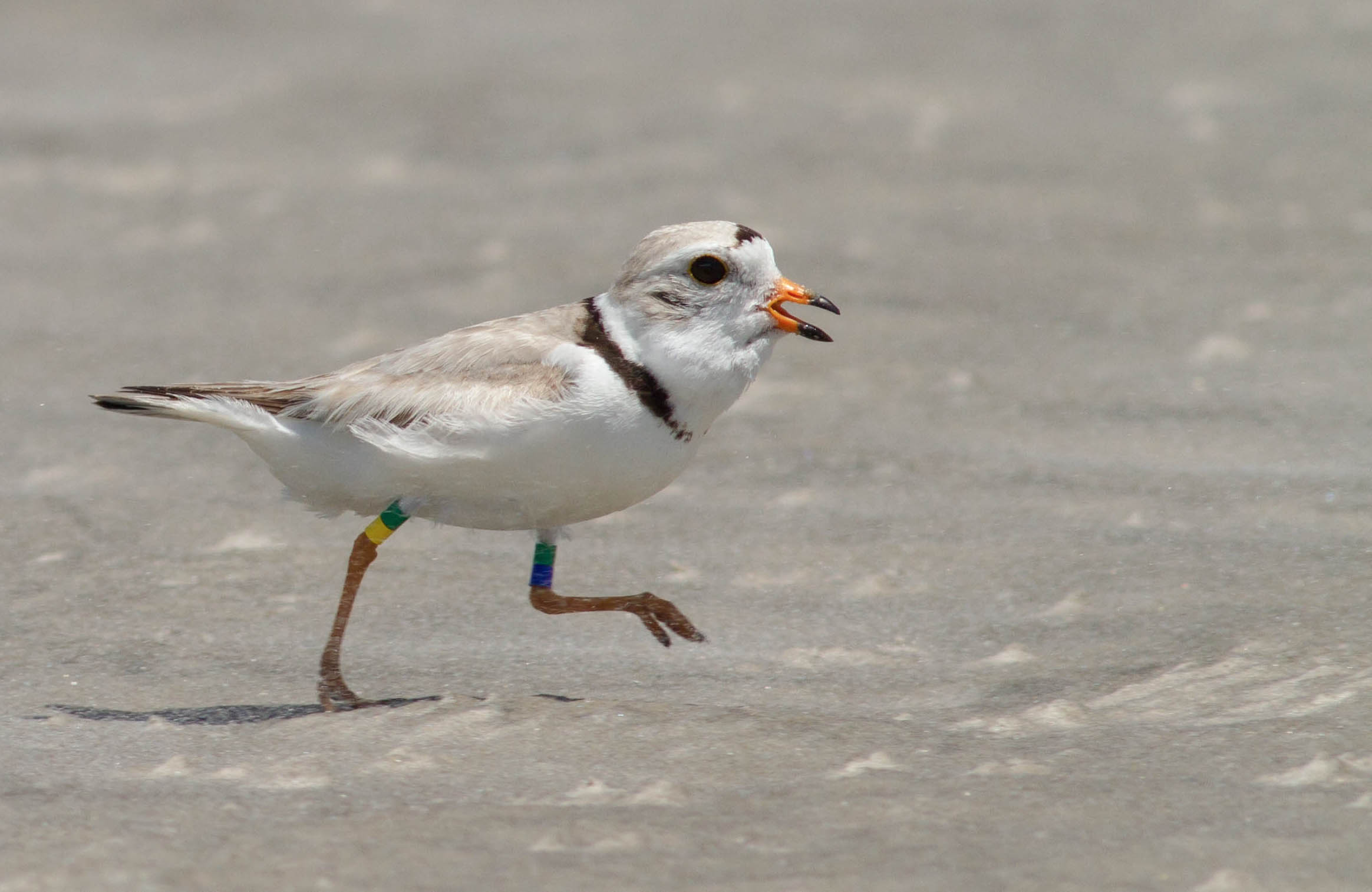
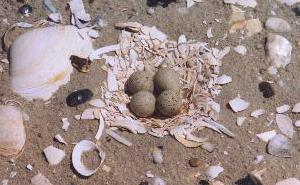
The visitors center (2 miles in from the entrance) can guide you to trails & observation areas, and warn you of nesting areas for piping plovers (at right), black skimmers, least terns and many shorebird species.

On the bay side, the Horseshoe Cove Salt Marsh is a good place to look for great blue herons, green herons and egrets. Offshore viewing from the beaches in summer may allow you a view of passing whales (hence the naming of the Spermaceti Cove Visitor Center)

From the Garden State Parkway, take exit 117 from the North or 105 from the south and follow the signs on Route 36 for 12 miles. Admission is charged during the summer season.


Some areas are less well-known, such as the Walkill National Wildlife Refuge. This large waterfowl habitat (7500 acres) is located along a 9-mile section of the Walkill River.

The Wallkill River NWR is located in Sussex County, New Jersey, and Orange County, New York. Congress established the refuge in 1990 to preserve and enhance lands and waters in a manner that conserves the natural diversity of fish, wildlife, plants, and their habitats for present and future generations. The management emphasis is on Federally-listed endangered and threatened species, migrating waterfowl and shorebirds, nesting and wintering grassland birds, and forest-dwelling birds.

There are three nature trails on the refuge. Each nature trail provides an excellent wildlife viewing opportunity. In winter months, with proper snow conditions, cross-country skiing and snowshoeing are allowed on these trails.

225 species of birds have been seen, including 24 raptor species. The occasional black bear & bobcat are also seen. There is a wildlife observation deck, Wood Duck Trail & hundreds of acres of upland grassland.

The Refuge is near Sussex & Unionville. Follow Rt. 23 to Rt. 565 for 1.4 miles to the Refuge office.

The NJ viewing guide is available on Amazon, along with a set of Field Guides to Wildlife, Birds, Trees & Wildflowers of New Jersey that would be useful to bring along on any trip out into nature.


Wednesday, December 4, 2019

Piping Plovers in NJ

Good news - there were 19% more piping plover pairs that nested in New Jersey this year. There were 114 pairs compared with 98 last year with an average of 1.24 young per nest reaching independence.

The 2019 nesting results were reported by the Conserve Wildlife Foundation of New Jersey and the New Jersey Division of Fish and Wildlife Endangered and Nongame Species Program.

It's good news but not the best possible news. The long-term average is 117 pairs and a peak of 144 in 2003.

Piping plover adult and chick at Cape May

The piping plovers are often the prey of red foxes. The birds build nests in small impressions on beach sand that are open to predation.

State programs to protect the plovers by trapping and killing red foxes in beach towns such as Brigantine and Stone Harbor. Seven Brigantine residents were taken to court and fined by the NJ Department of Environmental Protection for removing traps and taking other actions.

The DEP has tried using nest enclosures for protecting piping plover eggs and hatchlings, but there was a 67% increase in nest abandonment, mostly due to adult mortality at nest enclosures because the mesh enclosures make the plover nests more obvious to predators.

The Holgate and Little Beach units of the Edward B. Forsythe National Wildlife Refuge, and the state’s North Brigantine Natural Area were the most significant nesting areas with 42 pairs (37%).

The federal lands of Gateway National Recreation Area’s Sandy Hook Unit and E.B. Forsythe National Wildlife Refuge’s Holgate and Little Beach Units maintain 71% of the statewide population.

Wednesday, May 2, 2018

Foxes and Piping Plovers


Piping plover eggs and hatchling - NPS photo

The piping plover remains one of New Jersey's most endangered species. Because they lay their eggs in the coastal dunes, but also must go back and forth to the water to forage for food, they and their eggs and young are quite vulnerable to predators.

According to the DEP's New Jersey Fish and Wildlife Service website."The threats that it faces, including increased beach recreation and predation, continue to act as serious impediments to the recovery of this species. Without intense protection and management, it is unlikely that the piping plover would survive in New Jersey."

Plover numbers have dropped to 115 nesting pairs in the state, down from the roughly 135 pairs a decade ago.

One of those predators is the fox which will eat the adult birds, their chicks and their eggs. Eliminating foxes in some of these beach areas has become one necessary protection.

"These are not easy choices," said Dave Jenkins, head of the state Division of Fish and Wildlife's endangered species project. "We don't relish the idea of having to control foxes."

Foxes are not threatened in our state. They are vulnerable to diseases like rabies and mange, and can be aggressive. One fox aggressively approached a young child at Island Beach State Park last summer and had to be put down.

Nesting areas are also subject to human disturbances on beaches and as spring becomes summer you can expect to see more signanage and even closed area on some beaches to protect piping plovers and other shorebird nesting areas.

MORE at state.nj.us/dep/fgw/ensp/pdf/end-thrtened/plover.pdf


Monday, June 19, 2017

Protecting Piping Plovers at Island Beach State Park

Newborn piping plover chick - NPS photo

Beginning Friday, June 23, a section of Island Beach State Park ocean beach will be temporarily closed to Mobile Sport Fishing Vehicle (MSFV) traffic.

A vehicle barrier will be erected approximately 3/4 mile north of the jetty.

The closure is to protect Piping Plovers, an endangered species nesting in the Southern Natural Area.

Due to the temporary closure, IBSP may reach its capacity of MSFVs sooner than normal.

Piping Plover - via Flickr, Andrea Westmoreland

For more information visit njfishandwildlife.com/saltwater.htm

Monday, August 29, 2016

Piping Plovers Fledge at Island Beach State Park

Piping plover chick at 2 days


The piping plover pair nesting on the beach in Island Beach State Park successfully fledged two chicks. This was the first ocean side nest in more than 25 years and the first in the park in more than a decade.

For a summary of the nesting season visit njfishandwildlife.com/news/2016/ploversummary16.htm on the NJDEP Division of Fish and Wildlife website.

Friday, July 29, 2016

Update: Piping Plovers at Island Beach State Park

The following is an update from NJDEP Division of Fish and Wildlife biologist Christina Davis on the Piping Plovers nesting on the beach in Island Beach State Park:

It's been a week of highs and lows for our plover brood!  Last Saturday, 7/23, one of the two remaining chicks was observed with a moderate limp. There was no obvious cause of injury and the bird was still quite active, but its mobility was compromised. Piping Plovers (and especially chicks) do not fare particularly well in rehab so our preference is always to leave the individual in the wild, when possible. Given the condition of the chick, we decided to take a wait and see attitude.

By Monday, the limp had not improved. We had already planned to band the chicks that day (four color markers, two on each upper leg, specific to that individual) so we took the opportunity to get the bird in hand and examine the issue. We also had a veterinarian on standby ready to review photos and videos we sent her.

The problem area was the left foot, which was swollen, and the wing, which was a bit droopy. Considering that the chick is still growing (hampering efforts to treat it) , and that there were no signs of breaks or infection, a case could be made to release it. On the flip side, the chick weighed much less than its sibling (20g vs 25g) and the limp was quite pronounced. After much debate, and the appearance of a red fox seemingly attracted to the area by the chick calling, we determined the best course of action would be a stint in rehab. The healthy chick was released and the injured one taken from the site.

At the rehabilitation facility it was confirmed that there did not appear to be any breaks or fractures to the wing or the foot. This was good news as setting or immobilizing growing body parts can do more harm than good. The goal of rehab, therefore, is to allow the chick an opportunity to rest the foot and wing and to increase its weight (which is a lot easier for this species when it isn't burning calories running around).

The chick has done very well in rehab and is expected to be released soon. It has already  gained 5g and is active and alert. The healthy chick has continued to do well on site. We look forward to reuniting them!

When chicks are banded researchers do usually name them. This is primarily for ease of reference as a name is easier to recall/refer to than a band code. These two chicks are named Phipps (healthy chick) and Freeman (injured chick) as a tip of our hats to Island Beach's history. They can be identified by their band colors:

Phipps - Left upper leg is a black over a red band and the upper right is a blue over a yellow band (LR:BY)
Freeman - Left upper leg is a black over red band and the upper left is a blue over a green band (LR:BG)

As you can imagine, it is a lot easier to say (and remember), "Hurray, Freeman is in great shape and almost ready for release!" than "Hurray, Black over red, blue over green is in great shape and almost ready for release!"

The chicks hit an important milestone today (Thursday, July 28), by surviving 25 days. At this point, their flight feathers are coming in and they will start trying to fly very soon. It will take them time to become competent, but just like the Wright brothers, every day forward will bring them closer to mastering this skill.

For information on beach nesting birds in New Jersey visit http://www.njfishandwildlife.com/ensp/beachnester_info.htm

Saturday, July 9, 2016

Nesting Pair of Piping Plovers at Island Beach State Park


A pair of piping plovers is now nesting on the beach at Island Beach State Park, the first ocean side nest in more than 25 years and the first in the park in more than a decade.

This is great news for recovery of this federally threatened and state endangered bird.

NJDEP Division of Fish and Wildlife biologists hope this is an indication of a rebounding population after sharp declines witnessed between 2003 and 2014.

To give this new pair of piping plovers their best chance of successfully fledging their young, sportfishing vehicles are temporarily restricted from the beach. DEP officials did not make this decision lightly, recognizing that anglers who have purchased passes for the privilege of driving on the beach will be temporarily restricted from the area.

Without this measure, it would be highly likely that one or more of the chicks would be killed by the high volume of traffic this section of beach experiences on a typical summer weekend day. The state recognizes its responsibility to support the recovery of this imperiled species and to follow guidance provided by U.S. Fish and Wildlife Service and state Endangered and Nongame Species Program biologists to protect the chicks.

Pedestrian access to the area will remain open, but the public is required to observe fencing and other regulations (such as no dogs on beach) to protect the nest and chicks. While the vehicle closure will provide some protection for the plovers, it by no means guarantees that plover chicks will survive. Many other factors play a role in determining fate of piping plover broods, such as weather, predation and feeding success.

For more information on the nest, including its impact on park visitors, and links to more information, visit njfishandwildlife.com/news/2016/ploversreturn.htm

Tuesday, November 24, 2015

Piping Plover Population Rebounds in 2015


The NJDEP Division of Fish and Wildlife and the Conserve Wildlife Foundation of NJ have released the 2015 Piping Plover Breeding Report. The data reveals that the population of breeding piping plovers increased 17% to 108 pairs in 2015, as compared to 2014.

Despite the increase, the population of this federally threatened, state endangered species still remains below the long-term average (118 pairs) since federal listing in 1986 and well below the peak.

“The rebound in New Jersey’s piping plover breeding population and a second consecutive year of robust chick productivity was a much needed outcome,” said Conserve Wildlife Foundation Beach Nesting Bird Project Manager Todd Pover. “We need to continue our intensive management for a number of years to sustain any recovery, but we were very pleased to have finally broken the recent cycle of low nesting success and the record low number of nesting pairs in 2014.”

The piping plover – a small sand-colored shorebird that nests in New Jersey as part of its Atlantic Coast range from North Carolina up to Eastern Canada – face a number of threats, including intensive human recreational activity on beaches where they nest, high density of predators, and a shortage of highly suitable habitat due to development and extreme habitat alteration.

Federally listed as a threatened species in 1986, piping plovers have since recovered in some areas of the breeding range. Yet piping plovers continue to struggle in New Jersey, where they are listed by the state as endangered.

“As a species dependent on natural beach habitat, piping plovers face a particularly daunting challenge along New Jersey’s heavily developed and dynamic coast,” said Conserve Wildlife Foundation Executive Director David Wheeler. “Our dedicated scientists, partners, and volunteers are working tirelessly to ensure piping plovers remain a beloved and healthy presence along the Jersey Shore and beyond.”

CWF, in close coordination with NJDFW’s Endangered and Nongame Species Program, oversees piping plover conservation throughout New Jersey. Staff and volunteers help erect fence and signage to protect nesting sites, monitor breeding pairs frequently throughout the entire nesting season from March to August, and work with public and municipalities to educate them on ways to minimize impacts. Although conservation efforts on the breeding ground remain the primary focus, in recent years, CWF has also begun to work with partners all along the flyway, in particular on the winter grounds in the Bahamas, to better protect the at-risk species during its entire life-cycle.


The statewide fledgling rate, which includes data collected by partners at 19 active nesting sites throughout the state, was 1.29 fledglings per pair, down slightly from 2014 (1.36 fledglings/pair), but still one of the highest statewide levels since federal listing. Furthermore, both years were above the 1.25 fledgling rate believed necessary to maintain the range-wide Atlantic Coast population of piping plovers.

Statewide pair-nest success, the percentage of pairs that successfully hatch at least one nest, was high at 79%, well above the average since federal listing. Although population and productivity are ultimately the most important measures of recovery success, hatch success is an important metric to demonstrate the effectiveness of on-the-ground management.

Northern Monmouth County, as a region, continued to account for the largest percentage of pairs in the state (55 pairs or 51%), with Gateway National Recreation Area – Sandy Hook Unit accounting for most of those pairs.

The region comprised of North Brigantine Natural Area and the Holgate and Little Beach Units of the Edwin B. Forsythe National Wildlife Refuge accounted for the other significant concentration of breeding pairs in the state (43 pairs or 40% of the statewide total).

Holgate had the largest jump in abundance for any individual site, doubling its breeding pairs to 24 in 2015 (up from 12 in 2014). This increase was the result of highly suitable overwash habitat created at the site by Hurricane Sandy and the high breeding success that helped spur.

Cape May County, the southernmost region of the state, consisting of Ocean City to Cape May Point, continued its long-term downward trend, accounting for just 8 pairs in 2015, compared to 11 pairs in 2014 and 43 pairs in 2004 at its peak.


For more information, including a link to the report, visit http://www.conservewildlifenj.org/blog/2015/11/19/piping-plover-population-rebounds-from-historic-low-in-new-jersey/ on the CWF website.

For information on Beach Nesting Bird Management in New Jersey, visit http://www.njfishandwildlife.com/ensp/bnbmgt.htm on the Division's website.

Friday, October 16, 2015

Species on the Edge 2.0 Multimedia Contest Winners


The Species on the Edge 2.0 Multimedia Contest is a fun and educational way for high school students to work with technology and showcase their talent, creativity, and a love of nature. The contest helps to develop students’ experience in STEAM (Science, Technology, Engineering, Art and Mathematics). It is free to enter and open to all New Jersey high school students.

Prizes include a 1st prize of $1,000 in scholarship money and a 2nd prize of $500 and a 3rd prize of $250 in scholarship money. And all entries are eligible to win a drawing to spend a day in the field with a wildlife biologist.

This year's first place winner is David Tattoni, a senior at Peddie School in Hightstown, who created a YouTube channel featuring wildlife and wild places. For example, he worked with a piping plover biologist (shown below). The piping plover is a NJ endangered beach nesting bird.


The second place winners are Priyanshi Jain and Victoria Momyer, seniors at Biotechnology High School in Freehold, who developed the website “New Jersey Wilds” and its accompanying Facebook page.

The third place winner is Kayleigh Young, a junior at Cresskill High School in Cresskill, who produced the video "Endangered in New Jersey," which features interviews of her teachers and classmates focused on the importance of wildlife conservation.

More information on the contest and the winners on the Conserve Wildlife Foundation of New Jersey website.

Saturday, March 23, 2013

Piping Plovers Returning to NJ

Piping Plovers   Image: wikimedia.org
Piping Plovers winter primarily on the Atlantic Coast from North Carolina to Florida, although some migrate to the Bahamas and West Indies. Piping plovers return to their breeding grounds, including New Jersey beaches, starting in late March or early April.

The piping plover became a Federally protected species under the Endangered Species Act and in 1984, New Jersey listed the species as "endangered" and it remains one of the state's most endangered species.

The piping plover is a small, stocky, sandy-colored bird resembling a sandpiper. When still, the piping plover blends into the pale background of open, sandy habitat on outer beaches where it feeds and nests.

Its name comes from its call notes, plaintive bell-like whistles which are often heard before the birds are seen.


Our Jersey beaches are also home to the Federally endangered roseate tern, the threatened northeastern beach tiger beetle, the threatened seabeach amaranth, the least tern, the common tern, the black skimmer, and the Wilson's plover.

Starting soon and running into early summer, you will see beach areas along our coast marked with signs warning about beach nesting birds.

Plovers go through nesting and courtship rituals. When a pair mates, they make a nest as a depression in the sand. They are usually located close to the dunes.

Sometimes the nest is lined with small stones or fragments of shell.

There are usually our eggs hatch which will hatch in a bit less than four weeks.

Piping plovers were once common along the Atlantic Coast in the 1800s. Unfortunately, there were hunted for their plumage which was used for fashionable ladies hats.

The population made a comeback after the Migratory Bird Treaty Act of 1918 and peaked during the 1940s.

Since then, the population has declined again due to to increased development in beach areas, predators (including feral cats) and increaseed recreational traffic on beaches which includes humans and pets.

You can help protect beach-nesting birds by resspecting fenced in or posted areas. Don't approach piping plovers or their nests and if you're walking dogs on a beach that allows them, keep them  leashed.  Even leaving trash or food scraps on beaches can attract predators which may prey upon piping plover eggs or chicks.

This summer nesting may be affected by the destruction of the dunes because of Hurricane Sandy and subsequent storms

The downy young plovers will follow their parents and learn to forage for marine worms, crustaceans, and insects. As with the eggs, the young are well camouflaged on the beach - so much so that the eggs and young are sometimes stepped on by people walking near the dunes. Unfortunately, when predators or people come near, the young will freeze motionless on the sand. The parents will try to distract intruders away from the young and to themselves by feigning a broken wing.


If the young can survive that first month, they will be able to fledge and can fly to escape. are flying in about 30 days.

Because of dune damage, or predator and human disturbance, eggs may not hatch. Plovers will often re-nest in the same area. But these later hatchlings will not be flying until August and will need to start their southward migration by mid-September to wintering areas.
    Sources:
    http://www.nps.gov/featurecontent/caco/plover_slideshow.html
    http://www.nps.gov/caco/naturescience/the-piping-plover.htm
    Piping Plover 'Seashore Science' Document
    The Threatened Piping Plover - a photo essay
    Piping Plover Annual Reports

    Friday, March 5, 2010

    A New Jersey Nature Calendar

    I have been following signs in my local area for years looking to nature to tell me that it was time to plant in my garden.

    That is something you have to do locally, so my own garden calendar probably applies to New Jersey, or just and this area of Essex County in some cases, and only specifically to my own square mile in other cases.

    In fact, sometimes they seem to apply only to my own backyard microclimate! For example, the daffodils I have planted in the garden bloomed last year five days later than several houses around the block - probably due to the amount of sun they receive.

    I also take note of things that are happening around the state with wildlife. There are people who focus just on bird migrations as a sign of spring, for example.

    From my NJ nature calendar for spring:
    around March 25 - piping plovers return to NJ - time to prune evergreens, turn compost,  sow peas and spinach
    April 26 - bluefish run usually begins.
    April 29 - first piping plover nests on Jersey beaches.

    You get the idea.

    For centuries farmers, naturalists, and scientists have kept records of the patterns of plants and animals and used the information to predict the best time for planting and harvesting crops and when to start expecting problems with insect pests.

    There are other "citizen scientists" out there. You can join thousands of others in gathering environmental and climate change information from across the country in a program called Project BudBurst.

    It asks you to make careful observations of the phenophases in your area such as first leafing, first flower, and first fruit ripening of a diversity of trees, shrubs, flowers, and grasses. What is really important is to observe the first day of the appropriate phenophase (like the first flower).

    Reporting what you observe contributes valuable environmental and climate change information - but it's also a great way to learn about the environment, connect to nature, and contribute to science, all at the same time.


    Phenology (which I had never heard of, even though I was doing it) is the study of the timing of life cycle events like leafing, budding, and blooming in plants.

    The phenological events of many species has changed recently as a result of changing temperatures and rainfall patterns. The average global temperature increased by 0.6°C ( 1.0°F) during the 20th century. The temperature is predicted to rise with another 1.8 to 4.0°C ( 3.2 to 7.2°F) in the 21st century. That probably seems like pretty small variations, but at the global scale it can have dramatic effects on the environment.

    Climate change has the largest effect on plants because, unlike many animals, they cannot move easily from one area to another.

    The results might be that the growing season could start earlier or continue over a longer period of time. In NJ, the "official" last frost date is anywhere from April 15 to May 15, but I have been keeping track myself and a May frost has been the rare exception for my little microclimate in the past 20 years.

    So, watching for the phases of the plant life cycle (phenophases) causes you to be very mindful of things like temperature, rainfall and day length. Monitoring changes in events such as first bud, budburst, and flowering, can help scientists detect climate change.

    Got a New Jersey plant or wildlife calendar observation? Click the comment link below and let us know.

    Wednesday, November 11, 2009

    Sedge Invades NJ Beaches


    It looks innocent enough all alone...


    It's a foreign attack, and it's hitting the Jersey dunes.

    It's an invasive foreign plant that is getting into New Jersey's critical dune systems.

    It is called Asiatic sand sedge and it could take over the habitat of endangered and threatened species, such as the piping plover, as well as lowering the dunes which protect communities from flooding. (Only 105 plover pairs nested on NJ beaches this year, down from 111 pairs in 2008 according to the Conserve Wildlife Foundation of New Jersey.)


    The plant has no known predators or diseases here.

    The yellow-green plant was actually first spotted in the United States in Island Beach State Park in 1929. It forms a dense mat and drives out native plants, such as American beach grass and beach panic grass.

    According to the Fish and Wildlife Service, the plant occupies more than 90 acres in Island Beach State Park and on Sandy Hook and Asiatic sand sedge populations also have been found in Sea Bright, Monmouth Beach, Long Branch, Manasquan, Harvey Cedars, Long Beach Township, Edwin B. Forsythe National Wildlife Refuge and other locations.
    A group of students from Georgian Court, Marine Academy of Science and Technology on Sandy Hook, and Brookdale Community College are studying the sedge, mapping its extent and studying ways to get rid of it. Digging and pulling out sedge plants by hand can be effective with small infestations, but the plant's roots are 3 to 4 feet deep.


    but let it get hold in a sand dune...

    More information at http://www.courierpostonline.com
    Photos via National Park Service

    Monday, July 13, 2009

    Watch Out For Beach Nesters

    The piping plover and least tern are two of a the birds that nest and raise their chicks on our NJ beaches.

    June through August is generally the critical nesting and chick rearing period for these endangered and threatened birds - and, obviously, it's the busiest time for humans on our beaches.

    Some Delaware Bay beaches were closed from May 9 to June 5 this year because they are major migratory stopovers along the Atlantic flyway where shorebirds stop each spring to feed on the fat-rich eggs of the horseshoe crab before heading to the Canadian Arctic to breed.

    Other Atlantic Coast beaches will be closed from April 1 to October 30 or later to protect the threatened black skimmer, as well as other beach nesting birds.

    Not all beaches have special areas such as the circular predator exclosure with mesh top surrounded by an electrified wire fence that is seen in the photo above, so your cooperation is a key element in protecting the nests.

    Here are some simple ways you can help when you are on these critical beaches:

    Avoid nesting areas which are usually "fenced" or marked in some way with signage. Unfortunately, sometimes I think the sign actually attract people to walk over and look for the birds!

    Keep pets off the beach or leashed from mid April to mid September. Plovers and terns perceive even leashed dogs as potential predators. It's not that your dog will attack the birds (though they may!) but that the parents may abandon their nest or young when you or a dog approaches. On a hot summer day, a nest that is abandoned for even a few hours can be fatal for eggs or young. Think about mama plover (as seen in the photo) sitting on the eggs NOT to keep them warm, but to keep them from hard boiling.

    Avoid Frisbees, footballs, kites etc. in the the nesting areas. They lead people to accidentally disturb areas. With kites, I have read that plovers and terns may actually mistake kites for hawks and leave their nests to ward off the "intruders."

    Take that trash and food scraps out with you because it attracts gulls, foxes, raccoons, and skunks which will also prey on eggs and young.

    Of course, it's not all human and pet problems. Coastal storms and predators also negatively affect beach-nesting birds toll.

    Beach Nesting Birds in NJ Brochure (pdf, 183kb)
    Beach Nesting Bird Management and Reports
    Piping Plover - July 2003 Species of the Month
    Piping Plover Fact Sheet (pdf, 55kb)
    Black Skimmer Fact Sheet (pdf, 63kb)
    Least Tern Fact Sheet (pdf, 41kb)

    Tuesday, June 16, 2009

    Endangered Piping Plovers in Sea Girt


    The Sea Girt Borough Council voted this month to amend a beach use ordinance to ban kite flying and dog walking on the borough beach to protect endangered piping plovers who use the beach area to nest.

    The ban would be in effect from March 15 to September 30 which certainly covers the entire summer tourist season.

    It is another example of the difficult line between protection and economics that we walk in New Jersey. The ban would also include play with hard balls and Frisbees during bathing hours, and allows members of the beach patrol to designate certain areas for play with soft balls.

    Sea Girt is making the change partly to protect itself from possible fines for violating the Endangered Species Act. They had already been fined in 2007 by the DEP $25,000 for raking an area of the beach near a plover nest. They were also fined by the U.S. Department of Fish and Wildlife at $28,000 fine for the death of a plover chick that he agency contended was killed by the beach rake. (Sea Girt is appealing the fines.)

    Plover beach nest

    The exposed nature of the nests for many beach-nesting bird species make them particularly vulnerable to human intervention, both intentional and unintentional.