Showing posts with label plants. Show all posts

Thursday, July 24, 2025

Greenbrook Sanctuary

Greenbrook Sanctuary is a 165-acre nature preserve located in Tenafly, New Jersey, within the Palisades region of Bergen County. It's about 4.7 miles north of the George Washington Bridge, off Route 9 West. This sanctuary is a unique blend of natural beauty and tranquility, offering a serene escape from the urban sprawl of nearby New York City

In the wildest, most secluded acres, trees rise 100 to 130 feet and are often over 200 years old. Hikers and walkers here feel hundreds of miles and years away from the cities in such primeval forests.

The sanctuary boasts a range of ecosystems, including mixed oak forests, cliff edges, ponds, ravines, meadows, and wetland forests. These support a wide variety of plant and animal life, such as over 250 species of birds and numerous small mammals.

It has a network of  6.5 miles of trails suitable for all levels of hikers, offering stunning views of the Hudson River and the surrounding landscape.

The sanctuary is home to a diverse range of wildlife, including deer, foxes, and birds of prey like bald eagles and peregrine falcons.

If you pay attention to geological features, the area features rocky cliffs, wooded areas, and a shoreline along the Hudson River, providing scenic views and unique habitats.

A five-acre pond with a small adjoining bog increases the great diversity of this sanctuary. The 250-foot Greenbrook Falls is one of three major streams that drain the area and tumble down the ancient diabase cliffs into the Hudson River. Views of these waterfalls, the Palisades and Highlands to the north, and the densely populated cities across the Hudson, are possible from several promontories which look down 350 feet into the river.

During the migratory seasons, it is not unusual to observe eighty species in one day, including twenty varieties of colorful warblers and, in the fall, thousands of hawks (and an occasional eagle) soaring along the cliffs. Nesting birds are the great horned owl, broad-winged hawk, pileated woodpecker, ruffed grouse, wood duck, scarlet tanager, rose-breasted grosbeak, worm-eating warbler, and indigo bunting.

Common mammals include the nocturnal raccoon, red fox, striped skunk, gray squirrels, chipmunk, muskrat, cotton-tail rabbit, and the secretive white-footed mouse, short-tailed shrew, and common mole. Deer, opossums, weasels, flying squirrels, and red bats are also occasionally seen.

One caveat is that access to hiking Greenbrook Sanctuary requires a membership. Palisades Nature Association, (PNA) is a non-profit organization of conservation-minded people, founded in 1946 to preserve the natural character of the Palisades cliffs and to develop a wild sanctuary. PNA administers Greenbrook Sanctuary and members are required to follow the rules and regulations to support their conservation efforts, ensure the safety of fellow members, and preserve the wildlife and natural environment of Greenbrook Sanctuary.

More Information at njpalisades.org and greenbrooksanctuary.org/


Thursday, January 23, 2025

Thermonasty for Winter Protection


Rhododendron thermonasty

During particularly frigid days, the evergreen leaves of Rhododendron maximum display a unique trait known as thermonasty. In essence, the leaves are a type of natural thermometer. When temperatures dip below freezing, leaf margins curl inward causing the leaf to roll up and droop. Leaves are most tightly curled when temperatures are below 20 degrees.

Thermonasty is a useful adaptation that provides several important benefits. Rhododendron leaves are particularly susceptible to damage from desiccating winter winds—tightly curled leaves ensure surface area is reduced, thereby mitigating this threat. Additionally, during periods of extreme cold leaves are more prone to damage from the sun. Again, a reduced surface area helps to protect the leaves. 

Broad leaves positioned in a way to maximize sunlight collection is a liability when it comes to snow. Narrow, drooping, needle-like leaves help shed snow that could otherwise accumulate and break branches.

Even in late spring, some species of tulips close their flowers in response to cold temperatures at night and open them during warmer days. Similar to tulips, certain crocus species also exhibit thermonastic movements, closing their flowers in cold temperatures and opening them when it is warmer.

Monday, November 28, 2022

The Batona Trail


The Batona Trail is a 49.5-mile (79.7 km) hiking trail through New Jersey's Pine Barrens.
The trail is the fourth longest in the state and begins in Brendan T. Byrne State Forest (formerly Lebanon State Forest) at the ghost town of Ong's Hat and traverses Wharton State Forest and Bass River State Forest.

The Pine Barrens are not barren at all. There are 39 species of mammals, 229 bird species, 59 reptile and amphibian species, and 91 fish species that have been reported in the Pinelands. Possums, chipmunks, squirrels, beavers, muskrats, mice, foxes, raccoons, weasels, mink, river otter, and white-tailed deer are some of the more common mammals seen in the Pinelands. Some common amphibians and reptiles are snakes, skinks, newts, salamanders, frogs, toads and turtles.

Batona Trail The Pine Barrens Tree Frog has a population here that is disconnected from other populations in the Carolinas and the Florida Panhandle. 

The New Jersey Pinelands is the fringe of both northern and southern plant species, such as the Yellow Fringed Orchid.

The pines that are found there include loblolly pine, white pine, pitch pine, shortleaf pines, and  Virginia pines. Although pines dominate the area, there are also maple trees, birches, cedars, oaks, magnolia and sassafras trees along the trail.

Edible plants include bearberries, spotted wintergreen, teaberries, huckleberries, bayberries, blackberries, cranberries, blueberries and strawberries. 

There is a diverse range of other plants from the prickly pear cactus, wildflowers, 28 species of orchids, the pitcher plant, ferns, Atlantic white cedar and sphagnum moss.

The trail was built in 1961 by the Batona Hiking Club, which began informally in 1928 when Philadelphians began meeting regularly to hike. Most hikers will take about three days to hike the whole trail.

The portion of the Batona Trail through Wharton State Forest is maintained by the State Park Service and the Batona Hiking Club. One stop on this section of the Batona trail passes the Carranza Memorial within Wharton State Forest.

The trail passes also through Bass River State Forest is maintained by the State Park Service, the Outdoor Club of South Jersey and the Batona Hiking Club.


More Trail Information


Wednesday, July 27, 2022

Rooted: Black Cohosh

The mid-summer forest is largely green, but the flowering of black cohosh is a spectacle not to be missed.

This is episode 2 of the series ROOTED, a series that covers one wild plant species with a New Jersey focus and stars an unlikely ecologist, and a distinctive habitat. ROOTED is the web series that teaches you about wild plants in wild places, and why they matter.


Produced by Hundred Year Films and Wild Ridge Plants.

Thanks to the series sponsors for making Rooted possible and free for all: New Jersey Highlands Coalition, Scott & Hella McVay, and Severine Von Tscharner Fleming.

Wednesday, July 13, 2022

Rooted; Wild Ginger

 This is Episode 1 of the series ROOTED by Jared Flesher where he visits an isolated patch of wild ginger and ponders the mystery of how it got there. 

Sponsors who make ROOTED possible and free are New Jersey Highlands Coalition, Scott & Hella McVay, and Severine Von Tscharner Fleming.

Thursday, October 10, 2019

Carnivorous Pitcher Plants

                  Pitcher plants in Edwin Forsythe NWR, NJ - Photo: R.Albers/USFWS

October is baseball playoffs time but these pitchers have a longer season and can be deadly. The pitcher plant is one of those plants that is best known for letting flies and insects think they’re getting a free meal and then making them their own meal.

Pitcher plants tend to grow where most other plants can’t grow. The soils in which they grow are poor in minerals and extremely acidic. The plants don’t require insects to survive but it is thought that extra nutrients from insects allow plants to grow larger and healthier, and are more likely to reproduce.

They are named for their tall, tube-like stems, which resemble pitchers for water.

Sarracenia purpurea is commonly known as the purple pitcher plant, northern pitcher plant, turtle socks, or side-saddle flower and is a carnivorous plant in the family Sarraceniaceae.

In New Jersey, they’re common in the bogs and swamps of the Pine Barrens and can also be found in Kuser Bog at High Point State Park in Sussex County (a cedar bog believed to be the highest in the world) and in the White Lake Natural Resource Area in Warren County.

Prey insects, often small flies and ants, are attracted by the plant’s scent. Evidently, the plant’s chemical compounds attract various insects.

The pitcher plant’s frilly leaf tips have stiff, downward-pointing hairs. These hairs prevent the insects from climbing back out and they end up in a pool of liquid at the bottom of the pitcher. The liquid contains digestive enzymes that break down the insects and allow the plant to absorb the nutrients.

Pitcher plant showing the hairs - Photo by Kmmeyer - Northern Minnesota, CC BY-SA 3.0 
New Jersey actually has three groups of native carnivorous plants. Besides pitcher plants, we have sundews and bladderworts. Carnivorous plants evolved to eat animals because they grow in wet, nutrient-poor soils and so have adapted to get nutrition in other ways.

The purple pitcher plant is the showiest of the three with bright foliage and red flowers it will stand out in a bog or swamp plants and can often be seen growing from sphagnum moss.

Tuesday, July 24, 2018

Two Warnings: NJ Waterways and a Noxious Plant

The Department of Environmental Protection, in partnership with the New Jersey Department of Health, has updated recreational fish advisories for tributaries, lakes and ponds in the lower Delaware River watershed as part of the state’s ongoing fish-safety monitoring program.

The DEP has also expanded testing of fish in selected water bodies in this and other regions of the state to include several chemicals of emerging concern known as perfluoroalkyl and polyfluoroalkyl substances, known as PFAS. These analyses have resulted in the DEP’s first consumption advisories for these chemicals.

The DEP tested 11 fish species in 14 water bodies in Burlington, Camden, Cumberland, Gloucester, Ocean and Salem counties for PCBs, mercury and pesticides. The testing resulted in less restrictive advisories for 36 species than had been in place, while 24 saw no change. Ten advisories are now more restrictive.

Data also was collected for species not tested in previous years as well as at one new sample location. The new data resulted in 30 new consumption advisories for the lower Delaware River watershed region.

Due to growing concerns over the presence of PFAS in the environment, the DEP also sampled water, sediment and fish tissue samples from a limited number of water bodies in the lower Delaware River watershed and other regions of the state.

Water bodies were selected based on their proximity to potential sources of PFAS and their likelihood of being used for recreational and fishing purposes. PFAS were detected at varying levels and combinations in all of the water bodies tested.

PFAS – which include compounds more commonly known as PFOA, PFOS and PFNA – were once widely used in a variety of applications, including non-stick cookware, stain-resistant clothing and fabrics, food packaging, and in firefighting foams. These chemicals are persistent in the environment and can accumulate in people exposed to them.

Water bodies tested included the Passaic River in Passaic County, the Raritan River in Bergen and Passaic counties, the Metedeconk River in Ocean County, several lakes adjacent to Joint Base McGuire-Dix-Lakehurst in Burlington and Ocean counties, the North Branch of Rancocas Creek in Burlington County, Woodbury Creek in Gloucester County, Fenwick Creek in Salem County and the Cohansey River in Cumberland County.

All states have fish consumption advisories. Many of the fish on New Jersey’s advisory lists are typically caught and released without being consumed, but some people rely on some of the species on the advisory lists as a food source.

“Fishing provides enjoyable and relaxing recreation, and we know many people enjoy cooking and eating their own catch,” New Jersey Health Commissioner Dr. Shereef Elnahal said. “However, certain fish may contain contaminants and pose serious health risks like cancer and nervous system issues. It is a good idea to follow these advisories when consuming recreationally caught fish and crabs, particularly if you eat them often.”


The DEP and Department of Health advise all anglers to get the latest advisories for the specific water body they fish by visiting www.fishsmarteatsmartnj.org

As part of the lower Delaware River watershed update, fish were sampled from the following bodies of water: Big Timber Creek, along the border of Camden and Gloucester counties; Cooper River Lake, Kirkwood Lake, Newton Lake and Pennsauken Creek in Camden County; Mantua Creek, Stewart Lake and Wilson Lake in Gloucester County; DOD Ponds in Salem County; Rancocas Creek and Strawbridge Lake in Burlington County; the Maurice River and Union Lake in Cumberland County; and Prospertown Lake in Ocean County.

The DEP tested fish tissue for mercury, organochlorinated pesticides and PCBs, with the fish species that were sampled varying depending on location. Fish species sampled were largemouth bass, bluegill sunfish, common carp, white perch, channel catfish, pumpkinseed, striped bass, chain pickerel, yellow bullhead, brown bullhead and white catfish.

As is typical, the latest sampling found the highest mercury concentrations in species at the top of the food chain, such as chain pickerel and largemouth bass, while the highest PCB concentrations were found in bottom feeders, such as channel catfish and common carp. PCBs were generally detected at relatively low levels. Pesticides were found at only very low levels.

While water quality in New Jersey continues to improve, past pollution can persist for many years in sediments and continue to accumulate in fish at or near the top of the aquatic food chain.

Fish are an excellent source of protein, minerals and vitamins, and help maintain a healthy, well-balanced diet. The American Heart Association recommends that people eat fish regularly. Fish are also one of the few foods that are rich in omega-3 fatty acids needed for proper development of the brain and nervous system in the fetus and infants, and may reduce the risk of heart attack.

But due to past use of PCBs and pesticides as well as deposition of mercury from various sources, some recreationally caught fish can be unhealthy for children or some adults with certain health concerns.

The DEP and Department of Health have been issuing fish consumption advisories since 1983, updating them on a regular basis. Advisories include statewide, regional and water body specific advice as well as a general advisory for freshwater fish. These advisories allow the public to make informed choices about the fish they catch and eat.

The state’s ongoing public outreach activities include responding to online and telephone inquiries from the public, as well as distribution of outreach materials to all New Jersey Women, Infants and Children centers in English and Spanish. Information is also sent to recreational anglers, local and county health departments, and other stakeholders.

For much of the population, advisories can range from no restrictions to a recommendation to limit consumption to one meal per week. For the high-risk population – which includes pregnant women, women planning to become pregnant, nursing mothers, infants and children – advisories can range from no more than one meal per week to do not eat.

If you choose to eat those species under advisories, there are steps you can take to reduce your exposure.

Proper cleaning and cooking techniques, which remove some of the fat from the fish, can significantly reduce levels of PCBs and organic chemicals. However, these techniques will not reduce or remove unsafe levels of mercury from fish.

For all freshwater fish and waters not covered by consumption advisories, consumers should follow the DEP's general freshwater advisories, which recommend eating no more than one meal per week for the general population and no more than one meal a month for high-risk individuals.

For the DEP’s PFAS study report, visit www.nj.gov/dep/dsr/


From a brochure from the NJ Department of Agriculture on the highly toxic plant known as hogweed, which has been recently documented in our state.

Please be wary of this harmful plant while outdoors, as the sap can cause severe burns when present on the skin and exposed to sunlight. It can also cause blindness should sap get into the eyes.

Unfortunately, there are several plant species that look very similar to hogweed, with cow parsnip being the closest to mimic it. Therefore it is very important to become familiar with the appearance of hogweed. In addition, should you see this plant growing anywhere, please contact Chief Mark Meyer of the NJ Dept. of Agriculture's Bureau of Biological Pest Control at 609-203-9478.

Tuesday, February 13, 2018

Is Chocolate Endangered?


Valentine's Day is a big day for chocolate. The ancient Mayans said it was the food of the gods. In the 19th century, it was considered an aphrodisiac. This past Valentine's Day, Americans spent an estimated $1.7 billion on chocolate. Globally, it is a $98 billion a year product.

Consumer demand for chocolate is on the rise. But the cacao tree, the seeds of which yield cocoa powder, is threatened by pests, fungal infections and climate change.

A New Jersey connection comes to us via Mars Wrigley Confectionary. This $35 billion corporation needs chocolate and knows about the problems connected to it.  Last September, the company pledged $1 billion as part of an effort called "Sustainability in a Generation," which aims to reduce the carbon footprint of its business and supply chain by more than 60% by 2050.

The chocolate company behind M&M's, Snickers, and Twix, is expanding in New Jersey. The company announced that it will open its U.S. headquarters in NJ. The HQ will have two locations, one in their existing offices in Hackettstown, and another in a new space in Newark that will bring about 500 jobs to the city when it is up and running by July 2020.

Chocolate is made from Theobroma cacao seeds, roasted and ground. Theobroma cacao, also called the cacao tree and the cocoa tree, is a small evergreen tree native to the deep tropical regions of Central and South America. Its seeds, cocoa beans, are used to make cocoa mass, cocoa powder, confectionery, ganache and chocolate.

Researchers are working on multiple approaches that could bolster the fragile tree. The pests and diseases to which cacao is subject, along with climate change, mean that new varieties will be needed to respond to these challenges. Breeders rely on the genetic diversity conserved in field genebanks to create new varieties, because cacao has recalcitrant seeds that cannot be stored in a conventional genebank.

Tuesday, July 14, 2015

Newly Discovered Insect Species in the NJ Pine Barrens May Already Be Threatened


A male F. whitcombi leafhopper. Credit: Andrew Hicks
A new grass-eating species of insect was discovered to be living in the Jersey Pine Barrens of New Jersey. This leafhopper (Flexamia whitcombi) had previously escaped notice. - and at least one scientist worried that it might not be around for very much longer.

Unfortunately, this leafhopper depends on a single species of New Jersey grass, the pine barren smokegrass, for its food. Smokegrass is on the state's threatened species list. There are over 800 endangered plants and species of special concern in NJ.

M. torreyana pinebarren smokegrass    Credit: Uri Lorimer
As of now, scientists don't know for sure if the insect lives in the other regions of the eastern U.S. where the smokegrass also grows ( Tennessee and North Carolina).

If the leafhopper is unique to the Pine Barrens, there's a particular reason for concern, even though its food source is still relatively abundant there. Andrew Hicks of the Museum of Natural History at the University of Colorado writes:
 "The Pine Barrens are already suffering the effects of a warming climate, as evidenced by the recent irruption there of the Southern Pine Beetle. Should the effects of climate change or other anthropomorphic pressures cause the local extinction of the host (as has apparently already occurred elsewhere in its range), there will be little opportunity for the survival of this Flexamia. But that might be said of most species described today."


Sources:
washingtonpost.com/news/speaking-of-science/
www.nj.com

Tuesday, May 19, 2015

Federal Protection of Endangered Species


The NJ threatened Piping Plover (Charadrius melodus)

Federal protection of endangered species dates back to the Lacey Act of 1900, when Congress passed the first wildlife law in response to growing public concern over the decline of the passenger pigeon (Ectopistes migratorius). The Lacey Act prohibited interstate commerce of animals killed illegally and required the secretary of agriculture to preserve, introduce, distribute, and restore wild bird and game bird.

As public awareness of environmental problems initiated political activism in the 1960s, the Department of Interior formed a Committee on Rare and Endangered Wildlife Species to identify species in immediate danger of extinction.

The Redbook on Rare and Endangered Fish and Wildlife of the United States, published in 1964, served as the first official document listing species the federal government considered to be in danger of extinction. Two years after the Redbook list was published, Congress passed the Endangered Species Protection Act of 1966—the first piece of comprehensive endangered species legislation.

The goal, as stated in the 1966 Act, was to "conserve, protect, restore, and propagate certain species of native fish and wildlife." It was under the 1966 Endangered Species Preservation Act that the very first list of threatened and endangered species was created,

There are more than a thousand listed - see http://ecos.fws.gov/tess_public/pub/listedAnimals.jsp

Some are well known to the public and others are largely unknown. Here are some mammal examples

Indiana Bat - Myotis sodalis
Delmarva Peninsula Fox Squirrel - Sciurus niger cinereus
Timber Wolf - Canis lupus lycaon
Red Wolf - Canis niger
San Joaquin Kit Fox - Vulpes macrotis mutica
Grizzly Bear - Ursus horribilis
Black-footed Ferret - Mustela nigripes
Florida Panther - Felis concolor coryi
Caribbean Monk Seal - Monachus tropicalis
Guadalupe Fur Seal - Arctocephalus philippi townsendi
Florida Manatee or Florida Sea Cow - Trichechus manatus latirostris
Key Deer - Odocoileus virginianus clavium
Columbian White-tailed Deer - Odocoileus virginianus leucurus
Sonoran Pronghorn - Antilocapra americana sonoriensis


The Gray Wolf, (Canis lupus), is a good example of a species that is both loved and mythologized by the general public, but also seen as a nuisance predator by some farmers and ranchers.

It is a "keystone predator," and is an integral component of the ecosystems to which it typically belongs. The wide range of habitats in which wolves can thrive reflects their adaptability as a species, and includes temperate forests, mountains, tundra, taiga, and grasslands.

Gray wolves were originally listed as subspecies or as regional populations of subspecies in the contiguous United States and Mexico. In 1978, they were reclassifed as an endangered population at the species level (C. lupus) throughout the contiguous United States and Mexico, except for the Minnesota gray wolf population, which was classified as threatened. (Gray wolf populations in the Northern Rocky Mountains and Western Great Lakes were delisted due to recovery in 2011 and 2012)

Each state has its own unique list of species that are federally protect and exist in that state, and also species that are listed as threatened or endangered in that state but not across the country. (See the NJ list at state.nj.us/dep/fgw/tandespp.htm)

The general public often doesn't realize that listings include not only mammals but also birds, reptiles, amphibians, fishes, insects and plants.

An example of the plants is the NJ Swamp pink (Helonias bullata.

Swamp pink was federally listed as a threatened species in 1988.

A perennial member of the lily family, swamp pink has smooth, oblong, dark green leaves that form an evergreen rosette. In spring, some rosettes produce a flowering stalk that can grow over 3 feet tall. The stalk is topped by a 1 to 3-inch-long cluster of 30 to 50 small, fragrant, pink flowers dotted with pale blue anthers. The evergreen leaves of swamp pink can be seen year round, and flowering occurs between March and May.

Supporting over half of the known populations, New Jersey is the stronghold for swamp pink.  Swamp pink occurs in Morris, Middlesex, Monmouth, Ocean, Burlington, Camden, Gloucester, Atlantic, Salem, Cumberland, and Cape May Counties.

Thursday, February 19, 2015

Native Flora and New Jersey's Biodiversity in Danger

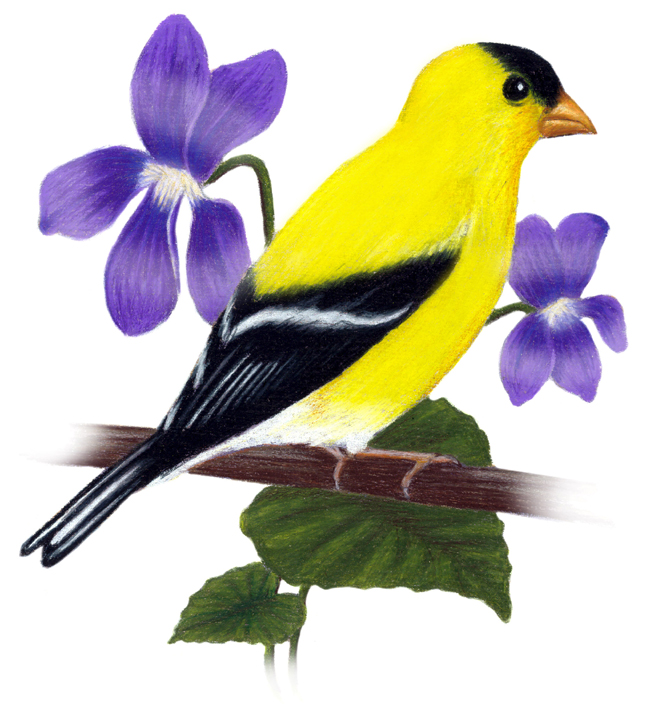
New Jersey State Bird and Flower.
Eastern Goldfinch / Carduelis tristis
Meadow Violet / Viola sororia

Flora is the plant life occurring in a particular region or time, generally the naturally occurring or indigenous—native plant life. The corresponding term for animal life is fauna. Flora, fauna and other forms of life such as fungi are collectively referred to as biota.


New Jersey's 4th graders learn that our state tree is the Northern Red Oak. Did you know that? Did you know that there are 17 species of oaks in New Jersey? Five are rare or endangered.

Our state wildflower is the Blue Woodland Violet or Viola sororia, which is a sure sign of spring. We have 30 native violets and 6 are unique violet species that are rare or endangered. The Cut-leaf Coast Violet no longer exists in the wild in New Jersey.

It might not surprise you that New Jersey is losing its native flora, but the situation is probably more critical than you would suspect.

Wild Blue Lupine
One example is the Wild Blue Lupine, Lupinus perennis, which was once common here but now only exist in four or five locations.

A lack of wildfires, alien weed invasions and deer over-browsing are causing increasing decline of many species.

Of course, the web in nature is always connected. The Wild Blue Lupine and the Yellow Wild Indigo are the only two plant species on which the female Frosted Elfin butterfly will deposit her eggs. Since her caterpillars only eat these two plants, it is no surprise that the Frosted Elfin butterfly is also critically endangered in our state.

One-third of our roughly 2,600 native plant species are designated as endangered or of special concern by the state's Natural Heritage Program.

You can download a list of all 822 rare plants at http://www.nj.gov/dep/parksandforests/natural/heritage/jan2010plantlist.pdf

Thursday, July 7, 2011

The Fight Against Invasive Species


The IUCN recently posted an article about "invasive aliens."  No, these are not the type found in summer movies like Super 8. These are the species - animal and plant - that invade habitats where they do not belong.

Biodiversity is being lost at an unprecedented rate, with a whole host of factors contributing to the disastrous declines. Habitat destruction is well-documented as being one of the leading causes of species extinctions, but invasive alien species are also to blame. But what exactly is an invasive species? Invasive species are those organisms which have been introduced by man, either accidentally or on purpose, to areas in which they are not naturally found, and have thrived to the extent that they have taken over their new environment.

It is important, however, to make the distinction between these species and ‘non-native’ species. Plenty of species are introduced to areas outside of their natural range, and are hence non-native, but not all of these will become invasive. Many will not be able to adapt to the new environment at all, and may eventually die off. Other non-native species cope well in their new surroundings without ousting native species from the ecosystem, co-existing without competition. An ecosystem can support this change as its original components and key players are still there. The non-native species may itself prove beneficial to human wellbeing and in some cases may become part of the landscape, as in the case of the Mediterranean Cypress (Cupressus sempervirens) in Tuscany or the Common Pheasant (Phasianus colchicus) in many areas of North America and Europe. What causes a species to be labelled as invasive rather than simply non-native is its ability to out-compete native species, impacting on the biological diversity of the region and even on the livelihoods of human communities.

Stink Bug  via http://media.nj.com/hunterdonnews_impact/

Invasive species in New Jersey include foreign bugs, plants, animals and aquatic creatures. Invasive species are introduced species that can thrive in areas beyond their natural range. They are characteristically very adaptable, aggressive, and have a high reproductive capacity. Their vigor combined with a lack of natural enemies often leads to outbreak populations that threaten and endanger native species.

For example, the East Asian stink bug is in NJ now and does literally stink.

The European green crab and the Asian Shore Crab threaten our native acquatic populations.

Flathead Catfish caught in the Delaware River near Lambertville
blogs.courierpostonline.com
The Flathead Catfish which is normally found in the Mississippi basin, has been found in NJ in places like the Delaware and Raritan Canal.


Giant Hogweed flower head
The Giant Hogweed sounds like something from science-fiction. This species that can grow up to 20 feet and it produces sap that cause blisters and severe burns that leave scars on humans.

Last fall, the first North American instance of invasive Chinese pond mussel was confirmed by New Jersey state biologists in Hunterdon County after DNA testing.

The USDA's website offers state lists and news. For NJ information, see invasivespeciesinfo.gov/unitedstates/nj.shtml

Further Reading

Monday, November 1, 2010

Garden State Invasions

There was a good feature article this past Sunday in The Star Ledger on invasive species of foreign bugs, plants, animals and aquatic creatures that are invading New Jersey.

Invasive species are introduced species that can thrive in areas beyond their natural range. They are characteristically adaptable, aggressive, and have a high reproductive capacity. Their vigor combined with a lack of natural enemies often leads to outbreak populations that threaten and endanger native species.

Did you know that NJ has a problem with feral cats and feral pigs?

Stink Bug  via http://media.nj.com/hunterdonnews_impact/
The East Asian stink bug is hitting the Garden State hard. And, yes, it does stink. (Quick! Make your own trap!)

Both the European green crab and the Asian Shore Crab are some of the aquatic creatures threatening our native populations.

Flathead Catfish caught in the Delaware River near Lambertville blogs.courierpostonline.com
The Flathead Catfish is normally found in the Mississippi basin, but has been found in NJ in places like the Delaware and Raritan Canal.

It might be exciting to think about catching one of these - they grow up to 100 pounds - but they can really do damage to the native populations of striped bass, eels, sturgeon and shad that they feed upon.

Giant Hogweed flower head
Giant Hogweed, which sounds like something from a sci-fi story, is a real species that can grow up to 20 feet.

It produces sap that cause blisters and severe burns that leave scars on humans.

And there is the carpet-like algae that has been seen on the Delaware River in 2008. It's probably a form of didymo, but has been given the disgustingly common name of "rock snot."


The Ledger article was written by Brian T. Murray who often writes about environmental issues in our state - from the fall season deer and car collisions, to invasive freshwater mussels discovered in Hunterdon County, and the way environmental issue mix with politics and business, as with windmill farms in NJ.


Further Reading

Wednesday, August 4, 2010

NJ DEP Team Makes Largest Find of Rare Plant

It's hard to believe that anything new and rare could still be discovered in our densely populated New Jersey, but a team of NJDEP researchers and scientists has documented that the world’s largest population of the rare and state endangered “Spreading Globeflower” is located on a state nature preserve in Sussex County, the Department announced today.

The find of thousands of the rare plants, formally labeled Trollius laxus, was made this spring by employees of the DEP’s Natural Lands Trust and the Natural Heritage Program.

The Spreading Globeflower is a member of the Buttercup Family. It features several large, pale-yellow flowers which usually begin to bloom in mid April and continue to flower through May. It is a wetland species that grows primarily in calcareous fens and open wooded swamps.

“This discovery serves as a reminder that important botanical discoveries are still being made in New Jersey and highlights the rich, botanical diversity that New Jersey has been long known for,” said Amy Cradic, DEP Assistant Commissioner of Natural and Historic Resources. “Hopefully, it serves as encouragement to our residents to go out and explore the state’s many state parks and forests, natural areas, preserves and wildlife management areas.”

Left photo: Trollius laxus, commonly known as the Spreading Globeflower,
is a state endangered plant. It is a member of the Buttercup family.
Right photo: A large population of Speading Globeflower was discovered
in this natural lands area in central Sussex County.
Trollius laxus is found in just five northeastern states: New Jersey, Connecticut, New York, Ohio and Pennsylvania. As of 2010, less than 60 populations have been confirmed, with New York and New Jersey having the bulk of the world’s populations.

In New Jersey, the plant is largely confined to the limestone belt in Sussex and Warren counties. Populations throughout its range tend to be small to moderate in size and typically occur as isolated small colonies or patches of a few hundred or fewer plants.

However, the New Jersey population recently discovered on a Natural Lands Trust preserve in Sussex County is massive. This population of Spreading Globeflower is estimated at 15,000 extremely robust clumps occurring on about two acres, and forming a near solid ground cover on a quarter acre of the preserve.

In both acreage occupied and size of population, this discovery is unprecedented, according to DEP scientists, who are still working to determine the full extent of this find in Sussex County. The largest population currently documented consists of about 2,000 plants and is located in upstate New York.

Trollius laxus used to be more commonly found in North Jersey, observed in parts of Passaic County until the late 1800s, last seen in Bergen County in 1919, and found as recently as 1980 in parts of Morris County.

The species' decline over the past century is a direct result of loss of wetland habitats through filling, flooding caused by beavers and loss of open habitat through woody plant encroachment and the spread of non native invasive plant species.

DEP staff involved in the discovery include, David Snyder, botanist, Natural Heritage Program; Kathleen S. Walz, ecologist, Natural Heritage Program; and Martin Rapp, preserve manager, N.J. Natural Lands Trust.

“New Jersey actually has greater botanical diversity compared to much larger neighboring states of New York and Pennsylvania, and we have endemic plants found nowhere else in the world,” said Bob Cartica, administrator of the DEP’s Office of Natural Lands Management.

In 2008, for example, also in Sussex County, DEP staff discovered a plant species never before observed in New Jersey, the fern-leaf scorpion-flower, or Phacelia bipinnatifida, in the Whittingham Wildlife Management Area.

"DEP TEAM MAKES LARGEST FIND OF RARE PLANT"  Press Release 6/30/10

Wednesday, June 9, 2010

Brookdale Park, June and Roses

Red Knock Out Rose Bush -Everblooming/Disease Resistant

Fragrant flowers blooming in the Essex County Brookdale Park Rose Garden have been enjoyed by passersby every summer for the last 50 years.

The North Jersey Public Rose Garden was formally opened and dedicated in June of 1959. At that time, there were 750 rose bushes planted at the flagpole in Essex County Brookdale Park, on the borderline of Montclair, Bloomfield, and Glen Ridge. It was the first and only garden in the state designed to instruct the public in plant adaptability to particular areas. The site was jointly sponsored by the North Jersey Rose Society and the Essex County Park Commission.

The Master Gardeners of Essex County have been caring for the Rose Garden since 1997 and formed a Rose Garden Committee in 2003 to aid in restoring the garden back to its original elegance.

Potted Pink Knock Out Rose Bush - Disease Resistant!

Brookdale Park is located in what once was a gathering place for the Lenni Lenape Indians. During the 17th Century, Dutch settlers transformed the area, then called Stonehouse Plains, into farming and grazing land. In the 1800s, when the area got its own post office near the Third River, the neighborhood came to be known as Brookdale.

In 1928, land purchases began and the basic work was completed by 1930. With the onset of the Depression, construction schedules slowed as money was needed elsewhere. As unemployment spread, agencies such as the federal Works Progress Administration (WPA) were organized and subsequently provided most of the funding and labor needed to construct the park. Brookdale Park was completed in 1937.

Brookdale Park, designed by the renowned Olmsted Brothers firm, which also created New York’s Central Park, is one of Essex County’s largest parks. With 78 acres in Bloomfield and 43 acres in Montclair, Brookdale is a serene oasis in an otherwise densely populated area.

A rose garden featuring more than 100 species of roses, trails for walking and running, lush groves and extensive lawns, playgrounds, sports fields, track facilities, tennis courts, an archery range and stadium grandstand are some of the attractions that make Brookdale Park a magnet for nature lovers, families, and physical fitness enthusiasts for miles around.


Essex County Brookdale Park's 121.4 acres spans both Bloomfield and Montclair Townships. Entrances can be found at Watchung Avenue, Bellevue Avenue, and Grove Street. When visiting the Rose Garden, please use the Grove Street entrance.

DIRECTIONS - from the Garden State Parkway, take Exit 151 and turn onto Watchung Avenue towards Montclair; make a right turn onto Grove Street and the Park is on the right.


Founded in the summer of 2009, Brookdale Friends is a volunteer organization focusing on horticultural projects in Brookdale Park, Essex County, NJ. Current programs include: Volunteer Mornings, the Brookdale Park Dogwood Collection, the Brookdale Park Children’s Garden and Give the Gift of Evergreen.


Wednesday, May 19, 2010

New Jersey’s Plant Diversity

New Jersey has a surprisingly high concentration of native plant and animal species relative to other states.

Its native flora, comprised of more than 2,100 species, has representatives of more than 50% of the plant species found in the northeast from Pennsylvania to Maine despite the fact that it contains a mere 5% of the total land area of the region.

According to the 2000 U.S. Census, although it amounts to less than 0.26% of the total land area in the United States, and is the fourth smallest state in the nation, approximately 13% of the plant species in the U.S. can be found in New Jersey.

What allows for this high diversity? A variety of habitats and landscapes exist in New Jersey, from the mountainous Ridge and Valley in the north, to the Outer Coastal Plain in the south. Five such physiographic provinces can be found within the state, all within an hour’s drive of each other, and the unique combination of geological, topographical, and hydrological features that each of these represents has given rise to a wide range of environmental conditions within them, and a tremendous diversity in the state overall.

Source: NJDEP Office of Science


To learn more about the health and threats Endangered Plant Species Populations in New Jersey, you can download the state's report (49 pages, PDF)


Endangered Wildlife and Plants of the World
Vanishing Flora: Endangered Plants Around the World
Saving Endangered Plants and Animals (Science Solves It)
Endangered Plants

Friday, May 7, 2010

Presby Memorial Iris Gardens

Essex County's Presby Memorial Iris Gardens is a living museum that displays a rich variety of irises that bloom from mid-May to early June.Their activities and plant sale begins today. It was a Mother's Day tradition of mine for many years to take my mom there to wak through the blooms.

In 1927, the Presby Memorial Iris Gardens were established in the name of Frank Presby—a local resident known for his stewardship of the American Iris Society. These gardens were tended by curator Barbara Walther for more than five decades and are now maintained by a volunteer society, the Essex County Presby Memorial Citizens Committee.

Peak bloom season occurs from May 15 through June 6. During this time, the Bloom Room Gift Shop is open from 10am to 8pm seven days a week.

Seeing the non-profit organization that maintained the gardens struggling to survive, and in danger of having to sell the Walther House, the County of Essex formed an extraordinary partnership in 2009 with the Citizens Committee's Board of Trustees and the Township of Montclair. With $1.1 million in grants from the NJ Green Acres Program and the Essex County Recreation and Open Space Trust Fund, Essex County purchased more than seven acres of land that make up the House and Garden complex; the adjacent 3 acres of Township land will be sold to the County for $1.

The County now maintains the House and grounds, and the Citizens Committee, maintaining ownership of the iris bulbs, continues to preserve the Gardens and records, build an endowment and expand their educational programming.

The property, consisting of the Walther House and Iris Gardens, is designated as a historic site by the National and State Registers of Historic Places and attracts thousands of people from around the world each year. The gardens contain approximately 8,000 irises in 3,200 varieties and produce nearly 75,000 flowers at peak season.

http://essexnjblooms.org/Irises.aspx

Vincent Van Gogh Garden of Irises Poster ART Print RARE - 11" x 14"

DIRECTIONS: The Essex County Presby Memorial Iris Gardens is located at 474 Upper Mountain Avenue in Upper Montclair, New Jersey. Street parking is available on Upper Mountain Avenue (garden side) and Highland Avenue. Handicap parking is available on the Walther House driveway. Entrance to the gardens is free and open to the public from dawn to dusk daily all year round.

SCHEDULE
Friday, May 7 & Saturday, May 8 Plant Sale 10am to 5pm
Saturday, May 8 Bloom Room Gift Shop Open for Mother's Day 11am to 5pm
Saturday, May 29 Annual Family Garden Party 11am to 3pm
Saturday, October 16 Community Cleanup Day 10am to 2pm
Friday, October 29 Garden Aglow Sunset
Saturday, December 11 & Sunday, December 12 Historic Holiday House Tour 12 Noon to 4pm

Irises Vincent Van Gogh ART PRINT POSTER RARE NEW - 16" x 20"


Citizens Committee of the Essex County Presby Memorial Iris Gardens
Irises: A Gardener's Encyclopedia
Irises
Irises: Vincent Van Gogh in the Garden