Showing posts with label endangered plants. Show all posts

Monday, June 8, 2026

Get Local: Essex County Endangered Species

I posted earlier about how Endangered Species Day really needs to be every day, especially in a densely populated state like New Jersey. I live in Essex County, New Jersey, one of the most densely populated counties in the state—and in the entire U.S.  As of 2024 estimates, it has roughly 850,000 residents living within about 130 square miles, giving it a population density of around 6,500 people per square mile. Essex ranks among the top three most densely populated counties in New Jersey, alongside Hudson and Union.

But it is not without wildlife and green areas, and, of course, some rare, endangered, and threatened wildlife and plant species. Newark, East Orange, and Irvington account for much of that density, with Newark alone exceeding 11,000 people per square mile. But towns such as Cedar Grove, Montclair, and Livingston are less dense—typically 2,000–4,000 people per square mile—but still tightly settled compared to rural counties.

High population density means fragmented habitats and pressure on green spaces, making local conservation efforts—like those highlighted in the poster —especially vital. Protecting remaining wetlands, forest corridors, and stream buffers helps maintain biodiversity amid urban growth.

The poster highlights the rare wildlife found across the county’s forests, wetlands, and river corridors—from the Watchung Mountains to the Passaic and Rahway watersheds. It features species such as the bog turtle, timber rattlesnake, Indiana bat, and peregrine falcon, along with native plants like swamp pink and American chaffseed that thrive in protected habitats. All of these depend on the Watchung Mountains and Passaic River corridor for survival.


Monday, February 27, 2023

Jersey Orchids

I consider myself a pretty good gardener and keeper of houseplants, but I have always had problems with orchids. I was surprised to read that New Jersey has 50 native orchids.

A steward for New Jersey Conservation Foundation spotted some leaves of green that stood out in the dull winter landscape. What was found was a cranefly orchid in a preserved farm in Salem County.  The landowner fenced the area to protect the plants from deer and the following summer dozens of stalks emerged from the ground with pale greenish-yellow, cranefly-shaped flowers.

cranefly orchid   
Photo by Dr. Thomas G. Barnes, USFWS on Pixnio

Cranefly orchids are different from most plants in that they don’t have flowers and leaves at the same time. Each autumn, a single green leaf with a purple underside emerges from the ground and stays through spring, enjoying a long season alone without competition for sunlight. If the plant can store enough energy, it will put up a flower stalk in mid to late summer, with irregular-shaped blooms resembling long-legged insects.

see some native orchids

Why wild orchids in New Jersey? We are in a unique place at the northern end of the range for southern plant and animal species, and at the southern end of the range for northern species. 

You won't find cranefly orchids in your garden center or potted up as gifts. There are "prettier" wild orchids such as the white-fringed, yellow-fringed and purple-fringed orchids, along with rose pogonia, dragon’s mouth, and pink, yellow and white lady’s slipper orchids. Of course, if you do find one, other than protecting it and taking a photo you should not try to take it home!

In fact, our rarest orchid is the small whorled pogonia which is federally-listed threatened species and state-listed endangered species. Small whorled pogonia populations have been confirmed in only three locations in northern New Jersey.  Where? We're not saying.

Native orchids have been threatened by collectors. Major threats to native orchids and other wildflowers include overabundant deer browsing, the spread of invasive plant species, poaching, and off-road vehicle drivers that destroy habitat. Loss of habitat and habitat fragmentation are also serious threats, compounded by destructive management practices and aggressive logging that overlooks the importance and needs of rare plants.

AS I discovered with my cultivated orchids, native orchids can also go for years without flowering waiting until they store up enough energy through photosynthesis to bloom.

Saturday, January 30, 2021

Studying New Jersey's Rare and Threatened Native Plants

My Rutgers alumni newsletter has a story about ecologist and biology professor Jay Kelly who studies the Garden State’s rare and threatened native plants to find ways to protect and restore them. I think most citizens if asked about endangered species think of animals, birds, perhaps fish, but plants are also part of the ecology that is threatened.   (Yes, also 

Kelly grew up playing in the woods near his home in Middletown, NJ, and had an early attraction to nature. The Rutgers alum is a professor of biology at Raritan Valley Community College.

New Jersey’s 339 endangered plant species are largely still endangered due to habitat destruction, an unchecked deer population (responsible for a 70-80% decline in the forest understory during the past 70 years), and the growing number of invasive foreign species that choke out native plants.

American chaffseed

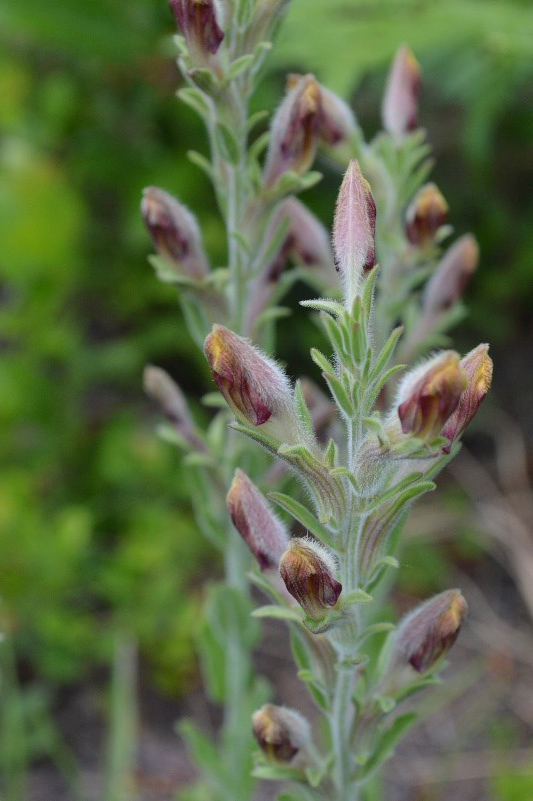
One of those plants is American Chaffseed (Schwalbea americana) which in found in the Pine Barrens. This hairy little plant with tubular purple flowers has been listed as a federal endangered species since 1992. 

How rare is it? Rare enough that by 2000, its entire Northeastern range was limited to a small stand in Brendan T. Byrne State Forest. 

Kelly began monitoring the chaffseed colony when he was a graduate student at Rutgers and discovered that this hemiparasite plant (relying on other plants early in its life cycle) preferred a nearby plant—the Maryland golden aster—for nutrients, and began cultivating it in a greenhouse alongside the asters. Those seedlings were transplanted into the wild starting in 2006 and are leading to some recovery in our state.

Another recovering plant is seabeach amaranth. This low-growing beach plant disappeared from New Jersey in 1913 but was spotted growing down the Shore in 2000. Kelly determined that human activities—particularly driving on the beach (which is allowed in Island Beach State Park and some New Jersey towns) and beach-raking—were the greatest threats to the species. With his students, they fenced off a portion of the upper beach at Island Beach State Park as a protected area and the experiment has led to a 600% increase in plants.

A new plant species he is focused on is bog asphodel, a plant that grows nowhere in the world but New Jersey. Kelly is conducting statewide surveys of many of the other 800-plus rare and endangered plant species in the state and working with the Partnership for New Jersey Plant Conservation to strengthen protections for rare plants.

Bog Asphodel. Narthecium ossifragum (38188351645)
bog asphodel   Narthecium ossifragum


Wednesday, October 30, 2019

Endangered Plants of New Jersey

The Fish and Wildlife Service website lists endangered plants and animals. There are 947 plants listed but only six listed species are believed to or known to occur in New Jersey.

Five of those are listed as "threatened" in NJ and only the American Chaffseed is listed as endangered in our state.

Endangered and threatened plants don't get the attention that animals do - which probably threatens them even more.

American chaffseed - USFWS, NJ Field Office

American Chaffseed (Schwalbea americana) is the sole species currently classified in the genus Schwalbea. It is an erect, hemiparasitic, perennial herb that is native to the southeastern United States where it is found in wet acidic grasslands. But the species has declined tremendously from its historical range due to fire suppression, and it is currently listed as "Endangered" by the U.S. Fish and Wildlife Service.

American chaffseed occurs in sandy (sandy peat, sandy loam), acidic, seasonally-moist to dry soils. It is generally found in early successional habitats described as open, moist pine flatwoods, fire-maintained savannas, areas between peaty wetlands and xeric (dry) sandy soils, bog borders, and other open grass-sedge systems.

American chaffseed is dependent on factors such as fire, mowing, or fluctuating water tables to maintain the crucial open to partly-open conditions that it requires. The species appears to be shade intolerant. American chaffseed occurs in species-rich plant communities where grasses, sedges, and savanna dicots are numerous.

American chaffseed is currently known to occur only in Burlington County, but the species formerly occurred in Camden, Gloucester, Atlantic, Cumberland, and Cape May Counties.

More at https://www.fws.gov/northeast/njfieldoffice/endangered/chaffseed.html

The other plants listed as threatened in NJ are:
  • Amaranth, seabeach (Amaranthus pumilus)
  • Beaked-rush, Knieskern's (Rhynchospora knieskernii)
  • Pogonia, small whorled (Isotria medeoloides)
  • Pink, swamp (Helonias bullata)
  • Joint-vetch, Sensitive (Aeschynomene virginica)

Tuesday, September 18, 2018

Endangered Plant Discovered in NJ After a Century Missing

A rare and endangered plant species last seen in New Jersey a century ago has been discovered growing north of Worthington State Forest in Warren County.

A botanist with the New Jersey Department of Environmental Protection’s Office of Natural Lands Management discovered stalked woolgrass (Scirpus pedicellatus) along the shore of the Delaware River in July. The last sighting of the plant was in Sussex County on July 4, 1918.


Commissioner McCabe said. “The presence of this rare plant and others reminds us to appreciate and strengthen the ecological diversity in New Jersey so that future generations may enjoy these beautiful plants.”

Stalked woolgrass is listed as endangered in New Jersey. Although it had not been seen in a century, stalked woolgrass and many other rare and historic plant species are assumed to exist if the habitat that supports the plant also exists. There are 10 other species of woolgrass that grow in the state, but stalked woolgrass is the rarest, having been observed only once before, by Edwin B. Bartram, a member of the Philadelphia Botanical Club, in 1918.

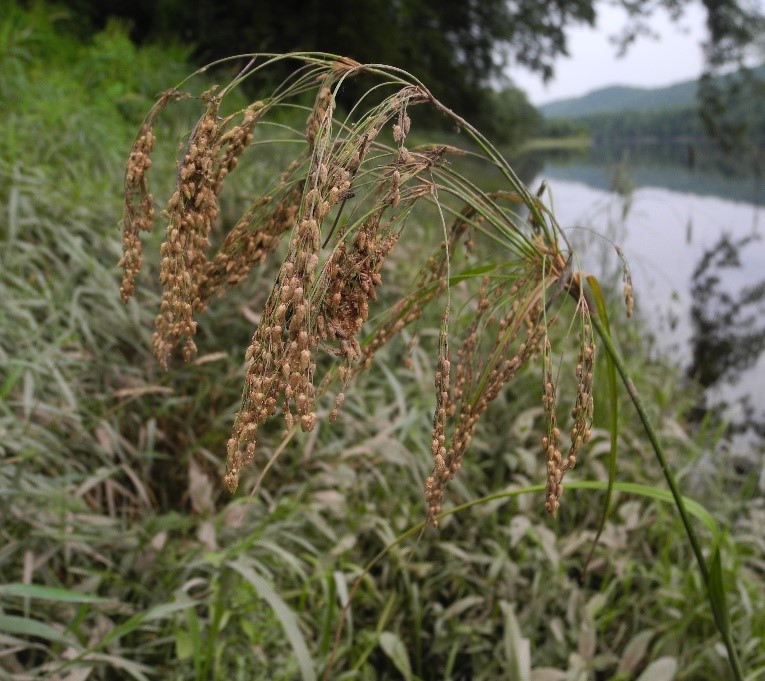
Stalked woolgrass belongs to a large family of plants known as sedges. It has grass-like leaves that form large clumps and produces flowering stems that grow up to five feet tall. The mature seeds are covered with feathery plumes, which gives the plant its characteristic wooly look. The species is more common in states north and west of New Jersey and reaches the southeasternmost limit of its range in this state. Its habitat is open marshes on floodplains and river shores.

The Natural Heritage Program, part of the New Jersey Forest Service’s Office of Natural Lands Management, identifies and tracks more than 800 endangered and rare plant species as well as rare and unique ecological communities.

More on Scirpus pedicellatus gobotany.newenglandwild.org/species/scirpus/pedicellatus

For a complete list of plant species tracked by the Natural Heritage Program, visit www.nj.gov/dep/parksandforests/natural/heritage/njplantlist.pdf

To view a report on the status and trends of endangered plants in New Jersey, visit https://www.nj.gov/dep/dsr/trends/pdfs/endangered-plant.pdf

Wednesday, September 5, 2018

Saving One of NJ's Last Wild Populations

That title probably suggest to you some wild creature roaming the Garden State. But it refers to an NJDEP press release about trying to save New Jersey’s last remaining wild population of a plant.

The plant is American chaffseed, a flowering perennial herb with highly specialized habitat needs. The species’ last stronghold is in a state forest in the Pinelands of Burlington County.


American chaffseed (Schwalbea americana)

The project is being overseen by the DEP’s Office of Natural Lands Management. This year, the total number of American chaffseed flowers at the Burlington County site is double that of recent years, with the number of stems up 65 percent from last year. All of this points to an increase in the overall number of plants next year.

Resembling a snapdragon, American chaffseed needs open meadows with sandy and acidic soil as well as nearby wetlands. Seeds of American chaffseed also require contact with the roots of a host plant to germinate. Known host plants in New Jersey include Maryland golden aster, inkberry and dwarf huckleberry.

The American chaffseed is listed as endangered by the state as well as the federal government. The biggest threats to American chaffseed across its range include development, mowing and suppression of wildfires that are needed to remove competing understory vegetation.

The species was once found at 18 locations in New Jersey, all in or near the Pinelands. At one time, the species was found in 16 states from Massachusetts to Louisiana, and as far west as Kentucky and Tennessee. Today its range has diminished to spotty populations in eight states along the Atlantic and Gulf of Mexico coasts.

Thursday, June 7, 2018

Saving Spaces for the Swamp Pink

The Department of Environmental Protection has received a $250,000 federal grant to help acquire land to preserve and protect an endangered member of the lily family found primarily in New Jersey.

The grant from the U.S. Fish and Wildlife Service’s Cooperative Species Conservation Fund is targeted for acquisition of land along Cumberland County’s Cohansey River confirmed as critical habitat for swamp pink, listed as federally threatened and state endangered.


Rare Swamp PinkThe presence of swamp pink is a sign of a healthy ecosystem. Its primary threats are pollution, wetlands draining, erosion and sedimentation.

As a result of the grant, the DEP’s Green Acres Program will initiate negotiations with various property owners and will provide additional funds for the purchases. The owners and the locations of the properties will not be disclosed until the acquisitions are finalized.

Read more nj.gov/dep/newsrel/2018/18_0040.htm

Tuesday, February 13, 2018

Is Chocolate Endangered?


Valentine's Day is a big day for chocolate. The ancient Mayans said it was the food of the gods. In the 19th century, it was considered an aphrodisiac. This past Valentine's Day, Americans spent an estimated $1.7 billion on chocolate. Globally, it is a $98 billion a year product.

Consumer demand for chocolate is on the rise. But the cacao tree, the seeds of which yield cocoa powder, is threatened by pests, fungal infections and climate change.

A New Jersey connection comes to us via Mars Wrigley Confectionary. This $35 billion corporation needs chocolate and knows about the problems connected to it.  Last September, the company pledged $1 billion as part of an effort called "Sustainability in a Generation," which aims to reduce the carbon footprint of its business and supply chain by more than 60% by 2050.

The chocolate company behind M&M's, Snickers, and Twix, is expanding in New Jersey. The company announced that it will open its U.S. headquarters in NJ. The HQ will have two locations, one in their existing offices in Hackettstown, and another in a new space in Newark that will bring about 500 jobs to the city when it is up and running by July 2020.

Chocolate is made from Theobroma cacao seeds, roasted and ground. Theobroma cacao, also called the cacao tree and the cocoa tree, is a small evergreen tree native to the deep tropical regions of Central and South America. Its seeds, cocoa beans, are used to make cocoa mass, cocoa powder, confectionery, ganache and chocolate.

Researchers are working on multiple approaches that could bolster the fragile tree. The pests and diseases to which cacao is subject, along with climate change, mean that new varieties will be needed to respond to these challenges. Breeders rely on the genetic diversity conserved in field genebanks to create new varieties, because cacao has recalcitrant seeds that cannot be stored in a conventional genebank.

Wednesday, June 28, 2017

You Can Only Find This Plant in New Jersey

Spring Beauty Claytonia virginica
Spring beauty is a plant found in abundance in the Eastern temperate deciduous forest of North America throughout many different habitat types including lawns, city parks, forests, roadsides, wetlands, bluffs, and ravines.

The very rare and endangered Spring Beauty variety hammondiae
But Hammond’s Yellow Spring Beauty (Claytonia virginica var. hammondiae) is a very rare and endangered wildflower. Of interest here is that this variety only exists in a few patches of wet meadow in the northwest corner of New Jersey.

When we say rare, we mean this is not just the only place in NJ, or in the United States, but the only place on Earth where we know of this particular plant variety existing. That the location being in our often-misunderstood and highly developed state is another reminder that there are places of ecological and environmental importance in all parts of the planet.

Don't rush out to try to see this dime-sized gem of a flower. Thankfully, it is protected in The Nature Conservancy’s 100-acre Arctic Meadows Preserve. The Preserve itself is a rare inland acidic seep that because of the underlying geology and soils is a habitat where Hammond’s Yellow Spring Beauty can exist. (The blooms appeared in April.)

How did the plant and its habitat get discovered? I discovered in a post by Jim Wright that more than fifty years ago, naturalist Emilie K. Hammond noticed in a NJ meadow blooms which looked like Spring Beauty but were not the expected white or pinkish color but instead a deep yellow. Her discovery was reported to the Brooklyn Botanical Garden, which researched the flower and categorized it as another color variation of the common Spring Beauty. Not big news.

When there was home construction near that meadow in the mid-1980s, a botanist for The Nature Conservancy, David Snyder, checked out the situation. He discovered that not only that were they that odd color, but they were growing in an unexpected kind of habitat and blooming long after the more common variety had finished. This was a new type of Spring Beauty, found only in this location.

The Nature Conservancy bought the 77-acre property in the 1990s to protect the rare flower, and has since added 23 acres of adjacent land.