Showing posts with label gardening. Show all posts

Friday, November 29, 2024

The Three Sisters on Native American Heritage Day

Allison Mitchell, Co-Executive Director of the New Jersey Conservation Foundation, wrote in her newsletter about "Honoring The Three Sisters" at our dinner tables. This day after Thanksgiving in November which is National Native American Heritage Month, is a good time to recognize and honor the culture, traditions, and achievements of the original inhabitants of North America. 

New Jersey is no different from the rest of the country in having significant Native American history. We are reminded of that by place names in the state, some of the land we visit, and food we eat, 

For NJ, it is the first people here, the Lenni-Lenape, who lived here at least 10,000 years ago that started planting using “The Three Sisters” which are corn, beans, and squash. According to the National Agricultural Library, the intercropping method of planting corn, beans, and squash together has been studied and described by scholars of anthropology, history, agriculture, and food for many years. This method involves planting pole beans, squash, and corn together in a mutually-beneficial arrangement. The sturdy corn stalks provide support for the climbing beans, while the squash vines spread out to retain soil moisture and suppress weeds. Meanwhile, the beans enrich the soil with nutrients, the broad squash leaves offer shade, and the corn adds structure and stability. This traditional companion planting system fosters a harmonious relationship between the three crops, enhancing their growth and supporting a thriving ecosystem of plants and animals.

Mitchell points to Michaeline Picaro and her husband, Chief Vincent Mann, of the Ramapough Munsee Lenape Nation, Turtle Clan who have leased 14 acres of farmland to create The Three Sisters Munsee Medicinal Farm. It serves almost as a charity feeding, nurturing, and healing members of the Turtle Clan. 

Many different Native American tribes practiced this traditional gardening technique, which is believed to have originated with the Haudenosaunee (hah-dee-no-shownee) of upstate New York, or "People of the Longhouse." At least 15 different indigenous nations in the northeastern United States and southeastern Canada planted The Three Sisters, including the Native American women of New Jersey who were responsible for planting.

To learn more about some of the tribes of New Jersey:

Monday, April 4, 2022

Starting Seeds to Beat That Last Frost

Image: J Garget - Pixabay

March is the month when I start looking at my seed packets and the vials of seeds that I saved from last year. But the frost-free date for New Jersey when things should be safe to put in the ground varies.

In my part of northeastern NJ it is April 21 - 30 - but that is also the listed dates for the Atlantic City area. In northwestern NJ, it is May 21 - 31 - and also in Shamong Township in the Pinelands. In other words, it varies. And it is unpredictable.

I keep a garden journal year to year and mark the last frost for my little eco-zone. Over the past 15 years, the last frost in my garden has gone from a late one on May 3 and an early April 10. That's a 3-week spread. My average would be around April 20

That variation is the reason that many Jersey gardeners start seeds indoors. I find saving seeds an optimistic practice. It means I plan to be around the following spring to be in the garden again.  

And there are lots of reasons for starting your own seedlings for the garden.

To get ahead of spring and summer planting.
To learn and experiment with growing techniques.
To save money, compared with buying transplants.
To teach children how seeds germinate and plants grow.
To experience the emotional benefits of gardening during winter.
To prevent birds and other critters from eating seeds (like sunflowers) before they can grow.

Plants, such as tomatoes and peppers, need a longer season to mature so sowing seeds outdoors is not an option, and those young plants are not very happy outside even without frost when there are 40 degree nights. There are vegetables and flowers that can be grown successfully directly into the ground. My father always used St. Patrick's Day as the time to plant peas outside and start cleaning out the flower beds.

A pepper seed pack might say to sow indoors 8-10 weeks before the average last frost. Several years I have started seeds too early and the seedlings started to die before I ever got them in the ground.  

I start my tomatoes, peppers, and eggplant about 6-8 weeks before that last frost guess date. I also start some annual flowers such as zinnias, marigolds and sunflowers can also be started indoors, but I will sow some outside if it warms up early in mid-April.

Plants that don’t transplant well include root crops like beets, carrots and radishes, beans and peas; and squash family plants like cucumbers, summer squash, winter squash and melons such as watermelon. While perennial flowers often can be started from seed, it typically takes a long time and isn’t worth the investment for most home gardeners.

Seeds can sprout in less than a week if there is sufficient warmth and light. Indoors, the secret is to keep up that light via the sun and perhaps some grow lights too. 

I use seed trays that I fill with lightweight soil, peat pots, soil pellets, and some plain old pots with good garden soil, and I track which ones work the best year to year.

I also shuffle my trays in and out of the house trying to grab those warm days and bring them in at night and col days. It's work but I enjoy doing it.

The New Jersey USDA Plant Hardiness Map below shows the four different planting zones, 6a, 6b, 7a and 7b. 

click here to enlarge map


Monday, September 21, 2020

Container Gardening


My tomatoes are starting to wind down from summer. The cherry tomatoes are doing better than the big ones. The peppers are still doing very well.

My backyard soil is filled with tree roots and so it's not a great place for growing vegetables. But I live in the Garden State and I think it's required that we have some kind of garden. I have been gardening since my father taught a 5-yearold me how to put in tomato plants (deep!) in our backyard garden.

I could have made raised beds but I have been using containers for the past 10 years. My containers contain very good soil which I mix every spring from my two composters and some premium top soil, manure and peat moss that I buy. 

Conatiners have been a good alternative for me. I can place them where there is the proper sunlight for that plant. I need to be very attentive to watering as containers can dry out quickly. During our hottest days this summer, daily watering was required.

Here are some other places to look for information. It's never too early to plan next year's garden - and there are some good end of season sales on containers.

Container Gardening with Native Plants: Missouri Botanical Garden Plant List
Container Gardening with Native Plants: Tips from Aububon


Friday, August 28, 2020

Is There Compost in Your Garden?


I ask "Is There Compost in Your Garden?" but the answer should be YES!

Why make compost?

  • Composting enriches soil, helping retain moisture and suppress plant diseases and pests.
  • Composting reduces the need for chemical fertilizers.
  • It encourages the production of beneficial bacteria and fungi that break down organic matter to create humus, a rich nutrient-filled material.
  • It also reduces your trash quanity and so reduces methane emissions from landfills and lowers your carbon footprint.

My composting begins inside the house with a small container made for indoor composting. We add vegetable and fruit scraps and coffee grinds in the kitchen. I avoid things with seeds as they will sprout when you use the compost in the garden. Also avoid weed seeds outside.

I add some dry soil to it during the week so it doesn't get too soggy. I empty it weekly into the outside composter bins.

There are indoor composters that you can buy with charcoal filters, liner bags etc. but you can make something to use following some of the suggestions below.


My backyard composting is done with one rotating bin and one standing bin, but there are  a variety of composters you can purchase, and you can also create less formal and less expensive compost piles on your own. (See links below for suggestions)

  1. Select a dry, shady spot near a water source for your compost pile or bin. 
  2. Add brown and green materials as they are collected, making sure larger pieces are chopped or shredded. A discarded carrot whole will take a very long time to break down. The smaller the pieces the faster the composting occurs. 
  3. Moisten dry materials as they are added, but green materials adds moisture. You don't want the pile to be totally dry or soggy.
  4. Add some good garden soil occassionally as it contains microorganisms that speed up the process. I always start a new compost batch with some of the older, rich compost I am emptying. You can also buy compost starter.
  5. Once your compost pile is established, you can mix grass clippings and green waste into the pile and bury fruit and vegetable waste under 10 inches of compost material. Grass clippings add nitrogen but if not mixed in well with other materials will add too much moisture - and they will stink!
  6. Turn the contents weekly. (That's why the tumbler types make it easier to do.)
  7. Some people cover the top of a compost pile with a tarp to keep it moist but not saturated from rain. 
  8. When the material at the bottom is dark and rich in color, your compost is ready to use. This usually takes anywhere from two months in hot weather to six months to a year in colder times.
I "harvest" my compost when I do spring planting and then let the new batches go until early fall when I take some of its ready for my perennials and to mix into the vegetable garden after it is cleared. The rest says in and I add to it for sis months through winter.

There are also things you should NOT compost. The EPA posted this list:
  • Black walnut tree leaves or twigs because they release substances that might be harmful to plants
  • Coal or charcoal ash - Might contain substances harmful to plants. Wood ash is okay.
  • Dairy products (e.g., butter, milk, sour cream, yogurt) and eggs - though egg shells are a good addition.  These create odor problems and attract pests such as rodents and flies. 
  • Diseased or insect-ridden plants as diseases or insects might survive and be transferred back to other plants.
  • Fats, grease, lard, or oils - Create odor problems and attract pests
  • Meat or fish bones and scraps - Create odor problems and really attract pests!
  • Pet wastes (e.g., dog or cat feces, soiled cat litter) can contain parasites, bacteria, germs, pathogens, and viruses harmful to humans
  • Yard trimmings treated with chemical pesticides might kill beneficial composting organisms.

Wednesday, April 11, 2018

Getting Out Into Our a Garden State Garden

Kids in the garden from the 2016 White House Garden

Has there been enough warm weather and green shoots to get you out in the garden?

April is a lot of clean up for me, along with turning over the soil, planting seeds, moving plants, adding new plants, and planning my vegetable garden.

Henry Rangkuti wrote me back when it was cold and said that he stumbled upon an article on the site about vegetable gardening. 

Henry passed along two recommended links: motherearthnews.com/organic-gardening/10-best-garden-crops-for-beginners and on his own site gardeningjourney.com/vegetable-gardening-for-beginners/.

Of course, we love our Garden State and many people plant flowers and ornamentals. And we love our Jersey tomatoes and backyard vegetable gardens too.

I keep my own gardening calendar records every year where I record the appearances, blooms and harvest times. They do vary year to year, but most years I can see a pattern for that year. Perhaps it is a warm spring or mild winter and we are a week ahead of last year. I record frosts and freezes.

The Old Farmer's Almanac and other sites online will give you the aggregated planting calendar dates. You can check your local microclimate at almanac.com/gardening/planting-calendar/NJ - but don't be too surprised if we still get a snowstorm or freeze or frost that doesn't agree with years past. 

This month is a good time to be planting lettuce and other salad greens outside. It's the time to have our tomato seeds sprout inside, but we need to wait for May to move them into the garden.

We are the Garden State and not the farming state, but New Jersey is still home to more than 9,071 farms covering 715,057 acres of farmland. The state is among the leaders in many forms of agricultural production.  For example, New Jersey ranks: 5th in blueberry production, 3rd in cranberry production, 3rd in spinach, 3rd in bell peppers, 4th in peach production.  The state also produces an abundance of tomatoes, corn, apples, strawberries, potatoes, hay, soybeans and nursery stock.

New Jersey promotes its outstanding agricultural industry through its Jersey Fresh campaign. Jersey Fresh fruits and vegetables must pass a grading program to ensure they are the highest quality.

Saturday, March 17, 2018

Jersey Tomatoes


Late winter always gets me longing to get out in the garden. Now is the time to think about garden planning, starting seeds and cleaning up garden spaces. And I can't help but think about my Jersey tomatoes. Any NJ gardener with space for vegetables should be growing tomatoes and though there are many varieties, at least one should be a Rutgers-developed "Jersey Tomato."

I got my 2018 order form for Rutgers 250, Ramapo, Moreton and KC-146 tomatoes (You can also use it to order a Jersey tomato t-shirt.)


In 2008, the "Rediscover the Jersey Tomato" program began with the re-introduction of the Ramapo tomato. That type was released in 1968 and was celebrating 50 years, but it is not your only choice.

The Rutgers 250 resulted from crossing the same parent varieties as the original 1934 "Rutgers’ tomato" with ones featuring high fruit quality and flavor. It was named in honor of the University’s 250th anniversary in 2016. It has a mid-season maturity and firm, crack-resistant fruit with a uniform color. These are semi-determinate plants and best if staked. Rutgers 250 was not bred specifically for disease resistance, but it shows good resistance to bacterial spot and bacterial speck.

The "Ramapo F1" hybrid tomato was developed at Rutgers NJAES and released in 1968. The seeds were unavailable for many years, but Rutgers reintroduced it in 2008. This is a mid to late season tomato (about 80 days) that has medium to large fruits that are resistant to cracking and Verticillium and Fusarium wilt.

The less well known Moreton F1 was Harris Seeds’ first F-1 hybrid, released in 1953 and one of the first hybrids grown by Jersey tomato growers. This early maturing, tasty variety was off the market and re-introduced in a cooperative effort by Harris and Rutgers. Moreton makes a good earlier maturing (70 days) garden choice. Many gardeners will plant several varieties to get ealy, mid and later yields. Moreton is also a treated seed that is popular in extreme climates with short growing seasons and in containers.

KC-146 tomato is also known as Campbell’s 146 because it was developed by Campbell’s Soup Company as a better flavored processing tomato and released in 1956. It was eventually replaced with newer varieties with a more disease resistance, but Campbell’s maintained the KC-146 stock as their flavor standard. A mid to late season tomato, resistant to Fusarium wilt, semi-determinate plants that take 78 days to maturity. This was developed for processing (soup etc.) but has great flavor as a fresh tomato.


Wednesday, May 3, 2017

90 Years of the Presby Iris Gardens in Montclair

The Essex County Presby Memorial Iris Gardens in Montclair - the "Rainbow on the Hill" - celebrates its 90th anniversary this May. The Presby Memorial Iris Gardens is recognized internationally for its horticultural and historical significance. 

Following them on Instagram, I am reminded that forsythia blooming means its time to fertilize my own irises. Autumn is the time to divide irises, but if you buy new ones or just have a really crowded bed, take a look at their YouTube channel which has a video on how to divide the clumps and replant. 

For many years, it was a Mother's Day tradition for me to take my mom to the gardens, as irises were always one of her favorites in our own home garden.

The anticipated bloom season is May 12 through June 2. The bloom season begins with the “minis” bearded collection, then to the famed tall bearded irises, and ends with the non-bearded irises.
The gardens were established in 1927 to honor Frank H. Presby, a Montclair resident involved in improving the town's parks and recreation as well as the Montclair Art Museum. Presby was also a founding member of the American Iris Society, hence the decision to focus on that plant.

Starting with two 4-foot-wide beds, the public gardens now contain nearly 14,000 irises of approximately 1,500 varieties.

In addition to enjoying the iris blooms, you can visit the Bloom Room gift shop, and their Plant Sale will offer iris dug from the gardens.

The Essex County Presby Memorial Iris Gardens is located at 474 Upper Mountain Avenue in Upper Montclair, New Jersey. During bloom season, admission is a suggested $8 donation to help fund garden costs. The Gardens are open daily from dawn until dusk.
Bloom Room Gift Shop Opens & Iris Plant Sale
Friday, May 12 through Sunday, May 14 from 10 a.m. to 3 p.m.
The Bloom Room Gift Shop features an exciting mix of affordable home and garden accents. Potted and bare root irises from our collection are available for purchase. Visitors also may reserve summer grab bags.
Mother’s Day
Sunday, May 14 from 11 a.m. to 3 p.m.
Enjoy the day with Mom at Presby. Treat her to a special iris or item from the Bloom Room Gift Shop. Enjoy a free music program. A special luncheon is planned; check the website for ticket information. Artist Lisa Palumbo will be available from 1 p.m. to 3 p.m. to sign artwork.
Family Garden Party
Saturday, May 20 from 11 a.m. to 3 p.m.
Essex County Family Garden Party is a free community event sponsored by the Essex County Department of Parks, Recreation and Cultural Affairs with entertainment, crafts, face painting, booths from local organizations such as the Essex County Environmental Center and Master Gardeners, and various food trucks. A student art exhibit will also be featured. Rain date: Sunday, May 21.
Live Jazz Music
Weekends during Bloom Season from 4 p.m. to 6 p.m.
TaikoZoku Japanese Drumming Show
Sunday, May 21 from 4 p.m. to 6 p.m.
Hear the thrilling sounds of this Japanese style drum troupe from Glenn Weber’s New Jersey School of Percussion in West Orange.
Outdoor Movie Screening Disney’s Moana
Saturday, June 3 at 9 p.m.
Hosted by the Montclair Film Festival and Essex County Parks System.


Friday, April 14, 2017

Bring Back the Bees

An interesting environmental advertising project - a billboard that produces real honey
for Honey Nut Cheerios.


What is the only insect that produces food eaten by humans? It is nature's most economical builders, bees. In 36 BC, Marcus Terentius Varro argued that honeycombs were the most practical structures around. Centuries later, Greek mathematician Pappus solidified the "honeycomb conjecture" by making the same claim.

The weather is warming and you're probably seeing bees out looking for spring flowers. Hopefully, you are a friend of bees. Of course, there are reasons to avoid doing things that might provoke a bee to go into a defensive mode and sting you. But encouraging bees in your garden and in nature in general is a good thing for all of us and for the planet.

The amazing little bees might surprise you with their good color vision. Flowers have many colors for that attractive reason. Bees especially like blue, purple, violet, white and yellow.

Did you know that honeybees can make out faces the same way we do? They take parts—like eyebrows, lips, and ears—and cobble them together to make out the whole face. It's called "configural processing," and it might help computer scientists improve face recognition technology

We need bees. One in three foods we eat is made possible by bees and other pollinators who spread the pollen that crops need to grow. That includes many of our favourite foods like apples, almonds, coffee, and of course, honey. 70 out of the top 100 human food crops are pollinated by bees

An important part of sustainable agriculture is bees.

There are over 20,000 species of bees in the world. Honeybees have thrived for 50 million years, but colonies recently started dying in large numbers. 42% of bee colonies in the U.S. collapsed in 2015.

Why? Renowned entomologist and bee specialist Marla Spivak reveals four reasons why, and what we can do to help in this Ted Talk.


Common sense actions can restore and protect the world’s bees. Good starting places are:
- Ban the seven most dangerous pesticides.
- Protect pollinator health by preserving wild habitat.
- Restore ecological agriculture.

Cheerios cereal (General Mills) partnered early this year with Veseys Seeds to give away wildflower seeds so that people would plant them and make the world a bee-friendlier place. They quickly met their goal of distributing 100 million seeds.

The promotion hit a snag though because in sending free packets of wildflower seeds to people all over the country, they seem to have failed to take into account that some of the flowers included are invasive species in some areas that should NOT be planted there.  For example, Forget-me-not (which was listed on their site but supposedly not included in the seed mix) is banned as a noxious weed in Massachusetts and Connecticut. And the California poppy is good in California, but listed as an “invasive exotic pest plant” in southeastern states. Some of the flowers on there list are not native to anywhere in the US, so they are not necessarily good matches for our local bees.

Of course, you can still plant wildflowers on your own that are bee-friendly. This guide for the mid-Atlantic states is useful to grow pollinator-friendly plants. For other parts of the country, go to xerces.org/pollinator-conservation/plant-lists/ or check the USDA site to see if a plant is native to your state.

I am pleased to see General Mills making efforts for bees, even if this seeds project was less than perfect. By 2020, they expect their oat farms will host about 3,300 acres of nectar- and pollen-rich wildflowers, which are full of the nutrients bees and other pollinators need to stay strong.

Finally, it is important to remember that you can do more than just plant flowers to help create a bee-friendly habitat. Avoiding using pesticides outside on or near the flowers (including if you have a garden or lawn service spraying) is very important.

Also note that bees are not our only pollinators. Bees are the major pollinators - and this includes not just honey bees - but also hummingbirds and some kinds of butterflies, and to a lesser degree spiders, flies and wasps. Even bats who feed on the insects in the flowers as well as on the nectar and flower parts play a role in the pollination of over 300 species of fruit around the world.


Monday, February 20, 2017

Spring Planting


Though snow is on the ground, I saw a sure sign of spring this past week. I got an email from the Rutgers New Jersey Agricultural Experiment Station letting me know that the "Rutgers 250" tomato seeds for 2017 are available.

Jersey tomatoes have long had a reputation for being great. With all the lousy tomatoes that you often get in restaurants and in stores, everyone who has at least room for a big container in a sunny spot should plant tomatoes for this summer.

The Jersey varieties popular now are part of the Rediscover the Jersey Tomato program at Rutgers New Jersey Agricultural Experiment Station. They have revived four classic Jersey tomato varieties: Rutgers 250, Ramapo, Moreton and KC-146 tomatoes. I grew all four last year, but the Rutgers 250 was my favorite.

You don't have to be from Jersey to grow them, and you can download a printable order form to get seeds.
You might be getting seed and garden catalogs in the mail now, and displays will be up in garden center.

As you're packing away your snowblower, you can cheer up by by getting your garden tools in order, reviving the compost pile, raking up garden scraps and turning the soil on those drier early spring days.

Gardening conditions and recommendations vary widely by state, county and sometimes even by town within a county. You want information as specific as possible for your microclimate. Cooperative Extension offices have lots of free information via gardening fact sheets, diagnostic services and even help lines. For New Jersey residents, you can find your county Rutgers Cooperative Extension office online. If you are outside New Jersey, you can find guidance for gardening in your specific region through your local cooperative extension service.
Soon I will be starting my vegetable and a few other seeds indoors. Here's a page with some good information on that process: njaes.rutgers.edu/pubs/fs787/
If you're not sure about whether or not your garden soil has what is needed, rather than just add fertilizers and assume they will help (they might make things worse), you should test the soil. There are kits avaialble to do it yourself, and you can get have a professional soil test for pH, nutrient levels and more from places like the Rutgers Soil Testing Lab.


Wednesday, March 23, 2016

Noting the Passing of Seasons

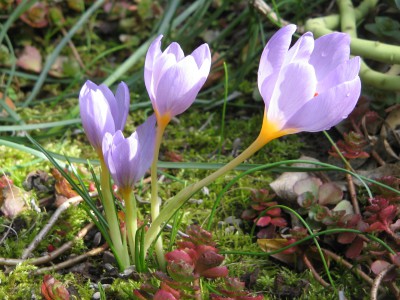
crocus

The crocuses bloomed three weeks earlier this year in my part of Essex County. I know that because I have kept a garden notebook for the past 35 years. Spring if officially here, but things have been blooming for awhile and I have been recording them.

Have you noticed any changes in when things sprout or bloom in your neighborhood? Maybe flowers tend to bloom a little earlier this year or birds that used to migrate are hanging around your yard through the winter?

In some ways my garden notebook is more of a nature notebook as I find myself also recording first and last frosts, snow storms, the appearances of birds, insects and wildlife. Some of those things I post on another blog of mine (where this post first appeared), both seriously and also as a kind of weather lore. My posts about predicting the weather based on signs in nature seem to get a lot of hits, so I am not alone in my interest, scientific or not.

Most people have never heard of phenology. but if you have ever paid attention to the timing of natural events, like blooming flowers and migrating animals, you have been practicing this -ology. Phenology is the study of the timing of recurring plant and animal life cycle events.

If you want to make those observation to be more "official," you can become a citizen scientist by connecting with groups like Nature’s Notebook. It  is an online project sponsored by the USA National Phenology Network. Americans can practice phenology in their own habitat and share their observations with other members and have their data shared with scientists who will use the data for research and decision-making.

It saddens me how disconnected people are to the natural world of plants, animals, the earth and sky. s a lifelong teacher, it really saddens me to see how disconnected kids become as they get older. The interest is always there in very young children, so it is something that is lost.

We may not all be as observant as Sara Schaffer of Nature’s Notebook who suggests that we notice the "slightest blush on a maple leaf that foreshadows the coming fall" or the "new, more vibrant feathers warblers put on days before mating.”

robin-pixabayDo you see the appearance of the first robin on your lawn as a sign that spring has arrived? I grew up hearing and believing that. But I have observed and recorded robins every winter. Once I saw four of them sitting on my fence in a February snowstorm. Robins as indicators of spring is a good example of weather lore.

Most robins do migrate south, but some are probably still around your neighborhood all winter - no doubt better protected in the woods than on your bare lawn. The robins that do migrate to the South in the fall, return in the spring, so then we see many more of them on that soggy lawn and field in search of food.

Geese flying south over my house is a daily occurrence. They fly from the reservoir south to a pond. They never migrate or leave any more. What does that indicate? Perhaps some of it is climate change, but it is also the prime water and grass we provide them in parks, golf courses, school fields and corporate settings. Why leave?

Though thinking that a captive groundhog can predict the end of winter is certainly weather lore, paying attention to events like true bird migrations can help us understand long-term trends and predict future events. That is why many observers may be reporting small changes that can help more accurately predict the long-term impacts of climate change and shorter-term events in the near future.

Friday, August 15, 2014

A Big Ten Rutgers Tomato

At Rutgers’ Snyder Research Farm, a seedling variant
in the search for a reborn Rutgers tomato.
Photo by Jennifer Pottheiser via njmonthly.com
Last week I received alumni mail about Rutgers' inaugural Big Ten football season. I also read a NJ Monthly article about attempts being made at Rutgers to bring back the famed Rutgers tomato.

Rutgers football may be just entering the Big Ten this fall, but the Rutgers tomato was in the Big 10 of tomatoes starting in the 1950s. For several decades the Rutgers tomato reigned in popularity for its Jersey tomato taste. It was tart, sweet, tender, round, red and ripened on the vine.

Companies, like Campbell Soup, loved them for juice, soup and ketchup. So why use the past tense when talking about this variety? It fell victim to commerce.  As the interstate highway system expanded in the 1950s, more produce was being trucked longer distances. The soft Rutgers tomato did not travel well. Scientists worked on developing varieties that did travel.

Those newer hybrids were firmer with thicker skins and interior walls and could be ripened after picking.  And they tasted lousy.

I have been a backyard gardener since I was a kid helping my father. We planted Rutgers tomatoes. My father saved seeds from the best ones for next year. But I moved on to buying plants at the garden center and at some point in the 1980s the Rutgers plants disappeared.

cherry
Lots of cherry tomatoes in July. Pop them in your mouth right in the garden

My tomatoes only travel about 100 feet, so "shippability" doesn't matter - taste does. The next generation tomato from Rutgers was the Ramapo, developed in 1968 which had a good ten-year run, disappeared and the was reintroduced in 2008. It tastes like a Jersey tomato, but doesn't ripen until August. Gardeners and farmer like a product in July.

"Heirloom" tomatoes were big for a few years. Those are varieties that go back pre-WWII. Nostalgic, but flawed for the same reasons that they fell away in the 1950s; they cracked, softened in heavy rain, got fungus and other diseases and you ended up throwing too many away. So much for nostalgia.

It probably surprises folks that New Jersey, even with its disappearing  farmland, still ranks fourth in the nation in value of agricultural products sold per acre.

The tomato that we often find in stores now is pretty dreadful compared to what I can pick in my backyard.  Stores, and many consumers, want firmness and picture-perfect fruit. Now that a lot of production is in Florida, California and Mexico,  those supermarket tomatoes are picked green and then gassed with ethylene to turn a sickly red, then refrigerated for shipping. Tomato gardeners know that you never refrigerate your tomatoes unless you want to halt ripening.

I have to plant one yellow tomato for my sister - a fan of the "low acid."
My mom showed me the gassing method without knowing the science. Put some half-ripe tomatoes in a brown bag with a few slices of an apple and close it up. She couldn't tell you why it worked, but it did. It didn't taste like one picked off a plant, carried into the kitchen, sliced and eaten with a little salt, or olive oil and some oregano., but better than the store-bought ones that she called "greenhouse tomatoes."

The Rutgers agriculture people have been working to resurrect the Rutgers tomato we once knew and are down to a dozen or so contenders from several hundred. It will be a Rutgers tomato reborn.

They have been having a Great Tomato Tasting for the past few years (this year's will be at the end of August) where regular folks taste and rate.

The new name is still undecided. "Rutgers250" is a possibility to mark its debut in 2016 which is the 250th anniversary of the college. We'll see if it tastes like the summer of 1962, but hopefully it will taste like summer.


This post was first posted at my Weekends in Paradelle blog in a slightly different form.

Saturday, June 7, 2014

A Moon Garden


Some people plant moon gardens. The idea is to grow plants with leaves and flowers of white, silvery and gray that will catch the moonlight - and look white and "lunar" white even in daylight or electric illumination.

Popular spring plants for a moon garden:
  • Daffodil (Narcissus) ‘Mount Hood’, ‘Cheerfulness,’ or ‘Stainless’
  • Tulip ‘String of Pearls’, ‘Maureen,’ or ‘Mount Tacoma’
  • Hyacinth ‘White Pearl’ or ‘Carnegie’
  • Bleeding Hearts ‘Alba’
  • Candytuft
  • Lilies of the Valley
  • Sweet alyssum
  • white snapdragons, 
  • some iris, delphiniums, lupines, crocuses and snowdrops.


To keep going into summer:
  • Coneflower ‘White Swan’
  • Hydrangea ‘Annabelle’ or ‘White Swan’
  • Butterfly bush ‘White Profusion’
  • Moonflowers (Ipomoea alba)
  • ‘Alba’ four o’clocks (Mirabilis jalapa)
  • White flowering tobacco (Nicotiana alata)
  • ‘Casa Blanca’ Oriental lilies
  • Rose ‘Iceberg’, ‘Lace Cascade’,‘Sally Holmes Antique Climbing’ or ‘Lady Banks White’

Late Summer/ Fall Flowers:
  • Clematis ‘Sweet Autumn’
  • Dahlias ‘White Perfection’ ‘Eternal Snow’ and ‘Playa Blanca’


White Gardens - How to Make a Stunning Moon Garden


The Twilight Garden: Creating a Garden That Entrances by Day and Comes Alive at Night


Sunday, April 27, 2014

Climate and Hardiness Zones in NJ


planting early lettuce
Hardiness Zones, Gardening Zones, Growing Zones and Plant Zones refer to defined geographic regions that can support specific plants, flowers and trees.

The zones define a minimum range of temperatures that a plant or tree can survive safely in that zone.

The most common are the Hardiness Zones defined by the U.S. Department of Agriculture (USDA).

In 2012 the USDA released an updated New Jersey hardiness zone map covering the period of 1981-2010. Believe what you will about climate change, but the trees are blooming earlier the past few decades.

warm weather planting - tomatoes
New Jersey's plant hardiness zone was changed in 2011 based on the warmer winters.

In 2012, trees started blooming around March 5. In 2010, after a warm spell at the end of March, the trees bloomed by April 1st.

For my part of NJ, we are in Zone 6B. The average first frost is between October 11 - 20 and the average last frost is April 11 - 20.

Sunday, March 24, 2013

Starting Seeds in Your Garden State Garden

There are no guarantees about the weather, especially in New Jersey. But gardeners need to know when the best planting dates in the spring are for starting seeds indoors or in the ground.

The date of the last spring frost is the important date for those seeds to survive and to be started at the earliest possible time.

The best way is to keep your own records of your garden's conditions each year. But, there are many charts to calculate frost dates based on historical data. Other factors that can influence planting dates include the soil temperature, altitude and slope of your land, any nearby waters, and day length.

The Farmers' Almanac  is an old standby for this kind of information and their online tool offers you information based on your zip code.

It will tell you dates for plants with a long growing season that should be started indoors, and the seeds for plants sown in the ground. (When no dates appear in the chart, that starting method is not recommended for the particular vegetable.)

It even has information for planting by the Moon, if that's something you believe is important. By this it is meant the days when you plant. You don't have to plant at night!  Above-ground crops, like tomatoes, are planted during the light of the Moon (new to full) and below-ground crops (like carrots) are planted during the dark of the Moon (from the day after it is full to the day before it is new again).

For example, there is a 50% probability that you will be frost free after April 18 according to the data from the Little Falls climate station.

There is also a page for each plant type, so a page like the one for beans includes information on planting, pests, harvest, storage etc.

A clip from their table for the Little Falls zip code:

CropStart Seeds Indoors -Moon-favorable Dates -Start Seeds in the GroundMoon-favorable Dates
Beans

Apr 18-May 2Apr 18-25
Beets

Mar 28-May 9Mar 28-Apr 9
BroccoliFeb 20-Mar 6Feb 20-25Mar 28-Apr 4

Wednesday, January 2, 2013

When to Plant in the Garden

Yes, I know the weather is cold in NJ right now, but that's a good time to start thinking about and plan your spring planting.

Catalogs full of seeds and plants will be arriving soon to further motivate you. And, for those of you taking your smartphone into the garden, there are apps for this topic too.

You can just search on gardening or vegetables or flowers and plenty will show up.  Here is one app: When to Plant. which I found reviewed in Wired magazine. It's customized to your area by your ZIP code and a database of about 5,000 weather stations across North American, so that the planting information is correct for your climate.

I am one of those gardeners who keeps his own calendar of planting, sprouting, blooming and harvest dates. But that doesn't help when I plant a new species. The app finds your average last spring and first fall frost dates and shows you the range of planting dates for more than 120 vegetables, herbs, fruits, flowers and cover crops.

There is also some basic growing information for each crop, including preferred soil type, sun requirements, recommended spacing, and sowing and harvesting how-to tips.

The app also gives you access to National Weather Service long-range forecast maps (U.S. only) so you can see projected temperatures, precipitation, weather hazards and drought.

The app is designed for iPhone and iPad, and is available in the Apple App Store for $1.99.

There are also free apps, like "Vegetable Planting Guide" which is available for iPhone and Android, so check your phone's app store.

No smartphone?  You can go to the website for The Old Farmer's Almanac and just put in your Zip code to find out the best planting dates for seeds inside and outside in your area.

Monday, July 9, 2012

School Greens: Garden in the Sky

Students from the School Greens Club at North Star Academy in Newark are on a mission to educate their school and community about healthy eating and more sustainable sources of food. But first they have to educate themselves.

Nature in a New York Minute's Kelly Rypkema follows these enterprising teens on their journey from the farm and kitchen of Stone Barns Center to the grand opening of their own rooftop garden in the middle the biggest city in New Jersey.


"Nature in a New York Minute" is a video series that showcases the wildlife, plants, and geology of the city environment.
NatureMinute.com

Friday, August 12, 2011

NJ Deer Facts

image via wikimedia.org
Estimates are that there are nearly 200,000 whitetail deer in New Jersey. 100 years ago, deer in NJ were "endangered."

This population explosion is causing many problems throughout the state including damaged landscaping to homeowners, major accidents to motorists, and an ecological imbalance.

According to njdeercontrol.com, who offer a deer repellent product and strategies to prevent deer from coming on your property, some of the "favorite" plants and shrubs of deer in New Jersey are:
SHRUBS: Arborvitae, Azalea, Burning Bush, Holly, Hydrangea, Lilac, Mountain Laurel, Red Twigged Dogwood, Rhododendron, Rose of Sharon, Viburnum, Yew.

FLOWERS: Aster, Astilbe, Bee Balm, Cardinal Flower, Coneflower, Daylily, Gayfeather, Geranium, Hosta, Impatiens, Sedum, Sunflowers, Tulips.

Some White Tail Deer facts:
  1. A deer’s nose is about 100 times more sensitive than a human's
  2. Deer can jump a 9 foot fence
  3. They are the largest wild herbivore in NJ
  4. Their stomach is able to digest different foods at specific times of the year. This helps it survive the changing availability of food, and why only certain plants and shrubs are eaten at particular times of the year.
  5. They actually thrive in today’s environment because they are an "edge species." This means they do not like large homogeneous tracts of land, but land with borders and edge habitats. As the human population has increased and divided land, we have created a more suitable habitat for the whitetail deer.
  6. They have no natural predators in New Jersey in high enough numbers to affect their population. Humans - especially motorists - and domestic dogs are the only real "predators."

Friday, May 20, 2011

Planting Time

Radius Garden NRGSET 4-Piece Gardening Hand Tool Set


It has been a rainy week here in NJ, but it's still time get out the garden tools, turn that soil and set out those plants that you started indoors or bought at the garden center.


The last frost date is now past in most parts of NJ.


City Spring Last Frost Fall First Frost
Atlantic City 5/15 9/28
Hammonton 4/25 10/3
Jersey City 4/18 10/19
Millville 4/29 10/10
Newark 4/15 10/26
Newton 5/24 9/19
Shiloh 4/29 10/12
Trenton 4/15 10/23


Source: "Climatography of the U.S. No. 20, Supplement No. 1",  1988, 
National Climatic Data Center, National Oceanic and Atmospheric Administration
Tree Gnome Figurine Garden Outdoor Statue Plaque Lawn Yard Art Decor
So, get outside this weekend, get planting and maybe even let Mother Earth News get you started on some summer garden projects.

OLD-FASHIONED COMPANION PLANTING
Planting an asparagus and strawberry garden bed to last a lifetime.

The A - Z of Companion Planting

Easy DIY Garden Shed Plans
Almost all of us need a little place to store outdoor stuff, and building a shed is one of the best ways to create additional storage space. Our garden shed plans are simple and require only basic carpentry skills. These plans will help you build a basic shed, but don't stop there! To customize your shed, you could create a combination toolshed and greenhouse, put a martin house on top, or use part of the shed for a chicken coop or rabbit hutch.

2x4basics Shed Kit, Peak Style Roof

Wednesday, March 2, 2011

Planning Your Garden State Vegetable Garden


There is nothing like a few warm days in this cold month and the arrival of some seed catalogs to get me thinking about the garden.

Even if you have never planted a vegetable garden, you can consider a few crops for this season to support our Garden State of mind.

Mother Earth News did a story on planning a first garden with ten easy crops that offer great eating possibilities.

I started getting seed and plant catalogs in January and started folding over pages. Now you can even order seeds online through Amazon!

So here are 10 to start out with in NJ.

Radishes do well even in not-so-great garden soil and are ready to harvest in only a few weeks.

Salad greens like lettuce, spinach, arugula and corn salad are available in mixed packets. People plant in spring and fall, and you can pick salads almost year-round.

Green beans are easy to grow and prolific. If you get a big crop, they freeze well, and they’re also delicious when pickled as dilly beans. Start with seeds after all danger of frost has passed.

For onions, you can do seeds and bulbs, but you might try small plants if it's your first time. If they do well, you can harvest onions. If not, you might get small bulb onions and you can always eat the greens.

Fresh-picked ripe strawberries are unbelievably sweet, and the plants are surprisingly hardy. Buy bare-root plants in early spring. Put this perennial in a sunny spot and keep it well weeded.

Both hot peppers and bell peppers are easy to grow. You can try seeds, but plants give you a jump on the season. Let peppers from the same plant ripen for different lengths of time to get a range of colors and flavors. Did you know that the green peppers eventually go red?

Zucchini squash won't take up as much room in your garden as many other types, and it’s very prolific. Start from seeds or plants. You won't need more than a few plants for a bumper crop. Have you ever tried the breaded and fried flowers?

Basil. Many herbs are easy to grow, but basil is a good choice because it’s a nice complement to tomatoes. Basil is easy to grow from seeds or from transplants.


Jersey tomatoes. It's required. There’s just no substitute for a perfectly ripe homegrown tomato. I still have to take those pale things that you get in a salad (even in NJ!) that they call tomatoes. Seeds are great but you need patience and some technique. It's hard to go wrong when you start with strong plants. Do seeds when you want some heirloom or a variety not available in the garden center. Maybe you can support an old Jersey heirloom - the Rutgers tomato. Cherry tomatoes come in several sizes, are easy to grow and produce lots of fruit for those salads. Even the fried green tomatoes are good come fall when it's too late to ripen. Don't even bring up that ripening in a brown bag method...

Let's end with potatoes. You might be surprised that they are an easy-to-grow staple that stores well when kept cool. There are simple and low-maintenance approaches like planting potatoes in straw rather than soil. I planted one year in a large black garbage bag of composted soil and gut great, easy to harvest potatoes. I've seen people use an old garbage can with the bottom cut out.  "Seeds" for potatoes are actually whole or cut sections of potatoes. Don't use ones from the grocery store because they have been treated.You can buy them from catalogs or at good garden centers in early spring.