Showing posts with label NJ History. Show all posts

Thursday, January 22, 2026

George Washington Drank Here

There are certainly many places in New Jersey where General George Washington stayed during his military campaigns. He certainly ate and drank in those places, too.  

Washington was not a heavy drinker of alcoholic beverages, but he did drink regularly. Madeira wine was his favorite, but he also drank rum punch, hard cider, and occasionally beer or porter. He even ran one of the largest distilleries in America after the war in Virginia.


Washington, with a tavern madeira

Where did he do some of this drinking?

The Indian King Tavern in Haddonfield (Camden County) is probably his most famous drinking connection. Washington visited while traveling through the state. Taverns like this served Madeira, rum punch, hard cider, and ale. The building later hosted the New Jersey legislature. It has been a strong tradition that Washington drank here. It is still standing and preserved as a historic site.

The Nassau Inn's original tavern in Princeton was a drinking spot where Washington as he stayed in town multiple times.  Located near the Battle of Princeton, this and other taverns were meeting places for officers. He probably drank his favorite Madeira or punch during stays. Tavern culture was integral to military life. 

Wallace House / Old Dutch Parsonage in Somerville (Somerset County) was Washington’s winter headquarters (1778–1779). He hosted dinners with his officers and staff, and wine and spirits were part of officer hospitality.  Records show regular alcohol consumption by staff. 

Ford Mansion in Morristown was Washington’s headquarters during the harsh winters of 1777 and 1779–1780. Washington was known to prefer Madeira over harder spirits and there were social evenings including drinks despite shortages. (Within the Morristown National Historical Park)

The Old Barracks, located in Trenton, was where Washington stayed before and after the Crossing of the Delaware. Soldiers were issued rum rations, but officers drank separately, and typically had wine or punch.

Rockingham House in Kingston (near Princeton) was where Washington stayed after the British evacuation of NYC. Celebratory gatherings with wine and toasts were customary

You can't stop by most of these places for a drink today, but you can drink in some history at all of them. Only the Nassau Inn Tap Room still operates as a drinking establishment with direct historical continuity. But if you want to go non-alcoholic, I have another suggestion.


Along the Aqueduct Trail in the Jockey Hollow unit of Morristown National Historical Park, there is a historically significant natural spring that provided water to people long before modern pipes existed. This natural spring is perhaps the most historically documented one in New Jersey. It’s the source of Primrose Brook, one of the cleanest-rated waterways in New Jersey, and is marked by a rudimentary stone wall piled around it and a slate slab canopy.

The Lenni Lenape used it as a water source hundreds of years ago, as can be ascertained by the many artifacts found in the immediate area, showing there was a settlement around it. 

While the late-1800s aqueduct system itself wasn’t around in Washington’s time, the spring that feeds Primrose Brook was a key fresh water source that helped make the Morristown/Jockey Hollow area viable for troops during the Revolutionary War. Washington led his Continental Army to winter encampment in Morristown during the Revolutionary War for a second time in 1779-80, and the spring was documented as being a water source for the patriot soldiers, particularly the Maryland and Pennsylvania brigades. One story tells of Washington visiting the spring after inspecting nearby drills and drinking directly from it with his cupped hands. 

In 1890, an aqueduct system was developed by the Morris Aqueduct Company, New Jersey’s first water company, founded in 1799, and the spring was put into use, bringing drinking water to the growing town. Today, the spring, with crystal-clear groundwater still flowing from it through cracks in the Precambrian bedrock, can be found along the Aqueduct Trail in the park.

A NOTE ON MADEIRA
Madeira wine is a fortified (grape brandy is added) wine originally coming from the Portuguese island of Madeira in the Atlantic Ocean, and it was one of the most popular wines in colonial America. Madeira is deliberately heated and oxidized during production. This gives it remarkable stability and the ability to survive long sea voyages. Its flavors don’t spoil once opened, and so it became the preferred wine of the American colonies. Today, it is referred to as a dessert wine.

I bought a bottle recently that I'm saving for George's birthday on February 22nd. 

In the meantime, during this winter, I will have some "Newark cider" like the hard cider George thought was the best. Made from a blend of four elite New Jersey apple varieties. The blend was dominated by the Harrison apple and“lauded by George Washington.” Modern NJ cider makers restoring the tradition say that Ironbound’s Newark Cider is “literally the cider that George Washington drank.”

Wednesday, January 7, 2026

Winter in Morristown with General Washington

Following the Continental Army's victory at Princeton, General Washington knew his army was exhausted and vulnerable if General Cornwallis, who was now rushing up from Trenton, caught them.
Washington broke off the pursuit and marched his army north to Morristown, New Jersey.

Beginning around January 6, 1777, the Continental Army set up its winter quarters in Morristown. This strategic location in the New Jersey Highlands allowed Washington to protect his army while constantly threatening the British supply lines that stretched between New York and their garrisons in New Jersey. 


The site chosen in Morristown was where the hills surrounding the camp offered a good vantage point to observe the British army, which was headquartered across the Hudson River in New York City.  


Morristown’s position allowed Washington to protect the roads leading from the British strongholds in New Jersey to New England and the roads leading to Philadelphia, where the leaders of the American Revolution were headquartered. 

Morristown was actually the location of two winter encampments during the Revolutionary War. Washington had first visited Morristown in 1773 with his stepson, John Parke Custis. He had been passing through the town en route to nearby Basking Ridge to visit William Alexander, Lord Stirling, who would later become a major-general in the Continental Army.

Morristown National Historical Park commemorates the sites of General Washington and the Continental Army’s winter encampment, where they survived through what would be the coldest winter on record. The park also maintains a museum & library collection related to the encampments & George Washington, as well as items relating to pre- and post-Revolutionary America.

Reproductions of soldier cabins

Washington used some of the winter trying to reorganize and build up the Continental Army. Despite the Trenton and Princeton victories, some soldiers chose desertion over another cold winter without adequate supplies. Reenlistments were down, and soldiers were returning home when their enlistments expired.

For five months, Washington maintained headquarters at Arnold's Tavern on the Green, which was - and still is - the central hub of Morristown society.

Washington ordered inoculations for his militiamen during a smallpox outbreak in February 1777 and he was very concerned with personal and public cleanliness. Nevertheless, his troops were so distressed by the disease and poor conditions of the camp that by spring 1777, many men attempted to leave and were charged with desertion.


Ford Mansion (Photo: Rob Shenk on Flickr)

Washington returned with his troops between December 1779 and June 1780 at a second encampment in a section of forest known as Jockey Hollow. The winter was again bitter. He was accompanied by his wife, Martha, and they were given shelter in the Ford Mansion owned by Colonel Jacob Ford, Jr. and his wife, Theodosia.

The Georgian-style mansion built in 1774, which was Washington's headquarters, is now part of the Morristown National Historical Park.

Some Sources 


Monday, December 22, 2025

A Revolutionary Christmas Week in New Jersey

New Jersey is often called the "Crossroads of the American Revolution" because it saw more battles and skirmishes than any other state.

December 1776 was particularly important. It begins with a retreat. In early December, after losing New York City, General George Washington and the Continental Army retreated across New Jersey, pursued by the British. They crossed the Delaware River into Pennsylvania in early December, seizing all boats to prevent the British from following.

Thomas Paine's pamphlet "The American Crisis" was written while Paine was with the army in NJ and PA was published this month to boost morale. Washington ordered it read to his troops on December 23.

The 1776 Christmas-night crossing of the Delaware River by George Washington's Continental Army to attack Hessian forces in New Jersey is a very famous image and story. Washington’s army braved a winter storm to cross the ice-choked Delaware River from Pennsylvania back into New Jersey at McKonkey's Ferry (now Washington Crossing). 


The Battle of Trenton via Washington Crossing Historic Park

The first Battle of Trenton was on December 26, after the Delaware crossing and a march of nine miles to Trenton. This surprise attack on the Hessian garrison (German mercenaries hired by the British) was a decisive victory, capturing nearly 900 prisoners with almost no American casualties.

However, a massive British army of about 8,000 men led by Lord Charles Cornwallis was marching south from Princeton to crush him. Washington, with his back to the Delaware River, was effectively trapped. Cornwallis, believing Washington had no boats and was trapped against the impassable Delaware River, famously told his officers they could "bag the fox in the morning." He ordered his troops to rest for the night.

Realizing his army would be destroyed in a dawn attack, Washington executed a daring deception. He ordered a small group of soldiers to keep the campfires burning bright and to make digging noises, tricking the British sentries into thinking the Americans were digging in for a fight. In total silence, the rest of the Continental Army wrapped their wagon wheels in rags to dampen the sound and marched around the British flank in the middle of the night.

By the time Cornwallis woke up the next morning to "bag the fox," the American camp was empty. Washington was already miles away, about to launch a surprise attack on the British rearguard at the Battle of Princeton, which was another victory.

The "Second Crossing" (December 29–30) came because Washington took a huge risk and crossed back into New Jersey to solidify his gains and encourage the militia to rise up.

The Continental Army skirmishes with British and Hessian troops in Princeton on New Year’s Day. The Second Battle of Trenton, also known as the Battle of the Assunpink Creek, was a pivotal defensive stand by the Continental Army on January 2, 1777. While often overshadowed by the surprise attack on the Hessians a week earlier, this battle was arguably the moment the American Revolution came closest to total collapse.

If Washington had lost at Assunpink Creek, the Continental Army would likely have been captured or destroyed, effectively ending the Revolutionary War. Instead, the successful defense and subsequent escape allowed Washington to drive the British out of most of New Jersey and boosted public support for the Revolution.

After marching approximately 12 miles through a cold night, Washington’s army arrived at Princeton at dawn on January 3, 1777. They encountered a British brigade, led by Lieutenant Colonel Charles Mawhood, that was marching out of Princeton to join Cornwallis in Trenton. A sharp, fierce engagement broke out on the fields south of the town. 

At a crucial moment, when the lead American units were wavering and being overrun by a British bayonet charge, Washington personally rode to the front of the lines. He rallied the troops and led the counterattack, resulting in a decisive American victory. The remaining British troops were surrounded and forced to surrender inside Nassau Hall (the main building of the College of New Jersey, now Princeton University).


Washington at the Battle of Princeton

Following the victory at Princeton, Washington knew his army was exhausted and vulnerable if Cornwallis—who was now rushing up from Trenton—caught them. Washington broke off the pursuit, leaving New Jersey's central corridor, and marched his army north to Morristown, New Jersey.

Beginning around January 6, 1777, the Continental Army set up its winter quarters in Morristown. This strategic location in the New Jersey Highlands allowed Washington to protect his army while constantly threatening the British supply lines that stretched between New York and their garrisons in New Jersey.


In this film, the "Ten Crucial Days" refers to the short, decisive period from December 25, 1776, through January 3, 1777, during the American Revolutionary War that was a critical turning point where General George Washington and the beleaguered Continental Army launched a series of daring, successful military operations in New Jersey that snatched victory from the jaws of defeat and renewed the Patriot cause.

Friday, December 19, 2025

The Line That Divided New Jersey

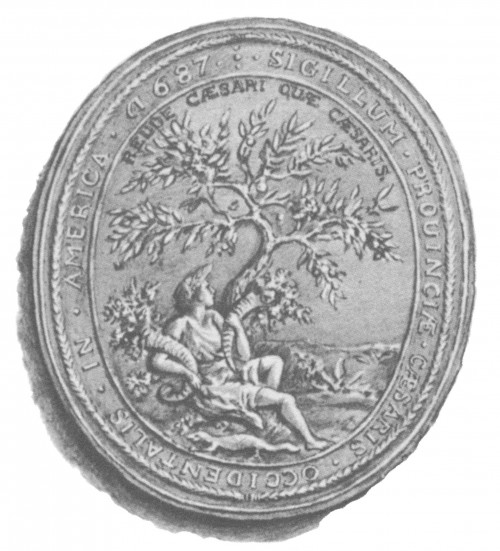
Seal of the Province of Western New Jersey

Once upon a time, New Jersey was the Province of New Jersey. In 1686, a man took a long walk through the Province and did the first survey in order to mark the border dividing it into West Jersey and East Jersey.

We may not agree on where North and South Jersey begin and end, and whether or not there is a Central Jersey, but there is also this East/West dividing line that exists, at least in our history.

That 1686 walker was Surveyor-General George Keith. The line that he drew on the map was a very straight one. The purpose of the survey was to clarify disputes resulting from the earlier 1676 Quintipartite Deed, which created the two territories. On July 1, 1676, William Penn, Gawen Lawrie (who served from 1683 to 1686 as Deputy to Governor Robert Barclay), Nicholas Lucas and Edward Byllinge executed a deed with Sir George Carteret known as the “Quintipartite Deed,” in which the territory was divided into two parts. East Jersey was taken by Carteret, and West Jersey by Byllinge and his trustees.

The newer "Keith Line" runs North-Northwest from the southern part of Little Egg Harbor Township, passing just north of Tuckerton. The line was to continue upward to a point on the Delaware River, which is just north of the Delaware Water Gap, but Keith was stopped in his survey. He was stopped by the Governor of West Jersey, Daniel Coxe, when he had reached the South Branch of the Raritan River (now Three Bridges in Readington Township).

More accurate surveys and maps needed to be made to resolve property disputes. But my own interest in the Keith Line is more cultural. These days, some people use this line as a way to mark the boundary between things like the "spheres of influence" for New York City sports teams and Philadelphia sports teams, such as the New York Giants (who play all their home games in New Jersey!) and the Philadelphia Eagles.

I like that when George took his 70-mile walk, he defined some of New Jersey's history, and that history still exists in some ways today. Remember, these disputed boundaries were between two British provinces, and this was happening about a century before the Declaration of Independence was signed.


The original provinces of West and East New Jersey are shown in yellow and green respectively. The Keith Line is shown in red, and the Coxe and Barclay line is shown in orange
The original provinces of West and East New Jersey are shown
 in yellow and green respectively. The Keith Line is shown in red,
and the Coxe and Barclay line is shown in orange

George was the Surveyor General of East Jersey. He walked north from Little Egg Harbor but when he was stopped at the Raritan River (in today's Warren County) there were some who claimed he was already way off-course.

But the boundary was not surveyed again for another 60 years. According to Robert Barnett's website WestJersey.org. There are at least 5 boundary lines - 2 before and 2 after Mr. Keith's.

The ruler-straight Keith Line is still a marker for municipal and county boundaries from Southern Ocean and Burlington counties up to Warren.

A good part of Barnett's interest in all this is because of the two quite different and distinct populations that settled in the two provinces. West Jersey was primarily populated by Quakers (see William Penn), and the East Jersey Province was primarily made up of Calvinists or Reformed Christians.

Religion isn't the distinction between those two areas of the state today, but differences remain. One example of  the historic distinction can be seen in cemeteries east and west. Some of the western Quaker burial grounds are simple and uniform, while the oldest northeastern ones will have ornate monuments.

Other distinctions are much broader (and more questionable) generalizations, such as West Jersey being more "blue-collar" and more likely to have a simpler Quaker-ish pace as compared to East Jersey being wealthier and faster-paced. Of course, there is some real evidence if you look at things like Census data on taxes, income and home values, which are all significantly higher in the East.

Despite being close to Philadelphia, the west has about a third of the population living in more rural or suburban communities.

As other writers have noted, there is a pretty distinct line dividing the fans of the Phillies vs. the Mets or Yankees, Eagles vs. Jets or Giants. In language, there are some food regionalisms like hoagie vs. sub sandwiches, water ice vs. Italian ice, and pork roll vs. Taylor Ham. All topics for barroom arguments in NJ.

And we haven't even gotten into where South Jersey begins, or the Lenape or Lenni-Lenape (later European-renamed Delaware Indians) who occupied these areas long before the Europeans arrived. 


This article first appeared on Weekends in Paradelle

Wednesday, July 30, 2025

New Jersey 1825

 Last week, I posted a week's worth of stories about hiking in New Jersey. In one post about hiking the Appalachian Trail through our state, I said that hiking that trail takes you through areas that still look much like they did 200 years ago.

That made me think about what New Jersey was actually like in 1825. I'm not time-traveling way back to when the region was inhabited by the Lenni-Lenape Native Americans, who had settled here around 1000 AD. Later, European explorers, including Giovanni da Verrazzano and Sir Henry Hudson, had mapped the coastline and rivers, paving the way for colonization. 

I'm not talking about the Colonial Era either. In 1664, King Charles II granted the land between the Hudson and Delaware Rivers to Sir George Carteret and Lord John Berkeley, who divided the colony into East Jersey (now North Jersey) and West Jersey (now South Jersey). The capital of East Jersey was Perth Amboy, while Burlington served as the capital of West Jersey.

New Jersey in 1825 was a time of early industrial energy. 

Photos didn’t exist yet in 1825—photography wouldn’t be invented until the late 1830s—but we do have some maps, drawings, and artifacts from that time that capture New Jersey’s look and feel.


Newark, East of Mulberry St. 1820-1825


Slavery was still legal, though slowly being phased out. The 1804 Gradual Abolition Act meant enslaved people born after that year would be freed at age 25, but full abolition didn’t come until 1844. 

Belvidere became the county seat of Warren County, thanks to land donated by Garret D. Wall, who would later become governor. This sparked a building boom and helped shape the town’s layout. 

Queen’s College was renamed Rutgers College, honoring Colonel Henry Rutgers, a Revolutionary War veteran and philanthropist who donated $5,000 and a bell to the school.

Colonel John Stevens demonstrated a steam locomotive at his Hoboken estate, showcasing New Jersey’s role in the early railroad era. The state was emerging as a leader in the Industrial Revolution, with growing infrastructure and manufacturing hubs.

The Marquis de Lafayette, famed French hero of the American Revolution, toured the U.S. and made stops in Paterson and Morristown. His visit was a major event, drawing crowds and sparking celebrations.

The colony was diverse, with settlers from various ethnic backgrounds, including Dutch, English, Swedish, and Finnish. The Quakers, in particular, played a significant role in shaping the colony's history, especially in West Jersey. They established congregations, founded towns, and built distinctive patterned brick houses that showcased their wealth and status.

Our forest was dominated by native hardwoods like oak, hickory, chestnut, and maple. The American chestnut was still common before blight hit in the early 1900s. NJ is still rich in hardwoods, but chestnut is nearly gone, and invasive species like Norway maple and Japanese barberry have altered forest composition.

Salt marshes and bogs supported native grasses, sedges, and Atlantic white cedar swamps. Many wetlands have been drained or developed, but restoration efforts are underway. Native species compete with invasives like phragmites.

The Pine Barrens were vast and largely untouched, dominated by pitch pine, scrub oak, and unique understory plants like pyxie moss. Thankfully, it is still intact in many areas, though threatened by development and climate change. Conservation efforts help preserve rare species.

Wildflowers and shrubs, including meadow rue, butterflyweed, spicebush, and mountain laurel were widespread, and many still thrive, but habitat loss and suburban landscaping have reduced native populations.

Moving from flora to fauna, mammals included white-tailed deer, black bear, foxes, raccoons, and bobcats that roamed freely. Wolves and cougars were disappearing due to hunting. Deer are still abundant, and some studies show a larger population now than in the Colonial Era. Bears are rebounding to the point of more interactions with humans. Bobcats are rare but present. Wolves and cougars are long gone.

Passenger pigeons were still common. Shorebirds and songbirds thrived in forests and wetlands. Today, passenger pigeons are extinct, but bald eagles and ospreys have made a comeback. Habitat loss affects many species.

Reptiles and amphibians are quite similar, and included Eastern box turtles, timber rattlesnakes, and salamanders were widespread. Many species are now threatened or endangered due to habitat fragmentation and pollution.

In our waters, rivers teemed naturally with sturgeon, shad, and trout. Coastal waters supported whales and dolphins. Pollution and dams reduced river fish populations, and some species, such as trout, are only sustained through interventions by the state. Marine mammals still visit, but some are endangered.

1825 was a place of transformation for our state, balancing its colonial past with the promise of industrial and cultural progress.

Friday, November 29, 2024

The Three Sisters on Native American Heritage Day

Allison Mitchell, Co-Executive Director of the New Jersey Conservation Foundation, wrote in her newsletter about "Honoring The Three Sisters" at our dinner tables. This day after Thanksgiving in November which is National Native American Heritage Month, is a good time to recognize and honor the culture, traditions, and achievements of the original inhabitants of North America. 

New Jersey is no different from the rest of the country in having significant Native American history. We are reminded of that by place names in the state, some of the land we visit, and food we eat, 

For NJ, it is the first people here, the Lenni-Lenape, who lived here at least 10,000 years ago that started planting using “The Three Sisters” which are corn, beans, and squash. According to the National Agricultural Library, the intercropping method of planting corn, beans, and squash together has been studied and described by scholars of anthropology, history, agriculture, and food for many years. This method involves planting pole beans, squash, and corn together in a mutually-beneficial arrangement. The sturdy corn stalks provide support for the climbing beans, while the squash vines spread out to retain soil moisture and suppress weeds. Meanwhile, the beans enrich the soil with nutrients, the broad squash leaves offer shade, and the corn adds structure and stability. This traditional companion planting system fosters a harmonious relationship between the three crops, enhancing their growth and supporting a thriving ecosystem of plants and animals.

Mitchell points to Michaeline Picaro and her husband, Chief Vincent Mann, of the Ramapough Munsee Lenape Nation, Turtle Clan who have leased 14 acres of farmland to create The Three Sisters Munsee Medicinal Farm. It serves almost as a charity feeding, nurturing, and healing members of the Turtle Clan. 

Many different Native American tribes practiced this traditional gardening technique, which is believed to have originated with the Haudenosaunee (hah-dee-no-shownee) of upstate New York, or "People of the Longhouse." At least 15 different indigenous nations in the northeastern United States and southeastern Canada planted The Three Sisters, including the Native American women of New Jersey who were responsible for planting.

To learn more about some of the tribes of New Jersey:

Saturday, December 23, 2017

General Washington's Spies and 'Victory or Death' in New Jersey


It is that time of year when you might see a story about reenactments of General George Washington crossing the Delaware River so that his army could attack an isolated garrison of Hessian troops located at Trenton, New Jersey. It is history and Christmas and New Jersey.

I watched AMC's television series TURN: Washington's Spies. (now on Netflix). I have always enjoyed studying American history, and the Revolutionary War is one of my favorite periods. I must credit my 7th-grade history teacher in Irvington, Mr. Henry Skirbst, for igniting my interest. He railed against the "dry bones" of teaching history as dates and facts and focused on telling stories of the people and places in history.

Certainly, part of my interest in the Revolutionary War was that it was fought in New Jersey, and I recognized many of the places mentioned in the textbook. Mr. Skirbst would love this show - though he might quibble with any historical inaccuracies or fictional creations. Espionage played a big part in the Revolutionary War, and the series brings out the idea that George Washington was one of our nation's first spymasters.

Washington was known as Agent 711 in the Culper Ring. The Culper Ring was a spy ring organized by American Major (later Colonel) Benjamin Tallmadge under orders from General George Washington in the summer of 1778 during British occupation of New York City at the height of the American Revolutionary War.

Under Washington, several networks of spies operated with agents who were merchants, tailors, farmers, or had other ordinary day jobs. They stayed at distances from each other and maintained secret identities. In some cases, spymaster Washington himself didn’t even know the identities of the men who worked together in secret to aid the cause.  

Photo by Zeete - Own work, CC BY-SA 3.0

I get that old 7th-grade delight when I hear New Jersey locations used on the show. One of those is the Middlebrook encampment. This was a seasonal encampment of the Continental Army near Middle Brook in Bridgewater Township, New Jersey (between Martinsville and Bound Brook) in 1777 and again in 1778–79.

Using part of the ridge of the First Watchung Mountain, this position provided a natural fortress not only protecting the Continental Army but also overlooking the plains towards New Brunswick, where the British forces were stationed in 1777.

During the winter of 1776–77, Washington initially camped near Morristown, but after his outpost garrison at Bound Brook was routed during the Battle of Bound Brook in April 1777, Washington moved the encampment closer to the Middlebrook encampment from late May to July 2.  There were 8,298 soldiers housed there, but it was recorded that 2,660 of them were sick, disabled, or unable to fight. The British maintained a strong force of about 17,000 near New Brunswick.

Washington returned to the Middlebrook grounds again in the Winter of 1778–9. He brought about 8–10,000 troops to the campsite by November 30, 1778. Soldiers constructed cabins from logs covered with clay, similar to those they had done at Morristown.

Washington himself rented the Wallace House (now converted to a museum) in Somerville for four months and paid Wallace $1,000. General von Steuben lived at the Staats House in South Bound Brook. General Henry Knox lived at the Jacobus Vanderveer House near Pluckemin, with the Continental Artillery camped at the Pluckemin Continental Artillery Cantonment Site.

A portion of the encampment site, known as the Washington Camp Ground, was added to the National Register of Historic Places on July 3, 1975.

Statue of Nathan Hale in New York City's City Hall Park. 

Nathan Hale was an American soldier and spy for the Continental Army who volunteered for an intelligence-gathering mission in New York City. Hale is considered America's first spy. He was caught by the British. According to the standards of the time, spies were hanged as illegal combatants. On the morning of September 22, 1776, Hale was marched along Post Road to the Park of Artillery (at modern-day 66th Street and Third Avenue), and hanged. He was 21 years old.

One of Hale’s best friends, Major Benjamin Tallmadge, never got over his death. Washington assured him that once they got the protracted war under control, all espionage would be handled from Army headquarters, and no spy’s life would be wasted the way Hale’s had been.

Most spying was done to gain intelligence about troop movements, supplies, and battle plans, which was General Washington's highest priority. Washington had Tallmadge equip all his spies with cipher codes, invisible ink, and aliases.

British and American forces both used spy networks and spycraft and supplied the British with misinformation that purposely misled their enemies as to their true intentions.

Ciphers and secret codes were used to ensure that the contents of written communications could not be understood if captured. In some cases,  letters were written in intricate secret codes where numbers and special characters replaced letters, a method most notably practiced by the Culper Spy Ring.

Not unlike my own amateur spycraft as a kid, they sometimes used invisible ink. This was usually a mixture of ferrous sulfate and water. The secret writing was placed between the lines of an innocent letter and could be discerned by treating the letter with heat or a chemical substance. The recipient placed the paper over the flame of a candle or treated it with a chemical reagent, such as sodium carbonate, which would reveal the letter’s hidden contents. 

Another ink was made from tannic acid, and Washington himself instructed his agents in the use of what was referred to as the "sympathetic stain," noting that the ink "will not only render communications less exposed to detection, but relieve the fears of such persons as may be entrusted in its conveyance." Washington suggested that reports could be written in the invisible ink "on the blank leaves of a pamphlet. . . a common pocket book, or on the blank leaves at each end of registers, almanacks, or any publication or book of small value.”

One method shown in the TV series is masking letters. You would view a letter through a shaped template placed over the full letter, and the actual message would appear within the boundaries of the “mask.”

Washington was forced to abandon first New York and then New Jersey, and he issued orders in December 1776 to all his generals to find “some person who can be engaged to cross the river as a spy,” and added that “expense must not be spared” in securing a volunteer.

They found a former British soldier named John Honeyman, who was living in Griggstown, New Jersey. Honeyman pretended to again be loyal to the king by selling cattle to several British garrisons along the Delaware. He gained the confidence of Col. Johann Rail, who was in command of three German Hessian regiments in Trenton.

Honeyman was "captured" by an American patrol and taken to Washington’s headquarters, where he was interrogated by Washington and put in the guardhouse awaiting a hanging the next day. Honeyman had given Washington a professional soldier’s detailed description of the routine of the Trenton garrison and the location of the picket guards.

Honeyman escaped from the guardhouse with a key supplied by Washington and made his way back to Trenton on December 24. He told Colonel Rall the story of his narrow escape and assured him that the Americans were falling apart. They were half-naked and freezing, and they lacked the food and basic equipment, such as shoes, to make a winter march.

Colonel Rail was pleased with the news and prepared to celebrate Christmas with the feasting and drinking that were traditional in his Germany.

Washington Crossing the Delaware by Emanuel Leutze, 1851

Why did Washington, with a beat-up Continental Army, try to cross an ice-choked Delaware River on a cold Christmas Eve in 1776?  He needed something to boost morale, and he hoped that a surprise attack on the Eve on a Hessian garrison of roughly 1,400 soldiers located in and around Trenton would be that boost. He needed some good news and hope that the Continental Army could defeat the British to encourage more men to join the ranks in 1777. He hoped that the intelligence Honeyman had supplied and the false information he gave to the Hessians would ensure a victory.

The plan originally included three separate river crossings, but only one made it across. 

Colonel Cadwalader was intended to lead his force of 1800 across near Burlington in order to harass and prevent the British and Hessian units from racing north to support the Hessians at Trenton.

General James Ewing’s force of 800 Pennsylvania militia was supposed to cross the river at Trenton and take up defensive positions along the Assunpink River and bridge and prevent a retreat.

Washington was to take 2,400 soldiers and cross at McConkey’s and Johnson’s ferries, roughly 10 miles north of Trenton. They would march south to Trenton to surprise the garrison at dawn.

Cadwalader and Ewing’s forces were unable to cross the ice-choked river, but Washington’s main force managed a crossing three hours later than planned.

Washington had been worried by intelligence reports that the British were planning their own crossing once the Delaware was frozen over, so he wanted to move quickly. The soldiers were told that they were departing on a secret mission. When they reached the crossing point in Pennsylvania, it was after sunset, and the rain had increased and was changing to sleet and snow.

Besides the men, they transported eighteen pieces of artillery and the horses to move them. Floating ice in the river increased the hazards.

Washington was among the first to cross, going with Virginia troops led by General Adam Stephen. These troops formed a sentry line around the landing area in New Jersey, with strict instructions that no one was to pass through. The passphrase was "Victory or Death".

The amount of ice on the river prevented the artillery from finishing the crossing until 3 am on December 26, and the troops were not ready to march until 4 am.

There was a British spy within Washington’s headquarters who has never been identified. The spy communicated to British Major General James Grant that Washington’s army was looking to attack north of the river. Though they had that information, Colonel Rall at Trenton did not believe Washington would attack. With the storm building, the Hessian defenders had a false sense of safety.

On the morning of December 26, Washington split the Army into two columns, one under his command of himself and General Greene, the second under General Sullivan. The Sullivan column would take River Road from Bear Tavern to Trenton, while Washington's column would follow Pennington Road, a parallel route that lay a few miles inland from the river.

In the battle, only three Americans were killed and six were wounded, while 22 Hessians were killed with 98 wounded. The Americans captured 1,000 prisoners and seized muskets, powder, and artillery. In spite of Washington's explicit orders for its destruction, casks of captured rum were opened, so some of the celebrating troops got drunk in the celebration after the battle.

But they still had to cross the river again to Pennsylvania, and the drinking probably contributed to the larger number of troops that had to be pulled from the icy waters on the return crossing. They also had to transport the large numbers of prisoners across the river while keeping them under guard. Most of Washington’s soldiers stood during the crossing since the bottoms of the Durham boats they used were neither comfortable nor dry.

Marquis de Lafayette, Alexander Hamilton, and George Washington
on the Green in Morristown, New Jersey. This group of statues is called The Alliance,
and it represents the moment when Lafayette told Washington and Hamilton
that the French were coming to support the American cause. May 10, 1780 in Morristown.
via blog.newjerseyisthebest.com