Showing posts with label Revolutionary War. Show all posts

Monday, January 12, 2026

Crossroads of the Revolution and America's 250th

I have written about New Jersey's role in the Revolutionary War (see posts) and a recent Ken Burns documentary series on PBS and there is lots of news about celebrations for the 250th anniversary of the United States in 2026.

New Jersey played a pivotal role in the American Revolution, serving as a key battleground for many important conflicts.

A 1976 Crossroads of the Revolution license plate was issued, celebrating the bicentennial 200th anniversary of America’s founding and the state's significant role in the American Revolution.

As America begins planning celebrations to mark its 250th birthday in 2026, a proposal has been made to create a “Semiquincentennial” license plate. A bill was introduced to create a commemorative license plate for the 250th anniversary of the American Revolution. Proceeds from the new license plate will support the preservation of New Jersey's Revolutionary War sites. No design has been approvedas of this writing.

POSTS ON THIS SITE ABOUT     (some posts appear undr multiple labels)

NJ History

Historical Preservation

Historic Sites

Wednesday, January 7, 2026

Winter in Morristown with General Washington

Following the Continental Army's victory at Princeton, General Washington knew his army was exhausted and vulnerable if General Cornwallis, who was now rushing up from Trenton, caught them.
Washington broke off the pursuit and marched his army north to Morristown, New Jersey.

Beginning around January 6, 1777, the Continental Army set up its winter quarters in Morristown. This strategic location in the New Jersey Highlands allowed Washington to protect his army while constantly threatening the British supply lines that stretched between New York and their garrisons in New Jersey. 


The site chosen in Morristown was where the hills surrounding the camp offered a good vantage point to observe the British army, which was headquartered across the Hudson River in New York City.  


Morristown’s position allowed Washington to protect the roads leading from the British strongholds in New Jersey to New England and the roads leading to Philadelphia, where the leaders of the American Revolution were headquartered. 

Morristown was actually the location of two winter encampments during the Revolutionary War. Washington had first visited Morristown in 1773 with his stepson, John Parke Custis. He had been passing through the town en route to nearby Basking Ridge to visit William Alexander, Lord Stirling, who would later become a major-general in the Continental Army.

Morristown National Historical Park commemorates the sites of General Washington and the Continental Army’s winter encampment, where they survived through what would be the coldest winter on record. The park also maintains a museum & library collection related to the encampments & George Washington, as well as items relating to pre- and post-Revolutionary America.

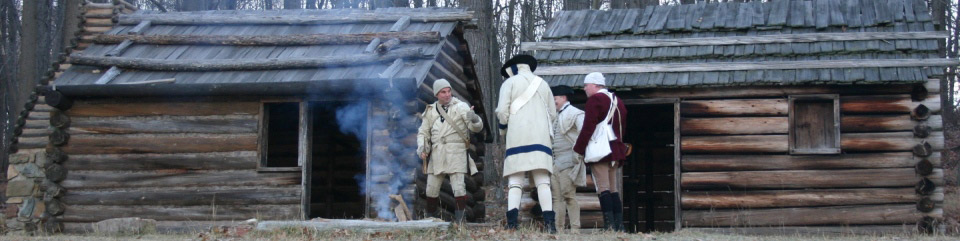
Reproductions of soldier cabins

Washington used some of the winter trying to reorganize and build up the Continental Army. Despite the Trenton and Princeton victories, some soldiers chose desertion over another cold winter without adequate supplies. Reenlistments were down, and soldiers were returning home when their enlistments expired.

For five months, Washington maintained headquarters at Arnold's Tavern on the Green, which was - and still is - the central hub of Morristown society.

Washington ordered inoculations for his militiamen during a smallpox outbreak in February 1777 and he was very concerned with personal and public cleanliness. Nevertheless, his troops were so distressed by the disease and poor conditions of the camp that by spring 1777, many men attempted to leave and were charged with desertion.


Ford Mansion (Photo: Rob Shenk on Flickr)

Washington returned with his troops between December 1779 and June 1780 at a second encampment in a section of forest known as Jockey Hollow. The winter was again bitter. He was accompanied by his wife, Martha, and they were given shelter in the Ford Mansion owned by Colonel Jacob Ford, Jr. and his wife, Theodosia.

The Georgian-style mansion built in 1774, which was Washington's headquarters, is now part of the Morristown National Historical Park.

Some Sources 


Friday, December 26, 2025

Washington Crossing State Park


Annual reenactment of Washington's Crossing

Washington Crossing State Park is the site of General George Washington’s historic 1776 Christmas night crossing of the icy Delaware River.

For almost ten hours, boats and ferries moved continuously back and forth carrying men, horses, and cannon to the Jersey side. By midnight, a strong storm had developed, hurling sleet, hail, and snow at the army. Landing at Johnson’s Ferry, the Continental Army still faced an arduous nine-mile march to Trenton as the storm continued with a vengeance. 

Reaching Trenton in the early morning of December 26th, the American Army surrounded, defeated, and captured over 900 Hessian mercenaries and secured a morale-boosting victory of immeasurable proportions.

An impressive collection of over 500 authentic Revolutionary War artifacts, on loan from The Swan Historical Foundation, Inc., is housed in the exhibit galleries of the Visitor Center Museum. This collection serves to remind visitors of the perilous struggles that men and women endured during this era.

The Johnson Ferry House is a circa-1740, gambrel-roof farmhouse and tavern near the Delaware River was built by Garret Johnson on his 490-acre tract. James Slack operated the ferry service in 1776. In addition to using the ferry service, General Washington and other officers probably used the house at the time of the Christmas night crossing of the Delaware. The keeping room, parlor, pantry, and bed chambers are furnished with local period pieces and reproductions similar to the furniture used by the Johnson and Slack families from 1740 to 1780. The site also includes an 18th-century kitchen garden. Living history demonstrations are frequently held on weekends.

During the winter months, when weather conditions are favorable, cross-country skiing is permitted on the 13 miles of ungroomed trails.

The park has 13 miles of trails for hiking. Walking and jogging are very popular in the park throughout the year.

Two and a half miles of trails are available for equestrian use in the Phillips Farm day use area. The Phillips Farm parking area is designated for horse trailers. There are no horse rental facilities in the park.

Five miles of trails in the Phillips Farm day-use area are available for mountain bike use.

For snowshoeing, the park offers 13 miles of trails that can be used during the winter months. There are 13 miles of moderate trails throughout Washington Crossing State Park. These trails are not ADA-accessible.


Check the park's website for information on any closures as the ongoing Washington Crossing State Park Improvement Projects prepare for the celebration of the United States’ Semiquincentennial Anniversary, the 250th anniversary of the signing of the Declaration of Independence. The 250th anniversary will happen on July 4, 2026, although events marking the various historical events before and after the July, 4 1776 signing will begin as early as 2024 and continue through 2033.

Monday, December 22, 2025

A Revolutionary Christmas Week in New Jersey

New Jersey is often called the "Crossroads of the American Revolution" because it saw more battles and skirmishes than any other state.

December 1776 was particularly important. It begins with a retreat. In early December, after losing New York City, General George Washington and the Continental Army retreated across New Jersey, pursued by the British. They crossed the Delaware River into Pennsylvania in early December, seizing all boats to prevent the British from following.

Thomas Paine's pamphlet "The American Crisis" was written while Paine was with the army in NJ and PA was published this month to boost morale. Washington ordered it read to his troops on December 23.

The 1776 Christmas-night crossing of the Delaware River by George Washington's Continental Army to attack Hessian forces in New Jersey is a very famous image and story. Washington’s army braved a winter storm to cross the ice-choked Delaware River from Pennsylvania back into New Jersey at McKonkey's Ferry (now Washington Crossing). 


The Battle of Trenton via Washington Crossing Historic Park

The first Battle of Trenton was on December 26, after the Delaware crossing and a march of nine miles to Trenton. This surprise attack on the Hessian garrison (German mercenaries hired by the British) was a decisive victory, capturing nearly 900 prisoners with almost no American casualties.

However, a massive British army of about 8,000 men led by Lord Charles Cornwallis was marching south from Princeton to crush him. Washington, with his back to the Delaware River, was effectively trapped. Cornwallis, believing Washington had no boats and was trapped against the impassable Delaware River, famously told his officers they could "bag the fox in the morning." He ordered his troops to rest for the night.

Realizing his army would be destroyed in a dawn attack, Washington executed a daring deception. He ordered a small group of soldiers to keep the campfires burning bright and to make digging noises, tricking the British sentries into thinking the Americans were digging in for a fight. In total silence, the rest of the Continental Army wrapped their wagon wheels in rags to dampen the sound and marched around the British flank in the middle of the night.

By the time Cornwallis woke up the next morning to "bag the fox," the American camp was empty. Washington was already miles away, about to launch a surprise attack on the British rearguard at the Battle of Princeton, which was another victory.

The "Second Crossing" (December 29–30) came because Washington took a huge risk and crossed back into New Jersey to solidify his gains and encourage the militia to rise up.

The Continental Army skirmishes with British and Hessian troops in Princeton on New Year’s Day. The Second Battle of Trenton, also known as the Battle of the Assunpink Creek, was a pivotal defensive stand by the Continental Army on January 2, 1777. While often overshadowed by the surprise attack on the Hessians a week earlier, this battle was arguably the moment the American Revolution came closest to total collapse.

If Washington had lost at Assunpink Creek, the Continental Army would likely have been captured or destroyed, effectively ending the Revolutionary War. Instead, the successful defense and subsequent escape allowed Washington to drive the British out of most of New Jersey and boosted public support for the Revolution.

After marching approximately 12 miles through a cold night, Washington’s army arrived at Princeton at dawn on January 3, 1777. They encountered a British brigade, led by Lieutenant Colonel Charles Mawhood, that was marching out of Princeton to join Cornwallis in Trenton. A sharp, fierce engagement broke out on the fields south of the town. 

At a crucial moment, when the lead American units were wavering and being overrun by a British bayonet charge, Washington personally rode to the front of the lines. He rallied the troops and led the counterattack, resulting in a decisive American victory. The remaining British troops were surrounded and forced to surrender inside Nassau Hall (the main building of the College of New Jersey, now Princeton University).


Washington at the Battle of Princeton

Following the victory at Princeton, Washington knew his army was exhausted and vulnerable if Cornwallis—who was now rushing up from Trenton—caught them. Washington broke off the pursuit, leaving New Jersey's central corridor, and marched his army north to Morristown, New Jersey.

Beginning around January 6, 1777, the Continental Army set up its winter quarters in Morristown. This strategic location in the New Jersey Highlands allowed Washington to protect his army while constantly threatening the British supply lines that stretched between New York and their garrisons in New Jersey.


In this film, the "Ten Crucial Days" refers to the short, decisive period from December 25, 1776, through January 3, 1777, during the American Revolutionary War that was a critical turning point where General George Washington and the beleaguered Continental Army launched a series of daring, successful military operations in New Jersey that snatched victory from the jaws of defeat and renewed the Patriot cause.

Wednesday, December 11, 2024

Princeton Battlefield State Park


A wintry view of Clarke House

On January 3, 1777, the peaceful winter fields of Thomas and William Clarke’s farms were transformed into the site of what is considered to be one of the fiercest fights of its size during the American Revolution. 

Soldiers under General George Washington surprised and defeated a force of British Regulars. Coming at the end of "The Ten Crucial Days," which saw the well-known night crossing of the Delaware River and the two battles in Trenton, the Battle of Princeton gave Washington his first victory against the British Regulars on the field. The battle extended over a mile away to the College of New Jersey (now Princeton University).

The Americans were pushed back by a strong British assault but were rallied by Washington, who rode his horse between the British and American lines, leading his men to his first field victory. 

I have visited a number of battlefields, and you never know what to find. You don't find evidence of the battles, but there is sometimes a feeling that being there brings to you as you walk the grounds, which is enhanced by visitor centers and displays.

Thomas Clarke, a Quaker farmer, acquired 200 acres in 1772 from his older brother William. He subsequently built a house and lived there with his sisters Sarah and Hannah, as well as Susannah, a black woman enslaved by the Clarke Family. The Clarke farm includes the original two-story half-Georgian frame house and enlarged wing, the carriage barn, and the smokehouse. The house, consisting of seven rooms, is furnished in the period of the Revolution. Much of the original flooring, moldings, and windows remain.

What became known as the Mercer Oak once stood in the middle of the battlefield, not far from the spot where General Hugh Mercer fell during the Battle of Princeton. The historic Mercer Oak, believed to have been present during the Battle of Princeton, once stood on the battlefield near what is now Mercer Road. It collapsed from old age in March 2000. An offspring grown from an acorn of the Mercer Oak in 1981 now thrives next to the large stump of the original tree. 

Information for visitors to the park

Princeton Battlefield Society


Wednesday, August 22, 2018

New Jersey Revolutionary War Sites: Morristown, New Jersey


Jockey Hollow was used as a campsite by 10-12,000 soldiers during the winter of 1779-80, while Washington was headquartered at Ford Mansion. It was a brutal winter and the soldiers experienced great hardship, hunger, and cold.

28 separate snow storms fell during the winter, and it was so continuously cold that, for the only time in recorded history, the waters around New York City froze over, and were closed to shipping for weeks at a time. In the midst of these extreme weather conditions, the soldiers had to build their own huts, and endure a serious shortage of food.

Morristown has a number of historic sites related to the Revolutionary War.

"The Green" has been and still is the center of Morristown and when General Washington took his headquarters at the Jacob Arnold tavern during the 1777 winter encampment, the Green became a hub of military activities.

Various buildings around it were used as officers' headquarters, army hospitals, and a military storehouse. There are historic plaques which describe buildings and churches that stood around the Green at the time of the Revolutionary War. Opposite the Arnold Tavern site on the North Park Place side of the park, is a monument to mark the site of the courthouse and jail that stood here at the time of the Revolutionary War.

There are a group of life-size statues of George Washington, Alexander Hamilton and the Marquis de Lafayette there. Another sculpture is called Patriots Farewell that sits atop a fountain on the West Park Place side of the park and shows a militiaman saying farewell to his wife and son, accompanied by their horse and dog. The plaque reads: "A monument to the New Jersey militia and their families whose sacrifices created a strong and enduring nation."

The Green is a great place to visit during a day of local sightseeing.

There is also a location known as Fort Nonsense. The name applied to the Upper Redoubt but may not have a basis in actual Revolutionary War era history. Apparently a story arose circa the early 1800's that Washington only had these fortifications built as a way of keeping his troops busy, and therefore the fort was a work of "nonsense." The name stuck and it is now used as the official name for this part of the Morristown National Park.

Cannon at Fort Nonsense - Wikimedia
During the winter 1777 Morristown encampment, this was the site of the Upper Redoubt, on top of what was then called Kinney's Hill. (A redoubt is an enclosed defensive fort, usually constructed from earthworks.) On May 28, Washington's last full day in Morristown in 1777, he wrote several letters and orders, including one to Lieutenant Colonel Jeremiah Olney. In it, he refers to the Upper Redoubt, the Guard House, and the "The Hill" on which they sat. These orders make clear that Washington had a serious reason for the structures.

While none of the original structure survives, an outline of the original fortifications (based on archeological evidence) is marked out in stones. There are a number of historical plaques here to explain the events connected to the area.

More information at revolutionarywarnewjersey.com

Saturday, December 23, 2017

General Washington's Spies and 'Victory or Death' in New Jersey


It is that time of year when you might see a story about reenactments of General George Washington crossing the Delaware River so that his army could attack an isolated garrison of Hessian troops located at Trenton, New Jersey. It is history and Christmas and New Jersey.

I watched AMC's television series TURN: Washington's Spies. (now on Netflix). I have always enjoyed studying American history, and the Revolutionary War is one of my favorite periods. I must credit my 7th-grade history teacher in Irvington, Mr. Henry Skirbst, for igniting my interest. He railed against the "dry bones" of teaching history as dates and facts and focused on telling stories of the people and places in history.

Certainly, part of my interest in the Revolutionary War was that it was fought in New Jersey, and I recognized many of the places mentioned in the textbook. Mr. Skirbst would love this show - though he might quibble with any historical inaccuracies or fictional creations. Espionage played a big part in the Revolutionary War, and the series brings out the idea that George Washington was one of our nation's first spymasters.

Washington was known as Agent 711 in the Culper Ring. The Culper Ring was a spy ring organized by American Major (later Colonel) Benjamin Tallmadge under orders from General George Washington in the summer of 1778 during British occupation of New York City at the height of the American Revolutionary War.

Under Washington, several networks of spies operated with agents who were merchants, tailors, farmers, or had other ordinary day jobs. They stayed at distances from each other and maintained secret identities. In some cases, spymaster Washington himself didn’t even know the identities of the men who worked together in secret to aid the cause.  

Photo by Zeete - Own work, CC BY-SA 3.0

I get that old 7th-grade delight when I hear New Jersey locations used on the show. One of those is the Middlebrook encampment. This was a seasonal encampment of the Continental Army near Middle Brook in Bridgewater Township, New Jersey (between Martinsville and Bound Brook) in 1777 and again in 1778–79.

Using part of the ridge of the First Watchung Mountain, this position provided a natural fortress not only protecting the Continental Army but also overlooking the plains towards New Brunswick, where the British forces were stationed in 1777.

During the winter of 1776–77, Washington initially camped near Morristown, but after his outpost garrison at Bound Brook was routed during the Battle of Bound Brook in April 1777, Washington moved the encampment closer to the Middlebrook encampment from late May to July 2.  There were 8,298 soldiers housed there, but it was recorded that 2,660 of them were sick, disabled, or unable to fight. The British maintained a strong force of about 17,000 near New Brunswick.

Washington returned to the Middlebrook grounds again in the Winter of 1778–9. He brought about 8–10,000 troops to the campsite by November 30, 1778. Soldiers constructed cabins from logs covered with clay, similar to those they had done at Morristown.

Washington himself rented the Wallace House (now converted to a museum) in Somerville for four months and paid Wallace $1,000. General von Steuben lived at the Staats House in South Bound Brook. General Henry Knox lived at the Jacobus Vanderveer House near Pluckemin, with the Continental Artillery camped at the Pluckemin Continental Artillery Cantonment Site.

A portion of the encampment site, known as the Washington Camp Ground, was added to the National Register of Historic Places on July 3, 1975.

Statue of Nathan Hale in New York City's City Hall Park. 

Nathan Hale was an American soldier and spy for the Continental Army who volunteered for an intelligence-gathering mission in New York City. Hale is considered America's first spy. He was caught by the British. According to the standards of the time, spies were hanged as illegal combatants. On the morning of September 22, 1776, Hale was marched along Post Road to the Park of Artillery (at modern-day 66th Street and Third Avenue), and hanged. He was 21 years old.

One of Hale’s best friends, Major Benjamin Tallmadge, never got over his death. Washington assured him that once they got the protracted war under control, all espionage would be handled from Army headquarters, and no spy’s life would be wasted the way Hale’s had been.

Most spying was done to gain intelligence about troop movements, supplies, and battle plans, which was General Washington's highest priority. Washington had Tallmadge equip all his spies with cipher codes, invisible ink, and aliases.

British and American forces both used spy networks and spycraft and supplied the British with misinformation that purposely misled their enemies as to their true intentions.

Ciphers and secret codes were used to ensure that the contents of written communications could not be understood if captured. In some cases,  letters were written in intricate secret codes where numbers and special characters replaced letters, a method most notably practiced by the Culper Spy Ring.

Not unlike my own amateur spycraft as a kid, they sometimes used invisible ink. This was usually a mixture of ferrous sulfate and water. The secret writing was placed between the lines of an innocent letter and could be discerned by treating the letter with heat or a chemical substance. The recipient placed the paper over the flame of a candle or treated it with a chemical reagent, such as sodium carbonate, which would reveal the letter’s hidden contents. 

Another ink was made from tannic acid, and Washington himself instructed his agents in the use of what was referred to as the "sympathetic stain," noting that the ink "will not only render communications less exposed to detection, but relieve the fears of such persons as may be entrusted in its conveyance." Washington suggested that reports could be written in the invisible ink "on the blank leaves of a pamphlet. . . a common pocket book, or on the blank leaves at each end of registers, almanacks, or any publication or book of small value.”

One method shown in the TV series is masking letters. You would view a letter through a shaped template placed over the full letter, and the actual message would appear within the boundaries of the “mask.”

Washington was forced to abandon first New York and then New Jersey, and he issued orders in December 1776 to all his generals to find “some person who can be engaged to cross the river as a spy,” and added that “expense must not be spared” in securing a volunteer.

They found a former British soldier named John Honeyman, who was living in Griggstown, New Jersey. Honeyman pretended to again be loyal to the king by selling cattle to several British garrisons along the Delaware. He gained the confidence of Col. Johann Rail, who was in command of three German Hessian regiments in Trenton.

Honeyman was "captured" by an American patrol and taken to Washington’s headquarters, where he was interrogated by Washington and put in the guardhouse awaiting a hanging the next day. Honeyman had given Washington a professional soldier’s detailed description of the routine of the Trenton garrison and the location of the picket guards.

Honeyman escaped from the guardhouse with a key supplied by Washington and made his way back to Trenton on December 24. He told Colonel Rall the story of his narrow escape and assured him that the Americans were falling apart. They were half-naked and freezing, and they lacked the food and basic equipment, such as shoes, to make a winter march.

Colonel Rail was pleased with the news and prepared to celebrate Christmas with the feasting and drinking that were traditional in his Germany.

Washington Crossing the Delaware by Emanuel Leutze, 1851

Why did Washington, with a beat-up Continental Army, try to cross an ice-choked Delaware River on a cold Christmas Eve in 1776?  He needed something to boost morale, and he hoped that a surprise attack on the Eve on a Hessian garrison of roughly 1,400 soldiers located in and around Trenton would be that boost. He needed some good news and hope that the Continental Army could defeat the British to encourage more men to join the ranks in 1777. He hoped that the intelligence Honeyman had supplied and the false information he gave to the Hessians would ensure a victory.

The plan originally included three separate river crossings, but only one made it across. 

Colonel Cadwalader was intended to lead his force of 1800 across near Burlington in order to harass and prevent the British and Hessian units from racing north to support the Hessians at Trenton.

General James Ewing’s force of 800 Pennsylvania militia was supposed to cross the river at Trenton and take up defensive positions along the Assunpink River and bridge and prevent a retreat.

Washington was to take 2,400 soldiers and cross at McConkey’s and Johnson’s ferries, roughly 10 miles north of Trenton. They would march south to Trenton to surprise the garrison at dawn.

Cadwalader and Ewing’s forces were unable to cross the ice-choked river, but Washington’s main force managed a crossing three hours later than planned.

Washington had been worried by intelligence reports that the British were planning their own crossing once the Delaware was frozen over, so he wanted to move quickly. The soldiers were told that they were departing on a secret mission. When they reached the crossing point in Pennsylvania, it was after sunset, and the rain had increased and was changing to sleet and snow.

Besides the men, they transported eighteen pieces of artillery and the horses to move them. Floating ice in the river increased the hazards.

Washington was among the first to cross, going with Virginia troops led by General Adam Stephen. These troops formed a sentry line around the landing area in New Jersey, with strict instructions that no one was to pass through. The passphrase was "Victory or Death".

The amount of ice on the river prevented the artillery from finishing the crossing until 3 am on December 26, and the troops were not ready to march until 4 am.

There was a British spy within Washington’s headquarters who has never been identified. The spy communicated to British Major General James Grant that Washington’s army was looking to attack north of the river. Though they had that information, Colonel Rall at Trenton did not believe Washington would attack. With the storm building, the Hessian defenders had a false sense of safety.

On the morning of December 26, Washington split the Army into two columns, one under his command of himself and General Greene, the second under General Sullivan. The Sullivan column would take River Road from Bear Tavern to Trenton, while Washington's column would follow Pennington Road, a parallel route that lay a few miles inland from the river.

In the battle, only three Americans were killed and six were wounded, while 22 Hessians were killed with 98 wounded. The Americans captured 1,000 prisoners and seized muskets, powder, and artillery. In spite of Washington's explicit orders for its destruction, casks of captured rum were opened, so some of the celebrating troops got drunk in the celebration after the battle.

But they still had to cross the river again to Pennsylvania, and the drinking probably contributed to the larger number of troops that had to be pulled from the icy waters on the return crossing. They also had to transport the large numbers of prisoners across the river while keeping them under guard. Most of Washington’s soldiers stood during the crossing since the bottoms of the Durham boats they used were neither comfortable nor dry.

Marquis de Lafayette, Alexander Hamilton, and George Washington
on the Green in Morristown, New Jersey. This group of statues is called The Alliance,
and it represents the moment when Lafayette told Washington and Hamilton
that the French were coming to support the American cause. May 10, 1780 in Morristown.
via blog.newjerseyisthebest.com

Tuesday, December 20, 2016

Saving Maxwell's Field in Princeton


This month it was announced that an agreement to save a portion of a Revolutionary War battlefield in Princeton, New Jersey from development was completed. 

The Civil War Trust has an agreement to buy nearly 15 acres of land across from Princeton Battlefield State Park for $4 million. The group has raised $1.4 million to buy the land from the Institute for Advanced Study and will now begin fundraising for the rest, with the intention to turn over the property to the state.

The Civil War Trust is the largest and most effective nonprofit organization devoted to the preservation of America’s hallowed battlegrounds. Although primarily focused on the protection of Civil War battlefields, the Trust also seeks to save the battlefields connected to the Revolutionary War and War of 1812.

The battlefield in Princeton is where American and British troops fought each other on January 3, 1777. The Battle of Princeton during the American Revolutionary War ended when the British soldiers in Nassau Hall (now part of the Princeton University campus) surrendered.

This victory came just after Washington's crossing of the Delaware River and capturing the troops at the Old Barracks in Trenton, and the two victories did a lot to improve American troop morale. This was just Washington’s first victory over British regulars in the field.

The 22 acres adjacent to Princeton Battlefield make up Maxwell’s Field where George Washington's charge first hit the British lines. Also adjacent to the site is the Institute for Advanced Studies which has been attempting to build faculty housing on Maxwell's Field. The institute is best known as the place where Albert Einstein worked. Under the new plan, they will build faculty housing on the part of the land it is keeping.

Approval from the Princeton planning board and Delaware and Raritan Canal Commission is still needed..

Monday, February 2, 2015

New Jersey's State-Owned Historic Sites

The NJDEP New Jersey State-Owned Historic Sites offer a variety of historical opportunities. They range from Revolutionary War battlefields, lighthouses, villages, and homes from the past of a president, poet, or industrial pioneer.

Here are just a few possibilities.


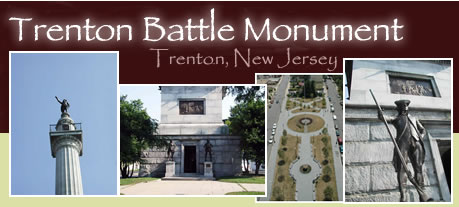
Trenton Battle Monument  Administered by Washington Crossing State Park
348 North Warren Street, Trenton, NJ 08638

The monument marks the site of the American artillery emplacement that commanded the streets of Trenton during the battle that led to the defeat of the three Hessian Regiments by the American Army at the Battle of Trenton, December 26, 1776. The monument was designed by John H. Duncan, architect of Grant's tomb.

Clarke House, Princeton Battlefield State Park
500 Mercer Road, Princeton NJ 08540
Built by Thomas Clarke in 1772, the house is located on Princeton Battlefield and was the scene of heavy fighting during the Battle of Princeton. General Hugh Mercer was mortally wounded nearby and was carried to the Clarke House, where he died nine days after the battle.


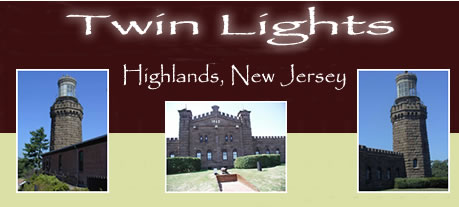
Twin Lights
Lighthouse Road, Highlands, NJ 07732

The current brownstone structure was built in 1862 and served as the primary seacoast light marking the entrance to New York Harbor. The towers are not identical twins; the south tower is square and the north is octagonal. This 1862 structure replaced an earlier twin tower lighthouse.

 Visit the Twin Lights virtual tour.


Wallace House
71 Somerset Street, Somerville, NJ 08876
The Wallace House was completed in 1776 as Hope Farm for John Wallace, a successful Philadelphia merchant. General Washington leased the house for use as his headquarters during the Middlebrook Winter Encampment, December 11, 1778, to June 3, 1779. The house is one of the best and most original examples of Georgian architecture in New Jersey.

NJN invites visitors to experience New Jersey's colonial history first-hand. View their short film about the Wallace House. 


Walt Whitman House
330 Mickle Boulevard, Camden, NJ 08103
The renowned poet lived in this house from 1884 until he died in 1892, and received many visitors during that time, including the painter Thomas Eakins, naturalist John Burroughs, and writers Oscar Wilde and Bram Stoker. The house is furnished with several pieces owned and used by Whitman.


Get the Official Guide for New Jersey State Parks, Forests & Historic Sites as a mobile app on your phone or tablet. It includes Enhanced GPS Features and is free. 
Go to www.pocketranger.com/apps/new-jersey on your mobile device.


Friday, October 26, 2012

Proposed American Battlefield Protection Bill Could Preserve NJ Sites

Reenactors at Morristown's Jockey Hollow   photo via nps.gov
"In the early Revolutionary struggle, few of the States among the old Thirteen had more of the battle-fields of the country within their limits than old New Jersey." 
~ Abraham Lincoln in an 1861 address to the New Jersey Legislature. 
If you went to school in NJ, you had a lesson at least once where you were told that General Washington not only slept here but spent more time in NJ with the Continental Army than any other state. Our best-known sites are the Trenton Barracks, the Princeton and Monmouth battlefields, the Jockey Hollow encampment, and Washington's Headquarters in Morristown.

The sites that are of concern are the many lesser-known sites that are being ignored and may end up being destroyed by development, like a Continental Artillery winter encampment in the Pluckemin section of Somerset County's Bedminster Township.

Michele Byers'  post on preserving some of New Jersey's historic landscapes alerted me to a bill introduced by New Jersey Congressman Rush Holt that would preserve our Revolutionary War sites.

The American Battlefield Protection Program already helps preserve Civil War sites, and the new bill would extend the program to the Revolutionary War and War of 1812 sites. The amendment was passed by the House of Representatives on September 10 and will now go to the Senate, where a companion bill has been introduced.

New Jersey has a good claim to being the "Crossroads of the American Revolution" being between the British stronghold in New York and our capital in Philadelphia.

If you want to learn more about the American Battlefield Protection Program Amendments Act, or S779 - go to the Library of Congress website at http://thomas.loc.gov/home/thomas.php.

If you are interested in this preservation, you can contact New Jersey's two U.S. Senators, Frank Lautenberg and Robert Menendez, and ask them to support S779 via the Senate website at www.senate.gov/general/contact_information/senators_cfm.cfm?State=NJ.

For more information about New Jersey's Revolutionary War history, visit the Crossroads of the American Revolution website at www.revolutionarynj.org.

Wednesday, January 18, 2012

Visiting Revolutionary War New Jersey

Hopefully, anyone who grew up in New Jersey knows that our state was pivotal in the American Revolution and played an important part in the American colonists' victory. NJ is often referred to as both the "Crossroads of the Revolution" and the "Military Capital of the Revolution."

Throughout the Revolutionary War, there were 296 clashes between the Americans and British within the colony of New Jersey. That is more than any other colony in the Revolutionary War.

I have written here earlier about a key battle that occurred on January 3, 1777, in the town of Princeton, when the patriots were pushed back by a British charge, General Washington, with his staff, took to the field to rally the retreating troops back into battle.

    But there are many other historical locations that are less well-known.

    The Abraham Staats House is one of the finest surviving buildings from the Dutch Settlement of the Raritan Valley in the 18th century. The house was entered onto the New Jersey Register of Historic Places and the National Register of Historic Places in 2002. It is located on the Delaware-Raritan Canal. (For birders, there are a variety of birds which have been spotted on the property and on the canal.)

    Of course, not all Jersey colonists were in favor of breaking from the crown. Governor William Franklin was the illegitimate son of Benjamin Franklin and was a loyalist who supported the Stamp Act. Governor Franklin signed the charter for Queen's College, which would evolve into Rutgers University. He was like other colonists who had emigrated from England and still felt loyalty to England. On January 8, 1776, Governor Franklin was arrested for opposing the Revolution.


    Morven

    Another National Historic Landmark in Princeton is known as Morven. Now, it is a museum and public garden. The museum occupies the house called Morven, which was formerly the New Jersey Governor’s Mansion and 18th century home of Richard Stockton, a signer of the Declaration of Independence. Its restoration and conversion to a museum were completed in 2004. Morven Museum & Garden is administered by Historic Morven, Inc., a non-profit organization founded in 1987, in cooperation with the New Jersey Department of State. The state acquired Morven in 1954.

    The Jacobus Vanderveer House is located in Bedminster Township, Somerset County, on part of the 218 acres that make up River Road Park. The oldest part of the Jacobus Vanderveer House was built in the early 1770s. It is typical of the Dutch frame houses that dotted the countryside before the American Revolution. Much of the original fabric of the house remains intact. It includes a wall in the west parlor that features raised wood paneling above the fireplace with a barrel-back cabinet to the side, and the home has original flooring of wide pine boards. The house gained a Federal-style addition in the early 1800s.

     Some Revolutionary War Links for New Jersey
    1. Abraham Staats House
    2. Bergen County Historical Society
    3. Bravo - Battlefield Restoration and Archaeological Volunteer Organization
    4. Burlington County Historian
    5. The David Library of the American Revolution
    6. Fort Lee Historic Park
    7. Friends of the Hancock House
    8. Jacobus Vanderveer House & Museum
    9. Lawrence Historical Society
    10. The Meadows Foundation
    11. Monmouth Battlefield State Park
    12. Morven
    13. New Bridge Landing
    14. Old Barracks Museum – Trenton
    15. Princeton Battlefield Society
    16. Washington-Rochambeau Revolutionary Route

    Friday, April 9, 2010

    New Jersey, Crossroads of the American Revolution

    Washington Crossing the Delaware by Emanuel Leutze, 1851

    Our state of New Jersey has more than 500 farmlands, hillsides and homesteads that played some part, saw some action in the American Revolution. NJ's Revolutionary War heritage has been federally recognized by the designation of the "Crossroads of the American Revolution National Heritage Area"  in New Jersey.

    Located between the British base at New York and the rebel capital at Philadelphia, New Jersey was the most war-ravaged of the 13 original states. More than 600 skirmishes and battles were fought on its soil, and more than 150 naval actions on its waters.

    Then, as now, New Jersey straddled roads connecting north and south. In 1775 and 1776, state regiments marched north. During November and December 1776, the remnants of the main Continental Army fled south across New Jersey, pursued by a British army. Just a month later, they retraced part of their route to defeat German and British detachments in Trenton and Princeton and march on to Morristown. This was the first of three winters that the Continental Army spent in New Jersey.

    In 2006, legislation designating the Crossroads of the American Revolution National Heritage Area in New Jersey was passed. This journey toward recognition by the Federal Government of our state’s significant role in the American Revolution began in 2000 when Congress directed the National Park Service to determine whether remaining resources related to the American Revolution in central New Jersey were of national significance.

    The study area comprised 14 counties between Bergen and Passaic in the north and Camden and Gloucester in the south. This area includes Morristown National Historical Park, Princeton and Monmouth Battlefield State Parks, Washington’s Crossing State Park, New Bridge Landing, the Old Barracks in Trenton, 13 National Historic Landmarks, and more than 250 other National Register of Historic Places sites and districts. All these sites have significant Revolutionary War period resources and that has secured their protection.

    Ultimately, the goals of the Crossroads Association will be to raise popular understanding of the historical significance of these sites, to provide an area-wide network between established historic sites, state parks, private property owners, local governments, not-for-profits, and other civic organizations in order to facilitate further preservation (including open-space preservation) and to offer a forum for new initiatives on site use, management, education and historical interpretation.

    Battleground NJ

    James Caldwell

    Revolutionary Chaplain James Caldwell was a Presbyterian minister from Elizabeth who served during the Revolutionary War. At the battle of Springfield, June 23, 1780, his company ran out of the paper wadding used to load their rifles. Caldwell was said to have gone into a nearby Presbyterian Church, grabbed as many Watts hymnals as he could carry, and distributed them to the troops. "Put Watts into them, boys," he said, and the soldiers ripped out the pages to use. Caldwell and his wife were both killed before the war ended.

    From July 1776 until November 1783, a British, German, and Loyalist army occupied Staten Island, western Long Island, and Manhattan, launching expeditions to collect supplies, probe local defenses, and attack the Continental Army. 

    Between January and June of 1777, skirmishes were fought up and down the Raritan River, as Continentals sought to limit British foraging and the British attempted to lure the Continentals from the safety of the Watchung Mountains. When Washington eluded them, the British withdrew from the Raritan Valley to attack Philadelphia.

    The September 1777 British occupation of Philadelphia brought the war to southern New Jersey. Fierce battles were fought for control of the Delaware River and the surrounding countryside. 

    On June 18, 1778, the British army evacuated Philadelphia and began marching toward New York, as Washington led the Continental Army eastward from Valley Forge. The resulting Battle of Monmouth was the last time the two armies met in New Jersey. In 1780, the British moved offensive operations to the south.

    Battle of Monmouth

    In June 1780, the New York garrison launched two large probes to test the Continentals at Morristown. These probes resulted in the burning of Springfield and Connecticut Farms. Along the coast, small British and Loyalist units continued pinpoint attacks.

    "Put Watts into them, boys!"  Battle of Springfield

    One of the American Revolution's last skirmishes was fought on December 27, 1782, at Cedar Bridge, Ocean County.

    After a peace treaty was signed in Paris, word reached the Continental Congress, assembled in Princeton, on November 1, 1783.


    Thursday, February 25, 2010

    Historical Preservation: The Old Barracks

    My Google alerts for endangered and threatened species sometimes turn up some odd results, like "Are women in information technology an endangered species?" But today, one that turned up concerns some New Jersey history.

    Historical preservation is also a part of Endangered New Jersey. Saving and educating people about our history is interesting and educational.

    The Old Barracks is a State and National Historic Landmark built in 1758 by the colony of New Jersey as winter quarters for British "regulars" returning from fighting in the frontier regions in the French & Indian War.

    During the American Revolution, the Barracks were occupied at different times by British/Hessian Forces or the Continental Forces. Following the Battles of Trenton in 1776, the Barracks was steadily controlled by the Continental Army and used as an army hospital for smallpox inoculations.

    The Old Barracks is a "living history" museum portraying the year 1777 with historical interpreters guiding visitors through the infirmary to learn about mandatory smallpox inoculations and surgeries performed on soldiers in the Continental Army, into the squad rooms that soldiers occupied as living quarters, and through the Officers' House.

    Currently, you can see their latest exhibit, "All Is Threatened and Endangered..." which is about New Jersey's role in the French & Indian War.

    Old Barracks Museum
    101 Barrack St
    Trenton, New Jersey 08608

    For directions, dates, and times http://www.barracks.org