Showing posts with label birding. Show all posts

Saturday, October 28, 2023

New to Birding?


Can you identify the bird pictured here? Do you wish you knew how to identify some of the less common birds you encounter, or that you could identify a species just by its call? If yes, then you might be a good candidate to take up birding.

There are plenty of books to get you started. Though you can spot lots of birds with the naked eye, you might want to get a pair of binoculars or a scope too as you progress.

If you are new to birding, you can get started easily with this birding tutorial from NJ Fish and Wildlife.

So, can you identify the bird pictured here? Post your answer in the comments.


A few birding books that focus on New Jersey

    =


Several birding scopes & binoculars

    =

Monday, August 23, 2021

Every Sound Has a Memory To It

Diane Moser

In December 2020, we lost Diane Moser who was known as a musician rather than an environmentalist. We were acquaintances, perhaps even friends, but we became closer in the last years of her life because of a project she started involving the music of bird songs.


Come Walk and Listen from Dennis Connors on Vimeo composition by Diane Moser
Improvisations by Diane Moser - piano, Anton Denner - flutes - Ken Filiano - bass.
Music recorded at Rockland Recording, Orangeburg, NY April 22, 2019.
Recording engineer, mixing and mastering by John Guth.


Diane wrote me last summer after a conversation we had at a party. She said "Here's something for you that I came upon today, through my research. It is Barry Truax's book Acoustic Communication (he worked with R. Murray Schafer on The World Soundscape Project). There is a chapter called "Listening to the Past" that you should read.

I read it and this was the quote that I wrote down. 
"The individual listener within a soundscape is not engaged in a passive type of energy reception, but rather is part of a dynamic system of information exchange. Similarly, soundscape composition is an open circuit in which the composer communicates the essence of a place to listeners."
Diane said that quote was pretty much what she was after with her new project. The project was recording endangered and threatened coastal and wetlands birds and their environments and then composing music to that. 

Diane had just come back from a conference in June and she said that a group of people there agreed that "creating empathy is the first line of environmental communication."

   
Diane gave me a copy of her album BIRDSONGS and then emailed me some background and recommendations for further reading. 

"I recommend R. Murray Schafer's book, The Soundscape: Our Sonic Environment and The Tuning of the WorldHere is something I wrote recently for a grant proposal: "To evoke a memory of nature, or feelings of compassion for nature is often times the first step for someone to take action in the form of volunteering, voting, protesting, signing petitions and so forth. It is my hope that this will happen with this new project."


"I was looking through Pauline's book Deep Listening: A Composers Practice. Here is a little of what she writes -
...sounds carry intelligence: ideas, feelings and memories can be triggered by sounds
...if you are too narrow in your awareness of sounds, you are likely to be disconnected from your environment
...more often than not, urban living causes narrow focus and disconnection
...too much information is coming into the auditory cortex, or habit has narrowed listening to only what seems of value and concern to the listener...all else is tuned out or discarded as garbage.
Diane told me that what she was finding interesting on her bird hikes was that people were talking. They weren't so much listening to the birds so much as they were looking for them. She said that she would either stay ahead of them to hear a good leader or more often stay way behind so she could listen and record.

I think that every sound has a memory to it. We all don't share the same memories for the same sound, but that is also quite beautiful. Tuning in to the sounds of nature and hearing the music there is a gift not all of us were given. Thankfully, the gift has been given to some of us, and they want to share it with us. Thanks, Diane.


MORE ABOUT DIANE

Monday, May 10, 2021

Birding Southwest

How about some birding from far away from New Jersey for a change?

Follow Tom Fleischner in the field as he explains his love for birds while introducing you to some of the birds found in the Mogollon Highlands. The Highlands is a dramatic landscape of escarpments, canyons, mesas, deserts, and high conifer forests. It is where the Sonoran Desert of the Basin and Range Province meets the redrock country of the Colorado Plateau and the Southern Rocky Mountains, and where the northern limits of some species coexist with the southern limits of others. Ecologically, it's where Mexico meets Canada. It is a land of high biological, ecological, and cultural diversity.

Monday, January 8, 2018

Ravens in New Jersey

Statue of a raven on the grounds of the Edgar Allan Poe National Historic Site in Philadelphia, PA
by Midnightdreary via Wikimedia Commons

Ravens are birds that have been a part of many mythologies. They were companions to the Norse god Odin. Native Americans thought of them as tricksters. And almost everyone knows that "Nevermore" raven in Edgar Allan Poe’s famous poem by that name.

But the real life raven is one of several larger-bodied species of the genus Corvus. There is no consistent distinction between "crows" and "ravens", and these names have been assigned to different species chiefly on the basis of their size. Crows are generally considered smaller than ravens, and the largest raven species are the common raven and the thick-billed raven.

The common raven, Corvus corax, has the widest distribution of any of the Corvidae family that includes crows, jays, nutcrackers, magpies and related birds such as rooks, jackdaws, and choughs. It is also the largest and heaviest of the passerines, or perching birds. And you may have heard that it is also one of the smartest birds.

Have you seen ravens in New Jersey?  They were once numerous in our state. They disappeared as a nesting bird in New Jersey in the 1920s. But in the early 1990s they began to breed once more in NJ and their numbers have been increasing ever since.

If you are curious about our Jersey ravens, the Wednesday, January 10 meeting of the Montclair Bird Club will feature “Return of the Raven,” presented by writer and environmental consultant Rick Radis. He will cover the historic status of the common raven in eastern North America, its return and its present status. Rick Radis is a past editor of NJ Birds, NJ Audubon Magazine and other conservation publications. His writing, editorial and photography have appeared in the New York Times, TNY, and many other national and regional publications.

The club's meeting on Jan. 10 begins at 7:30 p.m. at the Union Congregational Church in Montclair. The meeting is free and open to the public.

Common raven
By Stephencdickson - Own work, CC BY-SA 4.0, Link


Thursday, May 18, 2017

Ocean Fun Day Saturday May 20 at Island Beach State Park


Island Beach State Park, the jewel of New Jersey’s State Park System, will give visitors an opportunity to watch the release of young diamondback turtles into their natural habitat, as well as other youth-oriented environmental activities during Ocean Fun Day on Saturday, May 20. The diamondback terrapin release is new this year at Island Beach State Park.

Island Beach State Park is one of the few remaining undeveloped barrier beaches on the north Atlantic coast. With approximately 3,000 acres of beaches, dunes, maritime forests, freshwater wetlands and tidal marshes, the park is home to the state’s largest osprey colony, as well as peregrine falcons, wading birds, shorebirds, waterfowl and songbirds.

This year’s 14th annual Ocean Fun Days are scheduled from 11 a.m. to 3 p.m. May 20 at Island Beach State Park in Ocean County, and on Sunday, May 21 at the New Jersey Sea Grant Consortium’s headquarters in the historic Fort Hancock section of Sandy Hook in Monmouth County. Admission and parking are free. A free shuttle bus will be available at both parks to take visitors to tour sites.

Ocean Fun Day events encourage visitors to enjoy a day outdoors while learning about New Jersey’s coastal ecosystem through educational displays, nature tours and interactive programs that include seining, crafts, a scavenger hunt, touch tanks, youth fishing clinics and more.

Diamondback Terrapin
“Ocean Fun Day is a great way to teach visitors about the critical, yet fragile coastal ecosystems along the unspoiled barrier island that is Island Beach State Park,” said Director of Parks and Forestry Mark Texel. “The planned activities will show why Island Beach is a unique classroom to learn how ocean dynamics create barrier islands, and how the plants and animals here have adapted and thrived.”

Events at Island Beach State Park will be at Ocean Bathing Area 1, which is about four miles past the park’s gatehouse.

The turtle release will be done by students and faculty from Project Terrapin and the Marine Academy of Technology and Environmental Science (MATES). The Sandy Hook event will include guided tours of Sandy Hook sites and an open house at the National Oceanic and Atmospheric Administration/James J. Howard Marine Sciences Laboratory. Both sites will also offer a program on how to build a better sand castle by understanding the science behind cohesion, adhesion and surface tension.

“Ocean Fun Days have become a wonderful tradition for New Jersey’s families and visitors, and that is due to strong partnerships,” said Claire Antonucci, Executive Director of the New Jersey Sea Grant Consortium. “This year, we are delighted to partner with the Marine Academy of Technology and Environmental Science (MATES) to add a new activity to Ocean Fun Days with students and faculty from MATES Project Terrapin inviting the public to join them to release young diamondback turtles back into their natural habitat.”

Ocean Fun Days is presented by founding sponsor New Jersey Natural Gas, in partnership with the New Jersey Department of Environmental Protection, New Jersey Sea Grant Consortium, Asbury Park Press, New Jersey Division of Parks and Forestry, National Park Service and NOAA.

The New Jersey Sea Grant Consortium is an affiliation of colleges, universities and other groups dedicated to advancing knowledge and stewardship of New Jersey’s marine and coastal environment through innovative research, education and outreach programs. To learn more about the consortium or Ocean Fun Days, call (732) 872-1300, Ext. 19 or visit: njseagrant.org

For more information about Island Beach State Park, visit: islandbeachnj.org/ or find the park’s Facebook page at: facebook.com/islandbeachstatepark/


SOURCE: nj.gov/dep/newsrel/2017/17_0045.htm


Monday, January 2, 2017

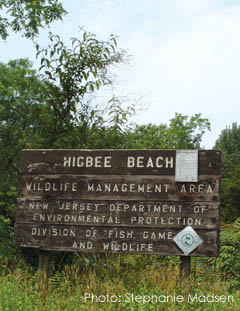
Guided Walks at Higbee Beach

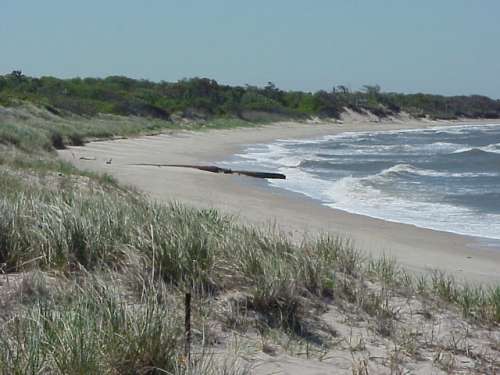
Higbee Beach via capemaybeach.com/higbeebeach.html

Guided walks in the Hidden Valley area of Higbee Beach WMA are being offered monthly by NJ Audubon in cooperation with the NJDEP Division of Fish and Wildlife.

The Higbee Beach Wildlife Management Area is important for its value to endangered, threatened and nongame wildlife.

This Cape May peninsula hosts one of the world's largest migrations each fall as millions of birds stop at the peninsula seeking food, cover and water. Higbee Beach plays a vital role in the migration, providing migrants with a stopover site as they increase their fitness before continuing their sojourn south.

The roughly 1,100-acre area offers a unique blend of several different habitats, including dune, forest, scrub-shrub and early successional fields. The Endangered and Nongame Species Program, in cooperation with the Bureau of Land Management, manages the fields and scrub-shrub areas for migrating songbirds and raptors.

There are two new viewing platforms that have been added to the nearly 2 miles of nature trails at the area. The platforms, which offer spectacular views of the field and forest canopy, feature educational signs on migration and habitat.

A a new dune trail which runs through forested dunes with views of the expansive Delaware Bay was added in 1999.


Higbee Beach is comprised of six different locales: Signal Hill, Davey’s (or Davis) Lake, Pond Creek, Sassafras Island, Hidden Valley, and the Magnesite Plant.

Hidden Valley's mix of varied habitats hosts a diversity of birds which may be encountered, including sparrows, hawks, waterbirds, and even the possibility of an owl.

According to capemay.com, Hidden Valley was once a 92-acre farm between Bayshore Road and the Pond Creek Marsh. The Dickinson family, preferring it be preserved rather than developed, sold it to the state in 1986. Part of the acreage is known as Hidden Valley Ranch, and is leased for equestrian activities. The fields, trails and swamps are well known to birders.


The next scheduled walk is Sunday, January 8 at 4:00 p.m.  
For more information visit community.njaudubon.org


If visiting during the fall migration, it is suggested that you go following a cold front with northerly winds. All you need is a set of binoculars and ID books.

In warmer weather, Higbee Beach is also home to lots of dragonflies and butterflies, including the long-distance migrant - the Monarch butterfly.

Wednesday, September 9, 2015

Raptor Watch New Jersey - Montclair Hawk Watch

Montclair Hawk Watch

Because New Jersey is located along the Atlantic Flyway, we are in a great place to observe hawks heading south to their wintering grounds. This is the time when migrating birds of prey come through NJ in greater concentrations as they follow our ridges and coastline.

Raptors migrate from late summer through early December, but the numbers peak between mid-September and mid-October.I have read that the best days usually occur after a day that featured a cold front with northerly winds, and mornings and early afternoons are better than later in the day.

It is pretty awesome to watch them ride the thermals, wind currents and updrafts along the Hudson River Palisades to the Kittatinny Ridge along the Delaware River and down to Cape May.

You can get more information at the New Jersey Audubon Society and the Hawk Migration Association of North America websites.

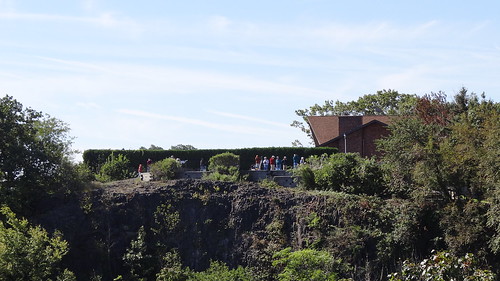
This week, I walked up the stairs to the Montclair Hawk Watch (Essex County) a observation platform that is maintained by the NJ Audubon Society. From there, you can watch migrating birds move south along the first ridge of the Watchung Mountains. On a clear day, the Verrazano Narrows Bridge, the New York City skyline and the Statue of Liberty are also in view.

The site is interesting atop a 500-foot basalt ledge on the First Watchung Mountain. There is a stone-filled platform at the top of a long staircase. They have recorded sightings of broad-winged hawks, bald eagles, American kestrels, red-tailed hawks, ospreys, merlins, sharp-shinned hawks, northern harriers, peregrine falcons and Cooper's hawks.

Directions: from the Garden State Parkway in Bloomfield, take exit 151 for Watchung Avenue and head west on Watchung to its end at Upper Mountain Avenue in Montclair, about 2.1 miles. Make a right turn and go north on Upper Mountain 0.7 miles to Bradford Avenue. Make a left turn and go up Bradford 0.1 miles to Edgecliff Road and make a right turn. Go up Edgecliff 0.2 miles and park on the shoulder (to avoid parking problems, please park well off the side of the road). The lookout path is on the south side of the road marked with a sign at the base of the steps.

Other places for watching:
  • Palisades Interstate Park, Bergen County, State Line Lookout - 527 feet above the Palisades.
  • Sunrise Mountain, Sussex County - the pavilion atop the mountain is located in Stokes State Forest in Branchville.
  • Chimney Rock, Somerset County in Washington Valley Park in Martinsville. This is the southern end of the Watchung Ridge that starts at the Montclair platform.
  • Raccoon Ridge in Blairstown is on the Kittatinny Mountains at an elevation of 1,563 feet and Scotts Mountain, also in Warren County at the Merrill Creek Reservoir in Washington.
  • Down at the tip of the state at Cape May Point State Park birds riding air currents from the surrounding Atlantic Ocean and the Delaware Bay head south overhead.


Thursday, February 21, 2013

Winter Birding at Brigantine Island

Marbled Godwits and Western Willets:  Image:Harvey Tomlinson

At Forsythe NWR (Brig), New Egypt, and Brigantine Island near Atlantic City, birders are enjoying winter birding.

From the Voice of NJ Audubon hotline, we find reports of "19 MARBLED GODWITS, 73 WESTERN WILLETS, 240 AMERICAN OYSTERCATCHERS, and 5 WESTERN SANDPIPERS" earlier this month.

Reports also have useful links like a Feb. 13 report of BARNACLE GOOSE, PINK-FOOTED GOOSE, PACIFIC LOON, NORTHERN LAPWING, CRESTED CARACARA, RUFOUS/ALLEN'S HUMMINGBIRD.

Not to ignore Northern NJ - there were also sightings from the NJ Meadowlands (DeKorte area) on Feb. 10 including a ROUGH-LEGGED HAWK a mixed flock of HORNED LARKS, SNOW BUNTINGS, and one LAPLAND LONGSPUR; an unseasonal GRASSHOPPER SPARROW and a flock of 40 COMMON REDPOLLS

Thursday, January 3, 2013

Winter Visitors Flock to South Jersey

Western Grebe - FWS
It is that time of year when the Jersey shore gets a lot of visitors flying in for a stay. they don't use Newark or Atlantic City airports. They fly in on their own because winter in South Jersey is when dozens of species of bird not native to this area take vacations from their northern homes.

While people in NJ may be complaining about snow and cold weather, these avian tourists find the shores and estuaries of the Delaware Bay coast very appealing. The Downe and Commercial townships, as well as Maurice River and Lawrence along the bay and river shores are considered prime area for birding. There are also a number of wildlife management areas (WMAs) and other protected open spaces that offer good viewing.

“The Delaware bay shore is one of the best wintering strongholds in North America,” Pete Dunne, director of the NJ Audubon Society’s Cape May Bird Observatory, told The South Jersey Times. “This is what is called an eruption year. Food stocks are scarce up north and so the birds come south."

Already, sightings of the winter finch, Townsend’s warbler and the rare western grebe have been made. There are also birds of prey including owls, hawks, falcons and eagles despite Hurricane Sandy drowning many of the mice, rats and weasels that are the prey of raptors in these marshes.

This year, the Audubon Society’s annual Cape May Christmas count documented 168 distinct species.

Northern Saw-Whet Owl  -  FWS
 Dunne reported ten distinct great horned owl calls one morning at Turkey Point in Downe Township.

And the saw-whet owls are present in large numbers. As many as 80 have been captured and banded in a given area in a single night.

The saw-whet owl is very passive and are present in areas of open marshland along the coast should have its share of prowling raptors.

For those interested in learning more about birds and bird watching, Dunne and the NJ Audubon will be hosting Break into Birding, an informational session for new birders on February 16 and 17. Information on all activities and programs offered by the Cape May Bird Observatory can be found online at www.BirdCapeMay.org
Images: U.S. Fish & Wildlife Service (Public Domain)

Friday, November 2, 2012

Hurricane Sandy and the Birds

I found myself wondering this week, as I sat without power and heat, how birds and wildlife were dealing with Hurricane Sandy.

One story I found online from magblog.audubon.org discusses some of the rare visitors that the storm swept into our area. In New York’s Finger Lakes Region, a Ross’s gull was sighted. This small, dove-like bird is seldom seen outside of the Arctic.
Seabirds likely get pulled into a hurricane’s spiral, and then move into its calm eye to ride out the storm. “When the storm reaches land, some of them may start fighting the winds,” avian expert Kenn Kaufman tells Audubon in a Q&A about birds and hurricanes. “Others may go with it and travel with the eye until the hurricane dissipates. The majority of seabirds, if they are not too weakened from having flown for so long without food, will probably find their way back to shore quickly. They have great powers of navigation.”
On the other hand, using satellite transmitters, it was revealed that whimbrels don’t try to avoid or ride out hurricanes but actually force their way through the storms.

A northern gannet - which spends most of its life at sea - spotted in West Fairview, PA.

Did you notice any unusual wildlife activity in your area during the hurricane? Post a comment below and let us know.

MORE

eBird has resources about birds that Hurricane Sandy blew in

Get suggestions for the best places to see birds, broken down by region

Wednesday, September 26, 2012

Birdwatching at the Gateway National Recreation Area

A woodcock at Gateway.
NPS PHOTO A woodcock

The Gateway NRA has three units at Sandy Hook, Staten Island and Jamaica Bay. The three combined have over 325 species of birds, most of them visiting as they migrate along the Atlantic Flyway.

The Birds of Gateway Field Guide features 12 of the more noticeable species in the parks  along with the seasons when these birds can be seen here. Advanced birders might prefer the Jamaica Bay Bird Checklist.

Bird Biographies of some of the better known birds you might see at Gateway.


Tuesday, February 7, 2012

February Events at the Essex County Environmental Center

Canoeing on the Passaic River at Octoberfest event
at the Essex County Environmental Center in Roseland.
A variety of programs are being offered at the Essex County Environmental Center during the month of February that will teach children and adults about nature and help them gain a greater appreciation and understanding of our environment.

Visit the Essex County Environmental Center at 621B Eagle Rock Avenue in Roseland, NJ for environmental education and nature appreciation. With the help of partner groups, their schedule of events and activities include a walk in our woods, discovering habitats, getting pointers on gardening, learning about nature photography and much more.


 Some events scheduled for February include:

"The Colorado Rockies," a fine art photography exhibit by Fred Dammont, on display at the Center during the month of February. Admission is free.

"Little Explorers Winter Nature Program" is a child-caregiver class that uses stories, walks and crafts to develop an awareness and appreciation for science and nature for the child as well as the caregiver. Each week, a different nature or science topic is covered. Cost is $6 per child/session (additional material fees may apply).

"Birding Hike in Essex County Weequahic Park" is presented by New Jersey Audubon and is geared for adults and children over 12. Visit an Essex County oasis while searching for wintering ducks, gulls and passerine birds. All can be viewed along an easy trail around the lake. Meet at the Essex County Environmental Center in Roseland and we will carpool to the park. This is a free hike. Space is limited. Hikes take place unless trails are impassable due to snow or ice. Hikes will be canceled is there is heavy rain or snow. Contact Kelly Wenzel at 973-226-6082 for more information and to register. Birding Hike is scheduled for Thursday, February 9, 2012 at 8 a.m.

"Maple Sugaring" is presented by New Jersey Audubon for children ages 4 to 12 and their family. Participants will "tap" a maple tree, collect some sap and make some maple syrup before returning to the Environmental Center for hot chocolate and sugar snacks. Cost is $5 for NJAS members and $7 for non-members. Advance registration is required. For information, call 973-226-6082. Maple Sugaring will be held Saturday, February 11, 2012 at 10:30 a.m.

"Birding Hike in Essex County Hatfield Swamp" is presented by New Jersey Audubon and is geared for adults and children over 12. Hikers will spend the morning searching for birds and other animals of winter. Meet in the parking lot of Stop and Shop in West Caldwell. Cost is $6 for NJAS members and $8 for non-members. Space is limited. Hikes take place unless trails are impassable due to snow or ice. Hikes will be canceled is there is heavy rain or snow. Contact Kelly Wenzel at 973-226-6082 for more information and to register. Saturday, February 18, 8 a.m. Meeting site: Stop and Shop Supermarket, Bloomfield Avenue, West Caldwell.

"Three-Day Short Course on Beekeeping" is presented by the Essex County Beekeepers Society for adults and children ages 12 and older. This short course is appropriate for new beekeepers as well as those who need a refresher. Participants will be taken through a full year of beekeeping, including purchasing and assembling equipment to harvesting, extracting, and bottling honey. Basics of disease and mite management and control will be covered. Scholarships for this course are available to young people ages 12-22. Visit www.njbeekeepers.org for more details. Meet in Garibaldi Hall. Cost is $90 per person and includes ECBS/NJBA membership, continental breakfast, and afternoon snack. For more information and to register, contact Pat Gamsby at BJORNLASS@AOL.COM or 973-227-2808. E-Mail is the best means of contacting Pat. Beekeeping Course will be held Saturdays, February 18 & 25; Field Day TBA Time: 9 a.m. to 4 p.m.


Registration is required for most programs at the Essex County Environmental Center. For more information or to register, please call 973-228-8776.


View Larger Map

Wednesday, January 18, 2012

Visiting Revolutionary War New Jersey

Hopefully, anyone who grew up in New Jersey knows that our state was pivotal in the American Revolution and played an important part in the American colonists' victory. NJ is often referred to as both the "Crossroads of the Revolution" and the "Military Capital of the Revolution."

Throughout the Revolutionary War, there were 296 clashes between the Americans and British within the colony of New Jersey. That is more than any other colony in the Revolutionary War.

I have written here earlier about a key battle that occurred on January 3, 1777, in the town of Princeton, when the patriots were pushed back by a British charge, General Washington, with his staff, took to the field to rally the retreating troops back into battle.

    But there are many other historical locations that are less well-known.

    The Abraham Staats House is one of the finest surviving buildings from the Dutch Settlement of the Raritan Valley in the 18th century. The house was entered onto the New Jersey Register of Historic Places and the National Register of Historic Places in 2002. It is located on the Delaware-Raritan Canal. (For birders, there are a variety of birds which have been spotted on the property and on the canal.)

    Of course, not all Jersey colonists were in favor of breaking from the crown. Governor William Franklin was the illegitimate son of Benjamin Franklin and was a loyalist who supported the Stamp Act. Governor Franklin signed the charter for Queen's College, which would evolve into Rutgers University. He was like other colonists who had emigrated from England and still felt loyalty to England. On January 8, 1776, Governor Franklin was arrested for opposing the Revolution.


    Morven

    Another National Historic Landmark in Princeton is known as Morven. Now, it is a museum and public garden. The museum occupies the house called Morven, which was formerly the New Jersey Governor’s Mansion and 18th century home of Richard Stockton, a signer of the Declaration of Independence. Its restoration and conversion to a museum were completed in 2004. Morven Museum & Garden is administered by Historic Morven, Inc., a non-profit organization founded in 1987, in cooperation with the New Jersey Department of State. The state acquired Morven in 1954.

    The Jacobus Vanderveer House is located in Bedminster Township, Somerset County, on part of the 218 acres that make up River Road Park. The oldest part of the Jacobus Vanderveer House was built in the early 1770s. It is typical of the Dutch frame houses that dotted the countryside before the American Revolution. Much of the original fabric of the house remains intact. It includes a wall in the west parlor that features raised wood paneling above the fireplace with a barrel-back cabinet to the side, and the home has original flooring of wide pine boards. The house gained a Federal-style addition in the early 1800s.

     Some Revolutionary War Links for New Jersey
    1. Abraham Staats House
    2. Bergen County Historical Society
    3. Bravo - Battlefield Restoration and Archaeological Volunteer Organization
    4. Burlington County Historian
    5. The David Library of the American Revolution
    6. Fort Lee Historic Park
    7. Friends of the Hancock House
    8. Jacobus Vanderveer House & Museum
    9. Lawrence Historical Society
    10. The Meadows Foundation
    11. Monmouth Battlefield State Park
    12. Morven
    13. New Bridge Landing
    14. Old Barracks Museum – Trenton
    15. Princeton Battlefield Society
    16. Washington-Rochambeau Revolutionary Route

    Thursday, June 2, 2011

    Cape May Ocean, Land and Air To Explore

    Spoontiques Resin Lighthouse - Cape May, NJ - Limited Edition  Cape May Light, NJ Bookmark

    Some resources online for folks who want to do some birding in that beautiful and most southern tip of New Jersey.

    BirdCapeMay.org offers birding maps

    There is also info for kayaking the waters in and around Cape Island which are excellent for trips along the Delaware bayshore just North of the Cape May Canal, or through Spicers and Cape Island Creek. There are many spots to put in and casually enjoy the natural beauty and wildlife of Cape Island.  For a tour plan and map, visit Circumnavigation of Cape Island.
    And for folks who don't want to go out into the ocean and who keep their gaze to the ground...

    Cape May's Gingerbread Gems
    Cape May's Gingerbread Gems

    Explorer's Guide The Jersey Shore: Atlantic City to Cape May: A Great Destination (Second Edition) (Explorer's Great Destinations)
    Explorer's Guide The Jersey Shore: Atlantic City to Cape May: A Great Destination 

    Cape May Walking Tours: Short, Fun, No-stress Tours for All Ages and Abilities
    Cape May Walking Tours: Short, Fun, No-stress Tours for All Ages and Abilities

    Cape May Point: The Illustrated History : 1875 to the Present (Schiffer Books)
    Cape May Point: The Illustrated History : 1875 to the Present

      Friday, April 29, 2011

      Spring Birding

      Red-headed Woodpecker via state.nj.us/dep/fgw/ensp/somdec.htm

      Warming weather not only brings some bird species to NJ, but brings out the more reluctant birders. Even if you're not a "birder" officially, you probably are paying more attention to seeing birds in your neighborhood.

      NJ Audubon offers lots of information for anyone on either end of the birding continuum.

      Check out their sightings reports at njaudubon.org/Tools.Net/Sightings/

      Look for the sightings in your own area, like at the Montclair Hawk Watch in northern NJ.


      http://www.njaudubon.org

      Saturday, March 19, 2011

      Free Nature Walk Sunday, Laurel Hill


      We posted about Laurel Hill (AKA Snake Hill) earlier this year.


      Sunday, March 20, 10 a.m.
      First Day of Spring Bird Walk 
      with the NJMC and BCAS

      This free two-hour nature walk starts at the ball fields of Laurel Hill County Park in Secaucus. We’ll look for the (possibly nesting) common ravens, raptors, waterfowl and herons on the Hackensack River, and any other birds we can find. We meet at the big parking lot by the Laurel Hill ball fields at 10 a.m. We will not also meet at the first parking lot in DeKorte Park in Lyndhurst at 9:20. The walk is run by the N.J. Meadowlands Commission and the Bergen County Audubon Society. Check meadowblog.net for last-minute weather updates. You will have to sign a standard liability release for this event. To rsvp, contact Don Torino of the BCAS at greatauk4@aol.com or 201-636-4022.

      SOURCE: Free Nature Walk on Sunday, Laurel Hill from The Meadowlands Blog

      Wednesday, January 12, 2011

      Winter Birding

      Advice from Paul Kerlinger on birding this month: "Just because it is cold, dreary, and January, don’t miss some wonderful birding. Dress warmly, go to the right spots, and you are likely to get great views of species you normally wouldn’t see."

      January: Blizzards of birds in Cape May

      It was a blizzard, but the “snowflakes” weren’t falling from the sky. Instead, they were rising up from the marsh, swirling and milling in a rough semi-circle before moving off. More than 10,000 Snow Geese had just blasted off from the salt marshes of Forsythe (formerly Brigantine) National Wildlife Refuge (near Absecon in Atlantic County). The reason for this spectacle was a single, adult Bald Eagle that had taken off from the trees a half-mile away and flew slowly toward the geese. That eagle was looking for a meal; perhaps a sick or injured goosed or even a dead one. With more than a half-million Snow Geese in South Jersey during the winter, the pickings are generally easy.

      Monday, January 3, 2011

      Snake Hill

      Snake Hill seen from the Laurel Hill Park
      Snake Hill (known officially as Laurel Hill) is a 150 foot tall (46 m) rock sticking up in the middle of the Meadowlands. This igneous rock intrusion jutting up from the floor of the Meadowlands in Secaucus, New Jersey is the site of a glacial lake, Lake Hackensack, that only started receding in 8000 B.C. The rock along the Hackensack River bank is the highest point on Laurel Hill which was formed by volcanic action over 150 million years ago.

      In Colonial times, people kept away from the peculiar sloped hill because of the many large black snakes found there and the area was nicknamed “Snake Hill.”

      From 1855 to 1962 there were Hudson County penal and charitable institutions on Snake Hill. The Almshouse, Penitentiary, Quarry and Hospital for the Insane, Contagious Diseases Hospital, and Tuberculosis Sanatorium, were all grouped on the north side of Snake Hill. Hundreds of people lived at Snake Hill at any given time. The Hudson County Burial Grounds is a Potter's Field associated with the numerous institutions, which had long been forgotten. They were unearthed during the addition to the New Jersey Turnpike for access to Secaucus Junction at exit 15X.

      In 1962 Hudson County finished closing their facilities on the site. The County entered into a 20 year contract with Callanan Industries to level much of the hill and the rock formation was largely obliterated by quarrying in the 1960s that reduced its height by one-quarter and its base area by four fifths. The diabase rock was used as building material in growing areas like Jersey City. In the 1960s and 70's, Gallo Asphalt had 4 asphalt plants, side by side, adjacent to the quarry and supplied paving materials throughout the surrounding urban region. Production ended in 1982.

      The graffiti-covered remains of Snake Hill are a familiar landmark to travelers on the New Jersey Turnpike's Eastern Spur, which skirts its southern edge.

      The rock is most often referred to as Laurel or Snake Hill (Slangenbergh in Dutch) but has also been called Fraternity Rock (because of the Greek letters painted on it presumably by local college fraternities), Long Neck (because it is a volcanic neck), Graffiti Rock and Mt. Pinhorne (after 17th century plantation owner William Pinhorne). The name changed from Snake Hill to Laurel Hill in 1926, when Hudson County freeholder Katherine Whelan Brown said that it was the "crowning Laurel of Hudson County" because of its unusual height prominence in the low lying meadowlands.

      Most of the original 184-acre (0.74 km2) parcel is currently being utilized as Laurel Hill County Park, which includes a portion of Hackensack RiverWalk.

      Laurel Hill Park is home to the Hackensack Riverkeeper's Field Office and Paddling Center. The Hackensack Riverkeeper also conducts many of its Eco-Cruises from this park.

      There is a narrow Ridge Trail along the top of the hill.

      View from Ridge Trail atop Snake Hill

      The rock is a 61 meter (203 ft) high pipe-like diabase intrusive, which is believed to be an offshoot of the nearby Palisades Sill. It may have been what is known as a volcano plug. Mineralized shales and sandstones, intruded by the diabase, are visible in the north and southwest sections of the property.

      Legend has it that a NY advertising executive, passing the hill on a train, is said to have drawn from it the inspiration for the Prudential "Rock of Gibraltar" logo in the 1890s.

      The mineral Petersite was discovered at Snake Hill in June 1981 by Nicholas Facciolla, who took it to the Paterson Museum. In 1982 the mineral was recognized as a new discovery and named for Thomas Peters and Joseph Peters curators of minerals at the Paterson, New Jersey, museum and the American Museum of Natural History in New York City, respectively.


      Birding, paddling and wildlife trail walking is available at Laurel Hill County Park & Saw Mill Creek Wildlife Management Area. The Saw Mill Creek Trail takes you near the vast mudflat and wide-open space of the Saw Mill Creek Wildlife Management Area (WMA). The base of the trail was initially built in the 1920’s and 1930’s as an access road for what are now high tension electric lines. It was reconstructed as a walking trail in 2001. Stone and soil were added, and six seating areas were incorporated. Native plants were used
      and there are beautifully-designed entrance gates at the trailheads.

      Laurel Hill Park is home to the Hackensack Riverkeeper's Field Office and Paddling Center, which is open weekends from April thru October and weekdays by appointment. Hackensack Riverkeeper also conducts many of its Eco-Cruises from this park.

      During this winter season, hiding along the channels and main creek, using the reeds as windbreaks on cold winter days, you will find Common and Hooded Mergansers, Common Pintail, Gadwall, Northern Shoveler, Bufflehead, Blue-winged and Green-winged Teals, Canada Goose and Mute Swan, some of which also breed in the Meadowlands. A glance at the electrical towers near the Turnpike may turn up a Peregrine Falcon or Red-tailed Hawk. Look across the marsh where the vegetation has died back and see the 3-foot tall dome-shaped lodges made by the common muskrat. Great Cormorants and Bald Eagles may also be seen.

      Directions: Follow County Avenue south from Secaucus. Bear right on New County Road just before the New Jersey Turnpike overpass. Follow for about one mile past the county jail complex (on the left) into Laurel Hill Park. Get driving directions via Google Maps

      Sources:


      Wednesday, December 29, 2010

      Winter Break Hikes

      Take a Hike: Winter break hikes being offered throughout Morris County, NJ | dailyrecord.com

      The woods may look inactive in winter. But they're not, says Douglas Vorolieff, senior teacher naturalist at the Morris County Park Commission.

      One way to spend the week between Christmas and New Year's Day is to take a guided hike through a local forest. There are many from which to choose.

      In a recent walk on Pyramid Mountain in Montville, Vorolieff pointed to a bird in a tree.

      "There's the dark-eyed junco," he said. "Many people don't realize some birds actually migrate to New Jersey for the winter, and the junco is one. We start seeing them in October and they'll be here until March, when they migrate north."

      Vorolieff, who is to lead an easy Family Walk on Pyramid Mountain Wednesday, will introduce participants to many wonders of the woods...

      Tuesday, December 7, 2010

      Non-Hunting Areas in NJ For Outdoor Recreation

      In addition to the information posted here yesterday, here are some other sources of information on places in NJ to use for hiking, birding and other recreational outdoor pursuits during the various hunting seasons.

      A list of "Public Deer Hunting Land in New Jersey" is available online from NJ Fish & Wildlife at http://www.state.nj.us/dep/fgw/huntland.htm

      There's also information on "Lands Open or Closed to Sunday Bow Hunting" which includes Wildlife management Areas and public lands that are still closed to hunting on Sundays. The latest list I could find is from 2009 so I'm assuming there haven't been changes - see http://www.njfishandwildlife.com/news/2009/sundayhunt.htm


      Of course, some of the smaller parks have no hunting allowed and those are good locations during this time too.

      You can try Cheesequake State Park, Wells Mills County Park (Ocean County), the Watchung Reservation (Union County), South Mountain (Essex County), Apshawa Preserve(Passaic County) and the Ramapo Valley County Reservation (Note that the surrounding areas of Ramapo Mountain State Forest and Ringwood State Forest do allow hunting.)

      For hikers, two good resources are: