Showing posts with label books. Show all posts

Saturday, October 28, 2023

New to Birding?


Can you identify the bird pictured here? Do you wish you knew how to identify some of the less common birds you encounter, or that you could identify a species just by its call? If yes, then you might be a good candidate to take up birding.

There are plenty of books to get you started. Though you can spot lots of birds with the naked eye, you might want to get a pair of binoculars or a scope too as you progress.

If you are new to birding, you can get started easily with this birding tutorial from NJ Fish and Wildlife.

So, can you identify the bird pictured here? Post your answer in the comments.


A few birding books that focus on New Jersey

    =


Several birding scopes & binoculars

    =

Wednesday, June 29, 2022

The Fall of the Tiny Insect Empires

Image: Ronny Overhate

Oliver Milman’s book The Insect Crisis: The Fall of the Tiny Empires That Run the World, is about the precipitous decline of insects. Some people would joke that they wouldn't mind there being fewer insects - like Jersey mosquitoes - around. But that is very short-sighted and reading this book you see what the disappearance of insects means for human life and the other creatures around us. 

These tiny invertebrates and their “tiny empires”  when measured as a whole biomass, the size is more than enormous. Their decline affects the food we buy and medicines we take and much of the natural beauty around us both flora and fauna.

The threats to insects are familiar - pesticides, habitat destruction, electric lighting and climate change.

In 2019, Biological Conservation reported that 40% of all insect species are declining globally and that a third of them are endangered.

theguardian.com/books/2022/jan/14/the-insect-crisis-by-oliver-milman...

Interview with Milman on NPR 


Friday, August 13, 2021

Backyard Naturalists

Image by Bessi from Pixabay

We're more than halfway through summer and if your kids are already moaning about school starting and want something to do, how about making them backyard naturalists?

I am always amazed at how many children and adults cannot name the species of the tree in the back or front yard or the kind of flowers growing around their neighborhood or the bird that landed on the deck or the insect flying or crawling nearby.

The NJ Division of Fish and Wildlife has created online learning resources for learning about our environment. They have some activities for kids to do while exploring, some outdoor Skills to learn and some species identification to help them become more familiar with the natural world.

There are good field guides to all these things and I have noted some below,
but a free, simple starting place can be this page:


Tuesday, June 4, 2019

Horseshoe Crab's Crown

Book illustration by Valentina Gallup

With the New Moon and Full Moons, horseshoe crabs appear on the Delaware Bay shore of New Jersey. At the Jamaica Bay Wildlife Refuge, a free event on June 9th features the debut of Horseshoe Crab's Crown, a children's book by Heather feather about oceanic friends working together to make a better world.

The American horseshoe crab is not a true crab and is not even a crustacean. It is more closely related to spiders and scorpions than to crabs, shrimps, and lobsters.

Horseshoe crabs have been around for at least 450 million years, making them one of the oldest lineages of animals alive today. They were roaming the seafloor more than 200 million years before dinosaurs existed.

A live reading and puppet show will take place at 1:30 at the Jamaica Bay Wildlife Refuge. It will be followed by a reception from 2-4, where attendees can explore the book making process and see the watercolors up close and personal. Crowns or fancy hats are encouraged.

The exhibit, on the creation of the book, runs for two months. Books on sale at the Wildlife Refuge Store.

Sunday, June 9, 1:30 Reading by the author; 2:00 -4:00 PM Opening reception 1:30


Wednesday, March 2, 2016

Armchair Hiking

Last December, when I was feeling under the weather and the weather was less than wonderful for hiking, I read Bill Bryson's book,  A Walk in the Woods. The book had been on my bookstack for a few years and I just never got to it. But I saw that the movie version was going to be on-demand, so I wa determined to read the book before seeing the movie.

Winter is a good time to be an armchair hiker, although I still like getting out in the woods during the winter, my days of hiking in cold mud and deep snow are probably over.

A Walk in the Woods is the account of his attempts to walk the Appalachian Trail. After some years in England, Bryson (now living in New Hampshire, with his wife and his four children) decided to reacquaint himself with his homeland by walking the 2,100-mile Appalachian Trail. (The subtitle of the book is "Rediscovering America on the Appalachian Trail.")

Any long hike or walk in the woods is not all laughs. In Bryson's book, you'll learn about the AT's history and (hopefully) come to believe in the need for the conservation of this fragile wilderness.

I had that same ambition when I was in my early twenties. I wanted to walk the AT from Georgia to Maine in order to find myself, rather than America.

I read several books about the trail, bought maps, made plans. Completing the entire 2,190 miles of the Appalachian Trail in one trip is a mammoth undertaking. Each year, thousands of hikers attempt a thru-hike and only about one in four makes it all the way.

According to AppalachianTrail.org, a typical thru-hiker takes 5 to 7 months to hike the entire A.T. You can walk in either direction, but there is a lot of planning, setting resupply points, regulations, and physical and mental preparations.

I did what many sojourners do at first. I hiked sections of the trail nearest to me on day and weekend hikes. My section hikes ended with a blown-out knee. Then came the birth of my sons, and life, and my hikes became walks. That is not a bad thing.

My favorite of the five books below

If you want to do some armchair hiking in New Jersey - or prep for actual hikes as the weather warms up - here are five books to get you started.
  1. Explorer's Guide 50 Hikes in New Jersey: Walks, Hikes, and Backpacking Trips from the Kittatinnies to Cape May  
  2. Hiking New Jersey: A Guide To 50 Of The Garden State's Greatest Hiking Adventures   
  3. New Jersey Walk Book: A Companion to the New York Walk Book
  4. Kittatinny Trails
  5. Hiking the Jersey Highlands: Wilderness in Your Back Yard
I don't know if my thru-hike would have been as fun or as funny as Bryson's sojourn with his out-of-shape buddy, Stephen, but I think I missed out on a good life adventure.

Anyway, the book would be a good weekend armchair adventure as we transition out of winter, and if you're still not ready for even an armchair reading hike, settle back on that couch and watch the movie version of A Walk in the Woods with Robert Redford and Nick Nolte.

And then, get out on a real trail!


Portions of this post first appeared on Weekends in Paradelle 

Tuesday, May 8, 2012

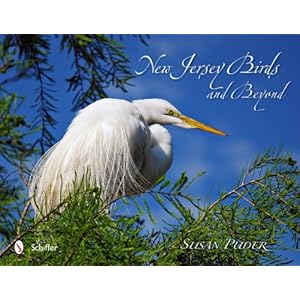
New Jersey Birds and Beyond

New Jersey Birds and Beyond is a beautiful new book by nature photographer Susan Puder on the New Jersey bird species that inhabit our shores, fields, and forests.

NJ being along the Atlantic flyway provides the opportunity to see a great variety of species at different times of the year. 434 color images and observations on over 180 bird species, and native flora and fauna, makes this a great view of our state's surprising diversity in habitats and species.

Susan Puder is a dedicated environmentalist who supports the preservation of open lands and wildlife. As an avid birder, she started the Southern Ocean Birding Group and is a member of the New Jersey Audubon Society. She has been a serious nature and wildlife photographer for over 20 years.

Wednesday, January 11, 2012

Conservationist Aldo Leopold


Lately, I have written a number of posts about the various hunting and trapping seasons here in NJ. So, today, when I saw on an almanac that it was the birthday of Aldo Leopold, I thought I should post a bit on him to balance the scales.

Aldo Leopold is the author of a key book in the conservation movement, A Sand County Almanac.

He was one of those kids that was drawn to the outdoors. After college, he entered Yale's forestry graduate program (one of the first in the country - not something you'd expect from an Ivy school) and became one of the nation's first professional foresters.


One of his assignments was to hunt livestock predators in a New Mexico national forest. But as he observed the bears, wolves, and mountain lions, he concluded that removing them had a broader impact on the entire ecosystem.

He developed a philosophy that humans should not dominate the land.  He popularized a definition of "wilderness" that meant nature in its own, untended state, rather than the conventional idea that wilderness is land for outdoor activity.

Eventually, he developed the first management plan for the Grand Canyon. He wrote the Forest Service's first game and fish handbook. He formed The Wilderness Society with other conservationists in 1935.

His "sand county" farm (worn out land purchased for $8 an acre) near the Wisconsin River, became his real world experiment. He planted 40,000 pine trees and tried to tend the land with his own conservation ethic of peaceful coexistence with nature. He documented this in essays collected in A Sand County Almanac.

The book was published in 1948, one week before he died of a heart attack while battling a grass fire.

(via Amazon) ...A Sand County Almanac has enthralled generations of nature lovers and conservationists and is indeed revered by everyone seriously interested in protecting the natural world. Hailed for prose that is "full of beauty and vigor and bite" (The New York Times), it is perhaps the finest example of nature writing since Thoreau's Walden.

... the heart of the book remains Leopold's carefully rendered observations of nature. Here we follow Leopold throughout the year, from January to December, as he walks about the rural Wisconsin landscape, watching a woodcock dance skyward in golden afternoon light, or spying a rough-legged hawk dropping like a feathered bomb on its prey. And perhaps most important are Leopold's trenchant comments throughout the book on our abuse of the land and on what we must do to preserve this invaluable treasure... a new generation of readers can walk beside one of America's most respected naturalists as he conveys the beauty of a marsh before sunrise or the wealth of history to be found in an ancient oak.

Much more... www.AldoLeopold.org

Monday, February 14, 2011

Wild New Jersey: Nature Adventures in the Garden State


David Wheeler's book, Wild New Jersey: Nature Adventures in the Garden State has just been published by Rutgers University Press.

Wild New Jersey: Nature Adventures in the Garden State [Paperback]David is the Director of Operations for the Edison Wetlands Association and the founder of the Wild New Jersey blog which (like this blog) looks at environmental and wildlife news from around the state and often features videos.

The book is a through-the-year sweep of New Jersey from the mountains to the beaches. It's a reminder of how diverse our state is in its habitats. The Pine Barrens and other spots in our state have an incredible diversity of wildlife that surprises even NJ residents - and just might shock outsiders.

David @DavidHWheeler and the Wild New Jersey blog @wildnewjersey are both on Twitter too.


Tuesday, December 28, 2010

Wildlife Viewing On A Comfortable Couch

The blizzard hit NJ this past Christmas weekend and I'm sure it stopped many plans to get outside. (I guess our "Warmer Planet and More Jersey Snow" post was well-timed last week!)

Luckily, there are some ways to view NJ's wildlife from the comfort of an armchair in a warm house with a nice hot drink nearby. Field guides make great winter reading and are a good way to prepare for weather that lends itself to forest and beach walks and brings out certain wildlife.

Endangered and Threatened Wildlife of New JerseyThe guide I would first recommend here is to Endangered and Threatened Wildlife of New Jersey. It is the only comprehensive guide to New Jersey's most imperiled species. Endangered and Threatened Wildlife of New Jersey is a richly illustrated color guide to the state's seventy-three most imperiled species, from bobcats to bobolinks, shortnosed sturgeons to loggerhead turtles, frosted elfins to triangle floaters, blue whales to American burying beetles.

Written primarily by the people who know these species best, biologists, the book is divided into seven sections: mammals, birds, reptiles, amphibians, fish, insects, and bivalves (mussels). Each animal is discussed individually including its ecology, distribution, and population status. Sixty-four detailed maps and more than one hundred spectacular color photos provide readers with a rare glimpse of these seldom-seen species.

Next up is the Field Guide to Reptiles & Amphibians of New Jersey Does it surprise you that New Jersey is home to 71 species of reptiles and amphibians? The NJ Division of Fish and Wildlife created this guide (and also separate companion audio CD).

 Written by David M. Golden, an ENSP Senior Biologist, and author Vicki Schwartz, the field guide contains 72 detailed descriptions of reptiles and amphibians that occur in N.J. With more than 100 full-color pictures and 72 distribution maps, this spiral-bound, 89-page guide will be useful for amateurs and experts alike.

Despite its small size, New Jersey boasts an unusually diverse population of Odonata -  damselflies and dragonflies. Some of these are fairly uncommon within the state, such as northern species that reach their southern limit in the northwest corner of the state and specialties found only in Pine Barrens habitats.

182 species found in NJ are included in this guide, both in species accounts and in a checklist at the end of the book. The plates also indicate which species are endangered, threatened, or of species concern. Introductory materials discuss New Jersey's geography, the biology of dragonflies and damselflies, and how to observe and record them. The core of the book are the species accounts, which describe how to identify each species, where and when to find it, and how common each species is, and each species plate has at least one photo, its key identification features, a map showing the counties where it has been recorded, and a timeline showing the months when it is most active.

A good starting place - especially if you are out in nature with kids - are the pocket wildlife guides. The "Pocket Guide to New Jersey Wildlife" is a pocket-sized, folding guide that is  beautifully illustrated in color with over 152 familiar species of birds, mammals, reptiles, amphibians, butterflies, and other insects with a map featuring prominent regional wildlife sanctuaries. It is laminated for durability when you are outdoors. There are also species specific guides available.


Some of these guides are available from select bookstores and at New Jersey Audubon centers and wildlife-oriented stores in NJ - BUT, you can do a little extra good by ordering through the Conserve Wildlife Foundation of New Jersey at http://www.conservewildlifenj.org/store/books/


Monday, July 12, 2010

At least 100 species go extinct every day

National Geographic Rare: Portraits of America's Endangered Species

"At least 100 species go extinct every day."

That's the opening to this video by National Geographic photographer, Joel Sartore. It's a companion to his book, Rare: Portraits of America's Endangered Species and it gives you an appreciation for what we stand to lose if changes aren't made concerning these species.


RARE from Joel Sartore on Vimeo

Friday, June 11, 2010

Night of the Moon Jellies

Night of the Moonjellies
by Mark Shasha


This beautifully illustrated picture book for ages 4-8 follows 7 year old Mark who discovers on the beach small jellylike objects that he places in a bag of seawater.

A moonlight ocean boat ride with his grandmother finds thousands of moonjellies shimmering in the water. (He wisely releases his own discovery among them.)

It's a nice book to bring to the beach this weekend with the kids. Unfortunately, it doesn't really explain what moon jellies are all about.

jellyfish live in water  http://www.photolib.noaa.gov/


New Jersey beachgoers of all ages have seen them.Unfortunately. they usually see them dead on the beach.

Their common name is Moon Jelly and their scientific name is Aurelia aurita.

The tentacles of a moon jelly are attached under the "umbrella shaped body." Moon Jelly are harmless to humans.

This is one of the most common jellyfishes found on the beach in New Jersey. Most of the time, they are found washed up on shore where they look like a round disk-shaped pad of fairly firm, clear jelly.

Most moon jellies you find will be about 4 or 5 inches in diameter. The disk that washes up on shore is only the remaining part of the creature. Yes, it's harmless to pick up.

When the creature was alive, it was a a carnivore that ate mostly plankton. They use stinging nematocysts to subdue the food they catch and also have a mucus layer that they pull food into. This sticky goo serves to trap their prey.

They stay close to the water surface for feeding, and that makes them food for by some large fish, turtles and even some birds.

Their locomotion is not that efficient, so currents often wash them ashore.


This video below shows a different species than the one that lives in NJ waters, but the behavior and appearance is very similar to our local moon jellyfish.


Monday, April 26, 2010

Teaching Kids About Horseshoe Crabs

Horseshoe crabs are a good species to introduce to kids. They are both frighteningly strange looking and dinosaur-interesting. And in New Jersey, they are likely to be encountered on our beaches.

The spring migration of many species of shorebirds coincides with the arrival of the horseshoe crabs in Delaware Bay. Bird counts of migratory shorebirds show disturbing decreases in numbers, and those who study the migrations see a correlation shorebird population declines and horseshoe crab over-harvesting.

Horseshoe crabs have survived 300 million years of a changing planet, but may not survive human interference. Loss of habitat is a concern, but the use of the crabs as bait is possibly even more of a threat.

These books offer a nice pathway into understanding this species for young readers.

Crab Moon (Read and Wonder)

Part story and part science lesson, Crab Moon (ages 5-9) is the story of seven-year-old Daniel and his mother who watch horseshoe crabs lay their eggs on the beach near their cottage in the moonlight of the full moon. I like that his mom remembers the seasonal spawning of horseshoe crabs on this same beach from her own childhood.

I also like the story's coda when Daniel "one last, lonely crab marooned upside down" and after some hesitation (horseshoe crabs can be scary looking!) he rights her, and follows her back to the sea.

Also

Harry Horseshoe Crab, A Tale of Crawly Creatures

Harry Horseshoe Crab, A Tale of Crawly Creatures

The Crab from Yesterday: The Life-Cycle of a Horseshoe Crab


More on horseshoe crabs in New Jersey


Monday, April 19, 2010

Earth Day #40 is April 22

Forty years after the first Earth Day, the world is in greater peril than ever. Will
2010 be a turning point to advance climate policy, energy efficiency, renewable energy and green jobs?

The Earth Day Network is trying to galvanize millions to make personal commitments to sustainability.

Earth Day 2010 is a pivotal opportunity for individuals, corporations and governments to join together and create a global green economy.

You can join the more than one billion people in 190 countries that are taking action for Earth Day. Your actions don't have to be big or gobal or political.

Some personal pledges on the Earth day website include simple things like:
  • I will collect plastic bottles when I see them on the ground and recyle them.
  • Stop using plastic water bottles and get your water from the tap and carry it in a reusable bottle.
  • Go out on your own or with friends & family and pick up garbage around your community for 3 hours.
If you think it's time to stop protecting polluters and enact comprehensive climate legislation that will create American jobs, cap carbon emissions and secure our nation’s future, then look at next Sunday, April 25, when Earth Day Network will organize a massive climate rally on The National Mall to demand Congress pass strong legislation.

The Climate Rally will include notable speakers Reverend Jesse Jackson, film director, James Cameron, AFL-CIO President, Richard Trumka, Olympic gold medalist, Billy Demong, producer, Trudie Styler, author, Margaret Atwood, NFL player and television personality, Dhani Jones, environmental photographer Sebastian Copeland and many more.

The Climate Rally will also feature live music from Sting, John Legend, The Roots, Jimmy Cliff, Passion Pit, Bob Weir, Willie Colón, Joss Stone, Robert Randolph, Patrick Stump, Mavis Staples, Booker T, Honor Society and Tao Rodriguez-Seeger.

The first Earth Day was a success because 20 million Americans demonstrated their outrage for the state of the environment. Climate change is only one of about a dozen core issues that Earth Day hopes to address, including conservation and biodiversity, clean water, green schools and environmental education.


FOR YOUNG READERS

It's Earth Day! (Little Critter)
Earth Day (Rookie Read-About Holidays)
Earth Day: An Alphabet Book
Biscuit's Earth Day Celebration
Fancy Nancy: Every Day Is Earth Day (I Can Read Book 1)
Earth Day (Ready-to-Read. Level 1)
Dora Celebrates Earth Day!: Little Green Nickelodeon (Dora the Explorer)