Showing posts with label wilderness. Show all posts

Tuesday, September 10, 2013

The Wilderness Society

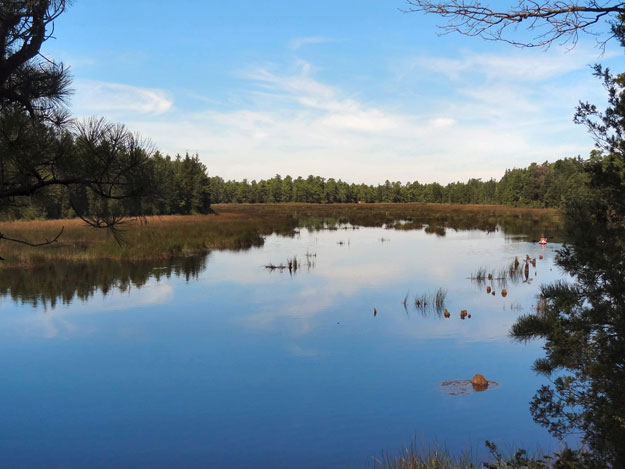
Great Swamp, NJ        Photo: www.fws.gov/northeast/greatswamp/

Wilderness is a haven from the pressures of our fast-paced society. They are places where we seek relief from the noise, rapid pace and crowds that often confine us. New Jersey has fewer places that might qualify as "wilderness" than the western states, but we still have large areas, such as the Pinelands or the Great Swamp, that offer opportunities for outdoor recreation.

In wilderness, we can walk and hike, watch wildlife, camp, fish and many other activities. This kind of recreation in the wild has countless proven benefits to our health and well being. And stil, we know that each year as we grow more and more connected through technology, we grow less and less connected with wilderness.

The Wilderness Society is a leading American conservation organization that works to protect our nation’s shared wildlands.

Protected wildlands give us:
Clean air and water,
Abundant wildlife,
Havens for recreation, solitude and learning,
Important sources of renewable energy,
Vital natural resources that must be managed wisely, and
A foundation for a healthy planet.


This video offers a glimpse into The Wilderness Society - from its history, to its new campaign
to reconnect Americans with their wild places on public lands. Narrated by Edward Norton.

As we become a more urbanized society with growing needs for space and energy, we often turn to wilderness as a resource. Yet, wilderness is not just a resource to be developed. It has many human, natural and economic benefits that we need to protect.
Wilderness belongs to you

As Americans, we own 618 million acres of American wildlands -red-rock canyons, turquoise rivers, desert plains, mountain peaks, Arctic tundra, southern wildflower fields and cool northern forests. But not all federal wildlands are "wilderness."

Wilderness is a type of protection given to the most pristine wildlands — areas within national parks, forests, recreation areas and other wildlands where there are no roads or development. This officially designated wilderness is the last remnant of the wild landscapes that once stretched from coast to coast.
Batso, Pine Barrens, Photo: www.nj.gov/dep/

Today, only about 110 million acres of true wilderness remain as part of the 618 million acres of federal wildland. That is just one of the issues that the Society addresses.

Of course, wilderness is also vital habitat for wildlife to live and for migration routes and breeding grounds. Fragmented and developed wilderness areas often threaten species populations. Designated wilderness areas make it possible to ensure the protection of species.

It also makes economic sense. Wilderness areas contribute to the local economy, especially in the rural communities that surround them. Outdoor recreation contributes more than $646 billion annually to the economy, supports 6.1 million jobs and generates nearly $80 billion in federal, state and local taxes.


Wilderness areas protect watersheds that provide drinking water to many cities and rural communities.

They help improve the quality of our air.


Since the Wilderness Act passed in 1964, Congress has designated nearly 110 million acres of federal wildlands as official wilderness. Official wilderness has the highest form of protection of any federal wildland. Today, about 235 million acres of federal wildlands have been permanently protected as wilderness, parks, refuges or other protected areas. But that’s only a third of our public lands. About 100 million acres of pristine wildlands are still at risk. These wildlands could qualify for future protection, but the window of opportunity is closing fast.


Monday, October 8, 2012

Batso Village Hosts Country Living Fair


Situated on picturesque Batsto Lake, the historic village of Batsto is an idyllic portal into the history and culture of New Jersey’s famed Pine Barrens, a place that brings the spirit of the region to life in the clanging of the blacksmith’s hammer, a child’s wooden rocking horse resting on a sunlit windowsill, the rush of wind through the crooked boughs of pitch pines.

The annual Country Living Fair, a large celebration of Pinelands culture and natural history through living history demonstrations, crafts, music, antiques, food, and old-time cars and farm equipment will be Sunday, October 21, from 10 a.m. to 4 p.m. at Batsto Village. The festival is sponsored by the Batsto Citizens Committee Inc. and the New Jersey Park Service.

The village is quite possibly the best place for visitors from near and far to begin their exploration of New Jersey's globally unique Pine Barrens.

More information on Batso http://www.nj.gov/dep/daw/batsto/


NJDEP New Jersey Department of Environmental Protection

Wednesday, January 11, 2012

Conservationist Aldo Leopold


Lately, I have written a number of posts about the various hunting and trapping seasons here in NJ. So, today, when I saw on an almanac that it was the birthday of Aldo Leopold, I thought I should post a bit on him to balance the scales.

Aldo Leopold is the author of a key book in the conservation movement, A Sand County Almanac.

He was one of those kids that was drawn to the outdoors. After college, he entered Yale's forestry graduate program (one of the first in the country - not something you'd expect from an Ivy school) and became one of the nation's first professional foresters.


One of his assignments was to hunt livestock predators in a New Mexico national forest. But as he observed the bears, wolves, and mountain lions, he concluded that removing them had a broader impact on the entire ecosystem.

He developed a philosophy that humans should not dominate the land.  He popularized a definition of "wilderness" that meant nature in its own, untended state, rather than the conventional idea that wilderness is land for outdoor activity.

Eventually, he developed the first management plan for the Grand Canyon. He wrote the Forest Service's first game and fish handbook. He formed The Wilderness Society with other conservationists in 1935.

His "sand county" farm (worn out land purchased for $8 an acre) near the Wisconsin River, became his real world experiment. He planted 40,000 pine trees and tried to tend the land with his own conservation ethic of peaceful coexistence with nature. He documented this in essays collected in A Sand County Almanac.

The book was published in 1948, one week before he died of a heart attack while battling a grass fire.

(via Amazon) ...A Sand County Almanac has enthralled generations of nature lovers and conservationists and is indeed revered by everyone seriously interested in protecting the natural world. Hailed for prose that is "full of beauty and vigor and bite" (The New York Times), it is perhaps the finest example of nature writing since Thoreau's Walden.

... the heart of the book remains Leopold's carefully rendered observations of nature. Here we follow Leopold throughout the year, from January to December, as he walks about the rural Wisconsin landscape, watching a woodcock dance skyward in golden afternoon light, or spying a rough-legged hawk dropping like a feathered bomb on its prey. And perhaps most important are Leopold's trenchant comments throughout the book on our abuse of the land and on what we must do to preserve this invaluable treasure... a new generation of readers can walk beside one of America's most respected naturalists as he conveys the beauty of a marsh before sunrise or the wealth of history to be found in an ancient oak.

Much more... www.AldoLeopold.org

Wednesday, December 30, 2009

The Nature Conservancy in NJ

Since 1955, The Nature Conservancy in New Jersey has protected more than 56,000 acres.

Their first project preserved 500 acres of one of New Jersey’s last old growth forests at Hutcheson Memorial Forest in Somerset County.

The Chapter now focuses on species and natural communities at risk in three program areas across the state. The program areas have projects in the Skylands, the Delaware Bayshores and the Pine Barrens.

In the Pine Barrens, they have safeguarded nearly 3,400 acres at four nature preserves.

These special places include the 520-acre Oswego River Preserve which spans diverse natural communities, Forked River Mountain Preserve, 1,740 acres linking neighboring protected lands to form an impressive greenway, and the Berkeley Triangle Project, a donation from a developer of nearly 4,500 acres, now protected and open to the public.

The Pinelands, which are not barren at all, spans more than one million acres. It is the most extensive undeveloped area on the eastern sea-board between Boston, Massachusetts and Richmond, Virginia.

The region harbors the largest example of pitch pine barrens on Earth as well as globally rare pygmy pine forests. These fire-shaped landscapes rely on natural fire regimes or ecologically prescribed burns to survive.

Mixed pine and oak forests and Atlantic white cedar swamps also thrive here, as well as many threatened plants and animals including curly grass fern (Schizaea pusilla) and pine barrens treefrog (Hyla andersonii).

Wednesday, September 16, 2009

Great Swamp National Wildlife Refuge

The Great Swamp National Wildlife Refuge was established in 1960 and lies 26 miles west of New York City's Times Square and 7 miles south of Morristown, New Jersey in Morris County.

This "oasis of wilderness" in the midst of urban and suburban areas provides important habitats to fish and wildlife and a unique opportunity for the public to enjoy wildlife and wilderness.

It consists of approximately 7,600 acres of swamp woodland, hardwood ridges, cattail marsh, grassland, ponds and meandering streams.


The Great Swamp is divided up into two sections, the Wilderness Area and the Management Area. No permanent structures, motorized vehicles or equipment are allowed in the Wilderness Area. The Wilderness Area serves as an outdoor laboratory and provides a more primitive outdoor experience for the general public. Hiking on almost eight and a half miles of trails is permitted. By limiting use in this sensitive area to foot travel, the wilderness experience can be preserved.

The rest of the refuge (Management Area) is intensively managed to maintain optimum habitat for a wide variety of wildlife. Water levels are manipulated in five shallow refuge impoundments to favor growth of a desirable mix of native plant communities.

These area provide habitat preferred by waterfowl, wading birds, shorebirds and other species during spring and fall migrations and the nesting season. Wood ducks and mallards are the most common waterfowl while Canada geese, black ducks, pintail, widgeon and teal are also abundant during migration. The wood duck has favorably responded to habitat protection and enhancement efforts. Artificial nesting structures are used to supplement natural nesting sites, which have declined throughout the wood duck's range.

Several hundred acres of grasslands are also maintained on the refuge by mowing on one to four year rotational cycles. Grasslands provide diverse wildlife habitats, food resources and nesting cover for a wide variety of wildlife species, including the eastern bluebird and several raptor species. Numerous research studies are conducted on the Refuge.

The Refuge has identified more than 222 species of birds according to their seasonal occurrence. Mammals found on the Refuge include the white-tailed deer, river otter, muskrat, mink, beaver, raccoon, skunk, red fox, coyote, woodchuck, gray squirrel, opossum, cottontail rabbit and the federally endangered Indiana bat. An variety of fish, reptiles, and amphibians, including the federally threatened bog turtle and the state endangered blue-spotted salamander, are also found on the Refuge.

The refuge has become a resting and feeding area for more than 244 species of birds. The refuge also provides a "home" for more than 39 species of reptiles and amphibians, 29 species of fish, 33 species of mammals and approximately 600 species of plants (including 215 species of wildflowers). Additionally, 26 of these species are listed by the State of New Jersey as being threatened or endangered, including the wood turtle, blue-spotted salamander and bog turtle (also federally threatened).

The links below are to brochures (pdf format) for the animals that occur on the Refuge.

The Refuge provides an excellent opportunity for learning about a variety of ecosystems. The Friends of Great Swamp NWR provide much of the environmental education and interpretation available at the Refuge through guided tours and a Discovery Den located at the bookstore on Pleasant Plains Road. Two separate Environmental Education Centers in the swamp provide additional education and interpretation opportunities and are located adjacent to the Refuge.

Great Swamp Outdoor Education Center
, operated by Morris County Parks Commision, is located on the eastern side of the Refuge off Southern Boulevard in Chatham Township. The Center offers a varied natural science program of classes and guided tours and provides one mile of trail and boardwalk for the public.

The Somerset Environmental Education Center is operated by the Somerset County Parks Commission. It is located on the western border of the Refuge in Lord Stirling Park. The Park has a varied program of environmental education courses, guided field trips, and 8 ½ miles of walking trail.

Sunday, September 13, 2009

National Wilderness Month

On September 3, there was a milestone in conservation history. It was the 45th Anniversary of the Wilderness Act.
President Obama extended the celebration to the entire month long by commemorating September 2009 as “National Wilderness Month.”
At the same time, the President invited fellow Americans to explore our nation’s wilderness:
“I call upon all Americans to visit and enjoy our wilderness areas, learn more about our wilderness heritage, and explore what can be done to protect and preserve these precious national treasures.”
Earlier this year, Obama signed the Omnibus Public Land Management Act of 2009, which designated over two million acres of wilderness from coast to coast.
The Wilderness Act protects some of America’s last few unspoiled landscapes — from Bob Marshall Wilderness in Montana to Alaska’s Denali Wilderness — so that they might remain forever wild.
New Jersey might not be a place that contains what could be classified "wilderness" any more, but when you go camping, hiking, climbing, paddling, fishing, or simply walking in those woods and forests, you can begin to appreciate wilderness.

Of course, many NJ residents will visit true wilderness areas in other states. The first nine million acres protected included Montana and Idaho’s Selway-Bitterroot Wilderness, the Boundary Waters Canoe Area Wilderness in Minnesota, the John Muir Wilderness in California, and New Mexico’s Gila Wilderness.

The National Wilderness Preservation System today includes 109 million acres from snow-capped mountains to wildflower-filled meadows, ancient forests, and deserts. There are wilderness areas in 44 states.

One place to enjoy wilderness close to home is in our own locations that are part of the National Wildlife Refuges. New Jersey has five such areas, and this week I will focus on these NJ wildlife refuges.

Friday, June 5, 2009

Wilderness Classrooms

An NOLS "classroom" - photo by Jeff Stein

I got the latest National Outdoor Leadership School catalog last week. It's one of those catalogs that I love to look through, even though I think I'm past the age of being able to do these courses.

Founded in 1965 by legendary mountaineer Paul Petzoldt, NOLS is a not-for-profit educational institution that takes people of all ages on remote wilderness expeditions.

They teach technical outdoor skills, leadership, and environmental ethics in some of the world’s wildest and most awe-inspiring classrooms.

The courses range from 10 days to a full academic year. It is a hands on, learn-by-doing approach that hopefully gives graduates skills to be competent, responsible wilderness travelers long after their course is over.


The Expedition from NOLS on Vimeo.

This is an informational video about their courses with footage from many different NOLS course areas, student and instructor testimonials, and a behind-the-scenes look at what an expedition is all about.

Wednesday, May 20, 2009

Leave No Trace

Leave No Trace is a set of principles for people who participate in outdoor recreation that seeks to minimize your impact on the natural environment.

The movement popularized the phrase "Take only photos, leave only footprints."

Back in the 1970s, the United States Forest Service, the Bureau of Land Management, and the National Park Service started to educate their non-motorized visitors (hikers & campers mostly) how to have a minimal impact on the land.

The movement also caught on with the Sierra Club and the Boy Scouts of America. A formal education program was developed in 1990 by the United States Forest Service in conjunction with the National Outdoor Leadership School.

Wilderness areas managed by the U.S. Forest Service actively promote adherence to Leave No Trace principles. Wilderness advocates wanted to protect these areas but limiting wilderness access would probably have actually lost support for the Wilderness Act.

Instead of promoting woodcraft (where wilderness travelers exploit wilderness resources in order to rebel against modern technology), groups went the opposite direction and promoted "Leave No Trace" (where travelers use the latest technology to minimize impact).

The Leave No Trace program is actually managed by the Leave No Trace Center for Outdoor Ethics, a non-profit organization.

Leave No Trace's 7 principles are:

1. Plan Ahead and Prepare
2. Travel and Camp on Durable Surfaces
3. Dispose of Waste Properly
4. Leave What You Find
5. Minimize Use and Impact of Fire
6. Respect Wildlife
7. Be Considerate of Other Visitors

Tuesday, April 21, 2009

Happy Birthday, John Muir


John Muir (1838-1914) was America's most famous and influential naturalist and conservationist. He has been called "The Father of our National Parks," "Wilderness Prophet," and "Citizen of the Universe." His writings and philosophy strongly influenced the formation of the modern environmental movement.

His writing tells about his adventures in nature, especially in the Sierra Nevada mountain range of California. Those include his Nature Writings, The Story of My Boyhood and Youth, My First Summer in the Sierra, The Mountains of California which are all in print - some are also available free online.

His direct activism helped to save the Yosemite Valley, Sequoia National Park and other wilderness areas. The Sierra Club, which he founded, is now one of the most important conservation organizations in the United States.

President Theodore Roosevelt met John Muir in Yosemite 100 years ago and helped inspire Roosevelt's innovative conservation programs, including establishing the first National Monuments by Presidential Proclamation, and Yosemite National Park by congressional action.

John Muir's life reminds us of the important things that just one person can do:

Wikipedia provides many links to his writings online and to information about his legacy.

On the Sierra Club website, you can find more information about Muir's life and legacy, including the site on the Life and Contributions of John Muir and a John Muir - Father of Our National Parks brochure