Showing posts with label Great Swamp NWR. Show all posts

Monday, August 12, 2019

Bald Eagle Program at the Great Swamp NWR

In 1982, there was one active eagle nest in New Jersey. By 2018, there were 185. Bald eagles are one of the best examples of an endangered species comeback in our state.

NJ Fish and Wildlife Bald Eagle Project Volunteers Kevin and Karin Buynie are completing their 11th season monitoring nests and will be giving a public presentation on August 11.
You will learn about the history of bald eagle conservation in New Jersey and at the Great Swamp National Wildlife Refuge where eagles have now fledged.

The program, Second Sunday... with Friends: MAGNIFICENT EAGLES will be on August 11 at 1:30 pm – 3:00 pm at the Refuge's Helen C. Fenske Visitor Center at 32 Pleasant Plains Rd., Harding Township (directions)

The Friends of Great Swamp National Wildlife Refuge was established in 1999 in partnership with the U.S. Fish and Wildlife Service and has a refuge-centric focus to support the goals, projects, and mission of the Great Swamp National Wildlife Refuge. Their operations and activities are managed by an all-volunteer board of directors and committees.


Friday, May 1, 2015

Spring at the Great Swamp National Wildlife Refuge


Spring is a popular time to visit New Jersey's Great Swamp National Wildlife Refuge.

Although it is just 26 miles from New York City’s Times Square, the refuge consists of 7,768 acres of varied habitats, and the refuge has become an important resting and feeding area for more than 244 species of birds. Fox, deer, muskrat, fish, and a wide variety of wildflowers and plants can be found on the refuge.

People are encouraged to observe, study, photograph and walk with nature in designated public areas. The best times for observing wildlife are early in the morning and late afternoon. Because of large number of visitors in the spring and fall, wildlife viewing on Sundays is often crowded.

The refuge has close to 11 1/2 miles of foot access trails, with varying difficulty from which wildlife can be viewed. There are also three wildlife observation blinds and one wildlife overlook. Pleasant Plains Road is a good place to view wildlife from your vehicle.

The Great Swamp National Wildlife Refuge also recommends that you visit nearby the Raptor Trust (for information please call 908-647-8211), the Somerset County Environmental Educational Center (for information please call 908-766-2489) and the Morris County Outdoor Education Center (for information please call 973-635-6629). There is also the Watchung Reservation, Morristown Historical Park, Sherman Hoffman Aubudon Center and several other outdoor recreation areas located close to the Great Swamp National Wildlife Refuge.

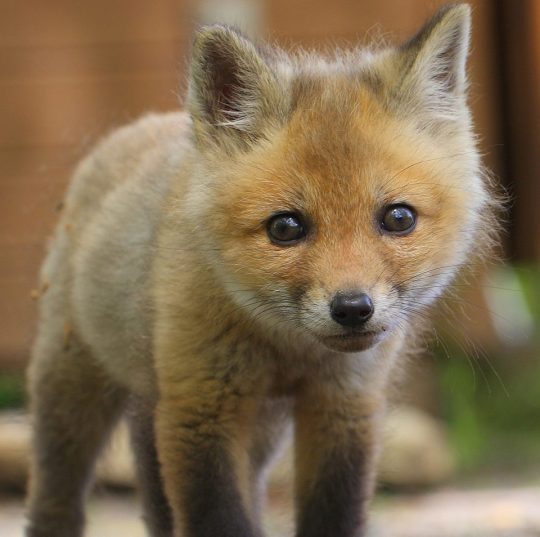
Red Fox kit - Photo by Matt Sullivan
Know Before You Go
  • The Great Swamp National Wildlife Refuge is open year-round from dawn to dusk, seven days a week. Occasionally, the refuge is closed due to special events or hazardous weather conditions (e.g. flooding/snow). Call ahead to insure they are open: 973-425-1222.
  • You should start your visit at the Helen C Fenske Visitor Center Thursday-Friday 12am-4pm or Saturday-Sunday 10am-4pm to orient yourself to the refuge. There you can learn the history and find where the wildlife hotspot of the day is. 
  • While out on the refuge, waterproof footgear or old sneakers are recommended during most seasons in the Wilderness Area. Mosquitoes, ticks, and deer flies may be numerous from May to September throughout the refuge, so insect repellent and protective clothing are advisable. Ticks can transmit Lyme disease, which has been found in the area.
Download the refuge brochure (pdf)


More information at  www.fws.gov/refuge/great_swamp

Wednesday, July 30, 2014

At Birthday #350, Some New Jersey Firsts

Great Swamp National Wildlife Refuge

New Jersey celebrates its 350th anniversary and Michele Byers did a post on New Jersey "firsts." You might know that Thomas Edison did the first phonograph, incandescent light bulb and the first motion picture projector. (The first town in the world to be lighted with overhead wires was Roselle, NJ.)

Lesser known firsts include NJ claiming the first cultivated blueberries, developed by Elizabeth White and Dr. Frederick Coville in the Burlington County Pine Barrens in 1916. They are our state fruit.

But the part that caught my eye were 4 first in the area of parks and conservation.
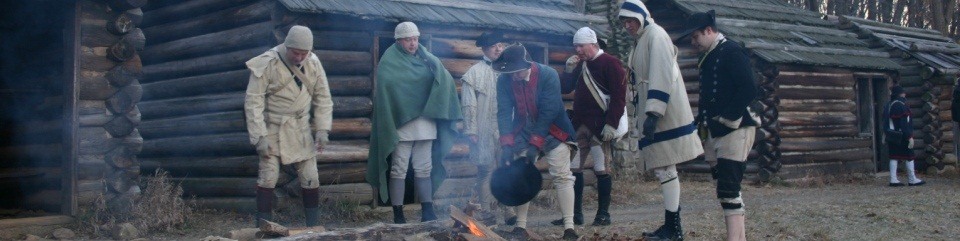
  1. The Morristown National Historic Park, where George Washington's troops spent the winter of 1779-80, is America's first historic park. 
  2. The Great Swamp National Wildlife Refuge includes the first federally-designated wilderness area east of the Mississippi. 
  3. The New Jersey Pinelands are America's first and only national reserve. 
  4. The Essex County Park System was the first in the country.

At the Morristown National Historic Park
 That's important for this first and only state where all counties are classified as metropolitan areas and we rank an unenviable first in population density in the U.S. (with an average of 1030 people per square mile).

That leads to another first, one that’s not so exciting and fortunately has not yet happened. New Jersey is on track to become the first state to reach full build-out, the point where all land is either preserved or developed. It’s crucial to keep saving parks and open spaces so when the Garden State does reach build-out, most if not all of our most critical lands are preserved rather than paved.

For more information about preserving New Jersey’s land and natural resources, visit the New Jersey Conservation Foundation website at www.njconservation.org

Saturday, September 21, 2013

Great Swamp National Wildlife Refuge Walk October 5


HIKE THE WILDERNESS OF THE GREAT SWAMP NATIONAL WILDLIFE REFUGE
 
Photo by Patrick Law
DATE: Saturday, October 5
TIME: 9 a.m. - 1 p.m.
PLACE: Great Swamp National Wildlife Refuge
 
DETAILS: Be enlightened and entertained by dueling biologists--New Jersey Conservation Foundation's biologist Dr. Emile DeVito and biologist/photographer, Blaine Rothauser--as they try to outdo each other  finding wilderness wonders! The walk will go through the restricted management area of the Great Swamp National Wildlife Refuge, an area not usually open to the public. Hikers will also be invited to explore the Fenske Visitor Center located in Basking Ridge. 
Space is limited, so sign up early! 
 
COST: $5 per adult; children and young adults under 18 are free. 
 

REGISTRATION: Advance registration required. To register online, go to https://donate.njconservation.org/2013greatswamphike

Wednesday, October 10, 2012

Great Swamp Educational Programs

The Great Swamp Watershed Association (GSWA), located in Harding Township, NJ, is the nonprofit member-supported environmental organization that monitors and protects water quality, and investigates and participates in land use issues in the watershed community, while working to strengthen environmental regulations in New Jersey.

GSWA also provides environmental education to community groups, teachers and students to help everyone understand the important role we each play in protecting our drinking water and preserving the natural beauty of our environment.
  • Seasonal environmental education programs are open to the general public. View a list of seasonal programming.
  •  Environmental science education programs designed for school classrooms—grades 3 to 12 and beyond. Read more about classroom instruction.
  • Programs For Educators include teacher training workshops focusing on state-approved core content and suitable for use in the classroom or Nature Center for teaching across curriculum. Topics include water conservation, the water cycle, biodiversity, wildlife habitats and more. Read more about teacher training workshops.

Tuesday, June 5, 2012

Programs at the Great Swamp National Wildlife Refuge


The Friends of the Great Swamp National Wildlife Refuge at the Helen C. Fenske Visitor Center in Harding Township are offering these programs.

Visitor Center
“Nature on Film, a Lunch & a Movie” will be shown at 12:30-1:30 p.m. Thursday, June 7. The film is yet to be announced. Viewers are encouraged to bring a “green bag” lunch. Beverages and dessert will be provided.

"Story Time for Children" with Pat Garvin. will take place at the Visitor Center from 1:30 to 2:30 p.m. Friday, June 8. Garvin will be telling seasonal stories for young children.

Second Sunday with Friends: A New Vision for Refuges will be held from 1:30 to 3:30 p.m. Sunday, June 10. A new vision for the National Wildlife Refuge System and the Great Swamp will be discussed.

For more information, call (973) 425–9510

http://www.greatswamp.org

Monday, November 23, 2009

Habitats and Partnerships

The NJFO’s Partners for Fish and Wildlife program recently wrote an article for the New Jersey League of Municipalities Magazine that highlights how the U.S. Fish and Wildlife Service can interact with municipalities across the State that want to create wildlife habitat.

Many of the 6,500 acres of wetlands, 3,000 miles of grasslands and other uplands, and 50 miles of riparian and in-stream habitat the Partners for Fish and Wildlife program has restored since it’s New Jersey inception in 1991 have come from partnerships with municipalities.


A good example of a successful partnership is Partners for Fish and Wildlife's "Partnership Project with NJ Audubon and Verizon" which won the Governor’s Environmental Excellence Award in 2007. That was a partnership of the USFWS's NJ Field Office’s Partners for Fish and Wildlife program, Verizon and the New Jersey Audubon Society.

The Verizon Center, located a mile upstream of the Great Swamp National Wildlife Refuge, is restoring 18 acres of uplands and 7 acres of riparian habitat. Verizon has also publicized the merits of voluntary corporate land stewardship.

Specific enhancements at the site include the removal and control of invasive vegetation; native grass and wildflower plantings; and the installation of a vernal pool, nest boxes and turtle nesting areas. These enhancements are currently providing suitable habitats for a variety of wildlife, including numerous bird and herptile species.

Verizon restored 25 acres on its property that are home to various grassland, riparian and wetland habitats. They planted over 500 native trees and shrubs on the site and plan to plant another 500 in 2008. They installed more than 10 acres of native grasses and wildflowers and removed invasive non-native vegetation on the land. They have implemented a delayed mowing schedule to promote wildlife breeding and have instituted a policy of zero chemical application on the restoration areas.

In addition they installed sand pits for turtle nesting areas, a vernal pool for amphibian breeding, installed numerous bird nesting boxes and outlined a monitoring and Stewardship Plan to track future progress on the site. A Stewardship Plan considers all aspects of resource management and documents management decisions and practices designed to maintain the land in a productive and healthy condition for present and future owners. It specifies actions that will increase the environmental and economic values of the land and the region.

The benefits extend beyond habitat restoration. The site extends along more than 3,700 feet of the Passaic River. In addition to improving water quality in the river the restored area in less than a mile upstream from a New Jersey Natural Heritage Priority Site known as the "Great Swamp Macrosite", an important area for the breeding of several threatened and endangered wetland species.

Restoring this habitat is part of Verizon's national commitment to green energy practices that include pursuing aggressive network equipment and building energy-reduction initiatives; utilizing alternative energy sources in the network, buildings and vehicle fleet; and promoting the company's technology as an alternative to travel, among other efforts.

Wednesday, September 16, 2009

Great Swamp National Wildlife Refuge

The Great Swamp National Wildlife Refuge was established in 1960 and lies 26 miles west of New York City's Times Square and 7 miles south of Morristown, New Jersey in Morris County.

This "oasis of wilderness" in the midst of urban and suburban areas provides important habitats to fish and wildlife and a unique opportunity for the public to enjoy wildlife and wilderness.

It consists of approximately 7,600 acres of swamp woodland, hardwood ridges, cattail marsh, grassland, ponds and meandering streams.


The Great Swamp is divided up into two sections, the Wilderness Area and the Management Area. No permanent structures, motorized vehicles or equipment are allowed in the Wilderness Area. The Wilderness Area serves as an outdoor laboratory and provides a more primitive outdoor experience for the general public. Hiking on almost eight and a half miles of trails is permitted. By limiting use in this sensitive area to foot travel, the wilderness experience can be preserved.

The rest of the refuge (Management Area) is intensively managed to maintain optimum habitat for a wide variety of wildlife. Water levels are manipulated in five shallow refuge impoundments to favor growth of a desirable mix of native plant communities.

These area provide habitat preferred by waterfowl, wading birds, shorebirds and other species during spring and fall migrations and the nesting season. Wood ducks and mallards are the most common waterfowl while Canada geese, black ducks, pintail, widgeon and teal are also abundant during migration. The wood duck has favorably responded to habitat protection and enhancement efforts. Artificial nesting structures are used to supplement natural nesting sites, which have declined throughout the wood duck's range.

Several hundred acres of grasslands are also maintained on the refuge by mowing on one to four year rotational cycles. Grasslands provide diverse wildlife habitats, food resources and nesting cover for a wide variety of wildlife species, including the eastern bluebird and several raptor species. Numerous research studies are conducted on the Refuge.

The Refuge has identified more than 222 species of birds according to their seasonal occurrence. Mammals found on the Refuge include the white-tailed deer, river otter, muskrat, mink, beaver, raccoon, skunk, red fox, coyote, woodchuck, gray squirrel, opossum, cottontail rabbit and the federally endangered Indiana bat. An variety of fish, reptiles, and amphibians, including the federally threatened bog turtle and the state endangered blue-spotted salamander, are also found on the Refuge.

The refuge has become a resting and feeding area for more than 244 species of birds. The refuge also provides a "home" for more than 39 species of reptiles and amphibians, 29 species of fish, 33 species of mammals and approximately 600 species of plants (including 215 species of wildflowers). Additionally, 26 of these species are listed by the State of New Jersey as being threatened or endangered, including the wood turtle, blue-spotted salamander and bog turtle (also federally threatened).

The links below are to brochures (pdf format) for the animals that occur on the Refuge.

The Refuge provides an excellent opportunity for learning about a variety of ecosystems. The Friends of Great Swamp NWR provide much of the environmental education and interpretation available at the Refuge through guided tours and a Discovery Den located at the bookstore on Pleasant Plains Road. Two separate Environmental Education Centers in the swamp provide additional education and interpretation opportunities and are located adjacent to the Refuge.

Great Swamp Outdoor Education Center
, operated by Morris County Parks Commision, is located on the eastern side of the Refuge off Southern Boulevard in Chatham Township. The Center offers a varied natural science program of classes and guided tours and provides one mile of trail and boardwalk for the public.

The Somerset Environmental Education Center is operated by the Somerset County Parks Commission. It is located on the western border of the Refuge in Lord Stirling Park. The Park has a varied program of environmental education courses, guided field trips, and 8 ½ miles of walking trail.

Tuesday, May 5, 2009

The Passaic River Watershed

The Passaic River runs almost 80 miles (129 km) through northern New Jersey.

It starts by winding its way around the swamp lowlands in and around the Great Swamp taking in through tributaries much of the surface waters of northern portion of the state. In its lower portion, it moves through some of the most urbanized and industrialized areas of the state.

The Passaic River formed as a result of drainage from the massive proglacial lake that formed in Northern New Jersey at the end of the last ice age, approximately 13,000 years ago. Glacial Lake Passaic, as we call it now, had its center in the present lowland swamps of Morris County.


The lake rose as the river was blocked, but eventually broke through at the Millington Gorge and the Paterson Falls as the glacier retreated.

Much of the lower river suffered severe pollution during the nineteenth and twentieth centuries because of the development that grew on its banks - in many cases in order to use the river as a resource or as a garbage dump.

The river's health has improved in the past 30 years. Some of that comes from the enactment of the 1972 Clean Water Act and other environmental legislation. Some improvement has come as a result of the decline of industry along the river.

The water quality is still poor. Sediment at the mouth of the river near Newark Bay still registers contamination by pollutants such as dioxin. Dioxin was produced at the Diamond Shamrock Chemical Plant in Newark as a waste product resulting from the production of the agent orange defoliation chemical used during the Vietnam War. The issue of responsibility for the cleanup of the dioxin contamination has been in the courts for decades without resolution.

The Passaic River flows close to my hometown, but even closer is the Peckman River which is one of the many small tributaries. The Peckman River originates in West Orange and flows northeasterly through Verona, Cedar Grove and Little Falls to its confluence with the Passaic River in the borough of Woodland Park (formerly West Paterson).

The New Jersey Department of Environmental Protection (NJDEP) has issued notices banning commercial fishing and advising the general public that fish caught in the tidal Passaic River (from Dunedee Dam to the mouth at Newark Bay) should not be eaten. Still, I see people fishing along the banks - particularly for catfish.

You can access the the Passaic from a number of county parks. It is pretty much free of industrialization until it reaches the Summit/Chatham border. The upper portion before Summit is far more natural in appearance. I have seen canoeists and kayakers there.

When it enters Essex County, there are some natural marsh lands and wooded areas that make it more inaccessible and somewhat protected.

The more heavily populated areas of Passaic County come next with the lower portions of the river south of Paterson being much wider but more industrialized as it flows into Newark Bay.

The Passaic River is known for chronic flooding problems during heavy rainfall or snow-melt. The worst area is where the Pompton River joins the Passaic River in Wayne, New Jersey.

Unfortunately, building has long been allowed in this flood plain. A plan has been proposed for years to build a 20 mile river flood tunnel. The tunnel would divert flood waters directly into the bay. Some riverside residents have already taken buy-outs from the federal government but many people still live within the flood plain.

The Passaic River Coalition (PRC) gives valuable assistance and stewardship for the preservation and protection of over 1,000 miles of waterways including the Passaic River. It was established in 1969.

Their goals include improvements in land-water resource management, and public health issues by working as an advisor to citizens, other environmental organizations, governments, and businesses. They gather scientific data to be used for creating wise management policies. They create maps and graphic displays that illustrate the physical, demographic, and socioeconomic characteristics of the River and its watershed for reports, open space plans, and natural resource inventories.

Their scope goes beyond the Passaic River's banks and into the larger watershed. They have met a Land Trust goal of obtaining 1000 acres by acquiring 34 properties in 6 counties (Passaic, Morris, Bergen, Essex, Sussex, and Somerset).

Protecting the watershed means protecting drinking water, preserving sensitive wildlife habitat, improving water quality, creating new open space, and promoting natural flood control management.

The PRC has been involved in the creation of new surface supply systems such as the Monksville Reservoir and the development of three Water Supply Master Plans for New Jersey. PRC has assisted in plans to restore Greenwood Lake, a primary water source for northern New Jersey and is creating the overall restoration guide for the Lake.

The next challenge is to address the 46 million gallon per day groundwater deficit in the NJ Highlands. You can join the PRC and donate to their fight.


A Great Conveniency - A Maritime History of the Passaic River,
Hackensack River, and Newark Bay


MORE INFORMATION