Showing posts with label invasive species. Show all posts

Thursday, March 12, 2026

The Invasive Northern Snakehead


It may sound like something out of science fiction: A three-foot-long fish that can breathe air, “walk” on land and survive for days out of the water, but the northern snakehead is very real. Perhaps more importantly, it’s very invasive.

You may see these kinds of headlines: These Large, Snake-Like Fish Are Invading the United States—and Authorities Want You to Kill Them. But are they in New Jersey?

Yes, the Northern Snakehead (Channa argus) is firmly established in New Jersey. They are classified by the New Jersey Department of Environmental Protection (NJDEP) as a "Potentially Dangerous Species" due to their invasive nature and the threat they pose to native aquatic ecosystems. They were first confirmed in New Jersey in 2009 and have since spread significantly.

Northern snakeheads are a predatory invasive fish originally from Asia that survive in freshwater lakes, creeks, rivers, and even muddy wetlands. They’re known for aggressive behavior, air-breathing ability, and fast spread.

They are most common in the Delaware River and its many tidal tributaries throughout South and Central Jersey. Current hotspots are the counties of Camden, Gloucester, and Burlington which have seen the highest concentrations.

They have been reported as far north as Sussex County near the New York and Pennsylvania borders. They inhabit a variety of environments, including rivers, lakes, ponds, and even stagnant, low-oxygen ditches.

The warm months (late spring – summer) are when snakeheads are most active and easier to encounter near shorelines and vegetation. They prefer shallow, warm, vegetated water with slow current — lily pads, weedbeds, and quiet backwaters are typical. They can breathe air and survive in low-oxygen water, making them adaptable to many habitats.

They eat almost anything, including native fish (like bass and perch), frogs, and even small birds, outcompeting local species for food. Snakeheads are "top-tier" predators with a "slash-and-grab" feeding style.

They are air-breathers and can survive out of water for several days in damp conditions, allowing them to migrate across land to reach new water bodies.

They spawn multiple times a year and guard their young, which leads to rapid population growth.

Snakeheads are frequently confused with the native Bowfin. You can tell the difference by the anal fin (the fin on the bottom rear): a snakehead’s anal fin is very long (nearly half its body length), while a Bowfin’s is quite short. The bowfin is native to North American freshwater systems and has a long dorsal fin only on top — unlike northern snakeheads, which have both long dorsal and long anal fins on the underside.

Important Rules for Anglers (2026 Regulations)

If you catch a Northern Snakehead in New Jersey, you must follow specific legal protocols:

  • It is strictly illegal to possess, transport, or release a live snakehead.
  • Anglers are required to destroy the fish immediately. You cannot keep them alive in a bucket or on a stringer.
  • You are allowed to keep them for food, but they must be dead before you leave the water.  
  • The NJDEP encourages reporting catches via their Aquatic Invasive Species (AIS) Reporting Form to help track their spread.


Wednesday, November 15, 2023

The Longhorn Tick in New Jersey


Female nymph and adult

In late 2017, animal health experts in New Jersey identified a Haemaphysalis longicornis tick, commonly known as the “longhorned tick” or “bush tick,” on a sheep in Hunterdon County. Recently, the tick has also been found in Union and Middlesex Counties. 

As of April 13, 2023, longhorned ticks have been found in Arkansas, Connecticut, Delaware, Georgia, Indiana, Kentucky, Maryland, Massachusetts, Missouri, New Jersey, New York, nNorth Carolina, Ohio, Pennsylvania, Rhode Island, South Carolina, Tennessee, Virginia, and West Virginia. 

The longhorned tick is not native to the United States. However, it is a serious threat to livestock in Australia, New Zealand and countries of eastern Asia.

Compared with well-known native ticks (such as the blacklegged tick, lone star tick and American dog tick), the Asian longhorned tick appears to be less attracted to human skin 

The longhorned tick is not native to the United States. However, it is a serious threat to livestock in Australia, New Zealand and countries of eastern Asia.

Finding the longhorned tick in New Jersey in 2017 was noteworthy because it was the first time this tick was found in the United States. Animal health authorities are still investigating exactly how the longhorned tick entered the U.S. Some possible ways it may have entered include entering on domestic pets (e.g. dogs), horses, livestock or humans. 

The reason this tick is a concern is because it may pose a risk to New Jersey livestock. It is a serious pest that can attach itself to various warm-blooded animals to feed. If too many ticks attach to one animal, the loss of blood can kill the animal. Ticks can also spread a variety of diseases. The property where the tick was found and animals living there were treated to eliminate the tick. The state will continue to monitor wildlife, livestock and horses in the local area for these ticks.

If you find a suspected longhorn tick on you, your pets, horses, livestock or hunter-harvested deer, please collect the tick for animal health officials to identify. Place the tick in a snack or sandwich size Ziploc baggie along with a small stamp size piece of moistened tissue paper and seal it. Do NOT use tape to secure the tick.

Call the New Jersey Tick Line at: 1-833-NEW-TICK (833-639-8425)

Sources
https://www.nj.gov/agriculture/divisions/ah/pdf/TickInfosheet.pdf   
https://www.cdc.gov/ticks/longhorned-tick/index.html

Monday, April 11, 2022

Northern Nutria?


Nutria may look a bit like beavers with long, thin tails, but they are quite different. This rodent that can weigh 12-20 pounds is one of the world's worst invasive species. Native to Brazil, Paraguay and Argentina, they began showing up in the American south decades ago. They were once thought to be non-existent in the north, especially in New Jersey, and that was fine with state biologists.

Unfortunately, there have been reports of them in NJ. They were trapped in the salt marshes of the Delaware Bay back in the early 1980s. An NJ Fish and Wildlife biologist reported seeing a nutria swimming in Salem County's Lower Alloways Creek Township in late 2007.

Nutria are primarily nocturnal foragers and they damage vegetation and crops that are used by wildlife and humans. They also destroy the banks of ditches, lakes, and other water bodies. They do their greatest damage to the marshes and wetlands they inhabit eating the plants that hold wetland soil together. That vegetation loss causes native animals and fish to lose their habitats.

Nutria can also be aggressive to pets and humans if they feel trapped.

Recently, a reader of this blog sent me a photo and asked if it was possible that it was a nutria. He lives in Lafayette (Sussex County) and spotted what he at first thought was a beaver, but it had the wrong kind of tail. I have not heard of any nutria sightings in northern New Jersey, so that is not a good report if accurate.

Their coloration can vary from light to dark (as shown in this post) and I have seen nutria online that look black and sometimes even with white patches. They do resemble beaver, fishers and muskrats , especially when seen in the water.

What is it?

NJ wildlife officials are asking people who spot nutrias to report them so they can determine whether they're colonizing in our state. You can report spotting a nutria (or fisher or bobcat) using the form at http://www.state.nj.us/dep/fgw/pdf/bobcat-fisher-nutria_sighting.pdf

Nutria (Myocastor coypus) was first introduced to the United States in 1899 in California where for about 40 years there were attempts to breed them for their fur. The fur market crashed after WWII and many were simply released. Though they thrive in temperate areas, the milder NJ winters have allowed them to stay and breed. 

Image: Manfred Antranias Zimmer from Pixabay


Thursday, August 6, 2020

New Jersey: Have You Seen Spotted Lanternflies?

A side-top view of an adult spotted lanternfly (Lycorma delicatula)
Image by Walthery - Own work, CC BY-SA 4.0

Usually, I am writing here about things that are endangered or threatened in New Jersey, but thi spost is about a species we would like to see become extinct.

The spotted lanternfly (Lycorma delicatula) is a planthopper that is indigenous to parts of China, India, Vietnam, and eastern Asia. Although it has two pairs of wings, it jumps more than it flies.

In its native habitat it is kept in check by natural predators or pathogens but it was accidentally introduced and was first recorded in the United States in September 2014. By 2018 it was considered an invasive species in eastern Pennsylvania, southwestern New Jersey, northern Delaware, northern Virginia, and eastern Maryland.

What should you do if you spot one in New Jersey? 

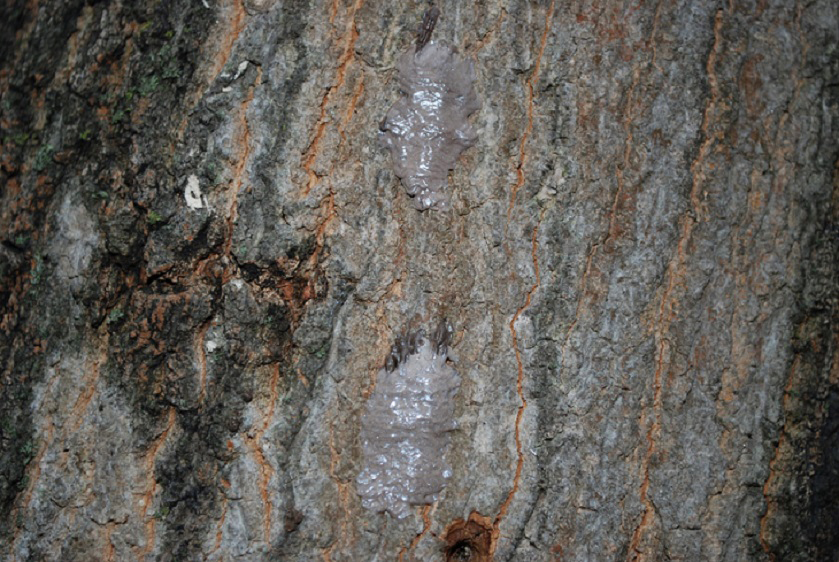
Egg masses

If you see egg masses (pictured above), scrape them off, double bag them and throw them away. You can also place the eggs into alcohol, bleach or hand sanitizer to kill them.

Watch an instructional video here: https://www.youtube.com/watch?v=WoFp_MbDiE8

Kill and collect a specimen: Specimens of any life stage can be turned in to the New Jersey Department of Agriculture’s lab for verification.

Take a picture: With your GPS function turned on your smartphone or a camera with GPS, take a photograph of ANY life stage (including egg masses) and
s
ubmit picture to: SLF-plantindustry@ag.nj.gov

Report a site: If you can’t take a specimen or photograph, call New Jersey Spotted Lanternfly Hotline at 1-833-223- 2840 (BADBUG0) and leave a message detailing your sighting and contact information.

• Spotted Lanternfly Reporting Guidelines

• Spotted Lanternfly Industry Guidelines

Tuesday, July 24, 2018

Two Warnings: NJ Waterways and a Noxious Plant

The Department of Environmental Protection, in partnership with the New Jersey Department of Health, has updated recreational fish advisories for tributaries, lakes and ponds in the lower Delaware River watershed as part of the state’s ongoing fish-safety monitoring program.

The DEP has also expanded testing of fish in selected water bodies in this and other regions of the state to include several chemicals of emerging concern known as perfluoroalkyl and polyfluoroalkyl substances, known as PFAS. These analyses have resulted in the DEP’s first consumption advisories for these chemicals.

The DEP tested 11 fish species in 14 water bodies in Burlington, Camden, Cumberland, Gloucester, Ocean and Salem counties for PCBs, mercury and pesticides. The testing resulted in less restrictive advisories for 36 species than had been in place, while 24 saw no change. Ten advisories are now more restrictive.

Data also was collected for species not tested in previous years as well as at one new sample location. The new data resulted in 30 new consumption advisories for the lower Delaware River watershed region.

Due to growing concerns over the presence of PFAS in the environment, the DEP also sampled water, sediment and fish tissue samples from a limited number of water bodies in the lower Delaware River watershed and other regions of the state.

Water bodies were selected based on their proximity to potential sources of PFAS and their likelihood of being used for recreational and fishing purposes. PFAS were detected at varying levels and combinations in all of the water bodies tested.

PFAS – which include compounds more commonly known as PFOA, PFOS and PFNA – were once widely used in a variety of applications, including non-stick cookware, stain-resistant clothing and fabrics, food packaging, and in firefighting foams. These chemicals are persistent in the environment and can accumulate in people exposed to them.

Water bodies tested included the Passaic River in Passaic County, the Raritan River in Bergen and Passaic counties, the Metedeconk River in Ocean County, several lakes adjacent to Joint Base McGuire-Dix-Lakehurst in Burlington and Ocean counties, the North Branch of Rancocas Creek in Burlington County, Woodbury Creek in Gloucester County, Fenwick Creek in Salem County and the Cohansey River in Cumberland County.

All states have fish consumption advisories. Many of the fish on New Jersey’s advisory lists are typically caught and released without being consumed, but some people rely on some of the species on the advisory lists as a food source.

“Fishing provides enjoyable and relaxing recreation, and we know many people enjoy cooking and eating their own catch,” New Jersey Health Commissioner Dr. Shereef Elnahal said. “However, certain fish may contain contaminants and pose serious health risks like cancer and nervous system issues. It is a good idea to follow these advisories when consuming recreationally caught fish and crabs, particularly if you eat them often.”


The DEP and Department of Health advise all anglers to get the latest advisories for the specific water body they fish by visiting www.fishsmarteatsmartnj.org

As part of the lower Delaware River watershed update, fish were sampled from the following bodies of water: Big Timber Creek, along the border of Camden and Gloucester counties; Cooper River Lake, Kirkwood Lake, Newton Lake and Pennsauken Creek in Camden County; Mantua Creek, Stewart Lake and Wilson Lake in Gloucester County; DOD Ponds in Salem County; Rancocas Creek and Strawbridge Lake in Burlington County; the Maurice River and Union Lake in Cumberland County; and Prospertown Lake in Ocean County.

The DEP tested fish tissue for mercury, organochlorinated pesticides and PCBs, with the fish species that were sampled varying depending on location. Fish species sampled were largemouth bass, bluegill sunfish, common carp, white perch, channel catfish, pumpkinseed, striped bass, chain pickerel, yellow bullhead, brown bullhead and white catfish.

As is typical, the latest sampling found the highest mercury concentrations in species at the top of the food chain, such as chain pickerel and largemouth bass, while the highest PCB concentrations were found in bottom feeders, such as channel catfish and common carp. PCBs were generally detected at relatively low levels. Pesticides were found at only very low levels.

While water quality in New Jersey continues to improve, past pollution can persist for many years in sediments and continue to accumulate in fish at or near the top of the aquatic food chain.

Fish are an excellent source of protein, minerals and vitamins, and help maintain a healthy, well-balanced diet. The American Heart Association recommends that people eat fish regularly. Fish are also one of the few foods that are rich in omega-3 fatty acids needed for proper development of the brain and nervous system in the fetus and infants, and may reduce the risk of heart attack.

But due to past use of PCBs and pesticides as well as deposition of mercury from various sources, some recreationally caught fish can be unhealthy for children or some adults with certain health concerns.

The DEP and Department of Health have been issuing fish consumption advisories since 1983, updating them on a regular basis. Advisories include statewide, regional and water body specific advice as well as a general advisory for freshwater fish. These advisories allow the public to make informed choices about the fish they catch and eat.

The state’s ongoing public outreach activities include responding to online and telephone inquiries from the public, as well as distribution of outreach materials to all New Jersey Women, Infants and Children centers in English and Spanish. Information is also sent to recreational anglers, local and county health departments, and other stakeholders.

For much of the population, advisories can range from no restrictions to a recommendation to limit consumption to one meal per week. For the high-risk population – which includes pregnant women, women planning to become pregnant, nursing mothers, infants and children – advisories can range from no more than one meal per week to do not eat.

If you choose to eat those species under advisories, there are steps you can take to reduce your exposure.

Proper cleaning and cooking techniques, which remove some of the fat from the fish, can significantly reduce levels of PCBs and organic chemicals. However, these techniques will not reduce or remove unsafe levels of mercury from fish.

For all freshwater fish and waters not covered by consumption advisories, consumers should follow the DEP's general freshwater advisories, which recommend eating no more than one meal per week for the general population and no more than one meal a month for high-risk individuals.

For the DEP’s PFAS study report, visit www.nj.gov/dep/dsr/


From a brochure from the NJ Department of Agriculture on the highly toxic plant known as hogweed, which has been recently documented in our state.

Please be wary of this harmful plant while outdoors, as the sap can cause severe burns when present on the skin and exposed to sunlight. It can also cause blindness should sap get into the eyes.

Unfortunately, there are several plant species that look very similar to hogweed, with cow parsnip being the closest to mimic it. Therefore it is very important to become familiar with the appearance of hogweed. In addition, should you see this plant growing anywhere, please contact Chief Mark Meyer of the NJ Dept. of Agriculture's Bureau of Biological Pest Control at 609-203-9478.

Tuesday, July 3, 2018

The Millstone River Fishery

American shad
Recent electrofishing surveys have given us more information on the Millstone River Fishery. http://www.njfishandwildlife.com/artmillstone.htm In an article by Shawn Crouse, Principal Fisheries Biologist for the Bureau of Freshwater Fisheries, we learn that the American Shad have been on the move in NJ.

Efforts are being made to restore migratory routes of anadromous fish species (those which live in the ocean but spawn in fresh water), including river herring and American Shad.

Several dam removals have taken place along the Raritan, Musconetcong, and Millstone Rivers in recent years, with more on the way, including those along the Paulins Kill (i.e. Columbia Lake).

Shad fishing on the Delaware River has been very good for several spring seasons. Fishing for American Shad is prohibited on all other New Jersey waters, as populations recover.

To restore American Shad and other migratory fishes by reconnecting historic migratory pathways, the Millstone River's Weston Causeway Dam was removed during the summer of 2017.

The Weston Causeway Dam, located just downstream of the Wilhousky Street bridge in Manville, was the first impediment to fish passage on the Millstone River. This 133-foot long and five-foot high dam was originally built to provide power at the Weston Mill. The site included a gristmill, sawmill, the dam, and associated waterpower features. The dam had no current purpose; the mill buildings were claimed by arson in July, 1983. In recent years, the dam had partially failed and was removed in August of 2017 as part of a Natural Resource Damage Assessment settlement agreement.

The Division of Fish and Wildlife (with assistance from the US Fish and Wildlife Service and the Watershed Institute (formerly Stonybrook-Millstone Watershed Association)) are committed to monitor changes to the fish assemblages above and below the dam, before and after dam removal.

The 38-mile-long Millstone River, a tributary of the Raritan River, has a diversity with more than fifty species found in recent years. Migratory species, including American Shad, Gizzard Shad, Blueback Herring, Striped Bass, and American Eel, have been documented passing the Island Farm Weir fish ladder on the Raritan River near its confluence with the Millstone River, approximately 1.5 miles downstream of the former Weston Causeway Dam.

The Millstone River offers an assortment of resident gamefish including both Largemouth and Smallmouth Bass, an abundance of panfish, and trophy-sized carp. The river is stocked annually with Northern Pike, however, those who fish it benefit from some of other nearby waterways stocked by the Hackettstown State Fish Hatchery. Channel Catfish are plentiful in the Millstone, which are presumably transplants from the neighboring annually-stocked Delaware & Raritan (D&R) Canal. Muskies are occasionally captured, possibly originating from the D&R Canal or Carnegie Lake stockings. Transient Walleye, which are not stocked in the watershed, are likely making their way from the Delaware River via the D&R Canal. In fact, sizable Walleye (up to 6 pounds) were found in most surveys in the lower Millstone River. Stocked Rainbow Trout appear as well, coming from any number of trout stocked waters in the watershed. A rigorous fish stocking program is not necessary, as a respectable fishery currently exists, in fact additional stocking of top predators may be counterproductive to the recovering American Shad population.

In the lower reaches, the most numerous species captured were American Eel, Common Carp, Redbreast Sunfish, Bluegills, and Spottail Shiner, with moderate numbers of Largemouth and Smallmouth Bass and Channel Catfish. The surveys near Blackwells Mills and Griggstown, where the river is noticeably smaller in every measurable way, yielded large numbers of American Eel, Redbreast Sunfish, Bluegill, and native forage species such as Spottail Shiner and Tessellated Darter.

Less commonly known species such as the Comely Shiner and Shield Darter (potential for listing as a Species of Special Concern) are also found in the Millstone, along with the Bridle Shiner in its tributaries, a potential State Endangered Species.

Other fishes of conservation interest, and more often found in the Pinelands, are found in the southern-most headwaters including the beautiful Bluespotted Sunfish, Mud Sunfish (potential Species of Special Concern), Swamp Darter, Tadpole Madtom, and the Pirate Perch.

Emily Powers, Hourly Fisheries Technician and Cathy Marion, USFWS biologist, despite their smiles, are holding an invasive Grass Carp that measured 46 inches and weighed almost 52 pounds. The species is fairly common in the lower Millstone River.
This all sounds positive, but while the removal of dams is considered an environmental win, negative impacts also may occur. This action also can expand the range of several invasive species including Grass Carp, Flathead Catfish, Green Sunfish, and Oriental Weatherfish. Other non-desirable fishes, such as Mosquitofish and Common Carp, which have been found in the lower Millstone River, may also extend their range upstream. By rule, anglers are actually required to humanely destroy species regulated as "Potentially Dangerous Fish."

Monday, January 12, 2015

Curbing Invasive Species by Eating Them


Following the traditions of her Chinese and Japanese ancestors, Tama Matsuoka Wong learned how to forage wild plants for food. She was surprised to learn how many plants in New Jersey's meadows are delicious.

They can also be harvested without limit because they're invasive. How to curb invasive species? Eat them! She teams up with chef Mark Drabich on some gourmet recipes.

Thursday, July 7, 2011

The Fight Against Invasive Species


The IUCN recently posted an article about "invasive aliens."  No, these are not the type found in summer movies like Super 8. These are the species - animal and plant - that invade habitats where they do not belong.

Biodiversity is being lost at an unprecedented rate, with a whole host of factors contributing to the disastrous declines. Habitat destruction is well-documented as being one of the leading causes of species extinctions, but invasive alien species are also to blame. But what exactly is an invasive species? Invasive species are those organisms which have been introduced by man, either accidentally or on purpose, to areas in which they are not naturally found, and have thrived to the extent that they have taken over their new environment.

It is important, however, to make the distinction between these species and ‘non-native’ species. Plenty of species are introduced to areas outside of their natural range, and are hence non-native, but not all of these will become invasive. Many will not be able to adapt to the new environment at all, and may eventually die off. Other non-native species cope well in their new surroundings without ousting native species from the ecosystem, co-existing without competition. An ecosystem can support this change as its original components and key players are still there. The non-native species may itself prove beneficial to human wellbeing and in some cases may become part of the landscape, as in the case of the Mediterranean Cypress (Cupressus sempervirens) in Tuscany or the Common Pheasant (Phasianus colchicus) in many areas of North America and Europe. What causes a species to be labelled as invasive rather than simply non-native is its ability to out-compete native species, impacting on the biological diversity of the region and even on the livelihoods of human communities.

Stink Bug  via http://media.nj.com/hunterdonnews_impact/

Invasive species in New Jersey include foreign bugs, plants, animals and aquatic creatures. Invasive species are introduced species that can thrive in areas beyond their natural range. They are characteristically very adaptable, aggressive, and have a high reproductive capacity. Their vigor combined with a lack of natural enemies often leads to outbreak populations that threaten and endanger native species.

For example, the East Asian stink bug is in NJ now and does literally stink.

The European green crab and the Asian Shore Crab threaten our native acquatic populations.

Flathead Catfish caught in the Delaware River near Lambertville
blogs.courierpostonline.com
The Flathead Catfish which is normally found in the Mississippi basin, has been found in NJ in places like the Delaware and Raritan Canal.


Giant Hogweed flower head
The Giant Hogweed sounds like something from science-fiction. This species that can grow up to 20 feet and it produces sap that cause blisters and severe burns that leave scars on humans.

Last fall, the first North American instance of invasive Chinese pond mussel was confirmed by New Jersey state biologists in Hunterdon County after DNA testing.

The USDA's website offers state lists and news. For NJ information, see invasivespeciesinfo.gov/unitedstates/nj.shtml

Further Reading

Wednesday, November 10, 2010

Invasive Species Comment

I received a private email comment (I wish all commenters used the comment box below each blog post...) on my recent story about invasive species in NJ.

I can't believe you praised that article - it was one of the most idiotic, ill-informed pieces I have ever read! PS: feral cats aren't the problem...plus they didn't mention mice & rats. So if we kill all the ferals, we'll be overrun by rodents. If you were genuinely worried about Endangered NJ, you'd concentrate on humans as the #1 invasive species here (specifically developers).
My response: I thought the Star-Ledger article was well done. The information was accurate and succinct - not a science paper, but for mainstream readers. It covered a wide variety of species. I recommend it.

I think the commenter is definitely a cat person. She locked onto one item - feral cats - in an article that covered much more. Those cats who have "gone wild" do threaten many birds and especially endangered and threatened ones that are beachnesters.

She's right that habitat loss by human intervention is a bigger problem. But humans in NJ are a very naturally occurring species.


This has been well documented. You can read a report online at http://www.abcbirds.org/newsandreports/NFWF.pdf that includes a five-state review of New York, New Jersey, Florida, California, and Hawaii.

Domestic cats are considered primarily responsible for the extinction of 33 bird species since the 1600s. Many managed cat colonies occur in public parks and beaches, where they pose a significant threat to wildlife and human health.

Since 1995, the City of Cape May, NJ has sponsored a program for people who register their cat colonies with the City’s Animal Control Department. There are currently 12 registered feral cat caretakers in Cape May. This program has been widely cited as a model for other New Jersey coastal communities to use to control their stray and feral cat populations.

The commenter had an emotional response to the article. I understand that. I understand it when people in NJ react emotionally to controlled hunts to reduce deer population. My own town had a good number of "Stop the deer slaughter" signs on lawns earlier this year, and I'm sure they will be back again soon.

People change and destroy habitats. We have a responsibility to correct that when we can and manage species when we can't.

We created the feral cat population. It's not a naturally occurring "species." As with other species that become invasive, we need to deal with it. Letting invasive species take their "natural" course is actually quite unnatural. They were not meant to be here and we need to protect those species that are natural to the area.

Photo via http://www.petside.com/petsideblog/

Monday, November 1, 2010

Garden State Invasions

There was a good feature article this past Sunday in The Star Ledger on invasive species of foreign bugs, plants, animals and aquatic creatures that are invading New Jersey.

Invasive species are introduced species that can thrive in areas beyond their natural range. They are characteristically adaptable, aggressive, and have a high reproductive capacity. Their vigor combined with a lack of natural enemies often leads to outbreak populations that threaten and endanger native species.

Did you know that NJ has a problem with feral cats and feral pigs?

Stink Bug  via http://media.nj.com/hunterdonnews_impact/
The East Asian stink bug is hitting the Garden State hard. And, yes, it does stink. (Quick! Make your own trap!)

Both the European green crab and the Asian Shore Crab are some of the aquatic creatures threatening our native populations.

Flathead Catfish caught in the Delaware River near Lambertville blogs.courierpostonline.com
The Flathead Catfish is normally found in the Mississippi basin, but has been found in NJ in places like the Delaware and Raritan Canal.

It might be exciting to think about catching one of these - they grow up to 100 pounds - but they can really do damage to the native populations of striped bass, eels, sturgeon and shad that they feed upon.

Giant Hogweed flower head
Giant Hogweed, which sounds like something from a sci-fi story, is a real species that can grow up to 20 feet.

It produces sap that cause blisters and severe burns that leave scars on humans.

And there is the carpet-like algae that has been seen on the Delaware River in 2008. It's probably a form of didymo, but has been given the disgustingly common name of "rock snot."


The Ledger article was written by Brian T. Murray who often writes about environmental issues in our state - from the fall season deer and car collisions, to invasive freshwater mussels discovered in Hunterdon County, and the way environmental issue mix with politics and business, as with windmill farms in NJ.


Further Reading

Tuesday, June 30, 2009

Invasive Flathead Catfish Found in NJ

Flathead Catfish
Pylodictus olivaris
Photo: Eric Engbretson, DOI, Fish and Wildlife Service, Invasive.org

The NJ DEP Division of Fish and Wildlife has verified a 5.5 pound, 20-inch Flathead Catfish was caught in the Delaware River at the Fireman’s Hole, Lambertville, on June 10, 2009. This is the third confirmed catch in New Jersey.

The first of these three Delaware River Flathead catfish was caught in 1999. It is believed that the fish originated from a reproducing population in the Schuylkill River in Pennsylvania.

Flathead catfish are native to a broad area west of the Appalachian Mountains encompassing the Mississippi, Missouri and Ohio River basins. They are an extremely predaceous catfish, reproducing and dispersing rapidly in river systems. Flathead catfish have been documented to eat substantial numbers of American shad during their spawning run. In the southeastern United States, the U.S. Fish and Wildlife Service has listed it as its highest priority among invasive animal species.

Flatheads can grow to a large size, and in warmer climates 90 to 100 pound fish have been documented. The body is yellowish brown to dark brown with black or brown mottling on lighter brown sides. It has a broadly flattened head and a tail that is only slightly indented, appearing more rounded or square. The key characteristic that helps anglers distinguish the flathead catfish from other catfish is that the lower jaw of the Flathead catfish projects past the upper jaw.

Anglers that catch what they think is a Flathead catfish are asked not to release it back into the water. A photograph of the fish is requested to confirm identification.

Notify the Division's Bureau of Freshwater Fisheries at:

Lebanon Field Office
1255 County Route 629
Lebanon, NJ 08833
908-236-2118 E-mail: mark.boriek@earthlink.net