Showing posts with label dams. Show all posts

Monday, May 16, 2022

Columbia Dam Removal Project Completed


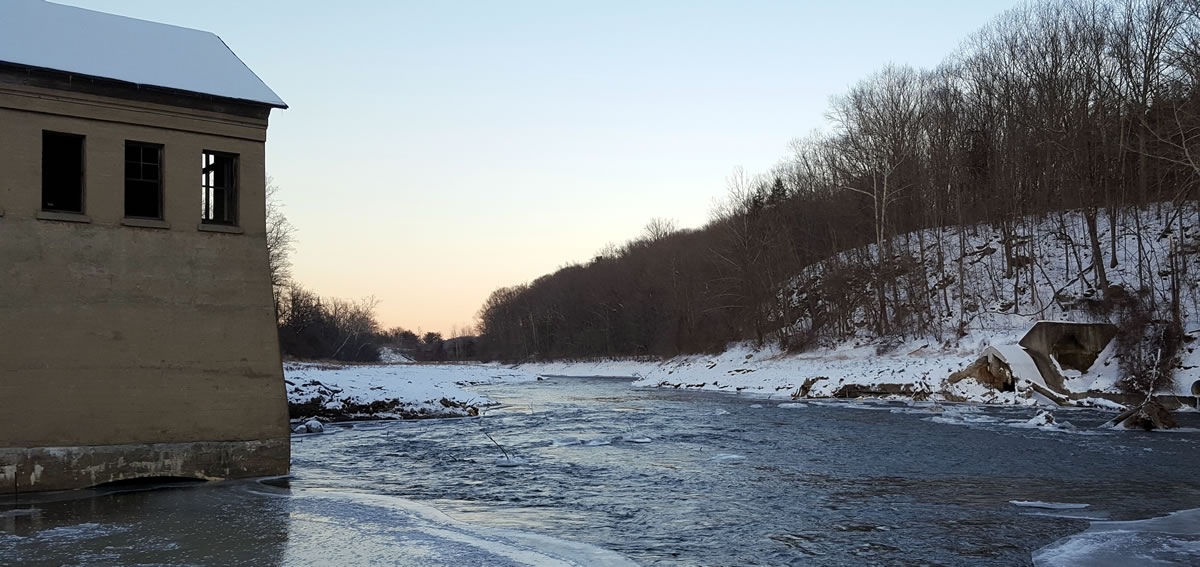
Dam site -Winter 2019

The Columbia dam removal project which began in 2018 is complete and the project area is again open for recreation following improvements to the area. 10 miles of river were reconnected, two dams and a powerhouse removed, and 1.5 miles of stream habitat were restored as part of the project.

The Columbia Dam was an 18-foot high, 300-foot long barrier that has for more than a century degraded water quality and blocked fish passage in the Paulins Kill, the third-largest New Jersey tributary to the Delaware River. 

NJDEP Fish and Wildlife partnered with The Nature Conservancy, US Fish and Wildlife Service, NRCS, American Rivers, National Fish and Wildlife Foundation, NJ Corporate Wetlands Restoration Partnership, and Toms of Maine. NJDEP’s Office of Natural Resource Restoration funded a significant portion of the project.

We have previously reported on other topics related to dam removals and habitat, including that shad were found in the Paulins Kill.

Read an article on the project from The Nature Conservancy


Friday, August 2, 2019

Shad Found in Paulins Kill Upstream of Former Dam Site

NJ Division of Environmental Protection biologists have officially documented American Shad in the Paulins Kill upstream of the former Columbia Lake dam site.

The dam was removed this past winter to restore this historic spawning pathway, as it had been blocking migration in New Jersey's third-largest tributary to the Delaware River for more than 110 years.

While photos from anglers have confirmed the presence of American Shad in the Paulins Kill earlier this spring, Bureau of Freshwater Fisheries biologists have now officially documented this species in the Paulins Kill upstream of the dam site. Shad, as with others, such as salmon, are anadromous, meaning that they migrate up rivers from the sea to spawn.

The dam, owned by the Division of Fish and Wildlife since the 1950s, was 18-feet high making it the largest removal to date in New Jersey. The removal was accomplished through a diverse partnership of state and federal governments, and non-governmental organizations with a majority of funding for the removal provided by DEP's Office of Natural Resource Restoration with monies from natural resource damages. The Nature Conservancy of New Jersey (TNCNJ) provided project management and oversight over the multi-year project in coordination with American Rivers.

Fisheries Biologist Ross Shramko holds one of the American Shad captured and released while electrofishing the Paulins Kill River in Blairstown. in June 2019.
The Nature Conservancy of NJ also provided significant funding through private donations, and grants from:
US Fish and Wildlife Service
USDA Natural Resources Conservation Service
Corporate Wetlands Restoration Partnership
National Fish and Wildlife Foundation
Atlantic Coastal Fish Habitat Partnership
Delaware Watershed Conservation Fund
Leavens Foundation and
Tom's of Maine.

The USFWS has provided support throughout various phases of the project including the design of critical fish passage structures through the I-80 bridge which traverses the Columbia Wildlife Management Area.

The project is ongoing, with stabilization of key areas along the newly formed stream channel underway, and removal of the powerhouse to begin in upcoming months. The Division's fisheries staff will continue to monitor the recovery of American Shad in the river and will conduct additional sampling this fall to confirm if they have successfully spawned in the river.

Anglers are reminded while American Shad may be targeted in the Delaware River mainstem, they cannot be targeted in other freshwaters of the state. Anglers who see or accidentally catch an American Shad while fishing for other species are encouraged to report their sightings to the Division at NJFWfish@dep.nj.gov or 908-236-2118. Please include the date of sighting, location, any photos, and your contact info.

SOURCES
www.nj.gov/dep/fgw/news/
www.nj.gov/dep/fgw/columbiadam_project.htm

Tuesday, July 3, 2018

The Millstone River Fishery

American shad
Recent electrofishing surveys have given us more information on the Millstone River Fishery. http://www.njfishandwildlife.com/artmillstone.htm In an article by Shawn Crouse, Principal Fisheries Biologist for the Bureau of Freshwater Fisheries, we learn that the American Shad have been on the move in NJ.

Efforts are being made to restore migratory routes of anadromous fish species (those which live in the ocean but spawn in fresh water), including river herring and American Shad.

Several dam removals have taken place along the Raritan, Musconetcong, and Millstone Rivers in recent years, with more on the way, including those along the Paulins Kill (i.e. Columbia Lake).

Shad fishing on the Delaware River has been very good for several spring seasons. Fishing for American Shad is prohibited on all other New Jersey waters, as populations recover.

To restore American Shad and other migratory fishes by reconnecting historic migratory pathways, the Millstone River's Weston Causeway Dam was removed during the summer of 2017.

The Weston Causeway Dam, located just downstream of the Wilhousky Street bridge in Manville, was the first impediment to fish passage on the Millstone River. This 133-foot long and five-foot high dam was originally built to provide power at the Weston Mill. The site included a gristmill, sawmill, the dam, and associated waterpower features. The dam had no current purpose; the mill buildings were claimed by arson in July, 1983. In recent years, the dam had partially failed and was removed in August of 2017 as part of a Natural Resource Damage Assessment settlement agreement.

The Division of Fish and Wildlife (with assistance from the US Fish and Wildlife Service and the Watershed Institute (formerly Stonybrook-Millstone Watershed Association)) are committed to monitor changes to the fish assemblages above and below the dam, before and after dam removal.

The 38-mile-long Millstone River, a tributary of the Raritan River, has a diversity with more than fifty species found in recent years. Migratory species, including American Shad, Gizzard Shad, Blueback Herring, Striped Bass, and American Eel, have been documented passing the Island Farm Weir fish ladder on the Raritan River near its confluence with the Millstone River, approximately 1.5 miles downstream of the former Weston Causeway Dam.

The Millstone River offers an assortment of resident gamefish including both Largemouth and Smallmouth Bass, an abundance of panfish, and trophy-sized carp. The river is stocked annually with Northern Pike, however, those who fish it benefit from some of other nearby waterways stocked by the Hackettstown State Fish Hatchery. Channel Catfish are plentiful in the Millstone, which are presumably transplants from the neighboring annually-stocked Delaware & Raritan (D&R) Canal. Muskies are occasionally captured, possibly originating from the D&R Canal or Carnegie Lake stockings. Transient Walleye, which are not stocked in the watershed, are likely making their way from the Delaware River via the D&R Canal. In fact, sizable Walleye (up to 6 pounds) were found in most surveys in the lower Millstone River. Stocked Rainbow Trout appear as well, coming from any number of trout stocked waters in the watershed. A rigorous fish stocking program is not necessary, as a respectable fishery currently exists, in fact additional stocking of top predators may be counterproductive to the recovering American Shad population.

In the lower reaches, the most numerous species captured were American Eel, Common Carp, Redbreast Sunfish, Bluegills, and Spottail Shiner, with moderate numbers of Largemouth and Smallmouth Bass and Channel Catfish. The surveys near Blackwells Mills and Griggstown, where the river is noticeably smaller in every measurable way, yielded large numbers of American Eel, Redbreast Sunfish, Bluegill, and native forage species such as Spottail Shiner and Tessellated Darter.

Less commonly known species such as the Comely Shiner and Shield Darter (potential for listing as a Species of Special Concern) are also found in the Millstone, along with the Bridle Shiner in its tributaries, a potential State Endangered Species.

Other fishes of conservation interest, and more often found in the Pinelands, are found in the southern-most headwaters including the beautiful Bluespotted Sunfish, Mud Sunfish (potential Species of Special Concern), Swamp Darter, Tadpole Madtom, and the Pirate Perch.

Emily Powers, Hourly Fisheries Technician and Cathy Marion, USFWS biologist, despite their smiles, are holding an invasive Grass Carp that measured 46 inches and weighed almost 52 pounds. The species is fairly common in the lower Millstone River.
This all sounds positive, but while the removal of dams is considered an environmental win, negative impacts also may occur. This action also can expand the range of several invasive species including Grass Carp, Flathead Catfish, Green Sunfish, and Oriental Weatherfish. Other non-desirable fishes, such as Mosquitofish and Common Carp, which have been found in the lower Millstone River, may also extend their range upstream. By rule, anglers are actually required to humanely destroy species regulated as "Potentially Dangerous Fish."
Wednesday, July 24, 2013

Removal of Third Dam on Raritan River Will Aid Fish Spawning and Migration

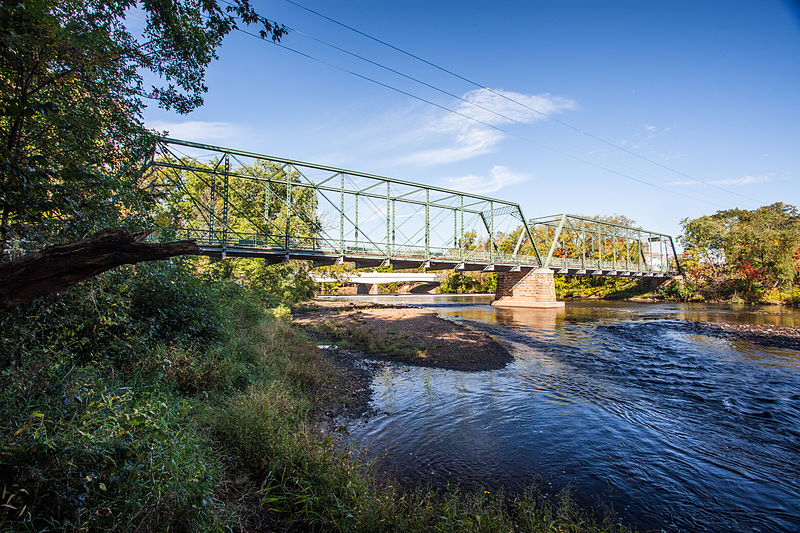
Nevius Street Raritan Bridge

Department of Environmental Protection (DEP) Commissioner Bob Martin announced the start of the removal of a third dam from the Raritan River in Somerset County that will further open a 10-mile stretch of the middle and upper portions of the river to fish spawning and migration and also allow more recreational opportunities.

Removal of the Nevius Street Dam in Raritan Borough is the third and final dam elimination project on the Raritan River over the past three years that is financed by a landmark natural resource damages settlement secured by the DEP in 2010 with El Paso Corporation, which is now Kinder Morgan. This restoration project is being implemented as compensation to the public for harm to natural resources caused by past pollution at a refinery that was operated by or affiliated with El Paso.

In addition to the dam removals, the DEP received nearly $160,000 from Kinder Morgan for herring research on the Delaware River as part of the settlement.

“This is another example of the Christie Administration’s commitment to improved water quality and enhanced recreational opportunities in our state,’’ said Commissioner Martin. “This project makes excellent use of pollution settlement dollars to provide a major environmental improvement on the Raritan River. Also, residents and sportsmen in the region will enjoy the recreational benefits of this dam removal for generations to come.’’

“The significant ecological benefits of removing this dam are consistent with the efforts of Duke Farms to be a model of stewardship, and we are delighted to see the progress which has been made to enhance the Raritan as the true queen of New Jersey rivers,’’ added Michael Catania, Executive Director of Duke Farms, which owns the dam.

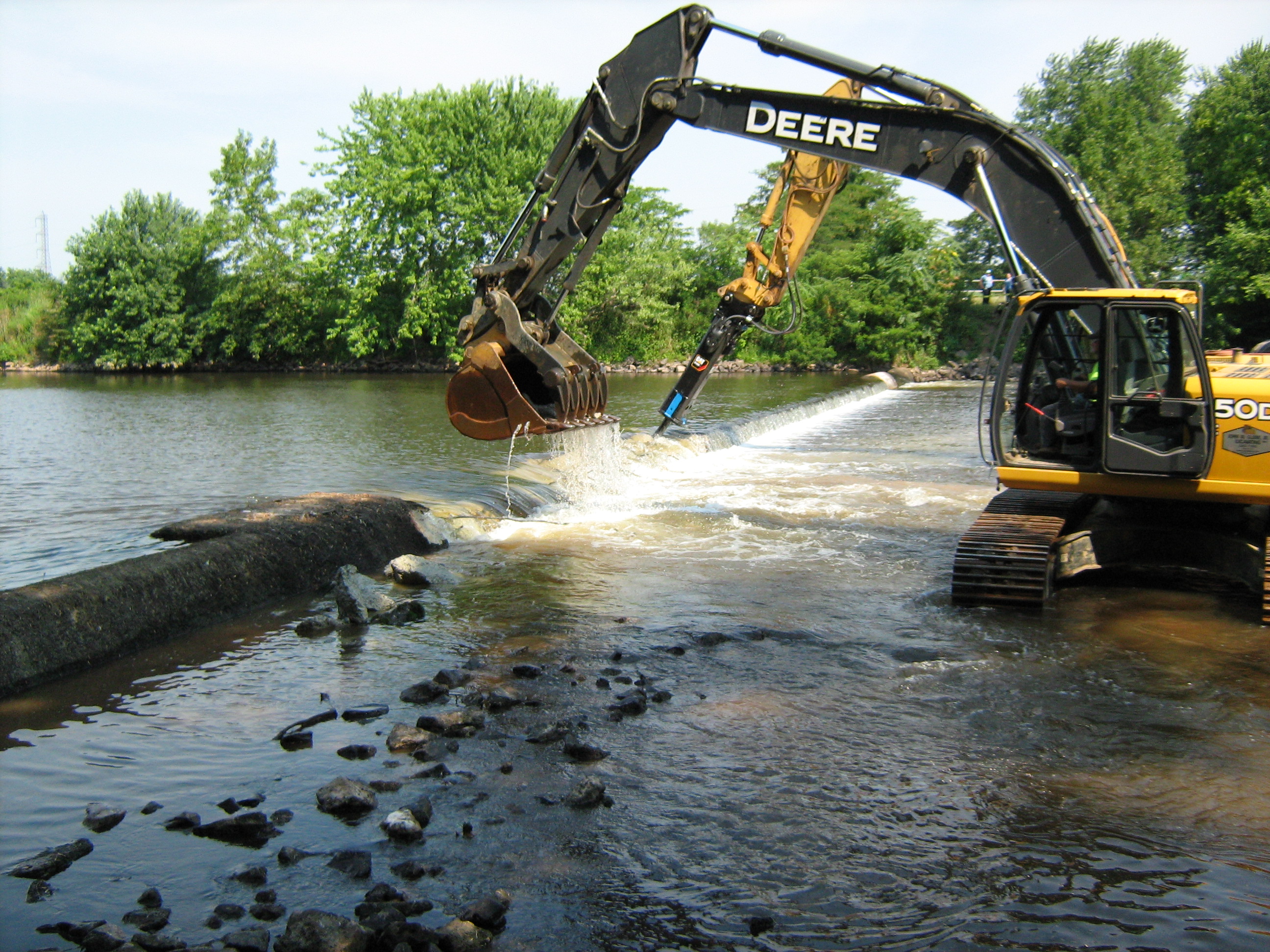
The Nevius Street Dam is being removed over the next two weeks as part of a watershed-wide effort to re-establish historically significant migratory fish passage, restore riverine habitat and the natural flow of the Raritan River, and enhance recreational uses.

Its elimination will add to habitat improvements realized from removal of the Calco Dam in Bridgewater in 2011 and the Robert Street Dam in Bridgewater and Hillsborough townships in 2012. Removal of the Nevius Street Dam should be completed within two weeks by Kinder Morgan’s contractor, River Logic, said Kinder Morgan project manager John Jengo.

Meanwhile, the DEP’s Office of Natural Resource Restoration continues to study additional dams in the Raritan River watershed and will evaluate and implement appropriate options for future enhanced fish passage and recreational opportunities.

The Nevius Street Dam is located just south of the Borough of Raritan at river mile 27.0 in Somerset County. It was constructed in 1901 by James Buchanan (Buck) Duke, the tobacco and hydropower industrialist, for aesthetic and recreational purposes as part of his development of Duke Farms, a 2,740-acre estate in Hillsborough Township.

The dam is constructed of mortared stone block over a concrete core, with a stair-step design on its downstream side. The dam length is approximately 195 feet.

A water intake structure was installed in the early 1960s on the north end of the dam and Duke Farms began utilizing this intake system for its primary water supply when their pumping withdrawals from the Raritan Water Power Canal were discontinued in the 1970s.

All three dam removals will open up 10 miles of migratory fish habitat along a stretch of the Raritan that twists through a highly diverse residential, commercial and agricultural portion of Somerset County that includes Bridgewater, Hillsborough, Bound Brook, Somerville and Manville. It also will open up about 17 miles of tributaries, including the Millstone River, to spawning. None of the dams were built for flood control:

Calco Dam, demolished in 2011, was located at river mile 20.9 and built by the Calco Chemical Co. in 1938 to disperse chemicals from its facility.
The Robert Street Dam, a 6 ½-foot-high sheet piling and concrete dam had been located at river mile 27.9 and was originally constructed prior to 1930 for purposes that are not known today.
The Nevius Street Dam, located at river mile 27.0, was constructed of rocks and mortar in 1901 for aesthetic purposes and later retrofitted to provide water to Duke Estate ponds.
Fish to benefit most from the removal of the dams are American shad, American eel, herring, and striped bass, which once migrated in prodigious numbers through the gravelly shallows of the Upper Raritan. Better water flow also will improve flushing of sediments, reduce nutrient loadings and improve conditions for tiny aquatic organisms that are critical to the food web in the river system.

"Somerset County is delighted to see this initiative of the Christie Administration and the DEP provide such tangible improvements to the Raritan River to help improve the quality of life for the citizens of Somerset County,” said Somerset County Freeholder Director Peter Palmer.

“The removal of the Nevius Street Dam will complement the borough's plans to make the Raritan River more accessible to our residents and a focal point for our own recreational and redevelopment efforts, added Raritan Mayor Jo-Ann Liptak.

Calco Dam in Bridgewater

The voluntary settlement with El Paso – now Kinder Morgan -- resolved Natural Resource Damage claims made by the DEP against the Houston-based company that stemmed from contamination at EPEC Polymers Inc. in Flemington, Hunterdon County; Nuodex Inc. in Woodbridge, Middlesex County; EPEC Polymers Inc. in Burlington City, Burlington County; and the Eagle Point Refinery in West Deptford, Gloucester County. Investigations and/or cleanups are under way at those sites.

The DEP uses funds secured from Natural Resource Damage settlements toward ecological restoration projects, typically in the same watershed or general area where resource damages occur.

For a copy of the settlement agreement, visit: http://www.nj.gov/dep/docs/elpaso-nrd-settlement.pdf

For more information on the DEP's Office of Natural Resource Restoration, visit: http://www.nj.gov/dep/nrr/