Showing posts with label water pollution. Show all posts

Friday, March 22, 2024

EPA Proposal May Help Save the Sturgeon


From a post by Tony Hagen (editor@newjersey.sierraclub.org) 

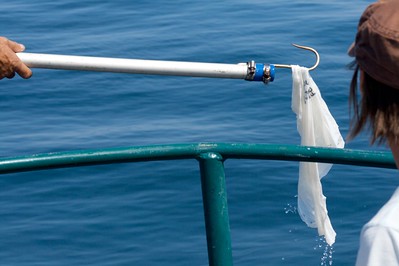
With sturgeon on the brink of extinction in the Delaware River, the Environmental Protection Agency (EPA) has introduced a draft rule (graphic above) that would ease one of the threats to this highly sensitive—some might say “canary”—fish. The EPA plans to set limits on how low oxygen levels can drop in the river.

Survival rates of Atlantic sturgeon and shortnose sturgeon tend to drop as dissolved oxygen levels decline. The EPA believes it can improve conditions with tighter controls on discharges of sewage and industrial waste. 

Anthropogenic activity (human waste), combined with warmer temperatures, causes algae to proliferate, and when algae die, their decomposition consumes oxygen in the river. This causes hypoxia, or oxygen-starved environments, which are especially harmful to sturgeon. 

Heavy sewage discharge from the Philadelphia area has been a chief cause of this problem. Also, nutrients flowing into the Delaware River from farming, golf courses, and lawn maintenance in neighborhoods along the Delaware River also contribute to the growth of algae and hypoxia. 

read more at sierraclub.org/new-jersey/blog/2024/03/epa-proposal-may-help-save-sturgeon

Wednesday, May 4, 2022

Plastic Pollution Is Bigger Than Single-Use Bags

Plastic large, small and microplastics at the Pacific gyre
Photo: Hagerty Ryan, USFWS on Pixnio

I wrote earlier about the ban on single-use plastic bags and most polystyrene foam containers that went into effect today. It is an important step in fighting plastic pollution. But plastic pollution comes from a lot more than those bags and takeout containers.

It is estimated New Jersey uses about 4.4 billion single-use plastic bags every year. A small fraction of them (less than 5 percent) are recycled, so they end up in landfills, trash incinerators, or just as litter in streets, wooded areas, along roads, and waterways.

The benefits of fewer plastic bags in the environment are greater than the inconvenience of bringing my having to bring my own bags from home. In my house, we have been re-using the small plastic bags from stores in our small trash cans in the bathrooms and bedrooms. But they do end up in our trash and eventually in a landfill or incinerator.

These bags and most plastic products are made from petroleum byproducts. Burned in an incinerator, they create air pollution. Left out and exposed to sunlight and the elements they eventually break down into smaller and smaller bits. Those bits are known as “microplastics” and these tiny particles become part of the food chain, particularly in oceans. They also find their way into and contaminate our drinking water (even some bottled waters) and food. 

Pollution (plastic bag)

If you walked the coastline of NJ from the rivers in the northeast and west to our famous Jersey Shore, you have come across plastic pollution. If you have been out on coastal waters, you probably have seen it too. As unattractive as it is, the dangers are not aesthetic. They hurt wildlife and eventually people.

The new ban won't even eliminate all plastic bags. Grocery stores can still use bags to hold uncooked meat, fish, poultry, loose items like fruits, vegetables, nuts, coffee, grains, and foods sliced or prepared to order. In other stores, exceptions include bags for holding newspapers, prescription drugs, and dry cleaning bags.

The ban is a good start but it is not the end.


Trash - mostly plastics - often end up washed up on coastlines
Science Photo Library, NTB via ndla.no

LINKS

NJDEP “Get Past Plastic” nj.gov/dep/get-past-plastic/#single_use_bags

New Jersey Clean Communities “Bag Up NJ” website at bagupnj.com

Tuesday, September 29, 2020

Plastiki and Plastic Pollution in Oceans

Expedition Kon-Tiki 1947. Across the Pacific. (8765728430)

I posted on another blog of mine back in August about the anniversary of the 1947 landing of Thor Heyerdahl's raft Kon-Tiki on a reef in French Polynesia which ended his sea journey.

I read his account of that journey,  Kon-Tiki, when I was in sixth grade for a book report and it really took hold of my imagination. The story by the Norwegian explorer and writer in his expedition across the Pacific Ocean from South America to the Polynesian islands wasn't intended as an adventure trip. Heyerdahl, a Norwegian ethnologist, had set out from Peru in April hoping to prove that early South Americans could have traveled across the Pacific and settled in the Polynesian Islands. 

The raft itself was historically accurate as they could make it. It was made entirely of pre-Columbian materials. The body was made of balsa logs lashed together with hemp ropes, and had gaps between the logs for the water to drain out. The cabin was built of bamboo and had a thatched roof of banana leaves. The mast was made of planks of mangrove, and it held a square sail. It was a replica of the rafts that native Peruvians were using at the time of the first European contact in the early 1500s. The journey took three and a half months. They traveled 4,300 nautical miles. 

In writing that post, I also found an article about a more recent explorer, David de Rothschild, who crossed the Pacific in a boat made from recycled plastic bottles. He is not an ethnologist but someone who wanted to call attention to the waste plastic that ends up in our oceans. 

This journey appeals to the environmentalist in me. His 60-foot catamaran was built almost entirely with waste material. I like that he named his boat Plastiki (for plastic Kon Tiki). There were 12,500 reclaimed soda bottles that are built into the hulls. Parts of the boat are held together with a new glue made out of cashew nuts and sugar. An old aluminum water pipe became the mast, and more recycled plastic was used to weave the sailcloth. 

They weren't trying to replicate any earlier explorers, so the boat had solar panels, a wind turbine and bicycle generators to provide electricity for the six crew members. There was a miniature greenhouse for some food, and a compost toilet.

Plastiki hull
The plastic bottlehull of Plastiki

Environmentalist David de Rothschild was the designer and sailor and he wanted the boat to be as environmentally green as possible. A team of engineers and marine architects helped build it and they tried to use the same materials that form most of the global marine pollution - the plastic of food and drink packaging. 

Plastiki puts a focus on the pollution but also that some trash can be a valuable resource for reuse instead of being dumped and becoming a pollutant. On its journey, Plastiki sailed through the Great Pacific Garbage Patch that has an estimated 100 million tons of plastic in an area twice the size of France. 

It takes 450 years for a plastic bottle to degrade, but even then, like other plastics, it will remain in the environment in small pieces. One of the concerns about ocean pollution is that those final tiny particles of plastic float around the surface where they are ingested by fish and marine life. Plastic makes up to 80 percent of all marine pollution and at least a million seabirds and 100,000 mammals are killed every year by eating plastic or getting caught up in it.

Though our Atlantic Ocean doesn't have a Garbage Patch like the Pacific, it certainly has a lot of plastic pollution. 


If you want to armchair either voyage: 

Kon-Tiki: Across the Pacific in a Raft 

Plastiki Across the Pacific on Plastic: An Adventure to Save Our Oceans 

map Plastiki's  Pacific-Voyage - Illustration by Andrew Rae - via theplastiki.com

Tuesday, July 24, 2018

Two Warnings: NJ Waterways and a Noxious Plant

The Department of Environmental Protection, in partnership with the New Jersey Department of Health, has updated recreational fish advisories for tributaries, lakes and ponds in the lower Delaware River watershed as part of the state’s ongoing fish-safety monitoring program.

The DEP has also expanded testing of fish in selected water bodies in this and other regions of the state to include several chemicals of emerging concern known as perfluoroalkyl and polyfluoroalkyl substances, known as PFAS. These analyses have resulted in the DEP’s first consumption advisories for these chemicals.

The DEP tested 11 fish species in 14 water bodies in Burlington, Camden, Cumberland, Gloucester, Ocean and Salem counties for PCBs, mercury and pesticides. The testing resulted in less restrictive advisories for 36 species than had been in place, while 24 saw no change. Ten advisories are now more restrictive.

Data also was collected for species not tested in previous years as well as at one new sample location. The new data resulted in 30 new consumption advisories for the lower Delaware River watershed region.

Due to growing concerns over the presence of PFAS in the environment, the DEP also sampled water, sediment and fish tissue samples from a limited number of water bodies in the lower Delaware River watershed and other regions of the state.

Water bodies were selected based on their proximity to potential sources of PFAS and their likelihood of being used for recreational and fishing purposes. PFAS were detected at varying levels and combinations in all of the water bodies tested.

PFAS – which include compounds more commonly known as PFOA, PFOS and PFNA – were once widely used in a variety of applications, including non-stick cookware, stain-resistant clothing and fabrics, food packaging, and in firefighting foams. These chemicals are persistent in the environment and can accumulate in people exposed to them.

Water bodies tested included the Passaic River in Passaic County, the Raritan River in Bergen and Passaic counties, the Metedeconk River in Ocean County, several lakes adjacent to Joint Base McGuire-Dix-Lakehurst in Burlington and Ocean counties, the North Branch of Rancocas Creek in Burlington County, Woodbury Creek in Gloucester County, Fenwick Creek in Salem County and the Cohansey River in Cumberland County.

All states have fish consumption advisories. Many of the fish on New Jersey’s advisory lists are typically caught and released without being consumed, but some people rely on some of the species on the advisory lists as a food source.

“Fishing provides enjoyable and relaxing recreation, and we know many people enjoy cooking and eating their own catch,” New Jersey Health Commissioner Dr. Shereef Elnahal said. “However, certain fish may contain contaminants and pose serious health risks like cancer and nervous system issues. It is a good idea to follow these advisories when consuming recreationally caught fish and crabs, particularly if you eat them often.”


The DEP and Department of Health advise all anglers to get the latest advisories for the specific water body they fish by visiting www.fishsmarteatsmartnj.org

As part of the lower Delaware River watershed update, fish were sampled from the following bodies of water: Big Timber Creek, along the border of Camden and Gloucester counties; Cooper River Lake, Kirkwood Lake, Newton Lake and Pennsauken Creek in Camden County; Mantua Creek, Stewart Lake and Wilson Lake in Gloucester County; DOD Ponds in Salem County; Rancocas Creek and Strawbridge Lake in Burlington County; the Maurice River and Union Lake in Cumberland County; and Prospertown Lake in Ocean County.

The DEP tested fish tissue for mercury, organochlorinated pesticides and PCBs, with the fish species that were sampled varying depending on location. Fish species sampled were largemouth bass, bluegill sunfish, common carp, white perch, channel catfish, pumpkinseed, striped bass, chain pickerel, yellow bullhead, brown bullhead and white catfish.

As is typical, the latest sampling found the highest mercury concentrations in species at the top of the food chain, such as chain pickerel and largemouth bass, while the highest PCB concentrations were found in bottom feeders, such as channel catfish and common carp. PCBs were generally detected at relatively low levels. Pesticides were found at only very low levels.

While water quality in New Jersey continues to improve, past pollution can persist for many years in sediments and continue to accumulate in fish at or near the top of the aquatic food chain.

Fish are an excellent source of protein, minerals and vitamins, and help maintain a healthy, well-balanced diet. The American Heart Association recommends that people eat fish regularly. Fish are also one of the few foods that are rich in omega-3 fatty acids needed for proper development of the brain and nervous system in the fetus and infants, and may reduce the risk of heart attack.

But due to past use of PCBs and pesticides as well as deposition of mercury from various sources, some recreationally caught fish can be unhealthy for children or some adults with certain health concerns.

The DEP and Department of Health have been issuing fish consumption advisories since 1983, updating them on a regular basis. Advisories include statewide, regional and water body specific advice as well as a general advisory for freshwater fish. These advisories allow the public to make informed choices about the fish they catch and eat.

The state’s ongoing public outreach activities include responding to online and telephone inquiries from the public, as well as distribution of outreach materials to all New Jersey Women, Infants and Children centers in English and Spanish. Information is also sent to recreational anglers, local and county health departments, and other stakeholders.

For much of the population, advisories can range from no restrictions to a recommendation to limit consumption to one meal per week. For the high-risk population – which includes pregnant women, women planning to become pregnant, nursing mothers, infants and children – advisories can range from no more than one meal per week to do not eat.

If you choose to eat those species under advisories, there are steps you can take to reduce your exposure.

Proper cleaning and cooking techniques, which remove some of the fat from the fish, can significantly reduce levels of PCBs and organic chemicals. However, these techniques will not reduce or remove unsafe levels of mercury from fish.

For all freshwater fish and waters not covered by consumption advisories, consumers should follow the DEP's general freshwater advisories, which recommend eating no more than one meal per week for the general population and no more than one meal a month for high-risk individuals.

For the DEP’s PFAS study report, visit www.nj.gov/dep/dsr/


From a brochure from the NJ Department of Agriculture on the highly toxic plant known as hogweed, which has been recently documented in our state.

Please be wary of this harmful plant while outdoors, as the sap can cause severe burns when present on the skin and exposed to sunlight. It can also cause blindness should sap get into the eyes.

Unfortunately, there are several plant species that look very similar to hogweed, with cow parsnip being the closest to mimic it. Therefore it is very important to become familiar with the appearance of hogweed. In addition, should you see this plant growing anywhere, please contact Chief Mark Meyer of the NJ Dept. of Agriculture's Bureau of Biological Pest Control at 609-203-9478.

Sunday, March 26, 2017

Tracking and Stopping Wastewater Pollution

Shark River
Shark River enter the Atlantic Ocean

Working in collaboration, the New Jersey Department of Transportation, Department of Environmental Protection, Monmouth County and Neptune City have tracked down and repaired a significant source of bacterial contamination that affected water quality and contributed to the closure of shellfish beds in the Shark River late last year.

Barely 12 miles in total length, the Shark River is comprised primarily of a large, U-shaped estuarine basin that is connected to the ocean by a relatively narrow inlet.

Using dye tests and cameras provided by NJDOT, the partners were able to locate sewage leaking into a stormwater discharge pipe at West Sylvania Avenue in Neptune City. The source of the infiltration into the stormwater pipe was then traced to two leaking municipal sewer lines, which the city recently repaired.

In early November, the DEP’s Bureau of Marine Water Quality Monitoring suspended any harvesting of clams from two stretches of the river totaling 266 acres – 122 acres in the northern portion of the river in Neptune City and 144 acres in the western portion of the river at Belmar – due to extremely elevated levels of bacteria, a strong indicator of sewage leaks.

“This has been a team effort in the truest sense of the term,” said DEP Commissioner Bob Martin. “Our scientists worked very closely with NJDOT engineers, who provided extensive technical and resource support.

“We also had the strong support of Monmouth County, local officials and Senator Jennifer Beck to track down the source of this pollution, no easy task considering the size of the area that had to be investigated and the complexity of piping networks in the area. Neptune City also stepped up and fixed the leaks promptly. I commend everyone who went the extra yard to protect the quality of water in the Shark River.”

“NJDOT personnel have the experience and skills needed to investigate the vast network of underground water and sewer pipes that run beneath the roadways in New Jersey – whether they are State, county, or municipal roads,” NJDOT Commissioner Richard T. Hammer said. “Neptune City approached the Department of Transportation last year regarding an issue with erosion on one of its roads. NJDOT led a coordinated inter-agency effort in which our engineers, through the use of Transportation Trust Funds, investigated the issue and in the process identified the source of long-term and persistent bacteria infiltration into the Shark River.”

“It has been a real pleasure to work with the DEP, NJDOT, and Monmouth County on this project to preserve our natural resource,” said Neptune Mayor Robert Brown. “This is proof how you can make great progress on such an important project when we all have the same goal.”

The DEP and its partners are currently launching a similar effort to track down the source of bacteria being discharged into the western portion of the basin. This situation may also be the result of an underground sewage pipe leak.

“We still have a lot more work ahead of us, but this is a great step toward identifying and tracking sources of bacteria that impact shellfish beds and can diminish the public’s recreational enjoyment of the river,” said Ray Bukowski, DEP’s Assistant Commissioner for Compliance and Enforcement, who organized the track-down effort.

Prior to their closure, the shellfish beds were classified as restricted due to degrading water quality, and have not been harvested in years because they would need to be taken to a special plant for cleansing, a process known as depuration, before they could be shipped to market.

“The DEP’s goal is to improve overall water quality in the river so that in the longer term we can make the naturally productive shellfish beds found there commercially viable again,” said Dan Kennedy, DEP’s Assistant Commissioner for Water Resources.

Due to strong programs protecting and monitoring shellfish beds, the percentage of beds considered safe for harvesting across the state is now nearly 90 percent, compared to about 75 percent in 1977.

Founded in 1912, the Bureau of Marine Water Monitoring actually precedes the formation of the DEP by nearly six decades. The bureau collects thousands of samples from shellfish waters which, among other things, measures temperature, salinity, nutrients and bacteria.

SOURCE: http://www.nj.gov/dep/newsrel/2017/17_0019.htm

Wednesday, November 23, 2016

Seabirds and Plastic Garbage

Petrel at sea
An article from Discovery discusses new research that answers why some seabirds consume so much plastic waste. The waste attracts them.

Eating plastic debris in the oceans by any sea life who mistake it for food is a major problem for marine conservation. In most cases - such as plastic bags and whales - it resembles a food that they normally eat. But new research found that in some cases it also smells like food.

Seabirds hone in on a specific chemical to locate food. That chemical is dimethyl sulfide (DMS). It is naturally produced by phytoplankton when crustaceans, squid and other small marine animals are feeding.

In a cruel twist, DMS is also produced by the algae that colonize pieces of plastic floating in the ocean.

Researchers tested three common plastics left in the ocean for three weeks and every bead contained a DMS signature above the threshold detectable by birds. The researchers looked at tube-nosed seabirds, that includes albatrosses, petrels and shearwaters, and they were all attracted to DMS, but they feel it is likely other marine predators use the same mechanism to find prey.

Research: http://advances.sciencemag.org/content/2/11/e1600395

Sunday, December 14, 2014

NJ Bill to Ban Micro-beads Turned Back by Governor Christie

NJ Governor Chris Christie conditionally vetoed a bill that would ban micro-beads. They are tiny polyethylene particles found in cosmetics and personal care products. Christie sent the bill back to the Assembly with a request to lower fines to a maximum of $500 per violation, and to remove language concerning offenses that are “continuing in nature” saying that the bill’s penalties would have unintended consequences on small businesses. He also recommended that it be made clear that the penalties “may be pursued only by the Commissioner of Environmental Protection, and not private parties.”

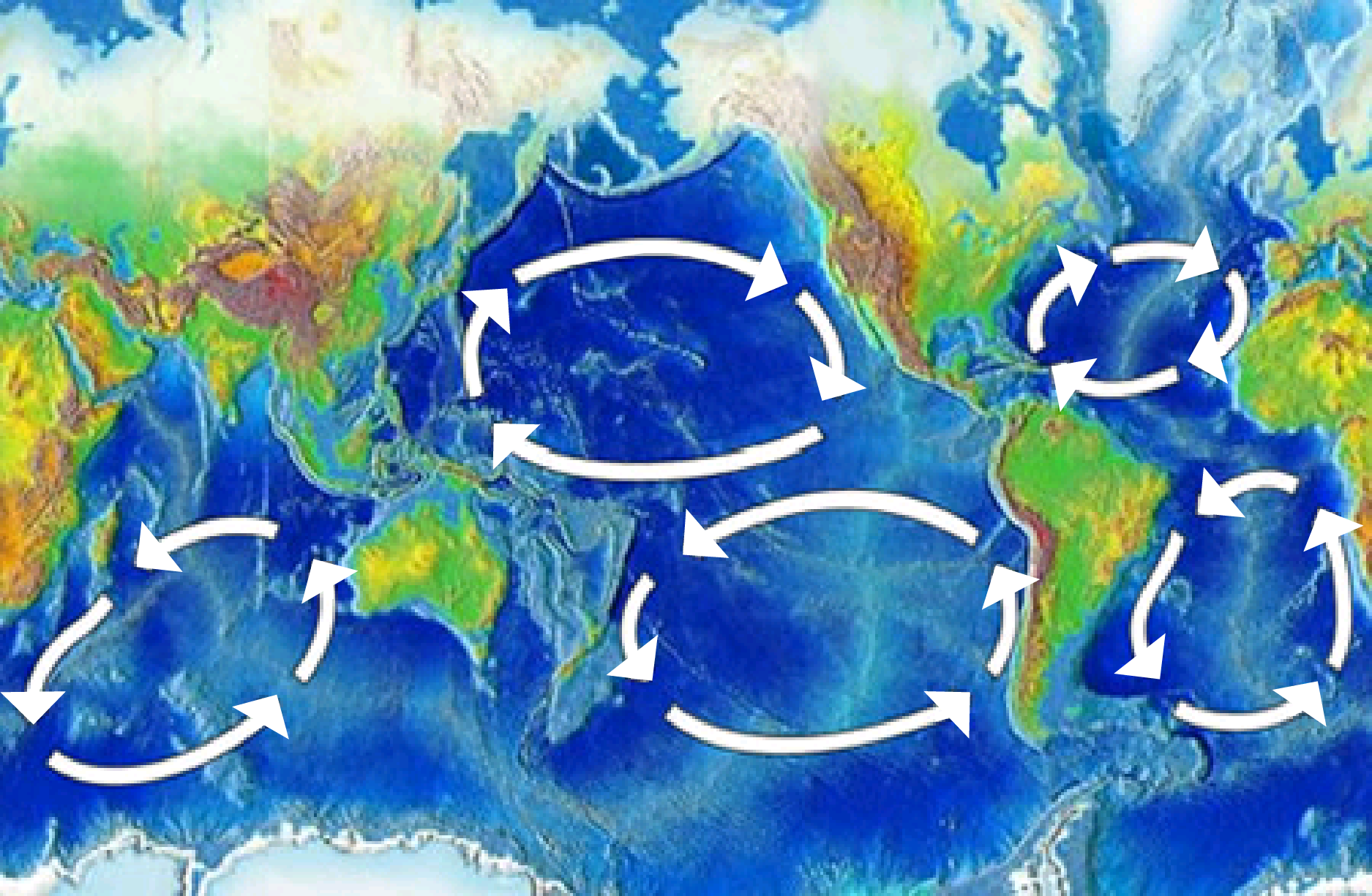
Micro-beads cannot be filtered from household waste water by sewage treatment plants. Eventually, they end up in the ocean. As with the Pacific garbage patch (photo above), the North Atlantic trash vortex is made up of trash fragments ranging from a millimeter to the size of a pencil’s eraser. The size of the Atlantic trash vortex compares in size to the area of France. The fine trash, like micro-beads, poison fish and kill seabirds whose guts become clogged with the beads making them unable to eat and so they starve to death.

The five major ocean gyres.
The North Atlantic garbage patch is an area of man-made marine debris found floating within the North Atlantic Gyre, originally documented in 1972. The patch is estimated to be hundreds of kilometers across in size with a density of over 200,000 pieces of debris per square kilometer. The debris zone shifts by as much as 1,600 km (990 mi) north and south seasonally, and drifts even farther south during the El NiƱo-Southern Oscillation, according to the NOAA.

The NJ Legislature will now decide whether to make the changes, attempt to override Christie's veto, or let the bill die.

A new study estimates nearly 270,000 tons of plastic is floating in the world's oceans. That's enough to fill more than 38,500 garbage trucks if each truck carries 7 tons of plastic. The figure appears in a study published, Dec. 10, 2014, in the scientific journal PLOS ONE. Researchers say the plastic is broken up into more than 5 trillion pieces.

Microbeads pollution - a drop in the ocean for the beauty industry


Source: Christie vetoes N.J. ban on micro-beads feeding Atlantic Ocean garbage patch the size of France | NJ.com

Tuesday, December 1, 2009

Sailing Trash Plastic Across the Oceans

Computer generated image of Plastiki
The adventurer and environmental storyteller, David de Rothschild, and a crew of leading scientists, adventurers and creatives are to set sail over 10,000 nautical miles across the Pacific from San Francisco to Sydney on a 60-foot catamaran made from post consumer plastic water and soda bottles and self-reinforced PET.

The 3 month journey is intended to inspire, educate and activate people to move towards a smarter more sustainable planet 2.0 way of living that can include. Its time to rethink waste as a resource.

The adventurer and environmental storyteller David de Rothschild and a handpicked crew of leading scientists, adventurers and creatives are to set sail over 10,000 nautical miles across the Pacific from San Francisco to Sydney on a 60-foot catamaran made from post consumer plastic water and soda bottles and self-reinforced PET.

By undertaking this daring expedition over three months, David and his Plastiki crew are on a mission to inspire, educate and activate individuals, communities and business’s to start moving towards a smarter more sustainable planet 2.0 way of living that can include waste as a resource.

The Plastiki Expedition will hopefully raise awareness about environmental disasters like the Great Pacific Garbage Patch, an area of the ocean loaded with floating trash that the Plastiki will sail through on its maiden voyage.

The Plastiki will be made of 12,500 two-liter plastic bottles; weigh 9 tons; and will have a composting toilet, on-board renewable energy, and a garden. The design team had a need to invent a glue that eliminates toxic epoxies, so they developed one from cashew sugar nuts.

http://www.theplastiki.com