I wrote earlier about the ban on single-use plastic bags and most polystyrene foam containers that went into effect today. It is an important step in fighting plastic pollution. But plastic pollution comes from a lot more than those bags and takeout containers.
It is estimated New Jersey uses about 4.4 billion single-use plastic bags every year. A small fraction of them (less than 5 percent) are recycled, so they end up in landfills, trash incinerators, or just as litter in streets, wooded areas, along roads, and waterways.
The benefits of fewer plastic bags in the environment are greater than the inconvenience of bringing my having to bring my own bags from home. In my house, we have been re-using the small plastic bags from stores in our small trash cans in the bathrooms and bedrooms. But they do end up in our trash and eventually in a landfill or incinerator.
These bags and most plastic products are made from petroleum byproducts. Burned in an incinerator, they create air pollution. Left out and exposed to sunlight and the elements they eventually break down into smaller and smaller bits. Those bits are known as “microplastics” and these tiny particles become part of the food chain, particularly in oceans. They also find their way into and contaminate our drinking water (even some bottled waters) and food.
If you walked the coastline of NJ from the rivers in the northeast and west to our famous Jersey Shore, you have come across plastic pollution. If you have been out on coastal waters, you probably have seen it too. As unattractive as it is, the dangers are not aesthetic. They hurt wildlife and eventually people.
The new ban won't even eliminate all plastic bags. Grocery stores can still use bags to hold uncooked meat, fish, poultry, loose items like fruits, vegetables, nuts, coffee, grains, and foods sliced or prepared to order. In other stores, exceptions include bags for holding newspapers, prescription drugs, and dry cleaning bags.
The ban is a good start but it is not the end.
Trash - mostly plastics - often end up washed up on coastlines Science Photo Library, NTB via ndla.no
I posted on another blog of mine back in August about the anniversary of the 1947 landing of Thor Heyerdahl's raft Kon-Tiki on a reef in French Polynesia which ended his sea journey.
I read his account of that journey, Kon-Tiki, when I was in sixth grade for a book report and it really took hold of my imagination. The story by the Norwegian explorer and writer in his expedition across the Pacific Ocean from South America to the Polynesian islands wasn't intended as an adventure trip. Heyerdahl, a Norwegian ethnologist, had set out from Peru in April hoping to prove that early South Americans could have traveled across the Pacific and settled in the Polynesian Islands.
The raft itself was historically accurate as they could make it. It was made entirely of pre-Columbian materials. The body was made of balsa logs lashed together with hemp ropes, and had gaps between the logs for the water to drain out. The cabin was built of bamboo and had a thatched roof of banana leaves. The mast was made of planks of mangrove, and it held a square sail. It was a replica of the rafts that native Peruvians were using at the time of the first European contact in the early 1500s.
The journey took three and a half months. They traveled 4,300 nautical miles.
In writing that post, I also found an article about a more recent explorer, David de Rothschild, who crossed the Pacific in a boat made from recycled plastic bottles. He is not an ethnologist but someone who wanted to call attention to the waste plastic that ends up in our oceans.
This journey appeals to the environmentalist in me. His 60-foot catamaran was built almost entirely with waste material. I like that he named his boat Plastiki (for plastic Kon Tiki). There were 12,500 reclaimed soda bottles that are built into the hulls. Parts of the boat are held together with a new glue made out of cashew nuts and sugar. An old aluminum water pipe became the mast, and more recycled plastic was used to weave the sailcloth.
They weren't trying to replicate any earlier explorers, so the boat had solar panels, a wind turbine and bicycle generators to provide electricity for the six crew members. There was a miniature greenhouse for some food, and a compost toilet.
The plastic bottlehull of Plastiki
Environmentalist David de Rothschild was the designer and sailor and he wanted the boat to be as environmentally green as possible. A team of engineers and marine architects helped build it and they tried to use the same materials that form most of the global marine pollution - the plastic of food and drink packaging.
Plastiki puts a focus on the pollution but also that some trash can be a valuable resource for reuse instead of being dumped and becoming a pollutant.
On its journey, Plastiki sailed through the Great Pacific Garbage Patch that has an estimated 100 million tons of plastic in an area twice the size of France.
It takes 450 years for a plastic bottle to degrade, but even then, like other plastics, it will remain in the environment in small pieces. One of the concerns about ocean pollution is that those final tiny particles of plastic float around the surface where they are ingested by fish and marine life. Plastic makes up to 80 percent of all marine pollution and at least a million seabirds and 100,000 mammals are killed every year by eating plastic or getting caught up in it.
Though our Atlantic Ocean doesn't have a Garbage Patch like the Pacific, it certainly has a lot of plastic pollution.
Working in collaboration, the New Jersey Department of Transportation, Department of Environmental Protection, Monmouth County and Neptune City have tracked down and repaired a significant source of bacterial contamination that affected water quality and contributed to the closure of shellfish beds in the Shark River late last year.
Barely 12 miles in total length, the Shark River is comprised primarily of a large, U-shaped estuarine basin that is connected to the ocean by a relatively narrow inlet.
Using dye tests and cameras provided by NJDOT, the partners were able to locate sewage leaking into a stormwater discharge pipe at West Sylvania Avenue in Neptune City. The source of the infiltration into the stormwater pipe was then traced to two leaking municipal sewer lines, which the city recently repaired.
In early November, the DEP’s Bureau of Marine Water Quality Monitoring suspended any harvesting of clams from two stretches of the river totaling 266 acres – 122 acres in the northern portion of the river in Neptune City and 144 acres in the western portion of the river at Belmar – due to extremely elevated levels of bacteria, a strong indicator of sewage leaks.
“This has been a team effort in the truest sense of the term,” said DEP Commissioner Bob Martin. “Our scientists worked very closely with NJDOT engineers, who provided extensive technical and resource support.
“We also had the strong support of Monmouth County, local officials and Senator Jennifer Beck to track down the source of this pollution, no easy task considering the size of the area that had to be investigated and the complexity of piping networks in the area. Neptune City also stepped up and fixed the leaks promptly. I commend everyone who went the extra yard to protect the quality of water in the Shark River.”
“NJDOT personnel have the experience and skills needed to investigate the vast network of underground water and sewer pipes that run beneath the roadways in New Jersey – whether they are State, county, or municipal roads,” NJDOT Commissioner Richard T. Hammer said. “Neptune City approached the Department of Transportation last year regarding an issue with erosion on one of its roads. NJDOT led a coordinated inter-agency effort in which our engineers, through the use of Transportation Trust Funds, investigated the issue and in the process identified the source of long-term and persistent bacteria infiltration into the Shark River.”
“It has been a real pleasure to work with the DEP, NJDOT, and Monmouth County on this project to preserve our natural resource,” said Neptune Mayor Robert Brown. “This is proof how you can make great progress on such an important project when we all have the same goal.”
The DEP and its partners are currently launching a similar effort to track down the source of bacteria being discharged into the western portion of the basin. This situation may also be the result of an underground sewage pipe leak.
“We still have a lot more work ahead of us, but this is a great step toward identifying and tracking sources of bacteria that impact shellfish beds and can diminish the public’s recreational enjoyment of the river,” said Ray Bukowski, DEP’s Assistant Commissioner for Compliance and Enforcement, who organized the track-down effort.
Prior to their closure, the shellfish beds were classified as restricted due to degrading water quality, and have not been harvested in years because they would need to be taken to a special plant for cleansing, a process known as depuration, before they could be shipped to market.
“The DEP’s goal is to improve overall water quality in the river so that in the longer term we can make the naturally productive shellfish beds found there commercially viable again,” said Dan Kennedy, DEP’s Assistant Commissioner for Water Resources.
Due to strong programs protecting and monitoring shellfish beds, the percentage of beds considered safe for harvesting across the state is now nearly 90 percent, compared to about 75 percent in 1977.
Founded in 1912, the Bureau of Marine Water Monitoring actually precedes the formation of the DEP by nearly six decades. The bureau collects thousands of samples from shellfish waters which, among other things, measures temperature, salinity, nutrients and bacteria.
Last year, the NJ Department of Environmental Protection, the city of Newark The Trust for Public Land announced the groundbreaking for a nearly $8 million expansion of the city’s Riverfront Park.
Riverfront Park is an urban greenway meant to connect city residents to the Passaic River waterfront.
This is actually the beginning of the third phase of the park’s development, which entails two stretches of riverfront land that will be developed with a boardwalk, walkway system, a fitness zone, an overlook with seating, a bikeway, space for open-air events and a gateway to the downtown area. A walkway will also be constructed under the Jackson Street Bridge, allowing safe pedestrian crossing between the Ironbound section of Newark and downtown.
The first phase of the park system – developed as the result of a partnership among the city, Trust for Public Land and Essex County Parks Department – opened in 2012 and provides playing fields for baseball, soccer and football, as well as basketball and tennis courts.
A second phase of the park opened in 2013. This phase connected the recreational complex to the park through a gateway linked to riverfront green space, which was developed with a boardwalk noted for its burnished orange planking made from recycled plastic, walkways and a floating dock.
The DEP is providing approximately $6.3 million toward the estimated $7.76 million cost of this phase of the project, including funding for park construction and remediation. The Trust for Public Land has provided the balance of the funding through private donations and other local sources. Horizon Blue Cross/Blue Shield of New Jersey, based nearby, is funding the Horizon Wellness Trail through the Horizon Foundation and the Healthcare Foundation of New Jersey is providing funding for the Fitness Zone.
NJDEP Commissioner Bob Martin said. “Rivers have long been an integral part of urban communities. Connecting people to them again is an important aspect of redeveloping urban areas. The Administration has a proven track record of working with government leaders, community groups and nonprofit organizations to improve the quality of life in New Jersey’s cities through revitalization."
"Our continued work on Riverfront Park allows the Passaic River to serve as a front door to the city,” said Newark Mayor Baraka.
“In addition to providing a great outdoor space for city residents and downtown workers to enjoy Newark’s riverfront, our partnership is helping to create a healthier community,” said Trust for Public Land New Jersey Director Anthony Cucchi. “For example, the park’s expansion will soon provide a Fitness Zone to exercise in, a new dedicated lane for cyclists, and the Horizon Wellness Trail to connect Newark’s Ironbound neighborhood with downtown Newark.”
The DEP added the park development sites to its Brownfield Development Area Program in 2009. Under this initiative, the DEP works closely with communities to design and implement plans that transform contaminated and/or underutilized properties into productive places again. The last use of the park development area was the Balbach Smelting and Refining Works.
The project is expected to be completed in 2017. The first phase of work will include and remediation of contaminants from historic fill – slightly contaminated dirt moved from other parts of the city many decades ago to reclaim waterfront land – as well as a small area of contamination from polycyclic aromatic hydrocarbons and total petroleum hydrocarbons. These areas will be capped with clean fill, grass, trees and shrubs.
The Christie Administration has played a pivotal role in another key component of revitalization – making sure the river is remediated from decades of industrial pollution that has contaminated sediments with pesticides, metals, PCBs and dioxins from the production of the Vietnam War-era defoliant Agent Orange.
In partnership with the DEP, the federal Environmental Protection Agency has launched a $1.4 billion remediation of the most heavily polluted stretch of river sediments, an 8.3-mile stretch of the lower river downstream of the park site. This project includes removing 3.5-million cubic yards of contaminated sediments to out-of-state facilities as well as bank-to-bank capping.
The EPA has removed the most heavily contaminated sediments from portions of the river near the Diamond Alkali Superfund site. The company polluted the river with toxic dioxins resulting from the manufacturing of Agent Orange.
The Passaic River was vital to the region’s economy for more than 100 years, attracting thousands of jobs and bringing prosperity, but pollution ultimately led to bans on any harvesting of crabs and limitations on eating fish from the river.
Today, due to many years of efforts – including cleaning up past contamination and park development such as the Riverfront Park project – Newark is realizing its potential as an important recreational and natural resource.
Though they live along the Passaic River, many Newark residents hardly know it's there.
For decades, pollution and development have kept the people and the Passaic apart.
But with the opening of Newark Riverfront Park, that's starting to change.
With colder weather and the holidays approaching, the Department of Environmental Protection reminds residents to practice safety and take steps to reduce the impact burning of wood has on air quality in their homes and neighborhoods.
“Burning of wood – whether in fireplaces, wood stoves, or outdoor wood boilers – can help reduce energy costs and add a cozy ambience to any home as the weather turns colder,” said Commissioner Martin.
“But wood burning also emits small particles and other air pollutants that can be significantly reduced with some common-sense practices, better protecting your health as well as your neighbors’ health and creating the climate for a safer and more enjoyable season.”
For some people, even short-term exposure to wood smoke can aggravate lung or heart conditions. Children, teen-agers, older adults and people with lung diseases such as asthma and COPD, or heart conditions are most susceptible to the effects of wood smoke.
The DEP recommends following these guidelines for burning wood at home:
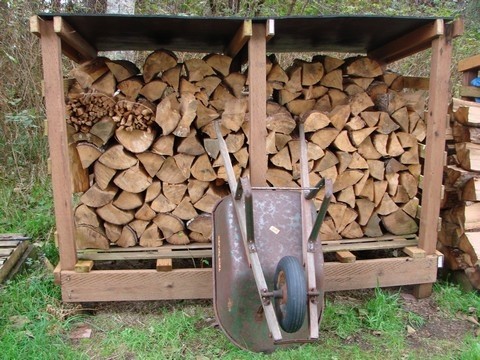
Allow wood to season before burning it. Seasoning means allowing the wood to sit outdoors for at least six months. Seasoning allows moisture to evaporate from the wood, making it burn more efficiently Seasoned wood is darker, has cracks in the end grain and sounds hollow when smacked against another piece of wood. Use a wood moisture meter to test the moisture content of wood. Wood burns most efficiently when its moisture content is below 20 percent.
Stack wood neatly off the ground with the top covered to protect the wood from rain and snow. Store wood that is to be used in the house a safe distance from fireplaces or stoves.
Start fires with newspaper and dry kindling and keep them burning hot.
Regularly remove ashes to ensure proper airflow.
Never burn garbage, cardboard, plastics, wrapping materials, painted materials or pressure-treated wood in your stove or fireplace.
Keep anything flammable – including drapes, furniture, newspapers and books – far away from any wood-burning appliance. Keep an accessible and recently inspected fire extinguisher.
Have chimneys cleaned annually by a certified chimney-sweep. Nearly seven percent of homes fires are caused by the buildup of creosote in the chimney. These fires can spread extremely rapidly, and are often signaled by flames leaping from the chimney or a low rumbling sound reminiscent of a freight train or airplane.
Consider using an indoor air HEPA filter in the same room as a stove or fireplace. These filters can reduce indoor particle pollution by as much as 60 percent.
State regulations and some municipal ordinances prohibit the emission of visible smoke from outdoor wood boilers. Wood boilers heat a fluid that is circulated in homes and buildings for heating purposes. Under state regulations, these boilers may only emit visible smoke for three minutes every half-hour to allow for start-up.
If you plan on burning wood as a major way to heat your home this winter, the DEP recommends upgrading to a U. S. Environmental Protection Agency-certified wood stove or fireplace insert. The newer equipment will reduce air pollution and is much more energy efficient.
If you love fishing, and fish the Hackensack River, here's another reason to cast your line out. A Montclair State University student seeks volunteers to assist with collecting fish from the Hackensack River. The fish are being collected as part of a study looking at the transfer of contaminants throughout the aquatic food web. The study area includes the towns of North Arlington, Secaucus, and Lyndhurst with the aim of obtaining 10 fish from each of the species listed below:
Bluegill
Pumpkinseed
Carp
Catfish
Largemouth bass
Chain pickerel
chain pickerel
Volunteers are required to have a valid NJ Fishing License and must abide by all fishing regulations for the specific species and waterways.
If you are interested in volunteering please contact Natalie Sherwood for more details at sherwoodn1 [at] montclair.edu
Populations that have been decimated or lost are being re-established to help filter out the very pollution generated by agriculture, industry, and development that threatened or endangered the species.
Freshwater mussels are "voracious filter feeders able to cycle gallons of water per hour." By taking in phytoplankton and small particles in streams and freshwater tidal habitats, they eject both clearer water and also a nutrient-rich detritus that actually fertilizes the stream and its sediments.
As with some other species, a healthy population of mussels indicates that water is of good water quality.
Mussels are among the earth’s longest living invertebrates. There are about 900 known species. Freshwater mussels live on every continent but Antarctica. Some species survive 100 years and more.
Unfortunately, they become endangered because their long lives mean that they face long-term exposures to pollution and are often the first victims of the increases in silt and theexcess nutrients that come with runoff from developed urban and agricultural land.
The Delaware River once had roughly a dozen native freshwater mussel species. While several still survive in isolated populations, the majority of the river’s mussels—and the species Kreeger’s Freshwater Mussel Recovery Program has, since 2007, focused on — is the Eastern elliptio, a dark shelled mussel up to five inches long with a pearly pink interior. While rare in the tidal estuary, elliptio is common in the river above the reach of the tides at Trenton, New Jersey.
William Lellis of the U.S. Geological Survey (USGS), who surveyed the upper Delaware mussels, estimates there might be as many as two million per river mile. With no dam along the Delaware’s main stem, the American eel, which hosts the mussel’s developing larvae on its gills, can repopulate mussels into beds far upriver, where, as a Wild and Scenic River, the runoff is freer of silt and nutrients than in the highly developed and industrialized estuary. There, the nutrient loads can be very high. The U.S. Environmental Protection Agency’s last National Coastal Condition Report found that the Delaware estuary had more high-nitrogen sites than any other Northeast coastal estuary. Surveys have shown that of 70 Pennsylvania streams, for instance, only four contained any freshwater mussels.
Kreeger realizes it’s critical to find out where and how many mussel beds remain in the estuary, determine where they might still survive if given the chance, and then try to restore those streams to the point where their mussel populations could be rebuilt. (To reach more streams and involve the public in the project, Kreeger has enlisted and trained volunteers to survey mussels in their local streams.) In 2011 and 2012, Kreeger reintroduced mussels into three southeastern Pennsylvania streams and, despite severe flooding, most of the animals survived. The idea, of course, is that, once established, mussels will begin to clean both the water and sediments in their new habitat. Can they do it?
NJ Governor Chris Christie conditionally vetoed a bill that would ban micro-beads. They are tiny polyethylene particles found in cosmetics and personal care products. Christie sent the bill back to the Assembly with a request to
lower fines to a maximum of $500 per violation, and to remove
language concerning offenses that are “continuing in nature” saying that the bill’s penalties would have unintended consequences on small businesses. He also recommended that it be made clear that the penalties “may be
pursued only by the Commissioner of Environmental Protection, and not
private parties.”
Micro-beads cannot be filtered from household waste water by sewage treatment plants. Eventually, they end up in the ocean. As with the Pacific garbage patch (photo above), the North Atlantic trash vortex is made up of trash fragments ranging from a millimeter
to the size of a pencil’s eraser. The size of the Atlantic trash vortex compares in size to the area of France. The fine trash, like micro-beads, poison fish and kill seabirds whose guts become clogged with the beads making them unable to eat and so they starve to death.
The North Atlantic garbage patch is an area of man-made marine debris found floating within the North Atlantic Gyre, originally documented in 1972. The patch is estimated to be hundreds of kilometers across in size with a density of over 200,000 pieces of debris per square kilometer. The debris zone shifts by as much as 1,600 km (990 mi) north and south seasonally, and drifts even farther south during the El Niño-Southern Oscillation, according to the NOAA.
The NJ Legislature will now decide whether to make the changes, attempt to override Christie's veto, or let the bill die.
A new study estimates nearly 270,000 tons of plastic is floating in the world's oceans. That's enough to fill more than 38,500 garbage trucks if each truck carries 7 tons of plastic. The figure appears in a study published, Dec. 10, 2014, in the scientific journal PLOS ONE. Researchers say the plastic is broken up into more than 5 trillion pieces.
Testing the Waters is a guide to water quality at vacation beaches. The state summary for New Jersey ranked our state third in beach water quality (out of 30 states. Only 3% of samples exceeded the national Beach Action Value for designated beach areas in 2013.
New Jersey has public beaches lining 127 miles of the Atlantic coast. The Cooperative Coastal Monitoring Program (CCMP), which is administered by the New Jersey Department of Environmental Protection, conducts quality monitoring from mid-May to mid-September.
You can find daily activity reports, including beach closings and advisories, at www.njbeaches.org (the CCMP website). As I write this, the Jersey shore beaches are all green lights and open.
In 2013, New Jersey reported 492 coastal beaches and beach segments, 288 of which were monitored. New Jersey also has "bracket" beaches that are adjacent to regularly monitored beaches; if high bacteria concentrations are found at a regularly monitored station, sampling is conducted at bracket stations to determine the extent of the affected area.
That 3% number means that of all reported beach monitoring samples, 3% exceeded the Beach Action Value (BAV) of 60 enterococcus bacteria colony forming units (cfu) per 100 ml marine or estuarine water in a single sample.
The 4 beaches in NJ that did exceed the rate with the highest percentages in 2013 were Berkeley Township at Beachwood Beach West in Ocean County (52%), Neptune Township at Shark River Beach and Yacht in Monmouth County (20%), Berkeley Township at West Beach Avon Road in Ocean County (18%), and Brick Township at Windward Beach in Ocean County (17%).
Acting Attorney General John Hoffman and Department of Environmental Protection (DEP) Commissioner Bob Martin announced today that several principal defendants in the Passaic River litigation have agreed to pay the state $130 million to resolve a portion of the state’s claims related to contamination of the Passaic River.
The settling defendants are Spain-based oil and gas conglomerate Repsol, S.A, Argentina-based energy conglomerate YPF, S.A., YPF Holdings, Inc. and YPF International, as well as CLH Holdings, Inc., Maxus Energy Corporation, Maxus International Energy Company and Tierra Solutions, Inc. The agreement follows a recently-announced $35.4 million proposed settlement with 258 third-party defendants and, if approved by the court, will allow the state to immediately proceed with its claims against the principal defendant, Occidental Chemical Corporation (OCC), for the bulk of the state’s damages and future costs.
Going forward, the state intends to pursue its liability claims against the one remaining non-settling principal defendant, Occidental Chemical Corporation, for all future clean-up and removal costs related to contamination of the Passaic River. It also will pursue OCC for damages resulting from the intentional discharge of Agent Orange, dioxins and other hazardous substances by the former Diamond Shamrock plant. These costs and damages are separate from, and in addition to, the $130 Million received from the settling defendants.
Last summer Judge Lombardi entered a judgment against Occidental Chemical Corporation, holding it liable for all of the state’s clean-up and removal costs because Occidental is the legal successor to Diamond Shamrock. In previous litigation, New Jersey’s Appellate Division determined that Diamond Shamrock intentionally dumped hazardous pollutants into the Passaic River for decades.
Under terms of the agreement announced today, the settling defendants’ total exposure to all claims for Passaic River cleanup and removal costs and damages could go as high as $530 million, subject to certain conditions and exceptions.
The Passaic River Litigation was launched by the state more than seven years ago against Occidental Chemical Corporation and other companies associated with the former Diamond Shamrock Chemicals Company plant in Newark.
Diamond Shamrock manufactured pesticides and herbicides from the 1940s through the 1960s, including the infamous defoliating chemical Agent Orange during the Vietnam War. Over a period of many years, the Diamond Shamrock plant discharged the known carcinogen dioxin, as well as other hazardous substances, into the Passaic River.
The EPA is currently finalizing a detailed plan for the cleanup of the lower eight miles of the Passaic River.
The DEP reminds residents that harvesting blue claw crabs from the waters of the lower river and Newark Bay is prohibited because of the contamination. The DEP continues to engage in coordinated multi-language education efforts reinforcing the ban with the help of community groups and municipalities in the lower Passaic River and Newark Bay region.
I saw a headline that read "Mushrooms Can Break Down 90% of Diaper Materials Within 2 Months" and followed it to a post on Treehugger.
It was already known that mushrooms can be great at breaking down pollutants. WE also know that disposable diapers are slow-degrading poop-containers that are filling up landfills.
What about a kind of mushroom that feasts on diapers? Researchers at the Metropolitan University in Mexico City seem to have followed this divergent thinking and found some.
In an article published in the journal Waste Management, Alethia Vázquez-Morillas describes her research in cultivating the right type of mushroom. She discovered that certain species can break down 90% of the material they are made of within two months. Within four, they are degraded completely.
What is more, she says, despite the unsavory diet of the fungi in question, Pleurotus ostreatus (better known as oyster mushrooms) are still safe to eat. (To prove the point she has eaten them. I think I would be more hesitant.)
Oyster mushrooms are good at this job because they feed on cellulose, the main material used in disposable diapers. In the wild, the Oyster mushrooms grow on dead trees, so they have the enzymes to break down cellulose.
The NJ Legislature passed a bill yesterday giving New Jersey the most restrictive standards on fertilizer in the nation.
The bill, which Governor Christie has already pledged to sign, is designed to reduce the amount of nitrogen that can wash into the state’s bays, lakes and rivers.
It restricts the nitrogen content of fertilizers and also sets limits on when homeowners and contractors can spread fertilizer on lawns. Unfortunately, golf courses are exempt from the new rules.
A package of other bills related to Barnegat Bay also passed the Assembly and should come up for a state Senate vote next Monday, sponsors say.
A compromise (after more than a year of negotiations) led to the requirement that all fertilizers contain at least 20 percent slow-release nitrogen. 30 percent was desired by environmental groups and 15 percent was the amount set by fertilizer manufacturer Scotts Miracle-Gro and Rutgers turf-grass experts.
Nitrogen is the focus because it often gets washed by rains into the state’s bays and other water bodies. It provides nutrients for algae and other aquatic plants that can grow so quickly they reduce oxygen levels in the water, threatening fish and other wildlife.
The heaviest blooms also cut off sunlight to the sea grasses that provide protective habitat to marine animals and prevent marsh erosion.
This growth can also hinder recreational boating and swimming in some waters.
How does it affect you directly?
Homeowners will be banned from applying fertilizer between Nov. 15 and March 1 and whenever the ground is frozen. In a similar vein, fertilizer can’t be used within 10 feet of any water body or just before a heavy rainfall. Professionals will be barred from applying fertilizer between Dec. 1 and March 1.
The legislation also bans the use of phosphorus in fertilizer to protect fresh water bodies such as lakes and streams. Some fertilizer manufacturers already have products that meet or exceed the standards set by the legislation.Those that do not will have one year from the bill’s implementation to comply.
The New Jersey Sierra Club applauded the legislation and noted its importance in protecting drinking water and the coastal tourism industry.
Cleaning the riverside of the Passaic River at Lyndhurst. Photo via http://www.pvsc.com
In order to protect and preserve local streams and rivers from water pollution, the Passaic Valley Sewerage Commissioners (PVSC) operate one of the country's largest treatment plants for the wastewaters of northern New Jersey.
In 1998, they created the Passaic River/Newark Bay Restoration Program to promote the recreational and economic uses of Newark Bay, the Passaic River and its tributaries. The Program is comprised of three elements: shoreline clean-ups, floatables removal, and "in-house" clean-ups.
The shoreline clean-up element has been among the most successful programs of its kind in the nation. Beginning in 1998, PVSC began assisting volunteer groups in conducting shoreline clean-ups to remove litter and other debris from along waterways within its service area.
In 2000, PVSC created a department of 15 full-time personnel to conduct larger shoreline clean-ups in addition to those organized by volunteer groups and community agencies. To date, PVSC's Restoration Program has conducted or assisted volunteers in more than 250 shoreline clean-ups that have removed over 1,000 tons of litter and debris from area shorelines.
In 1999, PVSC added floatables removal to the Program, after using state grant monies to purchase an innovative 50-foot surface skimmer vessel. Christened the S.V. Newark Bay, this vessel embarks on daily patrols on the Newark Bay and Passaic River, removing floating debris and litter. In 2001, PVSC added a second, smaller skimmer vessel to its clean-up arsenal, this one to conduct daily patrols in shallow water that had been inaccessible to the larger vessels.
Finally, PVSC conducts "in-house" riverbank clean-ups using the services of its employees. These projects are in response to requests for assistance from local municipal leaders. The crew is deployed to clean and restore specific problem areas within the PVSC service area. The success of the program can be demonstrated in its numbers. Since 1998, PVSC has removed 650 tons of floating matter and over 2,000 tons of shoreline debris.
Want to organize a shoreline clean-up? Contact Bob DeVita, River Restoration Program Manager, at (973) 466-2714.
New Jersey is forming a team of specialists to monitor the BP oil spill off the coast of Louisiana in the unlikely, but worrisome event the slick reaches East Coast shores.
Fearing the potential impacts on Jersey Shore tourism and the state’s fishing industry, Department of Environmental Protection Commissioner Bob Martin said he is not taking any chances as he announced today the creation of a “Gulf Spill Team” to closely monitor the disaster. The team will create a scientific model of the likely path of the contamination and develop a plan of action, although scientists have said it will require a “sequence of unlikely events” for the slick to hit the east coast.
"Right now, we are very optimistic the oil will not reach New Jersey and will not affect fishing nor the summer beach season." said Martin. "However, we are keeping close watch on this situation to be prepared for any possible scenario.'' http://www.nj.com/news/index.ssf/2010/05/nj_gulf_oil_spill_task_force.html
However, more recent assessments in NJ say that ocean currents make pollution of our coast virtually impossible. Our beaches and fishing industry will not be affected by the Gulf oil spill this summer, but are more threatened by misinformation, state Environmental Protection Commissioner Bob Martin has said.
Martin told the Assembly Environment and Solid Waste Committee the leaking oil remains currently confined in the Gulf of Mexico and has not reached the Loop Current that could take it towards the tip of Florida, and north along the Atlantic Coast towards the Carolinas.
And should that happen, Martin noted, the Gulf Stream would then carry it eastward and out to sea. Martin said the oil could only reach New Jersey through a sequence of unlikely, atypical events – and even then would not reach our coast until at least late autumn.
"Our beaches are clean and our tourism industry is safe from oil throughout the summer,'' Martin said. "Our fishing and seafood industries are safe because all of the migratory fish were already here for the season before the spill occurred.
"The greatest risk the state faces right now from the Gulf oil spill is misinformation – so it's important to get the facts right,'' Martin added. "It is crucial that we make plans and decisions based on facts and science, and keep the public accurately informed in order to avoid creating issues where they may not exist.''
Sea turtles may be the Gulf of Mexico oil spills biggest victims. Already 25 turtles have been found washed up on Mississippi’s shorelines.
Kemp's Ridley
Autopsies are being done to confirm whether or not their deaths are linked to the oil spill. If it is determined that the oil spill is the cause of death in the turtles the oil could have harmed the turtles in many different ways. Experts say that contaminants, such as oil, can lead to changes in a sea turtles immune system. Contaminants can also cause liver damage and lead to changes in the turtle’s protein and carbohydrate regulation. Experts report that hydrocarbons released by oil can trigger pneumonia, if these chemicals enter the lungs. Red blood cells can also be damaged.
One particular sea turtle, the Kemp's Ridley turtles in the Gulf of Mexico are of particular concern in this disaster as they are listed on the Endangered Species List.
Hundreds of small sunfish have mysteriously died in a small park pond in the last week.
“I’ve never seen anything like it before,” said Kashmir Singh, who has maintained the Grover Cleveland Park for eight years.
Singh, who was walking around the pond with a pool skimmer Friday, said many of the fish developed a fuzzy, white growth on their heads.
“It almost looks like a barnacle on the fish, and then soon after it appears, the fish dies,” said Bruce Davita, chief project coordinator for the Essex County Parks Department.
More than 300 sunfish in the pond have died this way, Davita said. Before the mold-like substance grows, the fish turns a dark brown or black color.
The pond, located at Brookside Avenue and Runnymede Road, is the site where the county plans to kick off a fishing derby May 1. Davita said a state Fish and Wildlife biologist told him there’s no health concern...
Reading a recent article about environmental issues in Florida got me thinking about how pesticides are still taking their toll on animal and plant species here in New Jersey.
Florida’s federally protected species are in the middle of an effort by environmentalists to tighten controls on pesticide use. The nonprofit Center for Biological Diversity told the U.S. Environmental Protection Agency it will sue unless EPA makes major steps to protect endangered or threatened species from chemicals used for killing plants or animals.
Pesticide makers have to register new products with EPA, which studies the chemicals and sets limits on how they can be used. That includes looking for unintended impacts on wildlife and plants, but it does not currently reviews and consultations with government agencies specifically about effects on endangered or threatened species.
On the other side, industry groups representing pesticide manufacturers say that government agencies are usually too busy and are extremely understaffed already.
Stricter regulations could put land off-limits for farming that uses pesticides, lowering crop yields and raising food prices.
Again and again, we see the clash of environmental protection and economics. Clearly both are important, but decisions that please both sides seem to be rare.
Since Rachel Carson published Silent Spring more than 40 years ago, the general public has been more attuned to the effects of chemicals in pesticides in our foods and the environment.
In NJ, the NJDEP is charged with enforcement of pesticide regulations, and citizens can file a complaint or report a pesticide spill or accidental misapplication.
The PCP began a series of pesticide use surveys in 1985. The various spheres of pesticide use addressed by these surveys are listed on their website and include agriculture, lawn care, mosquito control and other areas.
For example, one project focuses on the ground-based application of resmethrin and prallethrin for adult mosquito control. Goals of the project include determining the extent of the migration of the pesticide away from the target area and the amount of residue deposited in and around the site of application.
The information collected from these use surveys is used as a building block by agencies within the NJDEP for development and implementation of programs including ground water protection, farm worker protection and education, and sampling for residuals.
The data allows for the assessment of what pesticides are being used to a greater extent and to a lesser extent, what crops are receiving heavier or lighter pesticide applications, counties and municipalities showing increased or decreased use through the years, etc.
Even if someone is not an "environmentalist," they should be concerned with many of the same issues as that group for their own protection. As part of the NJDEP effort to address the issues raised by the Federal Food Quality Protection Act, the New Jersey Food Monitoring and Evaluation Program (NJFMEP) was initiated to catalog the pesticide residue levels present on produce being sold and consumed in New Jersey.
Since 2000, over 350 samples have been collected from roadside markets throughout the State. While the majority of the commodities collected were grown in NJ, the program does not ignore commodities that were grown in another state or country and sold to NJ consumers. The commodities examined include apples, asparagus, blueberries, broccoli, cauliflower, cherries, Chinese vegetables, cucumbers, eggplant, lettuce, onions, peas, peaches, peppers, potatoes (white and sweet), spinach, squash, strawberries, sweet corn and tomatoes.
Organic produce is also including in the program. Each sample collected is analyzed for over 100 different pesticide residues, including environmental contaminants such as DDT and dieldrin. As this program continues to expand, more commodities and sampling locations will be added to help further ensure the quality of the fresh produce in New Jersey.
Albany Street Bridge over the Raritan in New Brunswick
Having spent four years at Rutgers College, I heard and sang the alma mater plenty of times at events. "On the Banks of Old Raritan" (listen to it too)was more than a song in those years, because I spent a lot of time on the actual banks of the river and staring at it from my river dorm window (and flying some masterfully made paper planes over it to Johnson Park).
And so I settled down,
In that noisy college town,
On the banks of the old Raritan.
The River Dorms
The Raritan River is New Jersey's largest river that is entirely contained in the state.
Its watershed drains much of the mountainous area of the central part of the state, emptying into the Raritan Bay on the Atlantic Ocean. There are 1,100 square-miles of rivulets and streams that spill into the Raritan. The river's source is Budd Lake in the more rural northwestern part of the state. Its path through the state takes it through 100 municipalities and seven counties to an industrial end in Middlesex County.
The Raritan River forms at the confluence of the North and South Branches just west of Somerville. It flows 16 miles before slowing in tidewater at New Brunswick. Its estuary extends 14 miles more until the Raritan Bay at South Amboy.
So, naturally, there would be some further Raritan and Rutgers connections. The Sustainable Raritan River Initiative is one where Rutgers and the over thirty partner organizations and businesses are collaborating to restore and revitalize the Raritan River.
The threats facing the Raritan include over 150 significantly contaminated sites, the legacy of its industrial heritage, and stormwater runoff that erodes riverbanks and brings trash and pollutants into the waterway, the legacy of antiquated infrastructure in a highly urbanized region.
The lower watershed, cited as 14th among US rivers polluted by direct and sewer discharges of toxic chemicals (from 1990-1994), has been heavily impacted by intense industrial and storm runoff pollution and heavy flooding due to extensive urban impervious surfaces and climate change.
But the Raritan River basin also has spectacular natural areas, wildlife habitat, trails and recreational boating areas. It also has scenic waterfront redevelopment opportunities that create the potential for long-term balance and sustainability for the River and the towns that border it.
Some History
The Raritan River was an important water transportation route for the Native Americans. The “Raritan” was an Algonquin word meaning “stream overflows.” The Raritan people were also an Algonquin tribe.
In colonial days, early industry around developed along the Raritan around New Brunswick. During the Revolutionary War, the river provided a means for troop conveyance.
However, before the American Revolution, early Dutch settlers built grist mills on the Raritan, called the “Forked River” by Native Americans.
In the 1830s the Raritan-Delaware Canal provided a waterway connecting Philadelphia and Pennsylvania’s coal fields to New York.
The Lower Raritan Watershed’s environmental health has rebounded over the past decade, but there is a long way to go. Bald eagles, peregrine falcons, and osprey again soar the Raritan skies, and a thriving fish population has helped seals, otters, and marine life recover here.
The Edison Wetlands Association (EWA) Raritan River Project has fought since 1989 for the cleanup and restoration of the hazardous waste sites posing the greatest threats to human health and environment.
The Lower Raritan Watershed has a disproportionate amount of the NJ 25,000 toxic waste sites draining into its watershed. Most of these are not remediated to levels that are protective of human health or the environment. Federal and State regulatory agencies responsible for cleaning up these sites have abdicated their responsibilities and the pollution remains unchecked. Over-development threatens the remaining natural areas along the Raritan and her tributaries.
To end on a positive note, the relatively pristine Upper Raritan is a habitat for endangered ancient wild brook trout. It is challenged by an excessive deer population that is seriously reducing vegetative and forest renewal and by the need to preserve its farms and open space.
“Ode to the Raritan, Queen of Rivers”
by John Davis, 1806
All thy wat’ry face
Reflected with a purer grace
Thy many turnings through the trees,
Thy bitter journey to the seas,
Thou Queen of Rivers, Raritan!
The adventurer and environmental storyteller, David de Rothschild, and a crew of leading scientists, adventurers and creatives are to set sail over 10,000 nautical miles across the Pacific from San Francisco to Sydney on a 60-foot catamaran made from post consumer plastic water and soda bottles and self-reinforced PET.
The 3 month journey is intended to inspire, educate and activate people to move towards a smarter more sustainable planet 2.0 way of living that can include. Its time to rethink waste as a resource.
The adventurer and environmental storyteller David de Rothschild and a handpicked crew of leading scientists, adventurers and creatives are to set sail over 10,000 nautical miles across the Pacific from San Francisco to Sydney on a 60-foot catamaran made from post consumer plastic water and soda bottles and self-reinforced PET.
By undertaking this daring expedition over three months, David and his Plastiki crew are on a mission to inspire, educate and activate individuals, communities and business’s to start moving towards a smarter more sustainable planet 2.0 way of living that can include waste as a resource.
The Plastiki Expedition will hopefully raise awareness about environmental disasters like the Great Pacific Garbage Patch, an area of the ocean loaded with floating trash that the Plastiki will sail through on its maiden voyage.
The Plastiki will be made of 12,500 two-liter plastic bottles; weigh 9 tons; and will have a composting toilet, on-board renewable energy, and a garden. The design team had a need to invent a glue that eliminates toxic epoxies, so they developed one from cashew sugar nuts.
Image: SEAPLEX, Scripps Environmental Accumulation of Plastic Expedition
It may be a long way from the ocean waters off New Jersey, but the Great Pacific Garbage Patch, also described as the Eastern Garbage Patch or the Pacific Trash Vortex is a problem that also affects our ocean waters.
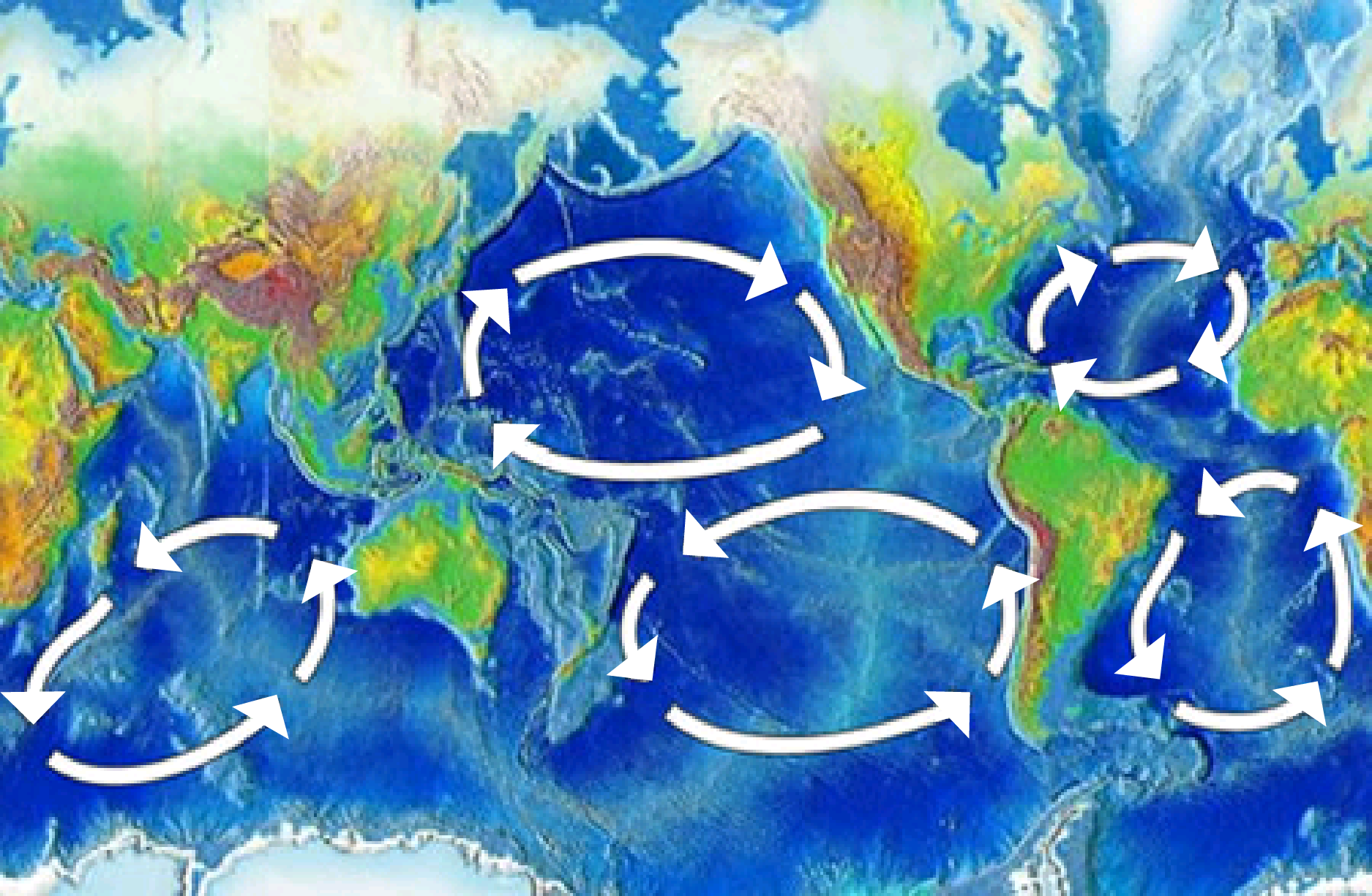
The patch is a gyre (any manner of particularly large-scale wind, swirling vortex and ocean currents) of marine litter in the central North Pacific Ocean located roughly between 135° to 155°W and 35° to 42°N.
It is full of suspended plastic and other debris that have been trapped by the currents of the North Pacific Gyre. The approximately 3.5 million tons of trash includes shoes, toys, bags, pacifiers, wrappers, toothbrushes, and bottles – all floating round and round midway between Hawaii and San Francisco.
The garbage patch stays relatively stationary in the North Pacific Ocean because of the North Pacific Gyre’s (AKA the horse latitudes) rotational pattern. This pattern draws in waste material from across the North Pacific Ocean, including the coastal waters off North America and Japan. Then, wind-driven surface currents move floating debris toward the center, trapping it in the region.
The existence of the Pacific Gyre garbage patch received more attention after articles written by Charles Moore, a California-based sea captain and ocean researcher, made it into the mainstream media. Moore, discovered it while returning home through the North Pacific Gyre after competing in a sailing race. After Moore contacted an oceanographer, Curtis Ebbesmeyer, the area began to be studies and was dubbed the “Eastern Garbage Patch” (EGP).
The actual size of the garbage patch is unknown. Estimates range from it being 0.41% to 8.1% of the size of the Pacific Ocean itself. It is often compared in size to the size of Texas.
In NJ, we see the same trash problem in the trash that washes up on our beaches and jetties. The durability and stability of plastic is what makes it practical for product, and what makes it a problem in the ocean. It is estimated that about 100 million tons of plastic are produced each year and that 10 percent ends up in the sea. Though we can blame about 20 percent of that seagoing plastic on ships and platforms, the rest comes from land.
Polythene plastic bags, bottles and containers, plastic drums, expanded polystyrene packing, polyurethane foam pieces, pieces of polypropylene fishing net and discarded lengths of rope are a good part of that garbage - plus an endless supply of plastic products like disposable lighters can be found.
Besides the larger items that we see in the water or on beaches, there are the remnants of those that do degrade. Via sunlight, wave action and mechanical abrasion, plastics break down slowly into ever smaller particles.
These particles join the small pellets of plastic lost at sea which are actually the way new plastics are marketed for manufacturers which make up a good part of the trash patches. Sometimes called "marine tumbleweeds,” huge quantities are found in beach cleanups and are found accumulated in sea areas where winds and currents are weak.
Will we be writing about the Great Atlantic Garbage Patch one day?



.jpg)


 Plastiki's Pacific-Voyage - Illustration by Andrew Rae - via






 are good at this job because they feed on cellulose, the main material used in disposable diapers. In the wild, the Oyster mushrooms grow on dead trees, so they have the enzymes to break down cellulose.


 in the Gulf of Mexico are of particular concern in this disaster as they are listed on the Endangered Species List.