Showing posts with label beaches. Show all posts

Tuesday, February 27, 2018

Repairing Beaches on LBI

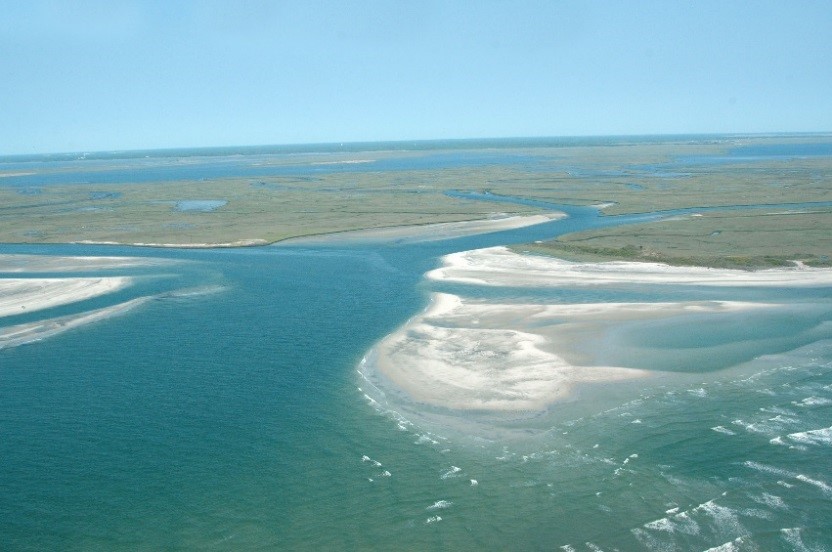
DEP PHOTO Little Egg Inlet
The Department of Environmental Protection’s Division of Coastal Engineering has launched a major project utilizing sand dredged to create a safe boat channel for Little Egg Inlet to repair beaches and dunes on southern Long Beach Island that have sustained significant erosion from storms.

“This project is designed to have the multiple benefits of restoring beaches that are economically vital for shore tourism and storm protection while making it safe for boaters to again use Little Egg Inlet,” said David Rosenblatt, DEP’s Assistant Commissioner for Engineering and Construction. “We look forward to having the project completed in time for the next tourism and boating season.”

Oak Brook, Ill.-based Great Lakes Dock and Dredge Co. on Jan. 18 launched the $18.4 million project that is utilizing sand from the southern portion of the inlet to repair beaches and dunes in Holgate and Beach Haven. The inlet is a major thoroughfare for recreational and commercial fishing boats between southern Long Beach Island and Brigantine. The project is funded by the DEP’s Shore Protection program.

The DEP is also partnering with the U.S. Army Corps of Engineers and Brigantine to pump 755,000 cubic yards of sand from the much smaller Brigantine Inlet, south of Little Egg Inlet, to repair beaches and dunes in that city that were damaged by a nor’easter in January 2016. The project began Jan. 19. Brigantine Inlet is not a navigation channel but has accumulated large shoals that can be utilized as a “borrow” area to provide sand for beaches and dunes.

Cranford-based Weeks Marine is implementing this $10.6 million project for the Army Corps of Engineers, which is providing $9.8 million in funding. The project will repair beaches and dunes from north of 14th Street south to Roosevelt Avenue. The DEP and city are cost-sharing the balance.
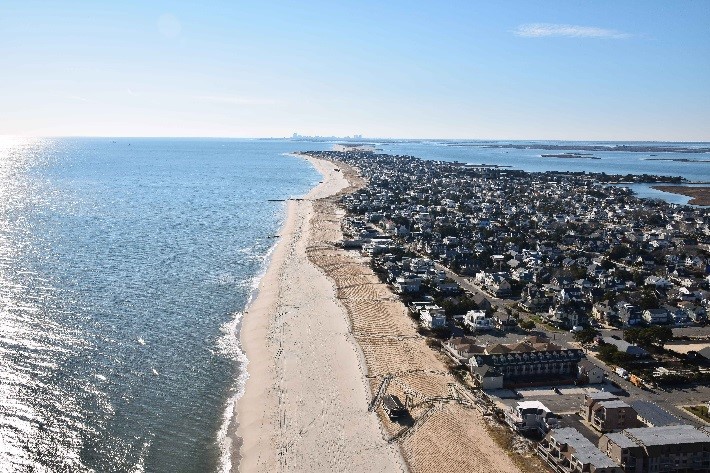
DEP PHOTO - Southern LBI project area
The much larger Little Egg Inlet is one of the widest inlets in New Jersey, and is extremely dynamic with shoals constantly shifting with the seasons. It provides access to the Little Egg Harbor portion of Barnegat Bay and Great Bay.

The channel has never been dredged. Over the years, the Coast Guard would mark the safest natural channel through the inlet. In March 2017, the Coast Guard removed navigational buoys because shoaling was so severe that no safe channel could be marked.

The Little Egg Inlet project will clear a mile-long portion of the previously marked channel that is 24 feet below mean sea level, using this sand to restore beaches in Beach Haven and Holgate on Long Beach Island. The Dredge Texas is working in conjunction with two large booster pumps to pump sand onto beaches.

Sand replacement work began near Susan Avenue in Holgate and is working north toward Beach Haven. Work has progressed to the area near Jeffries Avenue in Beach Haven. Work in Beach Haven will take about two more weeks, depending on weather.

Upon completion of work in Beach Haven, the dredge will begin operations near Rosemma Avenue in the Holgate section of Long Beach Township and will work southward to the Forsythe National Wildlife Refuge border. Pumping in this section should take about three weeks.

Depending on weather, the expectation is that all work and demobilization will be completed by mid-March. In total, some 700,000 cubic yards of sand will be moved from the inlet to the beaches, with an option to move an additional 300,000 cubic yards if necessary.

Each of the municipalities will be re-establishing sand fences, crossovers, and dune grass once the contract work and demobilization is completed.

Source: NJDEP - News Release 18/P008

Wednesday, December 6, 2017

Marine Academy of Science and Technology Recognized by New Jersey Audubon and National Wildlife Federation with Eco-Schools Award


Dune restoration by students at Sandy Hook  - Photo via ahherald.com

Marine Academy of Science and Technology (M.A.S.T.) is a co-ed four-year high school, grades 9-12. It is one of five career academies administered by the Monmouth County Vocational School District. The Marine Academy is fully accredited by the Middle States Association of Schools and Colleges. The school's curriculum focuses on marine sciences and marine technology/engineering.

The school was recognized by New Jersey Audubon and National Wildlife Federation with an Eco-Schools Award.  MAST students developed and implemented a plan to increase dune vegetation lost in Hurricane Sandy. The dunes are natural line of defense in protecting coastal communities during hurricanes and other storms.

On Sandy Hook, waves and storm surges from Hurricane Sandy badly damaged the dunes and the students identified one damaged area of particular ecological importance in an area within the park called the “critical zone.” This zone is the thinnest area and susceptible to overwash and flooding from storm events.

Working under the supervision of the National Park Service, the students planted over 1,000 dune grass plants over a span of 3,000 feet along the beaches of Sandy Hook.

The National Wildlife Federation’s Eco-Schools USA program is run by New Jersey Audubon in our state with a goal to engage schools in efforts to improve student environmental literacy and skills. The MAST dune restoration project earned them the Bronze Award.

MAST students participate in the Naval Junior Reserve Officer Training Corps (NJROTC) in lieu of Physical Education. The school is is located in the Fort Hancock Historic Area at the tip of Sandy Hook, sothe project was very "local." Their campus is adjacent to the Sandy Hook Lighthouse, the oldest working lighthouse in the country.

Wednesday, July 26, 2017

Yes, There Are Some Free Beaches in New Jersey


The Jersey Shore is not known for free beaches (or free parking), but you can find some free beaches all along our coast.

Atlantic City is a free beach town and Downtown Beach at Raleigh Avenue, Crystal Beach at New Hampshire Avenue or the Delaware Avenue Beach is open to surfers. Kayakers and wind surfers are allowed at the Jackson Avenue Beach. Want to surf cast? Fishing is allowed from10 am – 6 pm.

The free beaches at the Wildwoods offers 5 miles of wide, powdery sand.

Barnegat Beach in Barnegat Township has free access to Barnegat Bay, a public dock for boat launching, crabbing and fishing, and a boardwalk and the beach along with a historic and walkable downtown.

Cheesequake State Park in Matawan and Island Beach State Park in Seaside Park have free beaches if you pay for parking your carload of people.

Likewise, there are no entrance fees for Gateway National Recreation Area which includes Sandy Hook, but fees are charged for expanded amenities including beach parking to access beach centers.

Looking south toward Barnegat Inlet from the end of Island Beach State Park  (Wikimedia)
The visitNJ.org website also suggests some lesser-known free beach opportunities at the Jersey Shore:

  • Corson’s Inlet State Park, Strathmere - an undeveloped beach area, where shorebirds, terns and gulls can be spotted along the forested sand dunes. 
  • Highlands Beach - has small beaches between marinas with good views of sailboats, fishing boats and nearby seafood restaurants, shops and fishing rental spots. 
  • Ideal Beach, Middletown Township - quiet and less congestion without a boardwalk
  • Jennifer Lane Beach, Lower Township - at the southern edge of New Jersey, this is a great spot for dramatic sunsets at the Atlantic Ocean and the Delaware Bay. Try the sandy shoreline at Beach Haven W. Boulevard. 
  • Manahawkin Beach, Stafford Township - summer months lifeguards are on duty and there are several parks nearby for activities such as volleyball, paths for walking and biking, fishing pier and a roller hockey pit. 
  • Keansburg Beach - a kid-friendly beach with a pier and old-fashioned boardwalk.
  • Leonardo Beach, Middletown Township - 1.3-acre beach can be accessed through the parking area for Leonardo State Marina, for swimming and fishing.
  • Ocean County Park, Lakewood - free sandy beach and swimming area, tennis courts, open play fields, beach volleyball and a driving range, along with plenty of hiking trails and picnic areas. 
  • Strathmere, Upper Township - located between Ocean City and Sea Isle City, this low-key, off-the-beaten path spot offers a beach experience minues the honky-tonk boardwalk.
  • Union Beach's northeastern point has a quiet beach along the edge of extensive salt marshes. A great vantage point for birding. Park in the lot at the end of Front Street. 
  • William Morrow Beach, Somers Point - a small sandy shoreline that also offers a free concert series on Friday nights during the summer. 
MORE INFO
  1. Barnegat Beach
  2. Atlantic City beaches
  3. City of Wildwood, North Wildwood and Wildwood Crest beaches
  4. Island Beach State Park
  5. Cheesequake State Park
  6. Sandy Hook
  7. Corson’s Inlet
  8. Highlands Beach
  9. Ideal Beach
  10. Lower Township
  11. Manahawkin Beach
  12. Keansburg Amusement Park & Rapids Water Park and Keansburg Beach
  13. Somers Point beach and its summer beach concert series
  14. Union Beach
  15. Strathmere
  16. Leonardo Beach

Wednesday, November 30, 2016

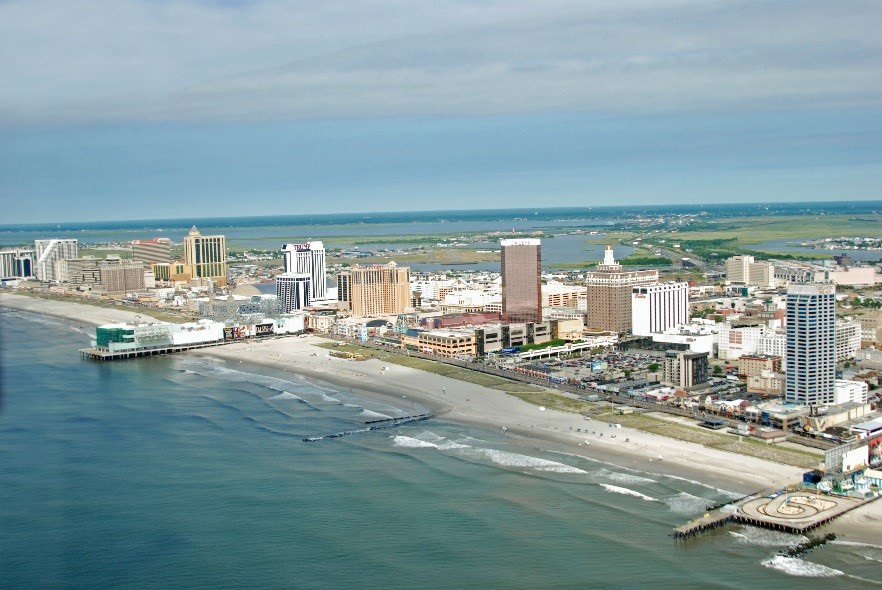
Coastal Protection for Atlantic County

The U.S. Army Corps of Engineers has awarded a $63.3 million contract to build engineered beaches and dunes in Margate and Longport and to replenish beaches in Atlantic City and Ventnor, Department of Environmental Protection Commissioner Bob Martin announced today.

The Absecon Island Coastal Storm Damage Reduction project is a joint effort of the Army Corps’ Philadelphia District and the DEP.

DEP PHOTO/Atlantic City

“This project is vital to the protection of homes, businesses, lives and infrastructure in these Atlantic County communities,” Commissioner Martin said. “I want to thank the Army Corps of Engineers for working closely with the DEP to ensure this project moves forward as an important part of the Christie Administration’s integrated strategy to make our economically vital shore communities more resilient by protecting them from storms and flooding.”

“I'm proud of the efforts of the team that has worked so hard to move this project forward,” said U.S. Army Corps of Engineers' Philadelphia District Commander Lt. Col. Michael Bliss. “When complete, the engineered dune and berm will be one system with the purpose of reducing damages to the infrastructure on the island.”
The contract was awarded to Cranford-based Weeks Marine Inc. and covers about eight miles of shoreline stretching from Brigantine Inlet south to Great Egg Harbor Inlet. The contract amount could increase based on options for placement of additional sand based on conditions that exist when the sand is placed.

The Army Corps will issue a notice to Weeks Marine Inc. directing work to commence before the end of the year. The work is expected to be completed by October 2017.
Work involves constructing an engineered dune and berm system in Margate and Longport as well as the scheduled nourishment of the previously constructed sections of the project in Atlantic City and Ventnor.

The contract calls for a 200-foot-wide beach, also known as a berm, and a dune built to an elevation of nearly 15 feet above sea level for Atlantic City. A 100-foot wide berm and a dune to an elevation of nearly 13 feet above sea level will be built for Ventnor, Margate and Longport.

More than 3.8 million cubic yards of sand will be dredged from approved offshore areas and pumped through a series of pipes onto the beaches of the four municipalities. The sand will then be built into a dune and beach system designed to reduce potential damages to infrastructure, businesses, and homes that can occur from coastal storm events.
In addition, the contract includes the construction of public access dune crossovers, placement of sand fencing, dune grass plantings, and the repair or extension of existing storm water outfalls and drainage structures.
The Absecon Island project was only partially completed when Superstorm Sandy slammed the state in October 2012. The project in place helped to dramatically reduce damages along those sections of the island.

The Army Corps had completed the initial construction of the project at Atlantic City and most of Ventnor in 2004. These sections of the project received sand nourishment in the spring of 2012, months before Sandy. The areas were restored in 2013, just months after Sandy.

The Army Corps will closely coordinate with Weeks Marine on the construction schedule and will post updates to its project website when further information is available.

Completing the initial construction in Margate and Longport is funded entirely by the federal government through the 2013 Disaster Relief Appropriations Act, commonly known as the Hurricane Sandy Relief Bill.

The periodic nourishment of the Atlantic City and Ventnor portion of the contract is cost-shared, with the federal government paying 65 percent of the project and the DEP paying 35 percent. Following the completion of initial construction, the project is eligible for continued periodic nourishment.

The Absecon Island project is one of several along the New Jersey coastline being funded by $1.2 billion appropriated by Congress to rebuild and strengthen the state’s beaches following Superstorm Sandy in October 2012. Many of these projects have either been completed or are well under way.

The coast-wide system of engineered beaches is part of an overall post-Sandy resiliency strategy. These efforts include hardening of infrastructure, developing innovative strategies to restore wetlands and build natural bay shorelines to buffer against storm surge, moving willing sellers out of harm’s way, and establishing new requirements for elevating structures in flood zones.

For more information on post-Sandy coastal projects in New Jersey, visit: www.nj.gov/dep/shoreprotection/projects.htm

SOURCE  nj.gov/dep/newsrel/2016/16_0114.htm


Sunday, July 19, 2015

Down the Shore: Public Access to Beaches


"The public’s right to access tidal waters and their shorelines, embodied in the Public Trust Doctrine, has existed prior to the inception of the State of New Jersey and continues to this day.  The Public Trust Doctrine is the principle that certain resources, in this case tidal waters and shorelines, are preserved for public use, and that the government is required to maintain them for the public's reasonable use.  Subsequent court cases have interpreted and implemented its strictures, and many legislative acts and regulatory provisions rely on the Doctrine to protect and enhance access.  The Department of Environmental Protection has long seen protecting this right as a vital part of our mission. We require public access to the shore and tidal waterways under the Coastal Permit Program and the Coastal Zone Management rules."       nj.gov/dep/cmp/access/

Saturday, June 27, 2015

Down the Shore

Seaside Park
Summer beach season at the Jersey Shore in full force as kids are out of school. There have already been many events down the shore because we don't follow the "official" start of summer in June - and we don't end summer at the shore until it's too cold to go to the beach in autumn!


Here are some links to help you visit our 127 miles of beaches.
Seaside Heights
There are a number of webcams that allow you to take a look at the shore. It's a nice escape when you're in the office and a way to check out weather conditions before you head down the shore.

Friday, June 27, 2014

Testing the Waters at the Jersey Shore


Testing the Waters is a guide to water quality at vacation beaches. The state summary for New Jersey ranked our state third in beach water quality (out of 30 states. Only 3% of samples exceeded the national Beach Action Value for designated beach areas in 2013.

New Jersey has public beaches lining 127 miles of the Atlantic coast. The Cooperative Coastal Monitoring Program (CCMP), which is administered by the New Jersey Department of Environmental Protection, conducts quality monitoring from mid-May to mid-September.

You can find daily activity reports, including beach closings and advisories, at www.njbeaches.org (the CCMP website). As I write this, the Jersey shore beaches are all green lights and open.

In 2013, New Jersey reported 492 coastal beaches and beach segments, 288 of which were monitored. New Jersey also has "bracket" beaches that are adjacent to regularly monitored beaches; if high bacteria concentrations are found at a regularly monitored station, sampling is conducted at bracket stations to determine the extent of the affected area.

That 3% number means that of all reported beach monitoring samples, 3% exceeded the Beach Action Value (BAV) of 60 enterococcus bacteria colony forming units (cfu) per 100 ml marine or estuarine water in a single sample.

The 4 beaches in NJ that did exceed the rate with the highest percentages in 2013 were Berkeley Township at Beachwood Beach West in Ocean County (52%), Neptune Township at Shark River Beach and Yacht in Monmouth County (20%), Berkeley Township at West Beach Avon Road in Ocean County (18%), and Brick Township at Windward Beach in Ocean County (17%).

Thursday, August 5, 2010

Court Order Provides Public Access to Sea Bright Beach

A Superior Court judge has ruled in favor of the state, ordering a beach club in Sea Bright to provide public access to the beach in front of the club, Commissioner Bob Martin announced today.

Judge Thomas W. Cavanagh, presiding in the Chancery Division in Monmouth County, this week issued an order ruling that the public owns all the tidelands in front of the Sea Bright Beach Club and ordered the club to work with the DEP on developing a plan to accommodate public access, including plans for maintenance, lifeguard protection and signage.

“Access to our beaches is an important right for everyone,” Commissioner Martin said. “This ruling restores the right of all members of the public to enjoy significant areas of the beaches in Sea Bright, even if the beaches happen to be in front of a private beach club. The next step is to work out a public access plan with the Sea Bright Beach Club.”

The ruling resolves access to the last of nine beach clubs that were named in a lawsuit the state filed in 2006 over public access to Sea Bright’s beaches. The lawsuit argued that 1993 agreements limiting public access to a 15-foot-wide limited use corridor were contrary to law and public policy.

Earlier this year, the state reached a settlement agreement with six other private beach clubs. They were the Chapel Beach Club, the Surf Rider Beach Club, Driftwood Beach Club, Sands Beach Club, Water’s Edge Beach Club and Ship Ahoy Beach Club. Under that settlement, the borough of Sea Bright also agreed to provide additional public-access amenities.

Another club, the Trade Winds Beach Club, was sold for residential development and public access has been allowed to the beach there. Another club, Donovan’s Reef Beach Club, settled previously and now allows full public access.

The DEP continues to work on new, comprehensive rules that will implement a common-sense approach for providing public access to beaches and waterways. A key objective is allowing municipalities to develop plans that recognize local conditions and costs without compromising public access.


NJDEP Press release http://www.nj.gov/dep/newsrel/2010/10_0066.htm

Wednesday, November 11, 2009

Sedge Invades NJ Beaches


It looks innocent enough all alone...


It's a foreign attack, and it's hitting the Jersey dunes.

It's an invasive foreign plant that is getting into New Jersey's critical dune systems.

It is called Asiatic sand sedge and it could take over the habitat of endangered and threatened species, such as the piping plover, as well as lowering the dunes which protect communities from flooding. (Only 105 plover pairs nested on NJ beaches this year, down from 111 pairs in 2008 according to the Conserve Wildlife Foundation of New Jersey.)


The plant has no known predators or diseases here.

The yellow-green plant was actually first spotted in the United States in Island Beach State Park in 1929. It forms a dense mat and drives out native plants, such as American beach grass and beach panic grass.

According to the Fish and Wildlife Service, the plant occupies more than 90 acres in Island Beach State Park and on Sandy Hook and Asiatic sand sedge populations also have been found in Sea Bright, Monmouth Beach, Long Branch, Manasquan, Harvey Cedars, Long Beach Township, Edwin B. Forsythe National Wildlife Refuge and other locations.
A group of students from Georgian Court, Marine Academy of Science and Technology on Sandy Hook, and Brookdale Community College are studying the sedge, mapping its extent and studying ways to get rid of it. Digging and pulling out sedge plants by hand can be effective with small infestations, but the plant's roots are 3 to 4 feet deep.


but let it get hold in a sand dune...

More information at http://www.courierpostonline.com
Photos via National Park Service