Showing posts with label spotted lanternfly. Show all posts

Thursday, August 14, 2025

Spotted Lanternflies in New Jersey

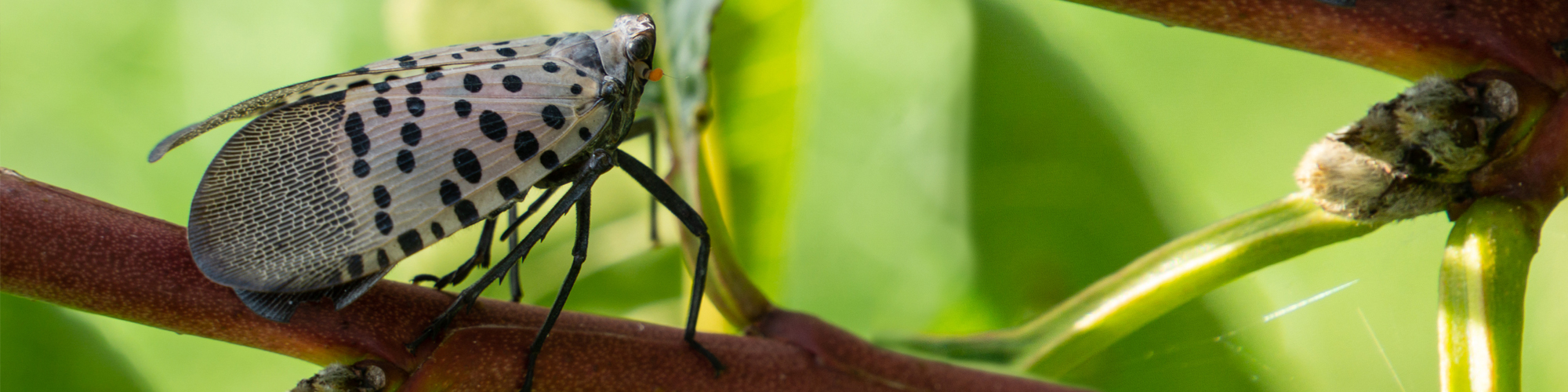
If you've stepped outside lately and spotted a bug with gray wings and a flash of crimson underneath, you're not imagining things—the spotted lanternfly is back. These invasive pests have returned to New Jersey in full force, and while they may look striking, they’re causing serious trouble for our environment.

After reading about how lanternflies are devastating Virginia's vineyards, I looked for updates from our own state. As of summer 2025, lanternflies are active across the Garden State, especially in North Jersey, where their populations are most concentrated. By now, they’ve reached their adult phase and will remain active until the first hard freeze. You’ll likely find them clinging to trees, hopping around your garden, or even hitching a ride on your car.


adult

Spotted lanternflies aren’t just a nuisance—they’re a threat to our local ecosystem. These insects feed on over 70 types of plants, including grapevines, maples, black walnuts, and fruit trees.

Their feeding weakens plants and leaves behind a sticky substance called honeydew, which attracts other pests and promotes mold growth. That means your backyard trees, local vineyards, and even public parks could be at risk.

One of the lanternfly’s favorite hangouts is the Tree of Heaven, itself an invasive species. These trees serve as prime egg-laying spots, making them a key target for control efforts. If you have one on your property, consider removal or treatment—it’s a proactive step in curbing the spread of the lanternfly.

New Jersey isn’t sitting idle. The state has extended grants to counties and municipalities to support lanternfly control efforts through 2026. But officials can’t do it alone—citizen action is crucial. So, here’s how you can help:

Stomp them: Yes, really. Squashing lanternflies is encouraged.

Report sightings: Use the NJ Department of Agriculture’s online portal to log infestations.

Check your car: Lanternflies love to hitch rides. Inspect your vehicle before traveling.


Friday, July 4, 2025

Bats Helping Rid Us of Lanternflies


We have known in NJ for several years about the spotted lanternfly. The New Jersey State Department of Agriculture put out warning about how this insect invader could have devastating effects on farms and vineyards in the Garden State.

One piece of good news is that a researcher at Rutgers found that the invasive species has an enemy that we didn't know about before – bats. "Most recently, we've discovered that they are eating the spotted lanternfly," said Erin McHale, a PhD candidate. As a part of McHale's research study, she analyzes what bats are eating by studying their guano (bat poop).

Bats are incredibly helpful to humans. Many bats eat insects and some can consume thousands of mosquitoes in a single night, reducing the need for chemical pesticides.

Fruit bats pollinate plants. We are not growing bananas, mangoes, and agave in NJ but where it is grown they help maintain ecosystems and agriculture.

Bats spread seeds through their droppings, helping forests regenerate and grow. 

New Jersey residents can help by installing a bat house. If it attracts bats, they can consume thousands of insects every night in your neighborhood. 

Thursday, August 6, 2020

New Jersey: Have You Seen Spotted Lanternflies?

A side-top view of an adult spotted lanternfly (Lycorma delicatula)
Image by Walthery - Own work, CC BY-SA 4.0

Usually, I am writing here about things that are endangered or threatened in New Jersey, but thi spost is about a species we would like to see become extinct.

The spotted lanternfly (Lycorma delicatula) is a planthopper that is indigenous to parts of China, India, Vietnam, and eastern Asia. Although it has two pairs of wings, it jumps more than it flies.

In its native habitat it is kept in check by natural predators or pathogens but it was accidentally introduced and was first recorded in the United States in September 2014. By 2018 it was considered an invasive species in eastern Pennsylvania, southwestern New Jersey, northern Delaware, northern Virginia, and eastern Maryland.

What should you do if you spot one in New Jersey? 

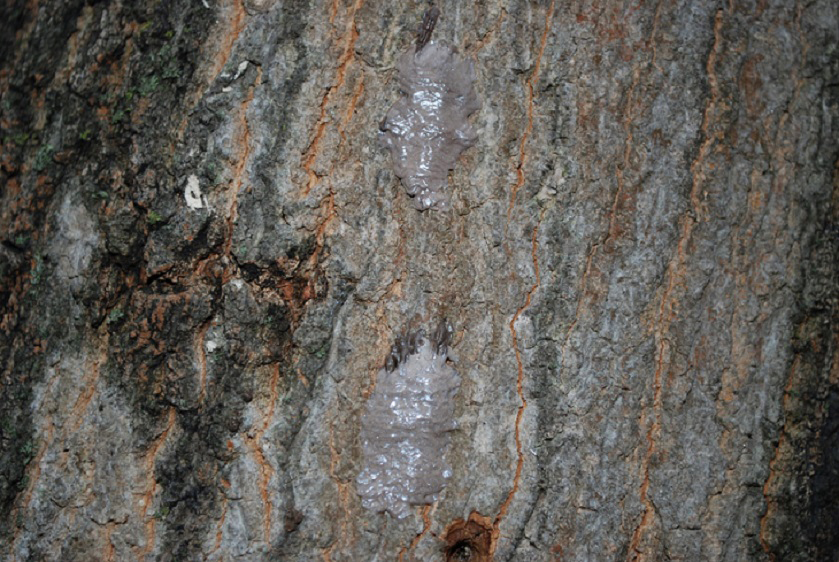
Egg masses

If you see egg masses (pictured above), scrape them off, double bag them and throw them away. You can also place the eggs into alcohol, bleach or hand sanitizer to kill them.

Watch an instructional video here: https://www.youtube.com/watch?v=WoFp_MbDiE8

Kill and collect a specimen: Specimens of any life stage can be turned in to the New Jersey Department of Agriculture’s lab for verification.

Take a picture: With your GPS function turned on your smartphone or a camera with GPS, take a photograph of ANY life stage (including egg masses) and
s
ubmit picture to: SLF-plantindustry@ag.nj.gov

Report a site: If you can’t take a specimen or photograph, call New Jersey Spotted Lanternfly Hotline at 1-833-223- 2840 (BADBUG0) and leave a message detailing your sighting and contact information.

• Spotted Lanternfly Reporting Guidelines

• Spotted Lanternfly Industry Guidelines