Showing posts with label Citizen Scientists. Show all posts
Tuesday, July 11, 2017
Have You Sighted a NJ Endangered Species?
You can help the Endangered and Nongame Species Program (ENSP) maintain updated records of rare species within the state. I was reminded of this recently when a commenter on a post here about bobcats mentioned that "local animal control" didn't seem interested in his sighting. That might often be true, but ENSP is interested.
You should check the list of New Jersey's endangered and threatened wildlife species maintained by the Division of Fish and Wildlife's Endangered and Nongame Species Program (ENSP).
If you have information on the location of a rare animal and would like to help build the Natural Heritage inventory, you can submit a report. This data will help develop critical habitat mapping and look at habitat and population trends, and ultimately help develop conservation strategies for endangered and threatened species.
You can fill out the sighting report form available at state.nj.us/dep/fgw/ensp/rprtform.htm (There is also one online for marine wildlife.)
Reporting includes marking the location of the sighting on a map to help biologists determine if suitable habitat is present at the location.
There is also information on submitting your report by mail or email.
Each record will be reviewed by an ENSP biologist.
Sunday, June 11, 2017
Reporting Rare Wildlife Sightings in NJ
I get emails and comments at this blog fairly regularly when people sight what they believe is an endangered, threatened or rare species. Some of those contacts have led to posts, but this is not an official blog, so I can't always get the information to the people at the NJ Division of Fish and Wildlife or the Endangered and Nongame Species Program.
Just this week, a commenter reported sighting a fisher. The state agencies are understaffed and really need accurate information, so that conservation action can be focused on NJ's most important natural areas. If you have information on the location of an endangered, threatened or rare animal or plant and would like to help, you can report the sighting. This data will helps develop critical habitat mapping and look at habitat and population trends, and ultimately helps to develop conservation strategies for endangered and threatened species.
TO REPORT A SIGHTING
Mail completed surveys to:
Endangered and Nongame Species Program
NJ Division of Fish and Wildlife
P.O. Box 400
Trenton, NJ 08625-0400
or send it as an e-mail attachment to: Gretchen.Fowles@dep.state.nj.us
In order to maintain the validity and integrity of the database, each record will be reviewed by an ENSP biologist. NOT ALL SUBMISSIONS WILL BE ACCEPTED.
Click these links for a listing of the current New Jersey Endangered and Threatened Species List or Special Species of Concern.
If you have any questions please contact ENSP at 609-292-9400.
![]() |
| Fisher - via wikipedia commons |
TO REPORT A SIGHTING
- Look at the information at www.state.nj.us/dep/fgw/ensp/rprtform.htm
- Complete a sighting report form OR, for marine wildlife, please use the Marine Wildlife Sighting Report Form Complete this form in its entirety - anonymous submissions cannot be incorporated into the database.
- These reports are for first hand field observations only. DO NOT COMPLETE THIS FORM if the source of your information is a report, news item, email, conversation, or other document. If that is the case, send the documentation instead.
- Only report one species at each location per form and map.
- Mark the location of the sighting on a map. When submitting a report, a map is necessary to help our biologists determine if suitable habitat is present at the location. Once the suitability of the area is determined the map provided aids in the delineation of land to be protected.
Mail completed surveys to:
Endangered and Nongame Species Program
NJ Division of Fish and Wildlife
P.O. Box 400
Trenton, NJ 08625-0400
or send it as an e-mail attachment to: Gretchen.Fowles@dep.state.nj.us
In order to maintain the validity and integrity of the database, each record will be reviewed by an ENSP biologist. NOT ALL SUBMISSIONS WILL BE ACCEPTED.
Click these links for a listing of the current New Jersey Endangered and Threatened Species List or Special Species of Concern.
If you have any questions please contact ENSP at 609-292-9400.
Wednesday, May 10, 2017
Citizen Scientists in New Jersey
I read a post celebrating the "citizen" in citizen science. There are many people who like to say that citizen science is about citizenship as well as science.
Citizen science is sometimes called crowd science, crowd-sourced science, or civic science. It can be the volunteer monitoring of a habitat or species. It can be doing scientific research conducted voluntarily, in whole or in part, by amateur or nonprofessional scientists. It is public participation in scientific research, and by conducting this research, people are likely to become a better citizen. It may cause you to become involved in the cleanup of a waterway in your area, or get you to become involved in protecting a species. You will certainly be learning more about your physical world.
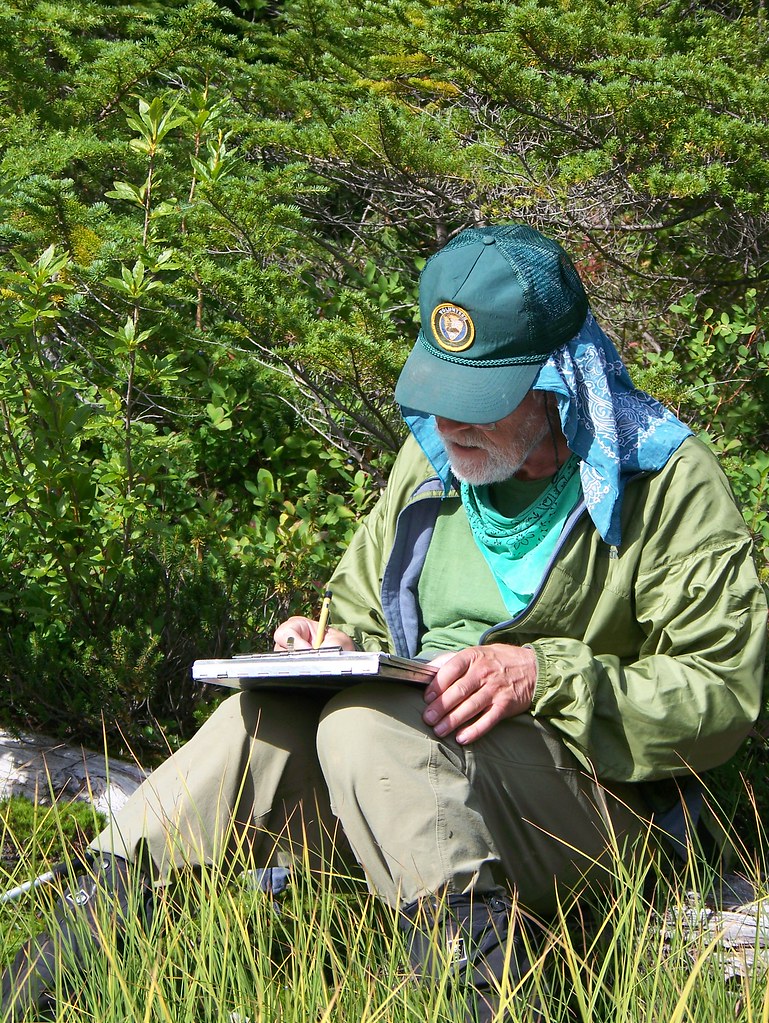
My own entry into citizen science began when I volunteered for the state's Wildlife Conservation Corps in 1990. I began by working on educational programs along with other volunteers at the Pequest Trout Hatchery and Education Center. I was able to develop and present some programs on tracking, map and compass and even nature writing. I also participated in fishing instruction, visitor services, trail maintenance, and bird house and butterfly garden maintenance.
Away from Pequest, I also volunteered at deer check stations, went on dead deer exccursions with NJDEP biologists to monitor how and why deer were dying or killed over winter (unrelated to hunting).
I also have participated in the Speaker's Bureau giving presentations to community groups and schools.
My focus over the past decade, as you might guess from this blog, has been working with the Endangered and Nongame Species Program (ENSP).
All volunteers for the NJDEP Division of Fish and Wildlife are members of the NJ Wildlife Conservation Corps (WCC) which is the largest natural resource management volunteer group in the state. WCC citizen science activities can assist in a wide variety of Division activities: operation of turkey, beaver and otter check stations; spring, fall and winter trout stocking programs; operations at the Rockport Pheasant Farm; fishing instruction at the Pequest facility; upkeep of hunter training ranges located in Wildlife Management Areas; and various activities with the Endangered and Nongame Species Program.
And there are a good number of other opportunities to volunteer in NJ.
The NJ State Forestry Services Volunteers in Forestry Program provides an opportunity for individuals and groups to help improve and enhance our forest resources. These citizen scientists are stewards of the land and value conserving our natural resources. If you'd like to donate your talent and time, go to state.nj.us/dep/parksandforests/
The NJ Audubon Citizen Science Program aims to develop information datasets through citizen participation, on the abundance distribution, and demography of avian species. Using information collected through the contributions of Citizen Scientists to provide the basis for managing bird populations at multiple spatial and temporal scales, to improve our knowledge of the ecology of New Jersey, and to promote habitat preservation.
The American Littoral Society was founded by scientists and naturalists who believed in the value of citizen science. They also engage members of the public in field research to increase the data collected and to connect our volunteers more closely to the natural world. This is a way that you, your kids, your students and your friends can get involved in science that will help the coastal environment by working with programs such as their Fish Tagging Program and Spill Spotters Network (reporting oil spills or other severe pollution events).
I also volunteered for several years in the National Park Service's Volunteer in the Parks program at Sandy Hook. I worked summers on the beaches monitoring and trying to protect nesting shorebirds from beachgoers by educating them about the species there.
There are probably many programs in your county or hometown. Citizen Science in Newark, New Jersey might mean helping the EPA monitor air sensors to help the Ironbound community. The Ironbound neighborhood is surrounded by a number of industries and a dense network of roadways and other transport routes. Residents of the community are getting a technological boost from EPA in their efforts to learn about sources of harmful air pollutants and improve public health with portable air sensor developed by EPA researchers to monitor levels of particulate matter and nitrogen oxide – pollutants that cause short- and long-term health effects and are regulated under the Clean Air Act.
You can even do citizen science from home. One example is WhaleFM which helps marine researchers understand what whales are saying. Volunteers listen to recordings of Orcas and Pilot Whales on your computer and help match them to like recordings. This project is sponsored by Scientific American, Zooniverse, and marine scientists from around the world. This is great for ocean lovers who don't live near an ocean or are limited in their ability to get outside.
![]() |
| banding osprey chicks - NJDEP |
Monday, April 6, 2015
Winter Bird Feeding: Good or Bad for Birds?
With a bit of spring weather visiting us this past week, some people might be starting some backyard cleanup. Did you have bird feeders out this past winter? I saw in my online reading "Winter Bird Feeding: Good or Bad for Birds?" asks an article posted on Cool Green Science.
With more than 40 percent of U.S. households feeding their backyard birds, it's a good question.
The overwinter survival of birds is enhanced by bird feeding and some studies have shown that birds making it through the winter in better physical condition see those benefits carry over into the nesting season.
All of that seems logical, but other studies have shown unintended consequences of bird feeding.
A study in the United Kingdom to examine the impact of bird feeding on nesting success found that birds fed during winter subsequently laid a smaller number of eggs that had lower hatching success and ultimately fledged fewer young than birds that weren’t fed at all. The offspring that did fledge weighed less and had a lower survival rate than the young of unfed birds.Further study is needed and if you want to be a Citizen Scientist, you can help by participating in initiatives like Project FeederWatch that ask people with bird feeders to share their observations. Project FeederWatch is a winter-long survey of birds that visit feeders at backyards, nature centers, community areas, and other locales in North America. FeederWatchers periodically count the birds they see at their feeders from November through early April and send their counts to Project FeederWatch. FeederWatch data help scientists track broadscale movements of winter bird populations and long-term trends in bird distribution and abundance.
Winter bird feeding is one of the most popular ways for people to interact with nature, and most do it to help birds get through these tough months. But what does this really mean for conservation? Does feeding help or hurt birds?
More than 40 percent of U.S. households feed their backyard birds, and in the United Kingdom, the rate is as high as 75 percent.
Despite the widespread popularity of bird feeding, scientists are still building a basic understanding of its impacts.
As we might guess, a number of studies show generally positive impacts of bird feeding. For example, the overwinter survival of birds is enhanced by bird feeding.
This is especially true during the coldest times, when some hungry birds might otherwise lose the battle with the elements1.
A study conducted during winter in Wisconsin showed that black-capped chickadees with access to bird seed had a much higher overwinter survival rate (69 percent) as compared to those without access to human-provided seed (37 percent survival).
Furthermore, some studies have shown that birds making it through the winter in better physical condition see those benefits carry over into the nesting season.
Bird feeding produces significantly earlier egg laying dates, larger clutches of eggs, higher chick weights and higher overall breeding success across a wide range of bird species2,6.
The greatest impact of feeding is seen when birds are most challenged, such as after particularly harsh winters, or when birds are young and inexperienced, or when they are living in low-quality habitats2. Feeding can promote the survival and reproduction of the not-quite-fittest.
But in contrast to these straightforward results – showing that bird feeding makes for better-off birds – a few studies indicate that, at least in some situations, there may be unintended consequences of bird feeding.
A European relative of the black-capped chickadee, the blue tit, was studied in the United Kingdom to examine the impact of bird feeding on nesting success.
One research group3,4 found that birds fed during winter subsequently laid a smaller number of eggs that had lower hatching success and ultimately fledged fewer young than birds that weren’t fed at all. The offspring that did fledge weighed less and had a lower survival rate than the young of unfed birds.
An additional U.K. study of the blue tit and another chickadee-like species, the great tit, had similar findings.
Both species, when they had access to bird food, laid fewer eggs, had lower hatching success, and ultimately had fewer chicks fledged.
Note, however, that these are just two studies demonstrating a negative effect of bird feeding – among a majority that show positive effects.
Nonetheless, the striking findings of lower reproductive success in supplementally fed birds need some explanation. Unfortunately, it was beyond the scope of these U.K. studies to definitively explain how bird feeding resulted in lower reproductive success, but the authors offer several possible hypotheses.
One possibility the authors suggest is that the bird feeding provided an irresistible diet that was unbalanced – too high in fat to produce high-quality eggs. More protein, micronutrients, and antioxidants than are provided by bird seed may be needed to produce high-quality eggs.
Another possibility is that bird feeding allowed individuals with a lower reproductive capacity which ordinarily would not survive the winter the chance to nest.
A final possibility is that the feeders were placed in poor quality nesting habitat – leading the birds to choose these suboptimal sites as nesting areas in the spring.
More research needs to be done across a wider geographic area and on more species to understand not only the impacts of bird feeding on reproductive success, but also on other factors such as disease transmission, species range expansion, and population trajectories.
Citizen scientists can help by participating in initiatives like Project FeederWatch that ask people with bird feeders to share their observations. What you see in your own backyard can contribute to the efforts to answer these questions.
- See more at: http://blog.nature.org/science/2015/01/05/winter-bird-feeding-good-or-bad-for-birds/?src=e.gp#sthash.GJenTpwC.dpuf
Monday, March 8, 2010
Project Budburst
As a followup to last Friday's post on nature's own calendar, here's more information about a program to which you can contribute your observations. Volunteers who take part in Project BudBurst, track climate change by recording the timing of flowers and foliage in their own local area.
The project started as a pilot program in 2007 operated by the University Corporation for Atmospheric Research (UCAR), the Chicago Botanic Garden, and the University of Montana. They are collecting thousands of observations from students, gardeners, and others to give researchers a more detailed picture of our warming climate. It's crowdsourcing data collection.
There's lots of information on the project site and at the links below, but here are some basics:
- Each participant in Project BudBurst selects one or more plants to observe. (The project website suggests more than 75 widely distributed trees and flowers, with information on each and you can add your own choices.)
- You start by checking your plants at least a week prior to the average date of budburst (the point when the buds have opened and leaves are visible).
- After budburst, you continue to observe the tree or flower for later events, such as seed dispersal.
- When you submit records online, you can view maps of these phenophases across the United States.
One that I did last year and will do again is that harbinger of spring, the forsythia (Forsythia xintermedia).
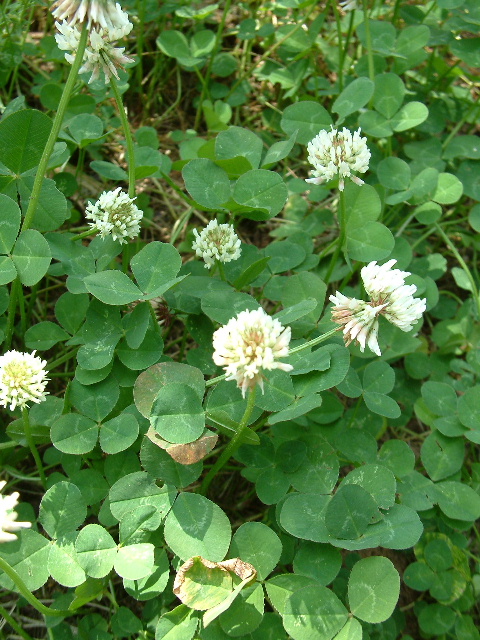
Maybe this spring when white clover pops up in your lawn, instead of battling it, you can observe it.
Did you know that it is in the plant family of the pea or legume (Fabaceae)? Trifolium repens, like other members of the pea family, fix nitrogen. This makes clover an important agricultural and rangeland plant—by planting it with grasses it is possible to increase the grass yield. Clover leaves and flowers are also good forage for wildlife and it is used widely by bees to produce honey.
I like both the scientific side of this, and becoming mindful of the natural world around you.
I recommend you take on this easy citizen scientist project in your own little part of the world. You can certainly do it for yourself, but sharing the information with the Project really adds another level of awareness.
MORE INFO
Friday, March 5, 2010
A New Jersey Nature Calendar
I have been following signs in my local area for years looking to nature to tell me that it was time to plant in my garden.
That is something you have to do locally, so my own garden calendar probably applies to New Jersey, or just and this area of Essex County in some cases, and only specifically to my own square mile in other cases.
In fact, sometimes they seem to apply only to my own backyard microclimate! For example, the daffodils I have planted in the garden bloomed last year five days later than several houses around the block - probably due to the amount of sun they receive.
I also take note of things that are happening around the state with wildlife. There are people who focus just on bird migrations as a sign of spring, for example.
From my NJ nature calendar for spring:
around March 25 - piping plovers return to NJ - time to prune evergreens, turn compost, sow peas and spinach
April 26 - bluefish run usually begins.
April 29 - first piping plover nests on Jersey beaches.
You get the idea.
For centuries farmers, naturalists, and scientists have kept records of the patterns of plants and animals and used the information to predict the best time for planting and harvesting crops and when to start expecting problems with insect pests.
There are other "citizen scientists" out there. You can join thousands of others in gathering environmental and climate change information from across the country in a program called Project BudBurst.
It asks you to make careful observations of the phenophases in your area such as first leafing, first flower, and first fruit ripening of a diversity of trees, shrubs, flowers, and grasses. What is really important is to observe the first day of the appropriate phenophase (like the first flower).
Phenology (which I had never heard of, even though I was doing it) is the study of the timing of life cycle events like leafing, budding, and blooming in plants.
The phenological events of many species has changed recently as a result of changing temperatures and rainfall patterns. The average global temperature increased by 0.6°C ( 1.0°F) during the 20th century. The temperature is predicted to rise with another 1.8 to 4.0°C ( 3.2 to 7.2°F) in the 21st century. That probably seems like pretty small variations, but at the global scale it can have dramatic effects on the environment.
Climate change has the largest effect on plants because, unlike many animals, they cannot move easily from one area to another.
The results might be that the growing season could start earlier or continue over a longer period of time. In NJ, the "official" last frost date is anywhere from April 15 to May 15, but I have been keeping track myself and a May frost has been the rare exception for my little microclimate in the past 20 years.
So, watching for the phases of the plant life cycle (phenophases) causes you to be very mindful of things like temperature, rainfall and day length. Monitoring changes in events such as first bud, budburst, and flowering, can help scientists detect climate change.
Got a New Jersey plant or wildlife calendar observation? Click the comment link below and let us know.
That is something you have to do locally, so my own garden calendar probably applies to New Jersey, or just and this area of Essex County in some cases, and only specifically to my own square mile in other cases.
In fact, sometimes they seem to apply only to my own backyard microclimate! For example, the daffodils I have planted in the garden bloomed last year five days later than several houses around the block - probably due to the amount of sun they receive.
I also take note of things that are happening around the state with wildlife. There are people who focus just on bird migrations as a sign of spring, for example.
From my NJ nature calendar for spring:
around March 25 - piping plovers return to NJ - time to prune evergreens, turn compost, sow peas and spinach
April 26 - bluefish run usually begins.
April 29 - first piping plover nests on Jersey beaches.
You get the idea.
For centuries farmers, naturalists, and scientists have kept records of the patterns of plants and animals and used the information to predict the best time for planting and harvesting crops and when to start expecting problems with insect pests.
There are other "citizen scientists" out there. You can join thousands of others in gathering environmental and climate change information from across the country in a program called Project BudBurst.
It asks you to make careful observations of the phenophases in your area such as first leafing, first flower, and first fruit ripening of a diversity of trees, shrubs, flowers, and grasses. What is really important is to observe the first day of the appropriate phenophase (like the first flower).
Reporting what you observe contributes valuable environmental and climate change information - but it's also a great way to learn about the environment, connect to nature, and contribute to science, all at the same time.
Phenology (which I had never heard of, even though I was doing it) is the study of the timing of life cycle events like leafing, budding, and blooming in plants.
The phenological events of many species has changed recently as a result of changing temperatures and rainfall patterns. The average global temperature increased by 0.6°C ( 1.0°F) during the 20th century. The temperature is predicted to rise with another 1.8 to 4.0°C ( 3.2 to 7.2°F) in the 21st century. That probably seems like pretty small variations, but at the global scale it can have dramatic effects on the environment.
Climate change has the largest effect on plants because, unlike many animals, they cannot move easily from one area to another.
The results might be that the growing season could start earlier or continue over a longer period of time. In NJ, the "official" last frost date is anywhere from April 15 to May 15, but I have been keeping track myself and a May frost has been the rare exception for my little microclimate in the past 20 years.
So, watching for the phases of the plant life cycle (phenophases) causes you to be very mindful of things like temperature, rainfall and day length. Monitoring changes in events such as first bud, budburst, and flowering, can help scientists detect climate change.
Got a New Jersey plant or wildlife calendar observation? Click the comment link below and let us know.
Wednesday, February 10, 2010
The Great Backyard Bird Count
The Great Backyard Bird Countis an annual four-day event. This year is will be on February 12-15 (Thursday - Monday).
Bird watchers of all ages will be counting birds to create a real-time snapshot of where the birds are across the continent. Anyone can participate, from beginning bird watchers to experts. You can spend 15 minutes on one day or all all four days getting involved.
The count is a collaborative effort of the Cornell Lab of Ornithology and Audubon. Participants are helping scientists learn about bird populations. It's also a good activity to get kids interested in the nature that's literally in their backyard.
GBBC events are all over North America. Below are events listed for New Jersey. Additional events are listed on their website.
GBBC Birding Seminar
When: Saturday, February 6, 10:00 AM-Noon
Where: Forest Road Park building at Fanwood Nature Center. Join the Fanwood Environmental Commission for an information session and birding seminar. Learn about birds that come to your feeder with birding expert, Holly Hoffman. Pre-registration required. Walk-ins welcome depending on space availability. Also learn how to count birds for the GBBC. Participate in bird activities and games to learn how to identify birds and how they adapt to different habitats. Pick up a bio-degradable bird feeder kit. Attractive door prizes! This is a free event open to all ages and skill levels. Children will receive participation certificate and a bird patch. On Valentine’s Day, February 14, we invite you to the Fanwood Nature Center to join volunteers to count birds for the GBBC. To register for birding seminar on Feb 6, forms available at www.fanwoodec.org or the Fanwood Borough Hall. Drop off completed registration form by Feb 3, at Fanwood Borough Hall or call to register at 908-322-8236 or email registration to fanwoodec@fanwoodec.org.
Hillsborough.
-Friday, February 12, 10:00-Noon: GBBC Bird Walk
Members of the Natural Resources staff at Duke Farms will lead volunteers along trails on the property to record bird species and numbers. Bird watchers of all levels, including beginners, are invited to attend. Free, no pre-registration required. Meet at the Visitors Center.
-Saturday and Sunday, February 13-14, 10 AM- 3:00 PM: Trails Open for GBBC Counting
Bird watchers who wish to participate in the GBBC should pick up checklists at the Visitors Center before heading out to tally birds, or they may count birds at the feeders located outside the Visitors Center. Free, no pre-registration required.
Contact: For directions to Duke Farms or for more information on their their birding and other educational programs, visit www.dukefarms.org or call (908) 722-3700.
Where: Flat Rock Brook Nature Center, 443 Van Nostrand Avenue, Englewood. Be a “citizen scientist” and participate in the GBBC. Learn to identify New Jersey’s winter birds and then take a guided walk to identify and count all the birds we can find. Our data will be used by scientists to analyze bird populations. Bring binoculars or borrow ours. No need to pre-register. For adults and children age 8 and older.
Contact: (201) 567-1265 ext 203, jill@flatrockbrook.org, or visit our website: www.flatrockbrook.org
Where: Wallkill Refuge Headquarters, 1547 County Route 565, Vernon. Friends of the Wallkill River National Wildlife Refuge are inviting the public to help count the birds for the GBBC. Participants are welcome to stop in and watch the birds at the refuge feeders from the warmth of the building or walk along the trail. A presentation on birdfeeding will be given at 1:00 PM. Volunteers Herb Houghton and Giselle Smisko will be available to answer questions and assist new birdwatchers with identification pointers. The program is free.
Contact: friendsofwallkillrivernwr@yahoo.com or call (973) 702-1957
Where: 247 Southern Blvd, Chatham. Pick up an observation packet at the visitor center and go out to your favorite vantage point to count birds. A staff naturalist will be at the visitor center counting the feeder birds and answering any questions. A great way to participate in the count! FREE. Ages 5 & up
Contact: The Great Swamp OEC, (973) 635-6629
www.morrisparks.net
Where: Davidson Mill Pond Park, 42 Riva Avenue, North Brunswick. The Middlesex NJ Master Gardeners group is hosting its "Earth Center 3rd Annual Birdcount" in conjunction with the Great Backyard Bird Count on this day. We will hand out a bird checklist for your use and free coffee, and suggest you bring binoculars and a bird field guide if you have one. Beginners and experienced birders welcome!
Contact: Pat Evans, pat_j_evans@yahoo.com
Bird watchers of all ages will be counting birds to create a real-time snapshot of where the birds are across the continent. Anyone can participate, from beginning bird watchers to experts. You can spend 15 minutes on one day or all all four days getting involved.
The count is a collaborative effort of the Cornell Lab of Ornithology and Audubon. Participants are helping scientists learn about bird populations. It's also a good activity to get kids interested in the nature that's literally in their backyard.
GBBC events are all over North America. Below are events listed for New Jersey. Additional events are listed on their website.
GBBC Birding Seminar
When: Saturday, February 6, 10:00 AM-Noon
Where: Forest Road Park building at Fanwood Nature Center. Join the Fanwood Environmental Commission for an information session and birding seminar. Learn about birds that come to your feeder with birding expert, Holly Hoffman. Pre-registration required. Walk-ins welcome depending on space availability. Also learn how to count birds for the GBBC. Participate in bird activities and games to learn how to identify birds and how they adapt to different habitats. Pick up a bio-degradable bird feeder kit. Attractive door prizes! This is a free event open to all ages and skill levels. Children will receive participation certificate and a bird patch. On Valentine’s Day, February 14, we invite you to the Fanwood Nature Center to join volunteers to count birds for the GBBC. To register for birding seminar on Feb 6, forms available at www.fanwoodec.org or the Fanwood Borough Hall. Drop off completed registration form by Feb 3, at Fanwood Borough Hall or call to register at 908-322-8236 or email registration to fanwoodec@fanwoodec.org.
GBBC at Duke Farms
Where: 80 Route 206 South, enter via the gate at Dukes Parkway EastHillsborough.
-Friday, February 12, 10:00-Noon: GBBC Bird Walk
Members of the Natural Resources staff at Duke Farms will lead volunteers along trails on the property to record bird species and numbers. Bird watchers of all levels, including beginners, are invited to attend. Free, no pre-registration required. Meet at the Visitors Center.
-Saturday and Sunday, February 13-14, 10 AM- 3:00 PM: Trails Open for GBBC Counting
Bird watchers who wish to participate in the GBBC should pick up checklists at the Visitors Center before heading out to tally birds, or they may count birds at the feeders located outside the Visitors Center. Free, no pre-registration required.
Contact: For directions to Duke Farms or for more information on their their birding and other educational programs, visit www.dukefarms.org or call (908) 722-3700.
GBBC at Flat Rock Brook
When: Sunday, February 14, 2:00 – 3:30 PMWhere: Flat Rock Brook Nature Center, 443 Van Nostrand Avenue, Englewood. Be a “citizen scientist” and participate in the GBBC. Learn to identify New Jersey’s winter birds and then take a guided walk to identify and count all the birds we can find. Our data will be used by scientists to analyze bird populations. Bring binoculars or borrow ours. No need to pre-register. For adults and children age 8 and older.
Contact: (201) 567-1265 ext 203, jill@flatrockbrook.org, or visit our website: www.flatrockbrook.org
GBBC at Wallkill River National Wildlife Refuge
When: Sunday, February 14, 11:00 AM- 3:00 PMWhere: Wallkill Refuge Headquarters, 1547 County Route 565, Vernon. Friends of the Wallkill River National Wildlife Refuge are inviting the public to help count the birds for the GBBC. Participants are welcome to stop in and watch the birds at the refuge feeders from the warmth of the building or walk along the trail. A presentation on birdfeeding will be given at 1:00 PM. Volunteers Herb Houghton and Giselle Smisko will be available to answer questions and assist new birdwatchers with identification pointers. The program is free.
Contact: friendsofwallkillrivernwr@yahoo.com or call (973) 702-1957
GBBC at Great Swamp Outdoor Education Center – Chatham
When: Saturday, Feb. 13, 9:00 AM -4:00 PMWhere: 247 Southern Blvd, Chatham. Pick up an observation packet at the visitor center and go out to your favorite vantage point to count birds. A staff naturalist will be at the visitor center counting the feeder birds and answering any questions. A great way to participate in the count! FREE. Ages 5 & up
Contact: The Great Swamp OEC, (973) 635-6629
www.morrisparks.net
GBBC and Earth Center Birdcount
When: Sunday, Feb. 14, 11:00 AM - 1:00 PMWhere: Davidson Mill Pond Park, 42 Riva Avenue, North Brunswick. The Middlesex NJ Master Gardeners group is hosting its "Earth Center 3rd Annual Birdcount" in conjunction with the Great Backyard Bird Count on this day. We will hand out a bird checklist for your use and free coffee, and suggest you bring binoculars and a bird field guide if you have one. Beginners and experienced birders welcome!
Contact: Pat Evans, pat_j_evans@yahoo.com
- Great Backyard Bird Count
- Backyard Birds of New Jersey
- Birds of New Jersey Field Guide
- National Geographic Field Guide to the Birds: New Jersey
- Compact Guide to New Jersey Birds
- Bird Count Page for Children
- The Burgess Bird Book for Children
- Audubon Life-List Journal
- Smithsonian Field Guide to the Birds of North America
- Peterson Field Guide to Birds of North America
Subscribe to:
Posts (Atom)

.jpg)