Showing posts with label NJENSP. Show all posts

Sunday, December 31, 2023

50th anniversary of the New Jersey Endangered and Nongame Species Conservation Act


ENSP biologist Kathy Clark checks bald eagle nest

This year marks the 50th anniversary of the New Jersey Endangered and Nongame Species Conservation Act. This landmark legislation protects hundreds of wildlife species, including raptors such as bald eagles and ospreys, threatened shorebirds such as the piping plover and red knot, rare amphibians and reptiles such as the Eastern tiger salamander and timber rattlesnake, and even butterflies and freshwater mussels.

From the state's press release: “The New Jersey Endangered and Nongame Species Conservation Act was a milestone in the history of environmental protection, coming at a time when the environment was under siege from pollution, wanton use of pesticides and uncontrolled development,” said Commissioner Shawn LaTourette. “Without this law, many of the species that we enjoy today, from bald eagles to bobcats to bog turtles, might no longer be part of New Jersey’s landscape.

Fifty years on, the state encounters new threats including climate change, invasive species, illegal collection and roadway mortalities.

Governor William T. Cahill signed the New Jersey Endangered and Nongame Species Conservation Act into law on Dec. 14, 1973, two weeks before President Richard M. Nixon signed the federal Endangered Species Act. The state law established NJDEP Fish & Wildlife’s Endangered and Nongame Species Program (ENSP), a small, highly dedicated team supported by hundreds of volunteers throughout the state.

ENSP’s mission is to actively conserve New Jersey’s biological diversity by maintaining and enhancing endangered, threatened and nongame wildlife populations within healthy ecosystems. Today, ENSP is responsible for the protection and management of more than 500 wildlife species, including 83 currently listed as threatened or endangered.

The state has many success stories. Probably better known are ones such as the recovery of ospreys to their historic population size, the return of the peregrine falcon statewide; and the remarkable rebound of bald eagles. But there are also many species that get less attention by the public, such as the Eastern Tiger Salamander pictured here.


Eastern Tiger Salamander

Growing up to 8 inches long, the Eastern tiger salamander is the largest salamander in New Jersey, yet it is elusive and rarely seen. Historical distribution was across 10 counties. Today it is only found in parts of extreme southern New Jersey, and it has been lost from surrounding states. Conservation efforts focused on the vernal ponds they need for reproduction have slowed the decline in New Jersey, giving hope for this species.

The bald eagle was nearly extirpated in New Jersey and was down to one active nesting pair in the early 1980s. As a result of a comprehensive restoration program and a ban on the pesticide DDT, they now number more than 250 nesting pairs. This is considered one of New Jersey’s greatest wildlife conservation success stories.

At one time lost from the wild in all states east of the Mississippi River due to the pesticide DDT, the peregrine falcon is still considered endangered or threatened in many eastern states, but it has been restored to many natural cliffs and has adapted to the tallest urban buildings. Through reintroduction and careful management, New Jersey is now home to more than 40 pairs of these impressive birds of prey.

Those magnificent birds get a lot of love from the public, but other species, such as snakes and bats, still have a stigma surrounding them based on folk tales and misinformation.

White-nose syndrome is a fungus that decimated bat populations in eastern North America. In New Jersey, efforts to protect their populations include installing bat-friendly gates to protect hibernating bats from human disturbance during winter months; preserving land to safeguard important bat hibernacula and fall foraging habitat; improving communications with residents and nuisance wildlife control companies about proper handling of bats in buildings and using new techniques to study and monitor bats.


Saturday, November 20, 2021

Bat Migration and Hibernation

When we think of migration flights by some species, birds are probably what we are thinking about. But bats also migrate. During these migrations, they will often rest in odd places - window screens, exterior walls of homes and buildings - and will frighten humans.  


Silver-haired bat found in Newark - Photo: K.Perotta via NJDEP 


They are often alone and may remain for a day or two. They are not harmful or threatening to humans and should be left alone. What you should do is take a photo and send it to  MacKenzie.Hall@dep.nj.gov with information about the location and date. The Endangered and Nongame Species Program (ENSP) is able to catch some of these migrating bats in mist nets and then use nanotags to track them for a few weeks to learn about their patterns. Your photos and information can supplement that data. Even if you don't know what species you have found, take several photos from different angles and send them for identification.


Hoary bat found in Avalon - Photo: M.Wright via NJDEP

New Jersey has had an active bat conservation program for many years that has a focus on protecting winter dens of non-migratory species that gather together for hibernation. These winter colonies often number in the hundreds or thousands. Bats are especially vulnerable to disturbance and vandalism during hibernation. Even unintentional human activity can arouse the bats and cause them to use up their energy reserves too quickly. 

The Hibernia Mine in Rockaway Township, Morris County is our most famous "bat cave" or hibernaculum. The site had been used for mining iron ore from the early 1720s until operations ended around 1913. Bats were first observed in the abandoned mine in the 1930s, and by the 1980s more than 20,000 bats were wintering there each year. But vandalism and trespassing were big problems. When federally endangered Indiana bats were found to be using the mine in 1992, New Jersey acquired the property soon thereafter via the Green Acres Program and it is now part of the Wildcat Ridge Wildlife Management Area.

The hibernating colony climbed to around 30,000 bats in the early 2000s, with Little Brown bats being most numerous but bats of all cave-hibernating species seeking refuge there. Sadly, White-nose Syndrome hit Hibernia in January 2009 and more than 90% of the bats died.


Monday, March 16, 2020

Funding the NJ Endangered and Non-game Species Program


You have seen cars on New Jersey roads with this Conserve Wildlife license plate, but did you know how it was obtained and what it means?

This special plate's purchase dedicates 80 percent of the fees to the NJ Endangered and Non-game Species Program. That is important because - as many people do not know - that program is supported by contributions and not by the state. 

These revenues help the state's Bald Eagle comeback, Peregrine Falcons, Ospreys, Bog Turtles, Barred Owls and many other species to survive in the state.


The other source of revenue is the checkoff on your state tax return on Line 66 on your NJ 1040 income tax return. EVERY dollar you donate goes directly to the state's Endangered and Nongame Species Program, and your contribution is matched with an equal amount of federal funding, further strengthening efforts to protect imperiled species.

The Endangered and Nongame Species Program is responsible for more than 600 species of greatest conservation need across New Jersey, including 86 species currently listed as endangered or threatened.

Tuesday, June 19, 2018

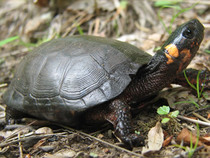
The Bog Turtle Is Now NJ's Official Reptile

The bog turtle is a tiny, dark turtle with a distinct orange patch
 behind the tympanum (ear membrane) on either side of the head.

The bog turtle is now the state’s official reptile following legislation signed by Governor Phil Murphy.

The Endangered and Nongame Species Program estimates that there are fewer than 2,000 of these inhabitants of groundwater-fed freshwater wetlands left in the state.

Once abundant in New Jersey, this secretive, palm-sized turtle today is now endangered and found only in rural areas such as Sussex, Warren, Hunterdon, and Salem counties.

Bog turtles have very specific habitat needs and are very sensitive to changes to its environment. The DEP has been working to protect land around high-priority populations, restoring habitat by eliminating invasive plant species, and identifying critical movement corridors.


Bog Turtle Fact Sheet

Saturday, December 16, 2017

2017 NJ Bald Eagle Project Report

The 2017 NJ Bald Eagle Project Report is now available.

The report contains the year's highlights and survey results of 178 monitored nest sites, including 153 active nests.

The report is produced by the NJDEP Division of Fish and Wildlife's Endangered and Nongame Species Program in partnership with The Conserve Wildlife Foundation of NJ and can be downloaded along with other raptor information at njfishandwildlife.com/ensp/raptor_info.htm

Wednesday, July 6, 2016

Observing (and Reporting) New Jersey's Endangered Species

Is that a bobcat or a feral house cat?

I sometimes get requests here about "where to find endangered species" in New Jersey. Of course, in general, we don't want you to be seeking out and disturbing threatened or endangered species.

We have about 500 animal species in our state and 83 of are classified by the state as endangered or threatened.

No one will stop from birdwatching for endangered birds - peregrine falcons, northern goshawks, red knots, piping plovers, short-eared owls, black skimmers and our breeding populations of bald eagles - but don't approach them or their nests.

There are guides (Endangered and Threatened Wildlife of New Jersey) and places online that can point you to areas where endangered species have been reported, but they are somewhat general.

You would be lucky to spot one of our elusive bobcats. And some other endangered mammals, such as Indiana bats and Allegheny woodrats, are more likely to be avoided by the average citizen.

We have six whale species listed and everyone loves to see them, either passing offshore or while on a whale watch boat that, hopefully, stays the legal distance away from them. The six are blue, fin, humpback, sperm, sei and North Atlantic right whales.

Have you spotted a bald eagle, bobcat, peregrine falcon, bog turtle, corn snake, blue-spotted salamander or southern gray tree frog? The New Jersey Division of Fish & Wildlife's Endangered and Nongame Species Program would be happy to hear from you. Volunteers and "Citizen Scientists" are useful for record keeping on the places where these species are found.

The state's endangered reptiles and amphibians include timber rattlesnakes, corn snakes, bog turtles, Atlantic loggerhead and leatherback turtles, blue-spotted and eastern tiger salamanders, and southern gray tree frogs.

Invertebrates on the list include northeastern beach tiger beetles, gray petaltail dragonflies, Aragos skipper butterflies and green floater mussels.

Two fish, Atlantic and shortnose sturgeon, are on the endangered list.

Last year, citizen scientists reported 465 rare species sightings, which supplemented about 2,000 staff reports.

There were probably a few reports of wolves, moose and other animals that do not live in our state. Some coyotes turn out to be dogs. So, you need to know your species. Look at the list of New Jersey's endangered and threatened animals, at  www.njfishandwildlife.com/tandespp.htm and check out the online field guide to help you identify these species found at www.conservewildlifenj.org/species/fieldguide

How to report spotting a rare animal: Go to www.state.nj.us/dep/fgw/ensp/pdf/rptform.pdf and download a report form which will ask you to filling some information, a map showing where the sighting occurred and, if possible, photos, video or audio recordings.

Monday, March 16, 2015

New Jersey’s Endangered Wildlife Fund Tax Check-Off

Though we hate to remind you that tax day is only a month away, we do really do want to remind you that you can help protect New Jersey's bald eagles and all other rare wildlife by supporting the New Jersey Endangered Wildlife Fund when you file your state income tax this year and every year.

Simply look for Line 59 on your NJ 1040 income tax return, and check-off for wildlife. Or remind your tax preparer that you want to make a contribution.

Every dollar you donate goes directly to the DEP's Endangered and Nongame Species Program (ENSP), enabling biologists to continue their work to restore, conserve and enhance New Jersey's populations of rare species. What's more, your contribution is matched with an equal amount of federal funding, further strengthening efforts to protect hundreds of imperiled species.

The Endangered and Nongame Species Program is responsible for protecting and managing nearly 500 wildlife species, including 73 species currently listed as endangered or threatened. The program is funded almost entirely by the state income tax check-off donations and through sales of the distinctive Conserve Wildlife License Plates.

For more than 35 years, ENSP biologists have been working to bring back from the brink of extinction a variety of rare species such as the bald eagle, the peregrine falcon and the osprey. Your contribution to the Endangered Wildlife Fund makes it possible for these scientists to prevent other birds, reptiles, amphibians, mammals, fish and even butterflies from being added to the state's list of endangered and threatened species.

Whether you receive a tax refund this year or you owe tax this year, you can help keep the wonder of rare wildlife alive for our children - and for theirs - by checking off for wildlife on your NJ 1040 tax return.

Tuesday, December 30, 2014

Reports on 3 New Jersey Raptors

An osprey returns to its nest     Photo by Gary Lehman

Raptors, commonly referred to as "birds of prey," include hawks, owls, eagles, falcons and vultures. Raptors have fascinated people for thousands of years and inspire people even today. Fortunately, after some frightening declines in some of our largest species, raptors represent some of New Jersey's greatest success stories.

The bald eagle, osprey and peregrine falcon have made impressive comebacks from the brink of extinction, in large part thanks to the efforts of division biologists.

Unfortunately, not all species of raptors are thriving - the American kestrel, for instance, has experienced a sharp decline in recent years, and the work of biologists in the Endangered and Nongame Species Program continues.

The 2014 reports on three raptor species managed by the NJDEP Division of Fish and Wildlife have been posted on the Division's web site. The reports detail the management efforts and results of Division staff and dedicated volunteers.

This work would not be possible without public support. Donations to the program can be made on the NJ state income tax return (Line 58 - check-off for wildlife) and through Conserve Wildlife License Plates.


2014 Peregrine Falcon Report (pdf, 130kb)
2014 Osprey Report (pdf, 105kb)
2014 Eagle Report (pdf, 970kb)


Also 
From One to 135 - New Jersey's Bald Eagle Success Story (US FWS site)


Source:  http://www.njfishandwildlife.com/ensp/raptor_info.htm .

Wednesday, December 3, 2014

Newly Identified Species Discovered in New Jersey - Atlantic Coast Leopard Frog


Atlantic Coast Leopard Frog  - NJFWS photo
 
The NJDEP Division of Fish and Wildlife Endangered and Nongame Species Program is currently participating in an ongoing effort to map the potential range of the Atlantic Coast leopard frog. This newly identified species is being found in places as diverse as the Great Swamp National Wildlife Refuge, the Meadowlands, marshlands along the Delaware River and Delaware Bay, Cape May Point State Park, and along stretches of the state's coastline.

For Division of Fish and Wildlife Endangered and Nongame Species Program zoologist Brian Zarate, having a hand in helping to “discover” a new frog species in a state as populated and urbanized as New Jersey is both a “very cool” and “humbling” experience.

“It’s kind of humbling, especially as a biologist, to realize that in a place like New Jersey, there’s an opportunity to learn new things,” Zarate said. “This discovery teaches us not to give up on certain habitats that people might dismiss.”

As part of a Rutgers University research project, the frog, barely the length of one’s thumb, has made national news with the publication of a study confirming its existence on Staten Island not far from the Statue of Liberty – going about its business unnoticed.

But Zarate and Division of Fish and Wildlife have been quietly contributing to the Rutgers Research for several years and, using a federal State Wildlife Grant matched by state funds, the Endangered and Nongame Species Program is currently working on a two-year-project to further refine the species’ habitat range in New Jersey.

“New Jersey has been a leader in protecting valuable wetlands resources,” said David Jenkins, Chief of the Endangered and Nongame Species Program. “These efforts have included wetlands in urban and suburban areas that may not, on first blush, appear to be of great value to wildlife. This discovery of this frog, literally in our backyard shows that New Jersey’s swamps and marshes, even those in urban and suburban landscapes, still have tremendous value for our native wildlife and we shouldn’t discount their value.”

Zarate’s connection to the Atlantic Coast leopard frog actually goes back to 2003, when he and a group of others working with protection of reptiles and amphibians heard an unfamiliar frog call at the Great Swamp National Wildlife Refuge in Morris County. The call is now frequently described as a series of chucks and occasional groans.

At the time, Zarate was a state contract biologist with the Conserve Wildlife Foundation of New Jersey. The group captured the frog and took some photos. It wasn’t the southern leopard frog, a species found widely in the Pine Barrens, so they concluded it was a northern leopard frog that someone, perhaps a high school biology teacher, had released into the wild.

Four years later, the group got the idea to return to Great Swamp to confirm whether the strange frog was still there, and perhaps if it was in other parts of the property. Not only was it where they first found it, but in several other wetlands as well.

A few months later, Zarate took a job with the Endangered and Nongame Species Program. A YouTube video of the frog that Zarate posted in 2007 connected him with Jeremy Feinberg, a doctoral student at the Rutgers University School of Environmental and Biological Sciences, who was working in the New York area to track down other reports of an unfamiliar frog call.

“Our role in the early stages was to help Feinberg’s group and explore what was going on in New Jersey,” Zarate said.

Using the state’s database of frog records and information gleaned from a wide range of professional experts, amateur frog aficionados, museum records, and the Internet, the frog was confirmed to exist in a wide range of habitats, virtually anywhere researchers went to confirm its call, actually the mating song of the male of the species.

Next spring, biologists and volunteers with the Endangered and Nongame Species Program will fan out to wetlands across the state, searching for more evidence of the Atlantic Coast leopard frog and collecting data on its habitat preferences. In addition, museum records indicate that a third leopard frog, the northern leopard frog, did, in fact, naturally occur in the northern part of the state as recent as the 1930s. Surveys will specifically target this frog at its past locations in hopes of finding them still hanging on.

“There’s still a lot we don’t know,” Zarate said. “The Atlantic Coast leopard frog is a really interesting species that somehow manages to hang on even in urban environments. It’s important we learn as much as we can about New Jersey’s wildlife and this discovery highlights the value in protecting our natural resources.”


SOURCE:  http://www.nj.gov/dep/newsrel/2014/14_0126.htm .

Wednesday, March 13, 2013

Spring Rains and Night Journeys

Next Wednesday is the first day of spring, and then April showers, and May flowers. But the spring rains of March are what get the frogs, salamanders, and toads to emerge from their winter burrows to get started on their spring season.

Amphibians like the spotted salamanders, wood frogs, spring peepers, and others are ready to move to breeding pools and lay their eggs. We call those "vernal pools" because they fill with rainwater, snowmelt, and rising groundwater in early spring. These pools will be gone as spring changes to summer advances.

The pools drying out is a good thing for the amphibians because these pools cannot support fish, which are normally predators for the amphibian eggs and young.


The best conditions for the amphibians are warm (40ºF or more) nighttime rains. The journey to the pools occur under the safety of darkness and rain which helps protect from other predators like owls and raccoons.

The Conserve Wildlife Foundation has been partnering with NJ’s Endangered and Nongame Species Program (ENSP) since 2002 to protect early-spring breeding amphibians like the wood frog, spotted salamander, Jefferson salamander, and spring peeper during their annual migration.


Saturday, January 26, 2013

Horseshoe Crabs, Red Knots and Hurricane Sandy


Hurricane Sandy tore up much of New Jersey's coastline and the boardwalks and homes have gotten a lot of attention. But it also tore up natural areas in bays that are important to fish and wildlife.

One of those effects will probably be felt by our horseshoe crabs and the Red Knot sandpipers who depend on them and visit us each spring.

The Red Knot is one of the well-traveled shore birds that migrate in spring. Their trip is from a winter home in Tierra del Fuego (at the southern tip of South America) all the way to summer breeding grounds in the North American Arctic. Midway on that incredible journey, is a very important stopover in New Jersey.

Our Delaware Bayshore is a critical feeding place where the birds rely on eggs laid by horseshoe crabs. Red Knots can almost double their body weight in a few weeks of feeding.

Two unfortunate things are limiting their chances this year.

1) The superstorm damaged important horseshoe crab nesting beaches. The high water pushed sand higher into the dunes on salt marshes. It also exposed some mudflats, marsh plant roots, and debris.

2) Our state Senate and Assembly introduced bills to lift the moratorium on the harvest of horseshoe crabs for bait.

The NJ Endangered and Non-Game Species Program scientists have shown in great detail for several decades the importance of the horseshoe crabs to the migratory birds having sufficient energy stores to complete the journey to their Arctic breeding grounds.


The crabs will still go to the beaches to lay eggs. The birds will still arrive. Neither species follows the news about Hurricane Sandy.

But there may not be enough eggs to feed the birds AND to propagate sufficient numbers of crabs. The birds actually eat excess and dying eggs that will not become crabs. The viable eggs are buried and generally birds would not go after them.

In the past 30 years, we have gone from horseshoe crabs on top of each other battling for nesting space to far fewer egg-laying females on the beaches.

Part of the problems has been the harvesting of the crabs for the bait industry. Horseshoe crabs are also bled for lysate which is important to pharmaceutical uses. In both cases, the crabs used, even if returned to the water usually die.

NJ created a harvest moratorium starting in 2006 to help in the recovery of the crabs and to help prevent problems with the red knots.


MORE INFO