Showing posts with label Endangered and Nongame Species Program. Show all posts

Friday, June 7, 2024

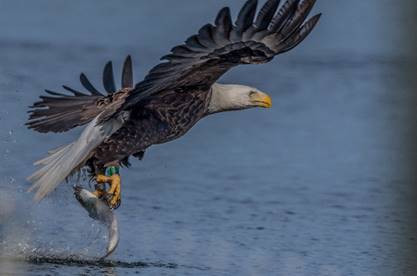
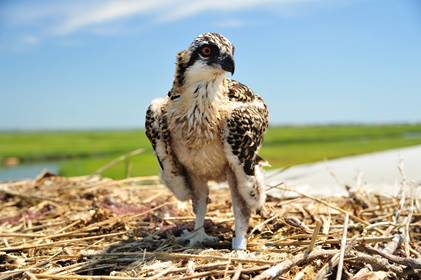
Proposal to remove the bald eagle and osprey from NJ’s list of endangered species

The Murphy Administration is proposing to remove the bald eagle and osprey from the state’s list of endangered species, reflecting decades of work to restore these iconic birds to New Jersey’s landscape, Environmental Protection Commissioner Shawn M. LaTourette announced.

The proposed de-listing is contained within a Department of Environmental Protection rule proposal published this week in the New Jersey Register and is based on a finding that populations of these birds have recovered to the point where the survival of these species in the state is no longer in jeopardy.

“The de-listing of eagles and ospreys is a milestone in the history of wildlife conservation in New Jersey and is a testament to the dedication of DEP professionals and volunteers who over the years stood watch over nests in all forms of weather, nurtured hatchlings, and worked tirelessly to educate the public about the importance of sustaining wildlife diversity,” said Commissioner LaTourette.

“Because of their efforts, people across the state today can thrill at the sight of bald eagles gliding above their massive tree-top nests or ospreys diving into a coastal creek to snare a fish,” Commissioner LaTourette continued. “While we celebrate these successes, we must remain vigilant in ensuring that these species continue to thrive and be ever mindful that endangered species continue to need our help.”

“The recovery of these species from near extirpation during the 1980s in New Jersey is a dramatic example of what is possible when regulations, science, and public commitment come together for a common purpose,” said David Golden, Assistant Commissioner of NJDEP Fish & Wildlife.  “With focused attention on other species of greatest conservation need, future recovery success stories are also possible.”

Under the New Jersey Endangered and Nongame Species Conservation Act, which celebrated its 50th anniversary this past December, NJDEP Fish & Wildlife’s Endangered and Nongame Species Program (ENSP) is responsible for protecting threatened, endangered and nongame species.


Thursday, April 7, 2022

Check off Line 68 on Your NJ State Income Tax to Help Wildlife


You still haven't filed your New Jersey tax form?
Good! You still have a chance to check off
Line 68 to make a donation 
and help protect Bald Eagles, Bobcats, Spotted Turtles, Tiger Salamanders, butterflies, and scores of other rare wildlife
by supporting the
 New Jersey Endangered Wildlife Fund when you file your state income taxes.

Simply look for Line 68 on your NJ 1040 income tax return and check-off for wildlife! Or remind your tax preparer that you want to make a contribution. Every dollar you donate goes directly to the state's Endangered and Nongame Species Program, enabling biologists to monitor and conserve our rarest wild populations from the Highlands to the Shore. 

And your contribution is matched with an equal amount of federal funding, further strengthening efforts to protect imperiled species.

The Endangered and Nongame Species Program is responsible for more than 600 species of greatest conservation need across New Jersey, including 86 species currently listed as endangered or threatened. Your contribution to the Endangered Wildlife Fund makes it possible for these scientists to protect and manage a diversity of species that bring beauty and balance to our fine state. 

The Endangered & Nongame Species Program receives no dedicated state funding and depends on contributions to do so much of its important work.

Whether you're getting a tax refund or owe this year, you can help keep the wonder of wildlife alive for our children - and for theirs - by checking off for wildlife on your NJ 1040 tax return.

Want to do even more for wildlife? Drive conservation home with a Conserve Wildlife License Plate!

Saturday, November 20, 2021

Bat Migration and Hibernation

When we think of migration flights by some species, birds are probably what we are thinking about. But bats also migrate. During these migrations, they will often rest in odd places - window screens, exterior walls of homes and buildings - and will frighten humans.  


Silver-haired bat found in Newark - Photo: K.Perotta via NJDEP 


They are often alone and may remain for a day or two. They are not harmful or threatening to humans and should be left alone. What you should do is take a photo and send it to  MacKenzie.Hall@dep.nj.gov with information about the location and date. The Endangered and Nongame Species Program (ENSP) is able to catch some of these migrating bats in mist nets and then use nanotags to track them for a few weeks to learn about their patterns. Your photos and information can supplement that data. Even if you don't know what species you have found, take several photos from different angles and send them for identification.


Hoary bat found in Avalon - Photo: M.Wright via NJDEP

New Jersey has had an active bat conservation program for many years that has a focus on protecting winter dens of non-migratory species that gather together for hibernation. These winter colonies often number in the hundreds or thousands. Bats are especially vulnerable to disturbance and vandalism during hibernation. Even unintentional human activity can arouse the bats and cause them to use up their energy reserves too quickly. 

The Hibernia Mine in Rockaway Township, Morris County is our most famous "bat cave" or hibernaculum. The site had been used for mining iron ore from the early 1720s until operations ended around 1913. Bats were first observed in the abandoned mine in the 1930s, and by the 1980s more than 20,000 bats were wintering there each year. But vandalism and trespassing were big problems. When federally endangered Indiana bats were found to be using the mine in 1992, New Jersey acquired the property soon thereafter via the Green Acres Program and it is now part of the Wildcat Ridge Wildlife Management Area.

The hibernating colony climbed to around 30,000 bats in the early 2000s, with Little Brown bats being most numerous but bats of all cave-hibernating species seeking refuge there. Sadly, White-nose Syndrome hit Hibernia in January 2009 and more than 90% of the bats died.