On December 29th, 2014, the U.S. Fish and Wildlife Service announced it would be conducting a status review of the monarch butterfly under the Endangered Species Act (ESA). The Service has reason to believe a listing may be necessary due to considerable evidence from a petition submitted by the Center for Biological Diversity, the Center for Food Safety, the Xerces Society for Invertebrate Conservation and Dr. Lincoln Brower. The petition stated that habitat destruction and loss of milkweed due to pesticide use are two of the most contributing factors to the declining monarch population. Other factors include disease and predation, overutilization for commercial purposes, and lack of existing conservation procedures.
Watch a monarch emerge from a chrysalis in the wild in this video by Tina Shaw/USFWS
During the summer months, the monarch can be found throughout the United States where milkweed, the species’ host plant, is plentiful. Milkweed provides nutrients to hungry caterpillars as well as space for mature females to lay their eggs. Although an adult monarch may lay up to 500 eggs in its lifetime, it has now been discovered fewer and fewer butterflies make the migration each year.
SOURCE: www.conservewildlifenj.org
Wednesday, February 11, 2015


Sunday, February 8, 2015
In Search of the Jersey Devil


I can't say that the Jersey Devil is endangered or threatened because I can't say that it ever existed, but the legend of the Jersey Devil dates back for centuries. Hundreds of people have reported seeing the creature, but despite extensive searches, no one has proven its existence.
The folks at StuffTheyDontWantYouToKnow.com love this kind of stuff. They love conspiracy theories (Their Facebook page is facebook.com/ConspiracyStuff ) and fringe science and beliefs, and I'll admit to enjoying watching their little videos (like the one below) even if I think almost all of it is untrue.
I will also read issues of Weird N.J. in search of oddities in my part of Jersey.
When my sons were quite young and we would go camping in the Pinelands, we always were looking for signs of the Jersey Devil.
I read them the story and showed them the pictures. It made for some great bedtime stories around the fire before they curled up in their sleeping bags.
After storytime, if they heard the call of a barred owl outside our tent, they did not hear it saying "Who cooks for you?" but rather something more sinister like "He wants to get you."
When you're 5 years old, it's easier to believe.
The folks at StuffTheyDontWantYouToKnow.com love this kind of stuff. They love conspiracy theories (Their Facebook page is facebook.com/ConspiracyStuff ) and fringe science and beliefs, and I'll admit to enjoying watching their little videos (like the one below) even if I think almost all of it is untrue.
I will also read issues of Weird N.J.
in search of oddities in my part of Jersey. When my sons were quite young and we would go camping in the Pinelands, we always were looking for signs of the Jersey Devil.
I read them the story and showed them the pictures. It made for some great bedtime stories around the fire before they curled up in their sleeping bags.
After storytime, if they heard the call of a barred owl outside our tent, they did not hear it saying "Who cooks for you?" but rather something more sinister like "He wants to get you."
When you're 5 years old, it's easier to believe.
Friday, February 6, 2015
The Celery Farm Natural Area
The Celery Farm Natural Area in Bergen County is one of New Jersey Conservation Foundation's success stories. This former celery farm was preserved in the late 1970s to prevent development and is now a popular nature preserve.
The Celery Farm is a 107-acre freshwater wetland in Allendale, New Jersey, and is open to the public during daylight hours every day of the year.
Volunteers from the Fyke Nature Association are responsible for creating and maintaining the footpaths around the preserve, the three observation platforms and the nesting boxes. Dogs are not permitted, and other prohibited activities include fishing, boating, feeding wildlife, littering and picking plants and flowers.
Over 240 species of birds have been recorded here, and more than 50 are known to breed here. The wetlands and deciduous woods provide habitat for many mammals, fish, reptiles and insects.
Monday, February 2, 2015
New Jersey's State-Owned Historic Sites
The NJDEP New Jersey State-Owned Historic Sites offer a variety of historical opportunities. They range from Revolutionary War battlefields, lighthouses, villages, and homes from the past of a president, poet, or industrial pioneer.
Here are just a few possibilities.

 Twin Lights
Lighthouse Road, Highlands, NJ 07732
The current brownstone structure was built in 1862 and served as the primary seacoast light marking the entrance to New York Harbor. The towers are not identical twins; the south tower is square and the north is octagonal. This 1862 structure replaced an earlier twin tower lighthouse.
Visit the Twin Lights virtual tour.
Get the Official Guide for New Jersey State Parks, Forests & Historic Sites as a mobile app on your phone or tablet. It includes Enhanced GPS Features and is free.
Go to www.pocketranger.com/apps/new-jersey on your mobile device.
Here are just a few possibilities.
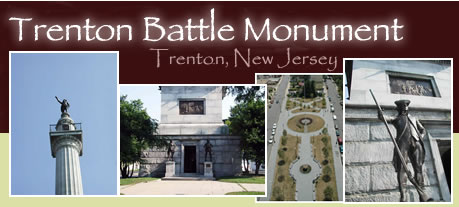
Trenton Battle Monument Administered by Washington Crossing State Park
348 North Warren Street, Trenton, NJ 08638
The monument marks the site of the American artillery emplacement that commanded the streets of Trenton during the battle that led to the defeat of the three Hessian Regiments by the American Army at the Battle of Trenton, December 26, 1776. The monument was designed by John H. Duncan, architect of Grant's tomb.
348 North Warren Street, Trenton, NJ 08638
The monument marks the site of the American artillery emplacement that commanded the streets of Trenton during the battle that led to the defeat of the three Hessian Regiments by the American Army at the Battle of Trenton, December 26, 1776. The monument was designed by John H. Duncan, architect of Grant's tomb.
Clarke House, Princeton Battlefield State Park
500 Mercer Road, Princeton NJ 08540
Built by Thomas Clarke in 1772, the house is located on Princeton Battlefield and was the scene of heavy fighting during the Battle of Princeton. General Hugh Mercer was mortally wounded nearby and was carried to the Clarke House, where he died nine days after the battle.
500 Mercer Road, Princeton NJ 08540
Built by Thomas Clarke in 1772, the house is located on Princeton Battlefield and was the scene of heavy fighting during the Battle of Princeton. General Hugh Mercer was mortally wounded nearby and was carried to the Clarke House, where he died nine days after the battle.
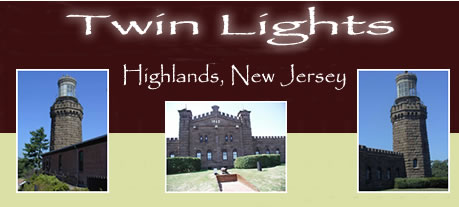
Lighthouse Road, Highlands, NJ 07732
The current brownstone structure was built in 1862 and served as the primary seacoast light marking the entrance to New York Harbor. The towers are not identical twins; the south tower is square and the north is octagonal. This 1862 structure replaced an earlier twin tower lighthouse.
Visit the Twin Lights virtual tour.
Wallace House
71 Somerset Street, Somerville, NJ 08876
The Wallace House was completed in 1776 as Hope Farm for John Wallace, a successful Philadelphia merchant. General Washington leased the house for use as his headquarters during the Middlebrook Winter Encampment, December 11, 1778, to June 3, 1779. The house is one of the best and most original examples of Georgian architecture in New Jersey.
71 Somerset Street, Somerville, NJ 08876
The Wallace House was completed in 1776 as Hope Farm for John Wallace, a successful Philadelphia merchant. General Washington leased the house for use as his headquarters during the Middlebrook Winter Encampment, December 11, 1778, to June 3, 1779. The house is one of the best and most original examples of Georgian architecture in New Jersey.
NJN invites visitors to experience New Jersey's colonial history first-hand. View their short film about the Wallace House.
Walt Whitman House
330 Mickle Boulevard, Camden, NJ 08103
The renowned poet lived in this house from 1884 until he died in 1892, and received many visitors during that time, including the painter Thomas Eakins, naturalist John Burroughs, and writers Oscar Wilde and Bram Stoker. The house is furnished with several pieces owned and used by Whitman.
330 Mickle Boulevard, Camden, NJ 08103
The renowned poet lived in this house from 1884 until he died in 1892, and received many visitors during that time, including the painter Thomas Eakins, naturalist John Burroughs, and writers Oscar Wilde and Bram Stoker. The house is furnished with several pieces owned and used by Whitman.
Get the Official Guide for New Jersey State Parks, Forests & Historic Sites as a mobile app on your phone or tablet. It includes Enhanced GPS Features and is free.
Go to www.pocketranger.com/apps/new-jersey on your mobile device.
Subscribe to:
Posts (Atom)