Wednesday, March 30, 2016

Essex County Cherry Blossom Festival 2016


Yes, the cherry blossoms around the tidal basin in Washington, D.C. are quite beautiful and blooming now. BUT, New Jersey has more cherry trees than Washington D.C. , so if you want to see the largest cherry blossom collection in the United States head to Branch Brook Park.


Branch Brook Park runs through Belleville and Newark, has more than 2,700 Japanese cherry blossom trees that burst into full bloom during the annual Essex County Cherry Blossom Festival
which for 2016 will be held April 9 - April 24.

You can check out the park's webcam to get a peek at the status of blossoms.


Each year about 10,000 people visit during the blossoming period and marvel at the beautiful colors of pink and white.

The park's cherry trees arrived in 1927, when Caroline Bamberger Fuld donated 2,000 cherry blossom trees to the Essex County Parks system in memory of her late husband.

Branch Brook Park also holds the distinction of being the first county park in the United States opened to the public. It was designed by the famed landscape architectural firm of Olmsted Brothers, a successor to Frederick Law Olmsted, the designer of Central Park in New York City.

Check out the festival activities at essexcountyparks.org


If you can't make it there for the cherry blossom in April,
the park is worth visiting in any season of the year.


Monday, March 28, 2016

Two Sides of the Sparta Mountain Forest Proposal

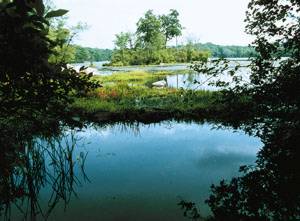
Ryker Lake,one of several bodies of water on the Sparta WMA | Photo by Wilma Frey

Sparta Mountain was preserved as part of the continuous forest of the Highlands that protects the drinking supply for half of New Jersey’s residents. But a proposed logging project may threaten that with increased silt and run-off that will affect trout streams and also that very high water quality water supply.

The NJDEP Division of Fish and Wildlife partnered with the NJ Audubon Society to revise the existing Forest Stewardship Plan (FSP) for the 3,461-acre Sparta Mountain Wildlife Management Area in Sussex County.

NJDEP states its primary goal of the plan is to "maintain ecosystem health, diversity, and integrity by creating a greater balance among the stages of forest succession throughout the property, minimizing further distribution of invasive exotic species, and enhancing biological diversity through responsible silviculture and mimicking natural 'gap disturbances'."


But some people view this "management" as just creating a different habitat more suitable for hunting. Groups such as the NJ Sierra Club say this proposal not only threatens the environment, but it will also interfere with public access, recreation, and hiking.

What NJDEP calls the "Sparta Mountain WMA Forest Stewardship Plan," environmental groups call "logging" and "clear-cutting" and a plan to "turn the Mountain into a field for bird habitat and deer over-population."

You only have until March 31st to let your feelings about this proposal be known, and can post those comments online for the NJDEP at http://www.state.nj.us/dep/fgw/spartamt_comments.htm

Sunday, March 27, 2016

Pequest Trout Hatchery and Natural Resource Education Center Open House April 2 and 3


The NJDEP Division of Fish and Wildlife will hold its annual Pequest Trout Hatchery and Natural Resource Education Center Open House next weekend on April 2 and 3, from 10:00 a.m. - 4:00 p.m. daily. Admission and parking are free.

The Open House has become a rite of spring for many freshwater anglers and outdoor enthusiasts of all ages, offering outdoor activities that are both fun and educational.  The event is held annually prior to the opening day of trout season, which falls on April 9 this year.

The event will feature archery and BB gun ranges, conservation exhibits and a giant mobile fishing tank loaded with monster trout and warm-water game fish from the Hackettstown and Pequest fish hatcheries. Children 4-16 will also be able to try their hand at fishing in the Kiddie Trout Tank and Fishing Education Pond, and a Sportsmen’s Flea Market will offer deals on fishing and hunting equipment, and other outdoor gear.

For more information about the event, including the full schedule of activities, visit http://www.njfishandwildlife.com/peqoh.htm

Wednesday, March 23, 2016

Noting the Passing of Seasons

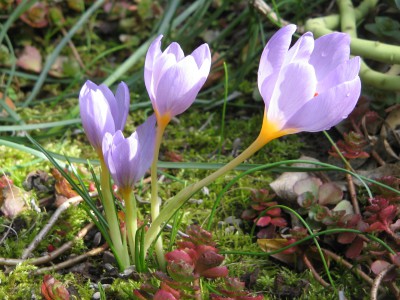
crocus

The crocuses bloomed three weeks earlier this year in my part of Essex County. I know that because I have kept a garden notebook for the past 35 years. Spring if officially here, but things have been blooming for awhile and I have been recording them.

Have you noticed any changes in when things sprout or bloom in your neighborhood? Maybe flowers tend to bloom a little earlier this year or birds that used to migrate are hanging around your yard through the winter?

In some ways my garden notebook is more of a nature notebook as I find myself also recording first and last frosts, snow storms, the appearances of birds, insects and wildlife. Some of those things I post on another blog of mine (where this post first appeared), both seriously and also as a kind of weather lore. My posts about predicting the weather based on signs in nature seem to get a lot of hits, so I am not alone in my interest, scientific or not.

Most people have never heard of phenology. but if you have ever paid attention to the timing of natural events, like blooming flowers and migrating animals, you have been practicing this -ology. Phenology is the study of the timing of recurring plant and animal life cycle events.

If you want to make those observation to be more "official," you can become a citizen scientist by connecting with groups like Nature’s Notebook. It  is an online project sponsored by the USA National Phenology Network. Americans can practice phenology in their own habitat and share their observations with other members and have their data shared with scientists who will use the data for research and decision-making.

It saddens me how disconnected people are to the natural world of plants, animals, the earth and sky. s a lifelong teacher, it really saddens me to see how disconnected kids become as they get older. The interest is always there in very young children, so it is something that is lost.

We may not all be as observant as Sara Schaffer of Nature’s Notebook who suggests that we notice the "slightest blush on a maple leaf that foreshadows the coming fall" or the "new, more vibrant feathers warblers put on days before mating.”

robin-pixabayDo you see the appearance of the first robin on your lawn as a sign that spring has arrived? I grew up hearing and believing that. But I have observed and recorded robins every winter. Once I saw four of them sitting on my fence in a February snowstorm. Robins as indicators of spring is a good example of weather lore.

Most robins do migrate south, but some are probably still around your neighborhood all winter - no doubt better protected in the woods than on your bare lawn. The robins that do migrate to the South in the fall, return in the spring, so then we see many more of them on that soggy lawn and field in search of food.

Geese flying south over my house is a daily occurrence. They fly from the reservoir south to a pond. They never migrate or leave any more. What does that indicate? Perhaps some of it is climate change, but it is also the prime water and grass we provide them in parks, golf courses, school fields and corporate settings. Why leave?

Though thinking that a captive groundhog can predict the end of winter is certainly weather lore, paying attention to events like true bird migrations can help us understand long-term trends and predict future events. That is why many observers may be reporting small changes that can help more accurately predict the long-term impacts of climate change and shorter-term events in the near future.