Showing posts with label salamander. Show all posts

Thursday, April 1, 2021

Amphibian Spring Crossings

Salamander crossing road - by inkoalseibua from Pixabay

Spring has arrived in New Jersey despite this week being quite chilly, windy. Our hibernating amphibians – the frogs, salamanders, and toads – are waiting for the warmer days and spring rains that signal to them to leave winter homes, come out and start mating.

Part of that spring ritual often includes crossing roadways and that is dangerous. It's not always a long journey. It might be a hundred yards. It might be further but crossing a busy roadway even a short distance might be life-threatening. It doesn't help that they are also not at full strength. Rainy, foggy nights and the darkness also help keep them hidden from predators like owls and raccoons.

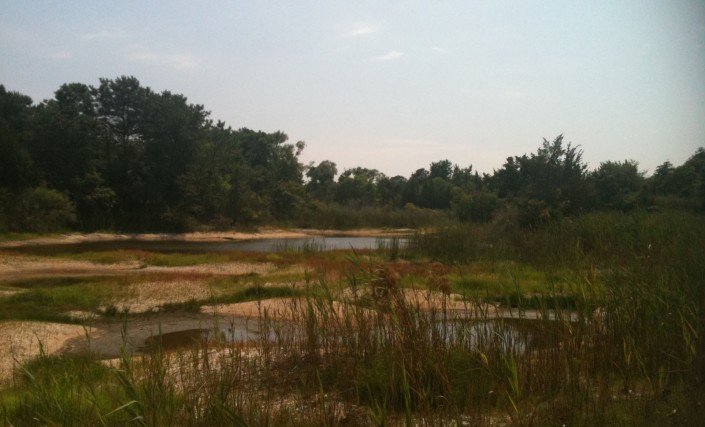
On the first warm, rainy nights of spring amphibians start to move. From below ground come spotted salamanders, Jefferson salamanders, wood frogs and spring peepers. Where are they headed? To vernal pools.  

See a list of New Jersey’s amphibian species and
listen to recorded frog and toad calls state.nj.us/dep/fgw/ensp/fieldguide_herps.htm

This movement can happen as early as February if we have a mild winter and some warm, rainy days and nights, but it can also be as late as April if the ground is still partly frozen or covered with snow. 

Volunteers and the staff from Conserve Wildlife Foundation have been acting as “amphibian crossing guards” at locations in Warren and Sussex counties. 

To learn more about the Conserve Wildlife Foundation’s
amphibian crossing program, go to
conservewildlifenj.org/protecting/projects/amphibian_crossing/


Searching for amphibians crossing with kids and rescuing them from harm is a great activity and a chance to be a wildlife superhero. Here are a few guidebooks. Check in your local library too.


Tuesday, March 3, 2015

How Many Salamanders?

Eastern Tiger Salamander (endangered in NJ)

Ecologist Raymond Semlitsch and his doctoral student Katie O’Donnell are researching part of the Mark Twain National Forest in Missouri for salamanders. They crawl along the ground, raking the leaf litter with their hands, looking under rocks and logs, and when they find  salamanders, they lift them gently from the dirt to be weighed and measured.

They are building a model of salamander populations and using the data from the sites they studied, they can estimate salamander populations in other parts of the woods.

How many salamanders are in the woods? The answer, according to the model, is between 1.88 and 2.65 billion salamanders. That’s within a district of the Mark Twain National Forest about 2,800 square kilometers in area, and those numbers 2-4 times higher than estimates made by other scientists in the 1970s.

Those earlier researchers, studying salamanders in the woods of New Hampshire, didn’t account for amphibians hiding underground. And more recent studies of other salamander species have found up to 10 times more salamanders than the 1970s research.

What about here in New Jersey?

NJDEP, Division of Fish and Wildlife’s Endangered and Nongame Species Program and the Conserve Wildlife Foundation of NJ have enhanced a complex of 12 vernal pools in Cape May County to create habitat for state-endangered eastern tiger salamanders and other vernal pool breeding amphibians. The interconnecting pools allowed eastern tiger salamanders to return to vernal pools to breed in early winter.


In mid-December, eastern tiger salamander egg masses can be found in the pools and egg masses collected from other sites have also been introduced into these pools as supplements.

Every year,  volunteers on a wooded road in northwestern New Jersey spend some early spring nights looking for frogs and salamanders to count.

They wait for the amphibians to cross the road on their way from the wooded uplands where they winter to the marshy lowlands and vernal pools where they will do their spring mating

Wood frogs and blue-spotted salamanders are more common amphibians in northern New Jersey and not endangered.

The NJ’s Endangered and Nongame Species Program and Conserve Wildlife, along withe the NJ Audubon Society are partners on the Amphibian Crossing Survey Project. Relying again on volunteers to help monitor sites in Warren and Morris County, they identify additional crossings throughout the northern region of the state. (Due to limited resources, they are currently focusing efforts on northern New Jersey.)


It is estimated that one third of the world’s amphibians are threatened with extinction, according to the International Union for the Conservation of Nature (IUCN).

SOURCES:
A Surfeit of Salamanders
NJ Online Field Guide for Reptiles and Amphibians


Sunday, February 26, 2012

Salamanders At Cape May Vernal Pool

The new vernal pools  Photo: Dave Golden
 As a follow-up to yesterday's post about the spring amphibian crossings now taking place in NJ, here's a link to a post by Karena DiLeo, Wildlife Biologist for Conserve Wildlife Foundation (CWF).

Last fall, NJDEP's ENSP and CWF completed a project to enhance a complex of 12 vernal pools in Cape May County, creating habitat for state-endangered eastern tiger salamanders and other vernal pool breeding amphibians.

The interconnecting pools allowed eastern tiger salamanders to return to vernal pools to breed in early winter.

In mid-December, eastern tiger salamander egg masses were found in the pools. Egg masses collected from other sites have also been introduced into these pools as supplements.

Saturday, February 25, 2012

Endangered or Just In Danger Amphibians and Reptiles

A yellow spotted salamander changing lanes

If the unusually warm weather and crocuses blooming in your garden haven't been harbingers of spring, then note that the amphibian migration has begun across a good part of New Jersey.

With the rain yesterday being just about the right temperature, some eager salamanders and frogs are moving to their breeding pools.

Unfortunately, our "Garden State" is also a highway state and crossing is quite dangerous for those creatures. There are some people out there helping out, but keep a watchful eye when driving on rainy nights if you can.

An article in The New York Times, "Bucket Brigade Gives a Lift So Salamanders Can Live to Mate", describes one group of "salamander people" in Mississippi  are out on these rainy, early spring nights scooping up salamanders to help them cross the road. These "herpers" who search for and aid the amphibians or reptiles do their part to try to protect endangered, threatened and just plain in danger creatures.

Some salamanders can live up to 30 years, so they have been down this road (well, really, across this road) before. But they procreate only once a year.

I have written earlier here about similar projects in New Jersey. Saving other, more lovable species might be easier to get attention, volunteers and funding.

The NJDEP, Division of Fish and Wildlife’s Endangered and Nongame Species Program (ENSP), the Conserve Wildlife Foundation of NJ, and the NJ Audubon Society have been partners on the Amphibian Crossing Survey Project. Since 2002, they have been working to protect early-spring breeding amphibians like the wood frog, spotted salamander, jefferson salamander, and spring peeper during their annual migrations, which often lead them across perilous roadways. Volunteers help monitor sites in northern NJ (resources are limited, so that has been the focus area) particularly Warren, Passaic and Morris County. But they also help to identify additional crossings throughout the state.

A single vehicle can crush dozens of the slow-moving animals as they try to cross the road during migration. For example, some major amphibian road-crossings occur in West Milford in Passaic county. On rainy evenings from late February through March, teams of volunteers will be serving as “Crossing Guards” - slowing traffic, moving amphibians across the road, and collecting data about the migration.

According to the ENSP, amphibians are regarded by many scientists as indicators of a region's health and as the first indicators to harmful environmental changes such as pollutants and higher aquatic temperatures. Basically, if we see problems in the amphibian community, it’s just a matter of time before larger organisms (such as birds, mammals, and humans) will be affected as well.

Amphibian populations are declining worldwide as a result of a number of factors, including water pollution, increased pesticide use, and habitat loss, which is the most significant factor for all of New Jersey's species of conservation concern.

Amphibians depend on both terrestrial and aquatic habitats throughout their life cycles. The loss of forests and wetland habitats, including clearing forests, filling in vernal pools, and development that leads to changes in the water table that dry out critical wetlands, only add to these critters’ plight.

Finally, fragmentation of habitat can also play a critical role in the demise of an amphibian population as they attempt to travel from one area to another. Amphibians become easy prey targets in open habitats (lawns, driveways, roads) and at barriers such as curbs and fences that are often impossible to cross.

A spotted salamander being helped across a road.

The Conserve Wildlife Foundation of New Jersey has assembled a resource package to help teachers educate students about New Jersey's reptiles and amphibians. The package includes the Field Guide to Reptiles and Amphibians of NJ and Calls of NJ Frogs and Toads CD, and a teacher's guide full of activities and lesson plans for grades 5-9. The activities are correlated to the state's Core Curriculum Content Standards.

Resource Package Flyer and Order Form (pdf)