Showing posts with label NJDEP. Show all posts

Wednesday, February 26, 2025

New Jersey State Parks Are Hiring For Summer Jobs


Do you or someone you know need to find a summer job? .

It's not too early to apply for summer jobs and you can apply for a summer job with the New Jersey Department of Environmental Protection, which is hiring over 800 seasonal workers for State parks, forests, and historic sites. 

Opportunities include lifeguards, maintenance staff, visitor service assistants, office assistants, naturalists, and history educators. 

Pay starts at $16 per hour, with Liberty State Park and The Greenway positions at $20 per hour. Lifeguards earn $18.50, or $19.50 for oceanfront roles, with training and certification provided. 

Apply by early March to secure a position that boosts your skills and supports New Jersey's top tourist spots.
Go online to https://nj.gov/dep/parksandforests/parks/jobs.html for more information and to apply.

There are a variety of opportunities from being outside and in the water as a lifeguard, Visitor Service Assistants provide accurate information to visitors at various facilities, patrol grounds and collect gatehouse fees, to office personnel who help register campers, answer phone calls and perform other customer service duties as requested by the park superintendent.


Friday, December 27, 2024

NJDEP Proposed Changes to the Endangered Species List

The NJDEP is proposing changes to the state's endangered species list that would affect 30 species that would see increased concern under the proposed rule. They include butterflies, freshwater fish, reptiles, amphibians, birds, and land mammals. Not all species are additions as some would be a changed or upgraded status.

The Atlantic sturgeon would be moved to the endangered list as less than 250 adults are believed to return to the Delaware River each year to spawn. 

Eleven butterfly species are proposed for endangered or threatened status, owing to population declines. 

The barn owl, eastern meadowlark, Kentucky warbler, king rail, and salt marsh sparrow each would see heightened concern under the proposal. The barn owl would be considered threatened and the eastern meadowlark endangered under the proposal.

The ruddy turnstone, a small wading bird, would be moved to special concern from stable, based on a significant population decline.

Cattle egrets and peregrine falcons would move to stable from special concern, and non-breeding red-headed woodpeckers would move to special concern from threatened.

The bobcat, the only mammal on the endangered list, would be upgraded to threatened as its population has increased, particularly in the area north of Interstate 80 and west of Interstate 287.

The Cope’s gray treefrog (below), although still restricted to the four or five southernmost counties, appears to be expanding northward. This may be due to shorter periods of cold and warmer winters associated with global climate change It would be upgraded to threatened from endangered.

Four bat species would be considered endangered under the proposal.

The bald eagle would see its conservation status changed from endangered to special concern. The osprey would be changed from threatened to stable. 

Species such as the bald eagle get lots of attention but we should also note that lesser-known species, such as the rusty-patched bumblebee are of concern. This bee used to be one of the most common bees in New Jersey, but no populations of this pollinator have been documented in the state since 1999, so the proposed rule would change its status to endangered.

SOURCE: sierraclub.org/new-jersey...

Saturday, May 4, 2024

NJDEP Seeking Public Comments on State Wildlife Action Plan

NJDEP Fish & Wildlife is updating New Jersey’s State Wildlife Action Plan (SWAP). The NJ SWAP is focused on the conservation of species and habitats to prevent them from becoming more rare and costly to protect or restore. Public comment is an important part of ensuring the needs of New Jersey’s Wildlife are addressed.

These at-risk birds, mammals, reptiles, amphibians, fish, and invertebrates are acknowledged as Species of Greatest Conservation Need (SGCN) due to their vulnerability to threats and low and/or declining populations or data gaps. Without actions to conserve them, SGCN are likely to decline further over the next ten years, possibly leading them closer to endangerment or extirpation. The updated plan is due for submission to the US Fish & Wildlife Service in 2025.

NJFW is seeking public comments on the updated Species of Greatest Conservation Need (SGCN) based on our selection process: information sources, criteria applied, and fatal flaw analysis of the resulting SGCN list. 

Comments are due by May 10, 2024


Friday, July 28, 2023

Youth Inclusion Program


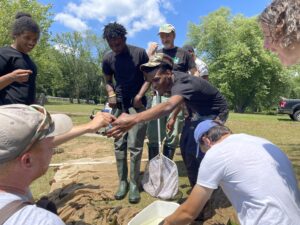
The New Jersey Department of Environmental Protection launched this summer its third annual Youth Inclusion Initiative summer program. The goal is to engage young people from overburdened communities that have disproportionately less open space by providing hands-on training and exposure to career opportunities within the environmental field.

Launched in Summer 2021, the program advances key elements of the Council on the Green Economy, which serves to develop a blueprint for expanding the green economy and building a diverse, inclusive workforce to support Governor Murphy’s clean energy and climate goals.

The DEP is partnering with five community-based organizations to provide participants ages 16 to 20 an opportunity to explore various careers within the environmental field by learning from DEP professionals in nearly all department programs such as water and air monitoring, natural resource management, and wildlife conservation. 

This year’s partner organizations are Neighborhood Improvement Association (Trenton), Rutgers-Camden, Groundwork Elizabeth, Ironbound Community Corporation (Newark) and The Work Group (Camden). The program will include 47 participants and runs from July 6 to August 16.

“The DEP is thrilled to launch its third year of the Youth Inclusion Initiative program that will advance the Murphy Administration’s goal of building a more diverse and inclusive green workforce,” said Commissioner LaTourette. “My DEP colleagues and I thank our community-based partners, who worked to recruit participants from areas that have disproportionately less open space. Our DEP professionals are eager to work with these young people, providing invaluable lessons and insights on protecting public health and the environment in some of the state’s wonderful outdoor settings.”

The program’s partner organizations, formally called Community Host Organizations, will support participants throughout and after the conclusion of the program by identifying next steps for furthering education, obtaining credentials and other actions to promote their growth.

This year, the Youth Inclusion Initiative was expanded to include professional development days, which will incorporate resume and cover letter writing sessions and presentations from guest speakers. Many of the guest speakers selected for the professional development days were awarded apprenticeship grants from the New Jersey Department of Labor & Workforce Development for creating opportunities for those from underserved communities through career pathways that support sustainable green jobs.

For more information about the 2023 Youth Inclusion Initiative,
visit dep.nj.gov/yii/

Tuesday, April 19, 2022

NJDEP's 50+2 Anniversary and Earth Day Celebration


Dept of Environmental Protection's 50+2 Anniversary
 Free event! Fun for the whole family.

Sat, April 23, 2022     10:00 AM – 3:00 PM EDT
Location: Central Railroad of New Jersey Terminal 
1 Audrey Zapp Drive, Jersey City, NJ 07305

🌮 Food Trucks

🏸Lawn Games

🎤Education Programs

🎨 Face painting

🏃🏾‍♀️Slide/Obstacle Course

🏆 Giveaways

🐻 Smokey Bear

Register at www.eventbrite.com 

Thursday, July 1, 2021

Reopening of the Liberty State Park Nature Interpretive Center

The Department of Environmental Protection has finally reopened the Liberty State Park Nature Interpretive Center in Jersey City. This project to restore park infrastructure heavily damaged in Superstorm Sandy back in 2012 has finally been completed.

The center was designed by renowned architect Michael Graves. It originally opened in 1985 and has been closed since Superstorm Sandy severely flooded the center damaging the structure, exhibits and causing mold impacts.

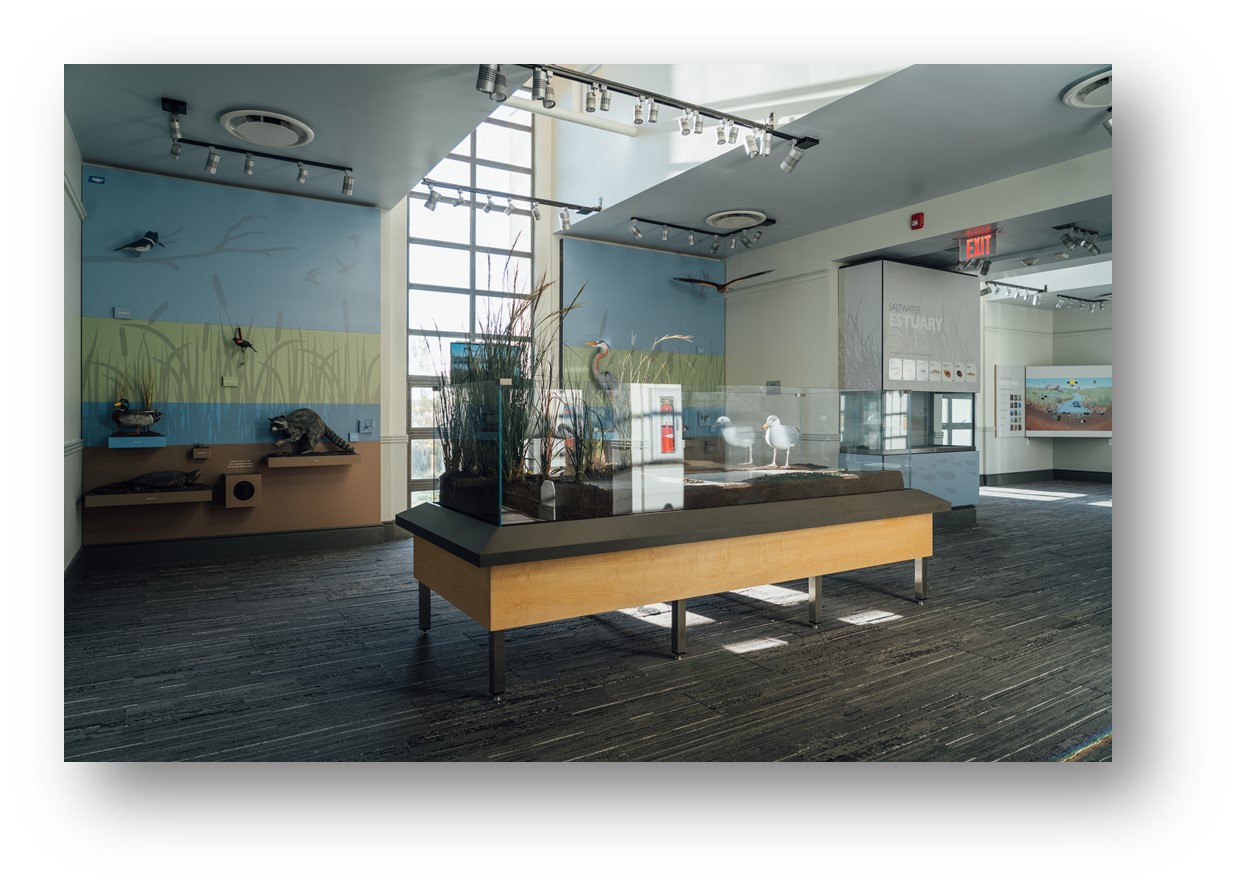
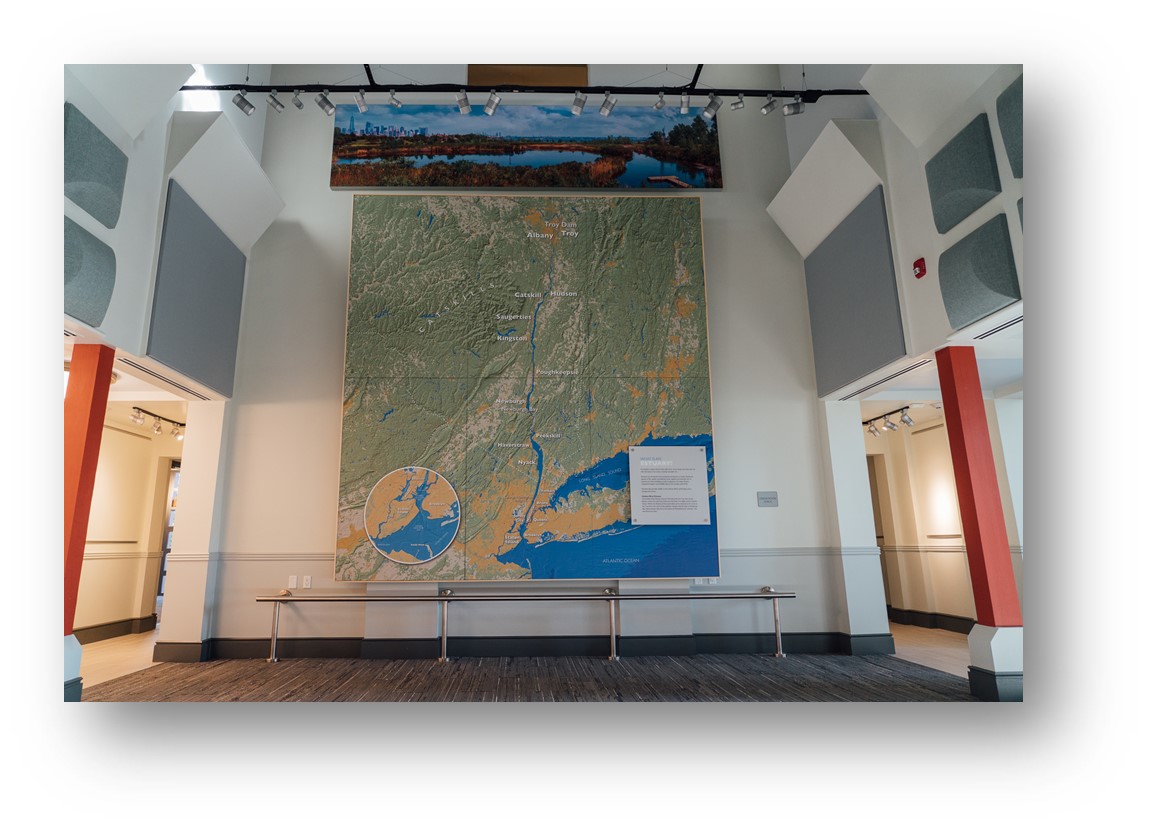
The nature center, on Freedom Way, features state-of-the-art environmental and natural history exhibits that focus on the Hudson River Estuary and surrounding environment.

New exhibits include a night theater, a nature discovery center with hands-on activities for younger visitors, a freshwater pond and meadow interactive mural, fresh and salt-water fish tanks, a salt marsh diorama, food web, and a host of other exciting new displays and activities.

Education and nature interpretive programs are available for schools and other organized groups and the general public. The center also offers a variety of professional development workshops for formal and non-formal educators.

The Richard J. Sullivan Natural Area, a 36-acre salt marsh in the heart of the New York Bay supporting the Hudson River Estuary, is adjacent to the nature center. It features a self-guided nature path, which allows visitors to explore the wildlife habitat.

The 1,200-acre Liberty State Park attracts 5.1 million visitors per year and offers expansive views of the Hudson River. In addition to the Nature Interpretive Center, the park features a two-mile waterfront walkway known as Liberty Walk, the 9/11 Memorial and Grove of Remembrance, the Liberty Landing Marina, the Green Park playground, nature trails, wildlife habitats and other recreational amenities.

Ferry service to the Statue of Liberty and Ellis Island depart from the Historic Central Railroad of New Jersey Terminal, which was also heavily damaged in Superstorm Sandy. The terminal building reopened in 2016 after a nearly $20 million restoration.


SOURCE: nj.gov/dep/newsrel/2021/21_0023.htm

Wednesday, May 5, 2021

It Is Amphibian Week


May 2-8 has been proclaimed National Amphibian Week by the U.S. Department of the Interior.  

Amphibians are tiny powerhouses for the ecosystem and the soundtrack to many of our spring nights, yet they're one of the most at-risk wildlife groups on the planet.  

The NJ Division of Fish and Wildlife is celebrating these valuable, vulnerable, cool (blooded) friends with daily social media posts all week, so follow @newjerseyfishandwildlife on Instagram and on Facebook.

Connecting Habitat Across New Jersey (CHANJ) is making progress on their first amphibian tunnel project, at a landmark frog and salamander road-crossing location in Sussex County.  This project tackles one of the leading threats to amphibians here and across the globe: habitat fragmentation. The project is currently in the design development stage and will hopefully break ground around Amphibian Week 2022.


Friday, August 2, 2019

Shad Found in Paulins Kill Upstream of Former Dam Site

NJ Division of Environmental Protection biologists have officially documented American Shad in the Paulins Kill upstream of the former Columbia Lake dam site.

The dam was removed this past winter to restore this historic spawning pathway, as it had been blocking migration in New Jersey's third-largest tributary to the Delaware River for more than 110 years.

While photos from anglers have confirmed the presence of American Shad in the Paulins Kill earlier this spring, Bureau of Freshwater Fisheries biologists have now officially documented this species in the Paulins Kill upstream of the dam site. Shad, as with others, such as salmon, are anadromous, meaning that they migrate up rivers from the sea to spawn.

The dam, owned by the Division of Fish and Wildlife since the 1950s, was 18-feet high making it the largest removal to date in New Jersey. The removal was accomplished through a diverse partnership of state and federal governments, and non-governmental organizations with a majority of funding for the removal provided by DEP's Office of Natural Resource Restoration with monies from natural resource damages. The Nature Conservancy of New Jersey (TNCNJ) provided project management and oversight over the multi-year project in coordination with American Rivers.

Fisheries Biologist Ross Shramko holds one of the American Shad captured and released while electrofishing the Paulins Kill River in Blairstown. in June 2019.
The Nature Conservancy of NJ also provided significant funding through private donations, and grants from:
US Fish and Wildlife Service
USDA Natural Resources Conservation Service
Corporate Wetlands Restoration Partnership
National Fish and Wildlife Foundation
Atlantic Coastal Fish Habitat Partnership
Delaware Watershed Conservation Fund
Leavens Foundation and
Tom's of Maine.

The USFWS has provided support throughout various phases of the project including the design of critical fish passage structures through the I-80 bridge which traverses the Columbia Wildlife Management Area.

The project is ongoing, with stabilization of key areas along the newly formed stream channel underway, and removal of the powerhouse to begin in upcoming months. The Division's fisheries staff will continue to monitor the recovery of American Shad in the river and will conduct additional sampling this fall to confirm if they have successfully spawned in the river.

Anglers are reminded while American Shad may be targeted in the Delaware River mainstem, they cannot be targeted in other freshwaters of the state. Anglers who see or accidentally catch an American Shad while fishing for other species are encouraged to report their sightings to the Division at NJFWfish@dep.nj.gov or 908-236-2118. Please include the date of sighting, location, any photos, and your contact info.

SOURCES
www.nj.gov/dep/fgw/news/
www.nj.gov/dep/fgw/columbiadam_project.htm

Friday, March 29, 2019

NJDEP Online and on Social Media


The N.J. Division of Fish and Wildlife is our professional environmental agency dedicated to the protection, management and wise use of New Jersey's fish and wildlife resources. The Division is within the Natural and Historic Resources Group in the NJ Department of Environmental Protection.

For stories and photos of the fish and wildlife on New Jersey, follow them online at:

their website njfishandwildlife.com

their photos on Instagram  instagram.com/newjerseyfishandwildlife/

and their page on Facebook  facebook.com/pg/NJFishandWildlife/


Thursday, December 14, 2017

NJDEP Seeks Public Comment on Update to State Wildlife Plan

The Department of Environmental Protection’s Division of Fish and Wildlife is seeking public comment on a major revision of the State Wildlife Action Plan, a blueprint that will guide wildlife conservation decisions and efforts in New Jersey over the next decade.

The State Wildlife Action Plan will provide a strategic vision for conservation actions for wildlife species of concern and is used by the U.S. Fish and Wildlife Service as part of its process in determining eligibility for important grant funding to states. This is the first revision of New Jersey’s plan since 2006.

“The State Wildlife Action Plan will guide DEP’s work and that of New Jersey’s very active conservation community in protecting our most vulnerable wildlife, ensuring that our great diversity of species can be enjoyed by future generations,” said DEP Commissioner Bob Martin. “We look forward to gathering valuable input from the public and conservation organizations across the state as we work together to develop the best plan possible.”

State Wildlife Action Plans assess the health of each state’s wildlife species and their habitats, identify the problems they face, and outline the actions needed to conserve them over the long term. New Jersey's 2005 Plan has helped sustain and enhance populations of at-risk species. The updated plan will continue to provide a guide for actions to protect species of greatest conservation need.

“By focusing on the needs of species of concern, this plan will help the Division of Fish and Wildlife make important conservation decisions that can prevent species from becoming listed as threatened or endangered,” said Division of Fish and Wildlife Director Larry Herrighty.

The public is encouraged to submit comments online.
To view or download the draft State Wildlife Action Plan and submit comments, visit: www.nj.gov/dep/fgw/ensp/waphome.htm


Previously known as the Comprehensive Wildlife Conservation Strategy, the State Wildlife Action Plan is a 10-year blueprint for protecting rare and declining wildlife species. To make the plan more focused and to establish clear and reasonable implementation goals, the proposed revision identifies 107 Focal Species from a list of 656 Species of Greatest Conservation Need (SGCN) that will be the target of conservation actions, such as habitat identification and management as well as research efforts.

The list includes bird species such as American woodcock, northern harrier, piping plover, cerulean warbler, and peregrine falcon; fish species such as brook trout, shortnose sturgeon, Atlantic sturgeon, and ironcolor shiner; reptile and amphibian species such as the northern scarlet snake, bog turtle, New Jersey chorus frog, and northern diamondback terrapin; mammals such as the little brown bat, Indiana bat, and Allegheny woodrat; and invertebrates such as yellow lamp mussel, American bumble bee, and pink sallow moth.

Conservation actions have been developed to address the most serious threats to these species, such as habitat loss, pollution, invasive species, and emerging diseases. Recommended actions include habitat protection and restoration, management of SGCN populations, and targeted monitoring to measure results.

In lieu of online submissions, written comments may be mailed to:

Wildlife Action Plan Comments
New Jersey Department of Environmental Protection
Division of Fish and Wildlife
PO Box 420, MC 501-03
Trenton, NJ 08625-0420

The DEP will consider all comments before submitting the final plan to the U.S. Fish and Wildlife Service. The public review and comment period will remain open until Jan. 19, 2018.

Tuesday, July 11, 2017

Have You Sighted a NJ Endangered Species?


You can help the Endangered and Nongame Species Program (ENSP) maintain updated records of rare species within the state. I was reminded of this recently when a commenter on a post here about bobcats mentioned that "local animal control" didn't seem interested in his sighting. That might often be true, but ENSP is interested.

You should check the list of New Jersey's endangered and threatened wildlife species maintained by the Division of Fish and Wildlife's Endangered and Nongame Species Program (ENSP).

If you have information on the location of a rare animal and would like to help build the Natural Heritage inventory, you can submit a report. This data will help develop critical habitat mapping and look at habitat and population trends, and ultimately help develop conservation strategies for endangered and threatened species.

You can fill out the sighting report form available at state.nj.us/dep/fgw/ensp/rprtform.htm (There is also one online for marine wildlife.)

Reporting includes marking the location of the sighting on a map to help biologists determine if suitable habitat is present at the location.

There is also information on submitting your report by mail or email.

Each record will be reviewed by an ENSP biologist.

Wednesday, March 29, 2017

NJDEP Division of Fish and Wildlife Celebrates 125 Years

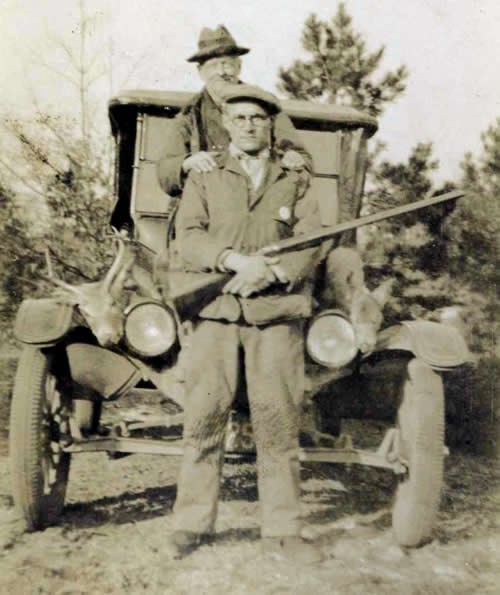
Game Warden M. Loveless (seated) with Deputy Warden Michael Bobera, circa 1912

The NJDEP Division of Fish and  Wildlife is marking 125 years of conserving wildlife and providing recreational opportunities for future generations of hunters, anglers and wildlife enthusiasts. Throughout the year, the Division will highlight historical information and conservation success stories on its website and Facebook page. It will also mark the anniversary during its annual special events, beginning with the Pequest Open House this weekend, Saturday, April 1, and Sunday, April 2, in Oxford, Warren County. This free event features exhibits, fishing, a beginner archery range, wildlife artists, taxidermists, woodcarvers and a sportsmen’s flea market.

The Division of Fish and Wildlife, which today manages nearly 350,000 acres of wildlife management areas, is one of the oldest state wildlife management agencies in the nation. The division traces its beginning to March 8, 1892, with legislation calling for the appointments of three fish and game commissioners and a paid “game protector” for the “better protection of the fishing interests and of the game birds and game animals of this state, and for the better enforcement of the laws relating thereto.”

This structure evolved into the New Jersey Division of Fish and Game, which was integrated into the DEP when the agency was formed on the first Earth Day, April 22, 1970.  In 1979, the agency became the Division of Fish, Game and Wildlife, and in 2000, the name was changed to the Division of Fish and Wildlife to encompass its mission of managing all wildlife.

“During this 125th anniversary, we rededicate ourselves to our mission of protecting, conserving and managing our wildlife resources for the benefit and enjoyment of many generations to come,” said Acting Division Director Larry Herrighty. “It is my sincere hope that residents and visitors take a few minutes to learn about our history, and all of the great work that we do and, most important, to take advantage of the many wildlife-related recreation opportunities that New Jersey has to offer.”

New Jersey has ecosystems that support an amazing diversity of wildlife: the wooded and rocky ridges of the Highlands, home to bears and bobcats; the vast pitch pine forests of the Pinelands that provide habitats for unique amphibians and reptiles; the coast’s beaches, dunes and salt marshes that teem with osprey, shorebirds and wading birds; the Delaware Bay region, boasting the state’s largest concentration of bald eagles; and Cape May, known worldwide for its hawk and butterfly migrations.

Today the division has a role in managing all wildlife species in New Jersey, including game animals; freshwater and marine fish; managing shellfish; birds, amphibians and reptiles; and endangered and nongame species. Division of Fish and Wildlife staff also educate the public about wildlife-related issues, and its conservation officers enforce the laws that protect wildlife.


The division’s many success stories and ongoing work includes:

  • Preservation and management of 122 state wildlife management areas encompassing 349,000 acres for hunting, fishing and enjoyment of nature;
  • An award-winning hunter education program that stresses safe and ethical hunting, and culminates in required attendance at a field session to demonstrate knowledge and skills;
  • Special youth hunting and free fishing days to introduce novices to these activities;
  • A comprehensive management and education program to maintain a healthy and sustainable population of black bears;
  • The impressive restoration of bald eagles, ospreys and peregrine falcons once threatened with extirpation in the state because of past use of the pesticide DDT;
  • Development and implementation of plans to assess the health of wildlife and their habitats, and to take actions to improve or stabilize potentially at-risk species;
  • Efforts to restore and protect populations of endangered species, such as two shorebird species – the piping plover and the red knot;
  • Ongoing implementation of the latest methodologies to track wildlife populations and identify their habitats;
  • Partnering with leading universities on research projects to better inform decisions on conservation and recovery strategies;
  • Management of freshwater fish stocking programs for popular game fish such as trout, muskellunge, channel catfish and walleye;
  • Identification and protection of high-quality freshwater fish habitats;
  • Management of recreationally and commercially important saltwater fish such as flounder, sea bass, striped bass and bluefish;
  • Management of more than 720,000 acres of estuarine and ocean beds for the harvest of clams and oysters;
  • The construction of boat ramps, launches and other public fishing access across the state;
  • Annual events such as the Pequest Trout Hatchery Open House, the Governor’s Surf Fishing Tournament, the NJ WILD Outdoor Expo and Garden State Deer Classic;
  • A successful Hooked On Fishing Not On Drugs program, a unique and nationally recognized program that encourages school-aged children to fish and appreciate the outdoors instead of turning to drugs, alcohol or tobacco;
  • Construction of a network of artificial reefs to enhance saltwater fishing;
  • Operation of the Hackettstown State Fish Hatchery, Pequest Trout Hatchery and Natural Resource Education Center, and the Rockport Pheasant Farm.
  • The division provides scientific analyses and advice to various state councils and committees, including the New Jersey Fish and Game Council, the New Jersey Marine Fisheries Council, the Shellfisheries Council, the Endangered and Nongame Species Advisory Committee, the Wildlife Rehabilitators Advisory Committee and the Waterfowl Stamp Advisory Committee.

“We can always count on the Division of Fish and Wildlife to provide us with the scientific data and other information we need to make sound decisions on behalf of everyone in the state,” said New Jersey Fish and Game Council Chairman David Burke. “I congratulate the Division of Fish and Wildlife on this milestone and look forward to continuing to work with the division toward our shared goal of conserving our fish and wildlife resources for all to enjoy.”

For information on the division, a history timeline, upcoming events, or to apply for a hunting or fishing license, and a link to the division’s Facebook page, visit: www.njfishandwildlife.com

The New Jersey Division of Fish and Wildlife Pocket Ranger mobile app guide to fishing, hunting and wildlife is available through Google Play and the iTunes Store.

SOURCE:  nj.gov/dep/newsrel/2017/17_0014.htm

Wednesday, February 22, 2017

Osprey Project Report Details Remarkable New Jersey Recovery

Osprey preparing to mate           Photo: Matt Edmonds at en.wikipedia

The nonprofit Conserve Wildlife Foundation of New Jersey (CWF) and New Jersey Division of Fish and Wildlife’s Endangered and Nongame Species Program (ENSP) today released the 2016 New Jersey Osprey Project Report highlighting the work performed to monitor and protect the state threatened bird of prey.

Some Highlights:

  • In 2016, 376 known-outcome nests fledged an average of 1.78 young per active nest. That rate has averaged 1.74 in recent years, remaining well above the minimum necessary for a stable population (0.80 young/active nest).
  • The 2016 productivity rate was near the long term average and suggests the population will continue to grow.
  • Forty-two new nests were found this year.
  • A state-wide census will occur in this year.
  • Of the 376 known-outcome nests, 316 were found along the Atlantic Coast and 60 were found on Delaware Bay.
  • A total of 670 young were produced from these known-outcome nests.
  • A total of 361 young were banded by volunteers and biologists with USGS leg bands for future tracking.
  • Population growth remains around 10% since approximately 2009.

The report notes that a total of 515 active nests were documented. A total of 670 young were produced from 376 known-outcome nests, and 361 young were banded by volunteers and staff with USGS leg bands for future tracking. The majority of nests are along the Atlantic Coast, while the most productive nests are located along the Delaware Bayshore (see end of release for report highlights).

“At the beginning of nesting surveys each year, I attempt to speculate on how well ospreys are doing,” stated CWF Habitat Program Manager Ben Wurst. “I started this year by simply saying that I’m optimistic for the positive outcome of the nesting season. Well, ospreys made my speculation seem quite dismal. I’m astonished by their continued growth while living in very close proximity to humans. I’m thankful for all support that we receive to help carry out this project to monitor and manage ospreys.”

Ospreys are the quintessential wildlife bioindicators in New Jersey and abroad. The continued monitoring of their population is critical for their long-term conservation and the health of the ecosystems where we live alongside ospreys.

“Only decades ago, ospreys had drastically declined across New Jersey and the nation, which makes their continuing recovery all the more remarkable,” said CWF Executive Director David Wheeler. “The ospreys’ expansion speaks both to the improving water quality of our estuaries and rivers, and the dedication and leadership of our State and CWF biologists and volunteers.”

In 2016, CWF continued to band young ospreys produced in Barnegat Bay with a red, alpha-numeric coded auxiliary band. Project RedBand is focused on ospreys that nest in the Barnegat Bay watershed from Point Pleasant to Little Egg Harbor. The main goal of the project is to engage the public in osprey management and conservation along the Jersey Shore. At the same time, while collecting data from re-sightings, biologists will learn about their dispersal, foraging habits, site fidelity, migration routes, and life span. In 2016, 62 red bands were fielded, putting the three-year total at 157. Five red-banded ospreys were re-sighted in 2016.

Over the past decade, CWF has conducted annual nesting surveys for ospreys while working in close partnership with ENSP. These surveys, performed each summer during the peak of their nesting season, cover around 80% of the known population, guiding conservation efforts across the state. The annual surveys would not be possible without the dedication of volunteer osprey banders and citizen scientists who monitor nests and report nesting activity online at www.osprey-watch.org.

Residents can help protect New Jersey's ospreys and all other rare wildlife by supporting the New Jersey Endangered Wildlife Fund when you file your state income tax this year and every year. Simply look for Line 59 on your NJ 1040 income tax return, and check-off for wildlife. Every dollar you donate goes directly to ENSP, enabling biologists to continue their work to restore, conserve and enhance New Jersey's populations of rare species. What's more, your contribution is matched with an equal amount of federal funding, further strengthening efforts to protect hundreds of imperiled species.

Conserve Wildlife Foundation of New Jersey (CWF) is a private, non-profit organization dedicated to the protection and preservation of New Jersey’s endangered and threatened wildlife and the habitats they depend on. We carry out our mission by researching and managing rare animal species, restoring habitat, educating New Jersey’s residents, and engaging volunteers in our conservation projects. Since the early 1990’s, CWF scientists and educators have helped conserve and protect a variety of at-risk species of wildlife in New Jersey, the most densely populated state in the nation.


Monday, February 13, 2017

Plan to Cut Trees in Sparta Mountain Wildlife Management Area Becomes Controversial


The NJ Department of Environmental Protection, in conjunction with the New Jersey Audubon Society, have put forward a plan to cut roughly 20 to 30 acres on Sparta Mountain annually. Opponents of the state’s plan to cut acres of trees in the Sparta Mountain Wildlife Management Area have come out strongly against the plan.

The state feels it is necessary to cut timber in order to diversify the forest and create “young forest habitat” that endangered species in the area need to thrive.

Opponents see the plan as a logging scheme disguised as a forest stewardship plan. They also feel that removal of the trees threatens an area of land that provides a large percentage of water for the state.

The anti-logging effort has been branded with the name “Stop the Chop” by the group SaveSpartaMountain.org.

A meeting in late January at the Franklin Firehouse was sponsored by the Friends of Sparta Mountain group, which included environmental speakers as well as Sen. Raymond Lesniak (D-Elizabeth).

The plan would encompass 3,400 acres of land within the townships of Sparta, Ogdensburg, and Hardyston in Sussex County and Jefferson Township in Morris County.


Wednesday, January 11, 2017

Peregrine Falcon Annual Report for 2016


The 2016 Peregrine Falcon research and management report is available on the NJDEP Division of Fish and Wildlife.

The population remained relatively stable with 35 known pairs (30 active) occupying suitable nesting habitat across the state.

For the full report visit njfishandwildlife.com/ensp/raptor_info.htm#peregrine

Tuesday, January 10, 2017

2016 Annual Report from the NJDEP Division of Fish and Wildlife

The 2016 Annual Report from the NJDEP Division of Fish and Wildlife is available on the Division's website.

The report contains an overview of each Division bureau or office along with highlights from the year.

The report, along with prior years' reports, can be viewed at njfishandwildlife.com/about.htm .

Friday, November 11, 2016

Support NJ's Endangered Wildlife With A Conserve Wildlife License Plate


When you buy a $50 Conserve Wildlife license plate, you not only let everyone know you believe in conservation. You let them know you're doing something about it. More than 80% of your payment, goes directly toward preserving our state's endangered wildlife.

That's crucial, because the New Jersey's endangered, threatened and nongame wildlife protection program receives no dedicated state funding and must depend completely on contributions from the general public.

Revenues from license plate sales (and the wildlife check-off on the state tax form) have made a difference in conserving wildlife that is threatened and endangered.

Conserve Wildlife license plates may be purchased during the motor vehicle registration cycle at a Motor Vehicle Commission agency, at any New Jersey automobile dealer when buying or leasing a new car, or by calling 1-888-486-3339 on weekdays to request an application to purchase a license plate via mail.

To learn more about the Division of Fish and Wildlife’s “Drive Conservation Home” License Plate Program, visit: www.nj.gov/dep/fgw/ensp/plates.htm

Wednesday, October 19, 2016

NJDEP Gets Grant to Protect Bog Turtle Habitat

The U.S. Fish and Wildlife Service has awarded the Department of Environmental Protection an $850,000 grant under the federal Endangered Species Act Grants Program. The Cooperative Endangered Species Conservation Fund (CESCF) Recovery Land Acquisition grant for New Jersey will go toward the future acquisition of hundreds of key acres of habitat for the bog turtle, which is found predominately in the northern half of New Jersey.

“Preservation of this unique habitat protects the federally threatened bog turtle, while also enhancing our environment and providing a better quality of life for residents of the state,” Commissioner Bob Martin said. “We are grateful to the U.S. Fish and Wildlife Service for our inclusion in this federal grant program.”

New Jersey is one of 20 states to receive funding to support projects that conserve at-risk species and their habitats.


“These grants will enable state fish and wildlife agencies to advance the stewardship of our nation’s fish and wildlife resources,” said Dave Chanda, Director of DEP’s Division of Fish and Wildlife. “We appreciate the strong ties formed by state agencies and their partners to protect these imperiled wildlife species and their habitats, which are critical to the on-the-ground success of these projects.”

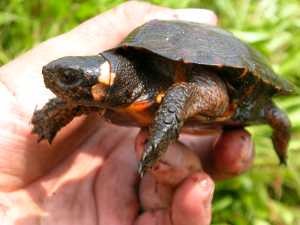
The bog turtle is native only to the eastern United States and is found in the northern half of New Jersey. The species, considered threatened at the federal level and endangered at the state level, congregates in small colonies often of fewer than 20 individuals. They prefer calcareous wetlands (areas containing lime), including meadows, bogs, marshes, and spring seeps, that have both wet and dry regions.

Once the purchases of the properties are completed, the preserved lands will be managed by the New Jersey Natural Lands Trust in cooperation with the DEP’s Endangered and Nongame Species Program,

CESCF funding is provided through three competitive grant programs: the Habitat Conservation Planning Assistance Grants Program, which provides funds to support the development of Habitat Conservation Plans (HCPs) that protect habitat for listed species; the Recovery Land Acquisition Grants Program, which provides funds for the acquisition of habitat in support of approved and draft species recovery plans; and the HCP Land Acquisition Grants Program, which provides funds to acquire habitat for listed species associated with approved HCPs.

The grants are funded in part by the Land and Water Conservation Fund, which was established by Congress in 1965. The fund promotes access to outdoor recreation resources for present and future generations by providing funding to federal, state and local governments to purchase land, water and wetlands for the benefit of all Americans. For the past 51 years, the fund has supported more than 40,000 conservation and outdoor recreation projects nationwide.

To learn more about the U.S. Fish and Wildlife Service’s Ecological Services Program visit: www.fws.gov/endangered

For more information on the state’s Threatened and Endangered species, please visit: www.nj.gov/dep/fgw/ensphome.htm

For more information on turtles in New Jersey, please visit: www.nj.gov/dep/fgw/ensp/fieldguide_herps.htm#turtles

For more information about the New Jersey Natural Lands Trust, please visit:
http://www.njnlt.org/

Source:  http://www.nj.gov/dep/newsrel/2016/16_0088.htm

Sunday, September 11, 2016

Reviewing NJ Birds for a Species Update

Peregrine falcon - Jersey City

The NJDEP Division of Fish and Wildlife periodically conducts status assessments for groups of wildlife. The Division is preparing to begin a review of NJ waterbird and landbird species to help guide an update of species status, that is, to assist in determining which species should be included on the state's Endangered Species list or designated as Threatened, Special Concern, Stable-Secure, or Undetermined-Unknown on the state's list of nongame wildlife.

To assist us with this process, the Division is inviting persons with expertise and knowledge regarding New Jersey's native bird populations to submit relevant information.

For more information, including how to be invited to participate, visit njfishandwildlife.com/news/2016/bird_status_review16.htm