Wednesday, March 31, 2010

Red Knots in New Jersey


Nearly four years after New Jersey banned horseshoe crab harvesting to protect a vanishing shorebird at the Delaware Bay, scientists say they are not optimistic about recent evidence showing the red knots may be on the rebound.

After journeying from the southern tip of South America, red
knots appear on the shores of Delaware Bay in May. They are generally so thin that they look like sparrows. There they will try to gorge themselves on the eggs of the horseshoe crab (Limulus polyphemus) and put on a layer of fat. If successful, they will look more like plump doves when they leave for the Arctic.

Ground surveys at Delaware Bay last spring found 24,000 red knots. That's an improvement from the 15,000 counted in 2008. Biologists also reported increased numbers of crab eggs on the bay estuaries. But neither the horseshoe crabs nor the red knots can be called a "recovered population" and the fate of the birds is linked to the crabs.

Horseshoe crabs are used as bait in the conch and eel industry. NJ fishermen contend that the cottage crab industry was unnecessarily hurt by by imposing a harvesting ban in 2006 that was extended indefinitely by law in 2008.

In an nj.com article, biologist Amanda Dey with the New Jersey Endangered and Non-Game Species Program said about last year, "We’ve seen a bump up in the numbers. ... It was a year that we had settled weather, so there were more crabs and more birds. We’d like to think we saw the bottom. But we don’t know."

Dey is part of the team of scientists studying both the crabs and the birds. They traveled to Tierra del Fuego, where they counted about 14,800 red knots in prime South American wintering grounds. The good news is that amount matches winter counts there over the past three years, which suggests that there has not been further declines. Unfortunately, the overall numbers are still at a potential crash level.

Our Delaware Bay spring count last year was still less than half the 50,000 birds recorded there in 1998.

New Jersey has the only moratorium among the 15 coastal states. Neighboring Delaware limits harvests to 100,000, male-only crabs annually.

It would probably surprise many New Jerseyeans that Delaware Bay is at the center of this dispute. It's because the Bay is where the world’s largest population of breeding horseshoe crabs emerges from winter waters each spring to lay eggs on the estuary shores.

Red knots are not the only birds that stop in NJ to bulk up on the eggs as they migrate. But red knots have one of the longest migrations flying from their South American wintering grounds to their Arctic breeding grounds.

More on red knows and NJ at http://www.state.nj.us/dep/fgw/ensp/redknot.htm

The Flight of the Red Knot: A Natural History Account of a Small Bird's Annual Migration from the Arctic Circle to the Tip of South America and Back

Red Knot: A Shorebird's Incredible Journey

Horseshoe Crabs and Shorebirds: The Story of a Food Web

Horseshoe Crabs

Horseshoe Crabs (Schaefer, Lola M., Musty-Crusty Animals.)
Crab Wars: A Tale of Horseshoe Crabs, Bioterrorism, and Human Health

Biology and Conservation of Horseshoe Crabs

The American Horseshoe Crab 


Thousands of Red Knots migrate through New Jersey

Tuesday, March 30, 2010

Peregine Falcon Activity at the Jersey City Nestbox


From njfishandwildlife.com:

"An egg has been laid! When we first tuned in today the webcam image revealed an egg that had been laid sometime between yesterday afternoon and 7:30 a.m. this morning. The timing is about average - egg laying varies year to year, with last year being one of the latest with the first egg not laid until April 13; in 2008 the first egg was laid around March 21.

Hopefully a new egg will be laid every two days or so until there is a full clutch of three or four (rarely, five). Once the female has finished laying her eggs incubation will begin, and about 32 to 33 days later hatching should occur. We appreciate the support of all our viewers as we begin another season in earnest now that laying has begun. Please remember our work and Check-off for Wildlife when you complete your NJ tax form this year."

The Jersey City Peregrine Webcam streams live video from a nestbox atop 101 Hudson Street between March and July each year. Follow the season on screen. Clicking on the still image will open a new window containing the live video feed when active. The video feed is in Windows Media format.

WEBCAM  http://www.njfishandwildlife.com/peregrinecam/jcp-live.htm

Volunteer to Help Replant the Villa Wildlife Management Area

The "Ponderlodge Golf Course" was purchased in February 2006 by New Jersey's Green Acres Program and is now known as Villas WMA. After being purchased, it was instantly prized by residents and outdoor enthusiasts for its size, location and recreational opportunities. Its location near the Cape May Peninsula gives it great potential value as a crucial habitat for migratory wildlife.

The 253-acre former golf course on the property has little habitat value to wildlife in its current state. The Division of Fish and Wildlife and the Conserve Wildlife Foundation of NJ (CWF) are partnering to restore and improve wildlife habitat on the former golf course portion of the Villas WMA.

Last year CWF began restoration efforts by planting over 900 tree seedlings on a former fairway. This spring CWF needs volunteers to help plant more tree seedlings to reforest additional former fairways.

Planting will begin the week of March 29 and will continue until all the available seedlings are planted. If interested in volunteering or know of a large group that would be interested in volunteering to help plant trees please contact:   Ben Wurst, Habitat Program Manager, Conserve Wildlife Foundation of NJ, ben.wurst@conservewildlifenj.org

The Ponderlodge Plan can be viewed at http://www.njfishandwildlife.com/ponderlodge_plan.htm

NJ Wildlife Management Areas   http://www.state.nj.us/dep/fgw/wmaland.htm 

Monday, March 29, 2010

Happy First Birthday Endangered New Jersey
We are now starting our second year online as a blog.

Endangered New Jersey began as a website built in 1999 for the ThinkQuest website competition for students. It was designed to be about endangered and threatened wildlife of the United States with a special focus on New Jersey, and it was built by three sixth grade students and their two teacher-coaches.

An archived version of the original site (that "locked" version is now out-of-date) is maintained in the ThinkQuest library online.


An updated version of the site was maintained by me at another location for about ten years, but the updates were infrequent.

So, in March of 2009, I set myself the task of starting a blog version of Endangered NJ. The blog format allows for more frequent updates, comments from readers and free hosting.

The blog also broadened the scope of the original site to include other topics about the diverse environments and species found in New Jersey, the challenges we face and what you can do to enjoy and protect them.

THE ORIGINAL SITE

I have to give credit to at least one of the original student members of the team, my son, Drew Ronkowitz. He had participated in the ThinkQuest Internet competition in 1998 with an entry title What's In A Name (a web site about the origins of names). That entry was a 1998 Finalist and received several other Internet awards, and in its first year on the still-new World Wide Web, it received over 35,000 visitors. I'll be relaunching that site too as a blog called Why Name It That on April first.

Drew was encouraged by earlier Web success, so he teamed up with his friends, Brandon Lane and James Kegley, and enlisting me as a tech coach and one of their teachers, Barbara Ann Ellert, as their content coach, the team started work.

They chose endangered species because it is studied in almost all elementary schools and is popular with kids. There are many sites about it but there were no sites about local New Jersey species.

I had been a volunteer with the state's Wildlife Conservation Corps for several years and knew that few pages showed up at the time on search engines including the official New Jersey Department of Environmental Protection's own site.

As part of the site, the team needed images and needed to get the rights to use them. They first approached the state web site's webmaster and the office of Endangered and Nongame Species Program. Happily, both were enthusiastic about the project and offered their site's information and the graphics found there.

The site had 3 main areas: 1. the species (which would be subdivided into birds, reptiles, mammals, etc.) 2. topics about endangered species in general (definitions, causes etc.) 3. a section that the coaches would concentrate on (teacher links, citations, updates, promotion, permissions etc.)

We also sent out e-mail permission requests to sites we found with useful photos. We told them that we were creating an educational web site for ThinkQuest and asked if we could use any of their photos on our site. We said that we would credit the photos to them and include a link to their site on our sources page. We got a positive response from the U.S. Fish and Wildlife Service and from two other sites. A few never answered. Two told us that they didn't have the rights to the photos themselves. And two others said we could not use their photos but could link to their pages if we wished.

The site was uploaded March 31, 1999, and we notified the State of New Jersey's Department of Environmental Protection about the site and hoped they would recognize our efforts. They did and even provided a link to us on their site.

So, in some way, this site is actually celebrating its 11th birthday this month!

The site was selected as a Gold Award Winner in the Science and Math category that year.
The Cedar Grove Board of Education presented the team members with a proclamation of congratulations. The Star-Ledger, did a great feature story on the team and site including a color photo of the students under the headline "Masters of the Web." By that September, the team had received e-mail from teachers, students (elementary school through college) , several biologists, and Scout leaders who had visited the site and used our resources.

Frequently, we received technical questions which we tried our best to answer or at least give a link or e-mail address they could try. One biologist contacted us about a species correction and was amazed to discover when we replied that the site was created by three students when they were in sixth grade - "I thought it was the state's official site! I'm very impressed!" he replied.

The site was featured on New Jersey Search and was included in their search engine database as a "NJ Proud" site. The team presented a program along with the Conserve Wildlife Foundation at their former elementary school and received plaques of appreciation from the association for "promoting wildlife conservation awareness to the citizens of New Jersey." We also made a slide presentation on endangered species at a local Veterans of Foreign Wars meeting. A member of the group had seen the site in a newspaper feature and contacted us. The VFW post presented certificates of appreciation to the team members for their "service to the community." The site was also featured in an article in the magazine New Jersey Outdoors in 2000.

Doing the site was a great experience for the students and the teacher coaches. Blogs didn't exist in 1999, so creating and launching a website was pretty unusual.

Hopefully, this latest incarnation will continue to grow and attract new readers and get out information on the natural resources and wildlife in New Jersey.

Saturday, March 27, 2010

Pequest Open House This Weekend


2010 Pequest Open House and Fishing Flea Market
March 27 & 28, 2010
10 a.m. - 4 p.m. daily
FREE!

This event is great for people of all ages and there are so many things to see and do throughout the day, so plan to celebrate the beginning of trout season and spring. Bring your families, friends, scout troops, church groups, fishing clubs and anyone else for a fun time in the outdoors.

Kids between the ages of 8 and 16 can try their hand at trout fishing a week before the season opens in our Fishing Education Pond. They will be given expert instruction by our staff, Wildlife Conservation Corps volunteers and volunteers from Trout Unlimited. Kids under 8 can try catching one of our trout in the "Kiddie Fishing Tank". And the best part is - we supply all the equipment! Children of all ages can do fish printing, the ancient Japanese art known as Gyotaku. Displays will be set up about fisheries management, aquatic insects and much more.

Visitors at raceway Inside the Natural Resource Education Center, visit with representatives from various conservation groups and learn how they are helping to protect our natural resources. There will also be ongoing fly tying demonstrations and many different wildlife artists, carvers and taxidermists will be here with their artwork and equipment for sale. Don't forget to look inside the Exhibit Hall and learn about the history of Pequest and what we do here. For even more information about the hatchery, don't forget to take the self-guided tour of the facility, where everything will be in full swing in anticipation of the upcoming trout season.


Just outside the main building, our Fishing Flea Market is sure to offer some good deals on both new and used equipment, lures, gear and so much more! So if you're looking to upgrade your fishing equipment or if you're just starting out, you'll want to check out the vendors here.


There will be food vendors on hand at the event or you can bring your own lunch and enjoy one of our 3 picnic areas nestled in the heart of the Pequest Valley.


The Pequest Trout Hatchery and Natural Resource Education Center is located 9 miles west of Hackettstown on Route 46 in scenic Warren County. Come for a family or group outing during the Open House or anytime throughout the year.  Directions to Pequest.

For more information on public or group visitation/programs call 908-637-4125 or see the on-line schedule of public programs. 

Schedule of Activities (pdf, 21kb) 

Press Release via http://www.state.nj.us/dep/fgw/peqoh.htm

Friday, March 26, 2010

D&R Greenway


D&R Greenway Land Trust is central New Jersey's non-profit land preservation organization, founded in 1989 through the collaboration and vision of four organizations: the Stony Brook - Millstone Watershed Association, Friends of Princeton Open Space, Regional Planning Partnership, and the Delaware & Raritan Canal Commission.

They were originally named the Delaware & Raritan Greenway, but they changed their name in 2004 to better reflect their preservation work as a Land Trust, and because their work expanded beyond the focus on the Delaware & Raritan Canal.

I actually heard about them because of a poetry event they offered recently called "Living Among Giants, Seeing the Forest for the Trees." It's one of a number of public programs they offer at at the Johnson Education Center.

They cover a lot of ground. Their operating region consists of over 1,500 square miles, encompassing portions of the Delaware, Raritan and Millstone River watersheds and the Delaware & Raritan Canal. This includes Mercer, Hunterdon, Somerset, Middlesex, Burlington and Monmouth counties.

Recently, they have also worked at preserving preservation of farmlands in Salem County in the area of Mannington Meadows.

Since 1989, D&R Greenway Land Trust has preserved 223 properties. The total acreage preserved as of February 1, 2010 is 14,320.69 acres valued at $316,177,653.

Thursday, March 25, 2010

Spring Amphibian Migrations

Why did the wood frog cross the road?

NJ Audubon, partners with the NJ Fish and Wildlife Endangered and Non-game Species Program (ENSP)
and Conserve Wildlife Foundation of NJ, to study migratory movements of amphibian populations in the state

There are widespread declines in amphibian populations globally. Studying local populations can help us more effectively protect their habitats.

Amphibians often play important and keystone roles in the natural world as indicators of functioning healthy ecosystems and as part of the predator - prey relationship. Like birds, they often signify a "canary in the coal mine" because widespread declines may indicate far reaching problems in the ecosystem. Herpetologists around the world have initiated research and conservation efforts to identify problems associated with these declines and come up with solutions to counteract them. The incredibly high extinction rate of some species can be attributed to:

* Human disturbance
* Habitat destruction
* Encroachment
* Pollution
* Introduced predators

Why did that frog, toad, or salamander cross the road?  Amphibian populations require habitat with abundant food supplies, breeding areas, and hibernation sites - and they need a safe travel path between these sites.

The always increasing development here in NJ and the entire northeast continues continues to separate hibernation sites from breeding pools with road crossings that amphibians must travel.

There are some amphibians (vernal pond obligates VPOs) that can only reproduce successfully in vernal ponds. Why vernal (spring) pools?  These pools only hold water for several months in the spring, so they are not places for amphibians to "live" but their short existence also ensures that fish can not live there and so will not eat the amphibian's eggs or young.

Most of these species are moving from safer upland forests on the first warm rainy nights to these vernal ponds. There, it is amphibian dating time. They search for mates, breed and lay their eggs for the next generation.


Spring Amphibian Migration 2010 video shows volunteer training and two crossings.

These amphibians might be living in your backyard or a small woodlot near you. You probably wouldn't even notice any "road kill" as nocturnal scavengers do a good job of cleaning up the evidence by morning.

Volunteers learn how to identify amphibian crossing sites (generally historic migratory routes from past years) and conduct night surveys on suitable weather nights to look for frogs and salamanders crossing roads.

They collect amphibian mortality data for the NJ Endangered Species Program. They also act as "crossing guards" to help amphibians negotiate dangerous road crossings during the most stressful time of their life cycle.

Of course, all volunteers also act as ambassadors for the project by educating other people about what they do.

Fowler's toad

To become a volunteer, visit the ENSP website at http://www.nj.gov/dep/fgw/wcchome.htm

For more information on this effort, see http://www.njaudubon.org/SectionEducation/Amphibians.aspx

FURTHER READING
On NJ Vernal Pools
Aquatic Turtles: Sliders, Cooters, Painted, and Map Turtles
NJ Wildlife: An Introduction to Familiar Species of Birds, Mammals, Reptiles, Amphibians, Fish and Butterflies


Obligate Vernal Pool Breeding Amphibians:
Eastern tiger salamander (Ambystoma t. tigrinum) Endangered
Marbled salamander (A. opacum) Special Concern
Spotted salamander (A. maculatum)
Jefferson salamander (A. jeffersonianum) Special Concern
Blue-spotted salamander (A. laterale) Endangered
Wood frog (Rana sylvatica)
Eastern spadefoot toad (Scaphiopus holbrookii)

Facultative Vernal Pool Breeding Amphibians:
Green frog (Rana clamitans melanota)
Bullfrog (R. catesbiana)
Pickerel frog (R. palustris)
Southern leopard frog (R. utricularia)
Carpenter frog (R.virgatipes) Special Concern
Northern cricket frog (Acris crepitans)
Northern spring peeper (Psuedacris crucifer)
New Jersey chorus frog (P. triseriata kalmii)
Upland chorus frog (P. triseriata ferarium)
Northern gray treefrog (Hyla versicolor)
Southern gray treefrog (H. chrysocelis) Endangered
Pine Barrens treefrog (H. andersonii) Threatened
Four-toed salamander (Hemidactylium scutatum)
Long-tailed salamander (Eurycea l. longicauda) Threatened
American toad (Bufo americanus)
Fowler's Toad (B. fowlerii) Special Concern

In addition to amphibians, there are several reptiles that inhabit vernal pools on a seasonal basis, primarily to eat the eggs and larvae of amphibians:
Wood turtle (Glyptemys insculpta) Threatened
Spotted turtle (Clemmys guttata) Special Concern
Mud turtle (Kinosternon subrubrum)
Eastern painted turtle (Chrysemys picta picta)
Common snapping turtle (Chelydra serpentina serpentina)

Wednesday, March 24, 2010

Timberdoodles and Wildlife Along the Atlantic Coast

The Atlantic Coast region is a highly urbanized area that stretches from southwestern Maine to the mouth of Chesapeake Bay. That makes it even more critically important to resident wildlife and migratory wildlife.

Recently, conservationists in the region have joined forces and funding to launch the Atlantic Coast Regional Woodcock Initiative, reports the Wildlife Management Institute (WMI).

But what caught my attention in the article I read was the mention of timberdoodles. It's a name that I had never heard. It's a bird also known by the folk names bogsucker, night partridge, brush snipe, hokumpoke, and becasse. It's the American woodcock.

A WMI initiative is aimed at creating habitat for timberdoodles, but it will also benefit New England cottontails, bobcats, golden-winged warblers, Eastern towhees, whip-poor-wills, ruffed grouse, wild turkeys and bog turtles, as well as scores of other species that use young forest for all or some of their life needs. The populations of many of these animals have fallen in recent decades.

The American woodcock (Scolopax minor) lives in young upland forest and brushy woods near rivers and streams. Woodcock eat worms and insects, which they catch by probing in the soil with their long bills. They breed across eastern North America from Atlantic Canada to the Great Lakes, and spend the winter in lowlands mainly in the southern and Gulf Coast states.

In the past, woodcock were abundant because plenty of young forest – also called early successional habitat – existed in their range. But many brushy areas have grown into mature forest, where woodcock do not live. And human development has destroyed much of the birds' former habitat. Because of these factors, the timberdoodle population has fallen by about 1.2 percent each year since the 1960s.

Habitat-management efforts on designated public and private lands will create demonstration areas where other managers and landowners can learn how best to create, rejuvenate and maintain young-forest habitat.

The Appalachian Mountains Regional Initiative began in 2008 and involves parts of Maryland, Ohio, Pennsylvania, New Jersey, Virginia, and West Virginia, and already has 10 Demonstration Areas up and running.

Here in NJ, the Wallkill River National Wildlife Refuge in Sussex County is part of the initiative and a woodcock interpretive trail is in the planning stages.


MORE
timberdoodle.org

Monday, March 22, 2010

2010 Pequest Open House and Fishing Flea Market

2010 Pequest Open House and Fishing Flea Market
March 27 & 28, 2010
10 a.m. - 4 p.m. daily
FREE!


Beginning in 1984, the Pequest Trout Hatchery and Natural Resource Education Center has been opening its doors to the public for the annual Open House, which usually takes place the weekend before Trout Season opens. This year's event will take place two weeks before due to the Easter holiday. The Open House allows the Division of Fish and Wildlife to show off the trout we raise at the state of the art Pequest Trout Hatchery and it serves as a reminder that spring is just around the corner.

Each year, thousands of people come to the hatchery to experience this event for themselves. And each year, the Division of Fish and Wildlife strives to make this a bigger event than the year before.

This event is great for people of all ages and there are so many things to see and do throughout the day. This year's Open House will be March 27 and 28 from 10:00 - 4:00 daily, so plan to join us as we celebrate the beginning of trout season and spring. Bring your families, friends, scout troops, church groups, fishing clubs and anyone else for a fun time in the outdoors.


Kids between the ages of 8 and 16 can try their hand at trout fishing a week before the season opens in our Fishing Education Pond. They will be given expert instruction by our staff, Wildlife Conservation Corps volunteers and volunteers from Trout Unlimited. Kids under 8 can try catching one of our trout in the "Kiddie Fishing Tank". And the best part is - we supply all the equipment! Children of all ages can do fish printing, the ancient Japanese art known as Gyotaku. Displays will be set up about fisheries management, aquatic insects and much more.

In the fields along our roadway, we'll have our beginner archery and shotgun ranges set up. For those experts out there, we'll also have our 15 target 3-D archery course set up in the woods, offering you many nice shots at some of New Jersey's huntable wildlife targets in realistic situations. You will need to bring your own archery equipment for this course.

Each day at 8:00 a.m., Hunter Education staff will lead a Hunter Education Class. Saturday's class will be for archery only; Sunday's class will be for shotgun only. Interested participants must register for the course at www.wildlifelicense.com/nj/ and bring their completed workbook.

Visitors at raceway Inside the Natural Resource Education Center, visit with representatives from various conservation groups and learn how they are helping to protect our natural resources. There will also be ongoing fly tying demonstrations and many different wildlife artists, carvers and taxidermists will be here with their artwork and equipment for sale. Don't forget to look inside the Exhibit Hall and learn about the history of Pequest and what we do here. For even more information about the hatchery, don't forget to take the self-guided tour of the facility, where everything will be in full swing in anticipation of the upcoming trout season.

Just outside the main building, our Fishing Flea Market is sure to offer some good deals on both new and used equipment, lures, gear and so much more! So if you're looking to upgrade your fishing equipment or if you're just starting out, you'll want to check out the vendors here.

Cal Huntzinger, the president of the NJ Chapter 22 of Muskies, Inc. will present a lecture entitled, "The Right Presentation" on both days of the event (see schedule below). The basics of "hunting" musky will be discussed along with rod and reel types, rigging, lures and their uses, leaders, reading the water, seasonal musky patterns, figure eight, hook set, landing and release tactics

There will be food vendors on hand at the event or you can bring your own lunch and enjoy one of our 3 picnic areas nestled in the heart of the Pequest Valley.

The Pequest Trout Hatchery and Natural Resource Education Center is located 9 miles west of Hackettstown on Route 46 in scenic Warren County. Come for a family or group outing during the Open House or anytime throughout the year.  Directions to Pequest.

For more information on public or group visitation/programs call 908-637-4125 or see the on-line schedule of public programs. 

Schedule of Activities (pdf, 21kb) 

Press Release via http://www.state.nj.us/dep/fgw/peqoh.htm

Saturday, March 20, 2010

Endangered Plant Species New Jersey

Spring is here!  At least on the calendar, it's here. So, it's an appropriate time to take note of the endangered plants here in New Jersey.

In 1989, the Endangered Plant Species List Act was enacted. The act directed the Division of Parks and Forestry to create the State’s first official list of plant species endangered in New Jersey.

One reason for creation of the list was to more effectively and efficiently incorporate the preservation of New Jersey’s natural diversity into government planning functions. Endangered plants were defined in the act as native species whose survival in the State or nation is in jeopardy, including plant species listed, proposed or under review by the federal government as endangered or threatened in the United States, any additional species known or believed to be rare throughout its worldwide range, and any species having five or fewer extant populations within the State.

The list of Special Plants of New Jersey contains all 339 native New Jersey plant species on the Endangered Plant Species List, as well as information on all other plants currently tracked by the Natural Heritage Database.

One example of an on-going project is annual monitoring and management of the State’s last surviving population of the state and federally endangered American chaffseed (Schwalbea americana), located on a precarious roadside in Brendan T. Byrne State Forest. New Jersey’s population of S. americana is now the only population north of North Carolina.

Another plant that has recently received considerable attention is the state endangered and federally threatened sea-beach amaranth (Amaranthus pumilus). This species occupies the specialized and dynamic habitat of open sandy beach between the high tide line and the toe of the primary dune, and recently reappeared in NJ after almost a century of absence.

To learn more about the health and threats Endangered Plant Species Populations in New Jersey, you can download the state's report (49 pages, PDF)


Endangered Wildlife and Plants of the World
Vanishing Flora: Endangered Plants Around the World
Saving Endangered Plants and Animals (Science Solves It)
Endangered Plants

Friday, March 19, 2010

End of Winter


Celebrate the end of winter with a few minutes of the season at Sandy Hook.

Best known as a summer location where millions of visitors enjoy beaches and trails, the Hook has some quiet charms in winter.

Here's a short video winter visit to Sandy Hook, set to Bach’s Cello Suite No. 6 in D Major. Take a few minutes and enjoy.

Video (Flash)link
http://ns.www.nps.gov.edgesuite.net/featurecontent/npnh/WinteratSandyHook/WinteratSandyHook.swf

Wednesday, March 17, 2010

Spring Equinox Shore Walk Saturday at Sandy Hook

Puritan and Priscilla off Sandy Hook by James Edward Buttersworth 18"x12" Art Print Poster

The American Littoral Society will have a Spring Equinox Shore Walk in Guardian Park, Fort Hancock at Sandy Hook on Saturday, March 20 at 7 p.m.

The spring equinox is one of two days in the year when daylight and darkness equally share the 24 hours of the day. It’s also a great day for an evening walk on Sandy Hook.

Meet at 7 p.m. at Guardian Park. Free, but call ALS at 732-291-0055 in advance to ensure an accurate head count.

Information on visiting Sandy Hook  http://www.nps.gov/gate/planyourvisit/thingstodosandyhook.htm

Sandy Hook, NJ (Images of America)

Sandy Hook, NJ (Images of America)

Friday, March 12, 2010

Pregnant Males

Strange and disturbing news from National Geographic News this month that a new study shows that one of the most common weed killers in the United States can make male frogs lay eggs.

Atrazine, a widely-used pesticide used croplands in the U.S., is an endocrine disruptor. That means that it is a substance that interferes with animals' reproductive systems.

Previous research had shown that atrazine could give male amphibians female characteristics. New research has discovered that the chemical transforms male frogs into fully functioning females.

Atrazine "Keeps Coming Back"

Of 40 genetically male African clawed frogs used in the experiment, 4 of the adult frogs—or ten percent—developed into what looked like perfectly normal females.

As always with this type of discovery, if you're not concerned with the impact on wildlife, consider the human implications. Though there haven't been many studies on the chemicals' impacts on people, some recent research has linked atrazine exposure to breast cancer.
The U.S. Environmental Protection Agency recently announced it's reevaluating atrazine. The chemical has been banned in the European Union since 2004.

Thursday, March 11, 2010

Marine Turtles and New Jersey

As a result of declines in the populations of several marine turtle species, the federal government listed the Kemp's ridley as endangered in 1970, the same year it also listed hawksbill and leatherback turtles as endangered.

In 1978, it listed loggerheads as threatened and green turtles as threatened and, in the case of the green turtle's Florida and Mexico breeding populations, as endangered.

In response, in 1979 the state of New Jersey classified the Atlantic hawksbill, loggerhead, ridley and leatherback turtles as endangered and listed the Atlantic green turtle as threatened.


Kemp's ridley turtle
Photo: http://www.nmfs.noaa.gov


MARINE TURTLES and NJ
Atlantic loggerhead turtle, Caretta caretta
Status: State: Endangered    Federal: Threatened

Atlantic leatherback turtle, Dermochelys coriacea
Status: State: Endangered    Federal: Endangered

Kemp's ridley turtle, Lepidochelys kempi
Status: State: Endangered    Federal: Endangered

Atlantic green turtle, Chelonia mydas
Status: State: Threatened   Federal: Threatened/Florida and Mexico breeding populations endangered

Loggerhead Turtles May Move From Threatened to Endangered

via Global Adventures

Scientists from the U.S. Fish and Wildlife Service and the National Oceanic and Atmospheric Administration have proposed to re-classify the loggerhead sea turtle’s designation from “threatened” to the more critical “endangered” category. Environmental groups say that the proposal could be a turning point leading to greater protection.

Adult loggerhead sea turtles weigh from 170 pounds (77 kg) to 350 pounds (159 kg) and measure 31 inches (79 cm) to 45 inches (114 cm). The greatest concentration of loggerheads is along the southeastern coast of North America and in the Gulf of Mexico, but they are common throughout the temperate and tropical zones around the globe.


Photo: Global Adventures

Wednesday, March 10, 2010

Volunteers Needed in Cape May County

Volunteers are needed to help install fencing to protect beach nesting birds.

Stone Harbor Point, Cape May County
Saturday, April 3, 10 AM in the parking lot at southern end of Stone Harbor.

Rain or shine event, unless heavy rain.

Please contact Todd Pover at bnb@hughes.net or 609-628-2103 to RSVP or if
you have any questions.

Tuesday, March 9, 2010

Senator Feinstein Drops Her Amendment to Override the Endangered Species Act

The West Coast fishing industry and the California Bay Delta ecosystem were saved from the brink of disaster last week when Senator Dianne Feinstein (D-CA) dropped her amendment to override the Endangered Species Act. Such an amendment would have been a largely unprecedented action by Congress to supersede the Biological Opinions of agency biologists that protect endangered species. Instead, a diverse group of public officials and stakeholders were able to negotiate solutions to the conflict that did not override our nation's environmental laws.
http://www.huffingtonpost.com/leda-huta/senator-feinstein-drops-h_b_487620.html

Monday, March 8, 2010

Project Budburst


As a followup to last Friday's post on nature's own calendar, here's more information about a program to which you can contribute your observations. Volunteers who take part in Project BudBurst, track climate change by recording the timing of flowers and foliage in their own local area.

The project started as a pilot program in 2007 operated by the University Corporation for Atmospheric Research (UCAR), the Chicago Botanic Garden, and the University of Montana. They are collecting thousands of observations from students, gardeners, and others to give researchers a more detailed picture of our warming climate. It's crowdsourcing data collection.

There's lots of information on the project site and at the links below, but here are some basics:
  • Each participant in Project BudBurst selects one or more plants to observe. (The project website suggests more than 75 widely distributed trees and flowers, with information on each and you can add your own choices.)
  • You start by checking your plants at least a week prior to the average date of budburst (the point when the buds have opened and leaves are visible).
  • After budburst, you continue to observe the tree or flower for later events, such as seed dispersal.
  • When you submit records online, you can view maps of these phenophases across the United States.
One category is "Deciduous Trees and Shrubs" (such as oak trees, as opposed to evergreens). The Project lists 28 deciduous trees and shrubs that are easy to identify and widespread across the continental United States. You can get a printable identification guide and phenophase field guide online with pictures, identifying characteristics, and plant specific phenophase descriptions.

One that I did last year and will do again is that harbinger of spring, the forsythia (Forsythia xintermedia).

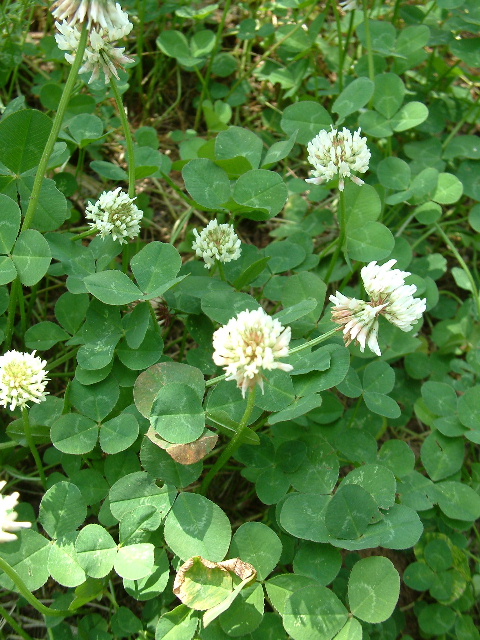
Maybe this spring when white clover pops up in your lawn, instead of battling it, you can observe it.

Did you know that it is in the plant family of the pea or legume (Fabaceae)? Trifolium repens, like other members of the pea family, fix nitrogen. This makes clover an important agricultural and rangeland plant—by planting it with grasses it is possible to increase the grass yield. Clover leaves and flowers are also good forage for wildlife and it is used widely by bees to produce honey.

I like both the scientific side of this, and becoming mindful of the natural world around you.

I recommend you take on this easy citizen scientist project in your own little part of the world. You can certainly do it for yourself, but sharing the information with the Project really adds another level of awareness.

MORE INFO

Saturday, March 6, 2010

Something Good About Paying Your NJ Taxes


If you're working on your NJ Tax return this weekend, take note of the Endangered Wildlife Fund Tax Check-Off.

You can help protect New Jersey's bald eagles and all other rare wildlife by supporting the New Jersey Endangered Wildlife Fund when you file your state income tax this year by checking off line 57 on your NJ 1040 income tax return. It's a check-off for wildlife. (Or remind your tax preparer that you want to make a contribution.)

Every dollar you donate goes directly to the DEP's Endangered and Nongame Species Program, enabling biologists to continue their work to restore, conserve and enhance New Jersey's populations of rare species. What's more, your contribution is matched with an equal amount of federal funding, further strengthening efforts to protect hundreds of imperiled species.

The Endangered and Nongame Species Program is responsible for protecting and managing nearly 500 wildlife species, including 73 species currently listed as endangered or threatened.

The program is funded almost entirely by the state income tax check-off donations and through sales of the distinctive Conserve Wildlife License Plate.

For more than 35 years, Endangered and Nongame Species' biologists have been working to bring back from the brink of extinction a variety of rare species such as the bald eagle, the peregrine falcon and the osprey. Your contribution to the Endangered Wildlife Fund makes it possible for these scientists to prevent other birds, reptiles, amphibians, mammals, fish and even butterflies from being added to the state's list of endangered and threatened species.

Whether you receive a tax refund this year or you owe tax this year, you can help keep the wonder of rare wildlife alive for our children - and for theirs - by checking off for wildlife on your NJ 1040 tax return.

Friday, March 5, 2010

A New Jersey Nature Calendar

I have been following signs in my local area for years looking to nature to tell me that it was time to plant in my garden.

That is something you have to do locally, so my own garden calendar probably applies to New Jersey, or just and this area of Essex County in some cases, and only specifically to my own square mile in other cases.

In fact, sometimes they seem to apply only to my own backyard microclimate! For example, the daffodils I have planted in the garden bloomed last year five days later than several houses around the block - probably due to the amount of sun they receive.

I also take note of things that are happening around the state with wildlife. There are people who focus just on bird migrations as a sign of spring, for example.

From my NJ nature calendar for spring:
around March 25 - piping plovers return to NJ - time to prune evergreens, turn compost,  sow peas and spinach
April 26 - bluefish run usually begins.
April 29 - first piping plover nests on Jersey beaches.

You get the idea.

For centuries farmers, naturalists, and scientists have kept records of the patterns of plants and animals and used the information to predict the best time for planting and harvesting crops and when to start expecting problems with insect pests.

There are other "citizen scientists" out there. You can join thousands of others in gathering environmental and climate change information from across the country in a program called Project BudBurst.

It asks you to make careful observations of the phenophases in your area such as first leafing, first flower, and first fruit ripening of a diversity of trees, shrubs, flowers, and grasses. What is really important is to observe the first day of the appropriate phenophase (like the first flower).

Reporting what you observe contributes valuable environmental and climate change information - but it's also a great way to learn about the environment, connect to nature, and contribute to science, all at the same time.


Phenology (which I had never heard of, even though I was doing it) is the study of the timing of life cycle events like leafing, budding, and blooming in plants.

The phenological events of many species has changed recently as a result of changing temperatures and rainfall patterns. The average global temperature increased by 0.6°C ( 1.0°F) during the 20th century. The temperature is predicted to rise with another 1.8 to 4.0°C ( 3.2 to 7.2°F) in the 21st century. That probably seems like pretty small variations, but at the global scale it can have dramatic effects on the environment.

Climate change has the largest effect on plants because, unlike many animals, they cannot move easily from one area to another.

The results might be that the growing season could start earlier or continue over a longer period of time. In NJ, the "official" last frost date is anywhere from April 15 to May 15, but I have been keeping track myself and a May frost has been the rare exception for my little microclimate in the past 20 years.

So, watching for the phases of the plant life cycle (phenophases) causes you to be very mindful of things like temperature, rainfall and day length. Monitoring changes in events such as first bud, budburst, and flowering, can help scientists detect climate change.

Got a New Jersey plant or wildlife calendar observation? Click the comment link below and let us know.

Thursday, March 4, 2010

March Workshops at the Essex County Environmental Center

LEARN ABOUT ANIMALS, STAMPS, BIRD WATCHING, NATURE PHOTOGRAPHY, GEOLOGY, INSECTS, WATER, GARDENING, PETS, COMPOSTING, PUBLIC SPEAKING AND MORE AT THE ESSEX COUNTY ENVIRONMENTAL CENTER in Roseland.

A variety of programs (both free and with a small fee) are being offered at the Essex County Environmental Center during the month of March that will teach children and adults about nature and help them gain a greater appreciation and understanding of our environment.

Here are just a few of the March offerings:


“Hands-On Composting” is presented by the Rutgers Cooperative Research and Extension. Learn the basics of home composting in this hands-on workshop. Cost is $8 per adult and includes manual and supplies. Advance registration is required. For information, call 973-228-8776. Hands-On Composting will be held as follows:
Date: Saturday, March 6, 2010
Time: 10 a.m.

“Rock-N-Roll Geology Club” is geared for children ages 7 to 12. Revel in the fascinating formations of Earth’s geologic creations. Hands-on club activities include exploring local geology, discovering what’s in local soil, and identifying rocks and minerals. Space is limited. Advance registration and payment is required. For information, call 973-228-8776. Cost is $6 per child per session (additional material fees may apply). Rock-N-Roll Geology Club is scheduled as follows:

Date: Tuesday, March 30, 2010
Time: 4 p.m.

“Outdoor Adventure Club” is for children ages 7 to 11. The hour will be directed by club members under the guidance of a Staff Naturalist who will facilitate all free-play activities. Activities may include building forts, collecting firewood, skipping rocks, telling stories, digging for critters, spotting wildlife, playing tag and more. Dress for the weather as all classes will be outside. Advance registration and payment is required. For information, call 973-228-8776. Cost is $6 per child per session. Outdoor Adventure Club will be held as follows:

Date: Wednesday, March 31, 2010
Time: 4 p.m.


“Wonder Walk in Essex County South Mountain Reservation” is for children ages 18 months to 5 years who are accompanied by their caregiver. Children should either be walking or in a carrier. Strollers are not recommended. Bundle up and explore the forest to find early signs of spring. Discover how trees “wake up,” look for animal homes and listen for early spring birds. Meet in the Tulip Springs parking area. Cost is $5 for NJAS members and $7 for non-members. Pre-registration is required. Space is limited. Contact Kelly Wenzel at 973-226-6082 for more information and to register. This is presented by the New Jersey Audubon Society. The Wonder Walk will be held as follows:
Date: Tuesday, March 9, 2010
Time: 10 a.m.
Place: Essex County South Mountain Reservation
Tulip Springs Area
Cherry Lane
West Orange, NJ

“Project Learning Tree Workshop – Literacy in the Urban Environment” is geared for teachers. This hands-on workshop encourages investigations in urban environments while fostering collaborative learning, decision-making skills and literacy. Discover current environmental issues in New Jersey, lessons to connect your students with the world around them, and opportunities for service learning. Each participant will receive the Project Learning PreK-8 Activity Guide. Advance registration is required. For information, call 973-228-8776. This program is free. Literacy in the Urban Environment will be held as follows:

Date: Wednesday, March 10, 2010
Time: 9 a.m. to 3 p.m.

“Birding Hike in Essex County South Mountain Reservation” is presented by the New Jersey Audubon Society. Participants will hike several trails in search of winter birds and early signs of spring. Target species include Black Vulture, Pileated Woodpecker and many forest birds. Meet in the Essex County Turtle Back Zoo parking lot. Space is limited. Cost is $6 for NJAS members and $8 for non-members. Contact Kelly Wenzel at 973-226-6082 for more information and to register. Birding Hike is scheduled as follows:

Date: Thursday, March 11, 2010
Time: 8:30 a.m.
Place: Essex County Turtle Back Zoo

“NJ Audubon Society Family Program - Maple Sugaring Fun” is appropriate for children in grades K-5. Participants will search the grounds of the Environmental Center for Sugar Maple trees. They will “tap” a maple tree, collect sap, and make maple syrup, and then return to the center for hot chocolate and sugar snacks. Advance registration is required. For information, call 973-226-6082. Cost is $5 for NJAS members and $7 for non-members. Maple Sugaring Fun will be held as follows:

Date: Saturday, March 13, 2010
Time: 10:30 a.m.

Wednesday, March 3, 2010

Two Hundred Million Years Ago in New Jersey


Time travel back about two hundred million years ago in your time machine that is sitting in Mine Brook Park (Flemington, NJ). When the dials stop, you would find yourself in a rifting Pangaea amidst volcanic activity that is occurring throughout New Jersey.

Okay, we don't have a time machine, but if you take note of the rock exposures along the Walnut Brook and many other locations in NJ, you can read the story of our state's geologic past.

Pangaea (see map) is a term that comes from Ancient Greek "pan" meaning "entire" and Gaia meaning "Earth" and is used to the supercontinent that existed during the Paleozoic and Mesozoic eras about 250 million years ago before the component continents were separated into their current configuration.

Throughout the history of the planet, Earth's plates have merged together then split and drifted apart. This action is a byproduct of a well-known geologic theory called plate tectonics. This theory states that the Earth's surface is broken up into roughly 20 or so giant pieces of rigid crustal plates that carry the oceans and continents with them as they move slowly around the planet.

It's a topic that hasn't just been for classroom study lately with the earthquakes in Haiti and Chile - and even a few small ones in Somerset County, NJ recently.

In New Jersey, earthquakes are measured with seismographs operated by the Lamont-Doherty Earth Observatory of Columbia University and the Delaware Geological Survey. New Jersey doesn't get many earthquakes, but it does get a few small ones.

Pangaea was cracking apart or "rifting" and as the North American Plate moved westward, separating from what is now Africa, volcanic activity deep in the earth was triggered. The rift would lead to the formation of the Atlantic Ocean.

The magma (molten rock) that erupted on the surface as a lava flow eventually cooled and solidified to form the igneous rock called basalt that is known as the Orange Mountain Basalt.

Along Walnut Brook, you can see the contact points between the basalt and the older red shale of the Passaic Formation. That older red shale is from lake sediment deposits which was covered by the lava flow.


Want to try a geocaching trip to Walnut Brook? (or just get direction and more info) Check out http://www.geocaching.com

Monday, March 1, 2010

Hudson Farm Greenway in Sussex County

A recent report in The Star-Ledger reports good environmental news for Northern New Jersey.

A 222-acre tract in Byram Township (Sussex County) has been preserved for $4.2 million with an agreement that included the Land Conservancy of New Jersey, Green Acres program, New Jersey Conservation Foundation, Byram Township and the Sussex County Open Space Committee.

The Conservancy was part of a four-year effort to permanently save the Hudson Farm Greenway tract for natural and recreation purposes, including ballfields and trails.

The Hudson Farm Greenway tract includes mature forest, Johnson Lake, existing hiking trails and a scenic ridgeline that overlooks Cranberry Lake. It creates a greenway corridor that Johnson Park with Allamuchy State Park. The nearby Highlands Trail may also be re-routed through the new greenway.

New Jersey preserved 332 acres of hiking, natural, agricultural lands in the past year including:

First Time Fen: 54 acres, Green Township - greenway linking the Whittingham Wildlife Management Area to the Pequest River Blueway.

Mayapple Hill Extension: 11.2 acres, West Orange - now part of South Mountain Reservation.

Lake Iliff Access: 13.5 acres, Andover Township

Pompton River Walk: 0.43 acres, Pequannock

Polowy farm: 140 acres, Frelinghuysen

New Village Road Natural Area: 109 acres, Greenwich Township

Miller-Kingsland Historic Park: 2.81 acres, Boonton

Horseshoe Lake Athletic Complex: 0.63 acres, Roxbury